
At WiseGEEK, we're committed to delivering accurate, trustworthy information. Our expert-authored content is rigorously fact-checked and sourced from credible authorities. Discover how we uphold the highest standards in providing you with reliable knowledge.
What are Malocclusions?
Malocclusions are problems with the mouth that cause the teeth to be misaligned in one way or another. In addition to being unattractive, these problems can impair the mouth's proper function and make it more difficult to clean the teeth. As a result, people who have these problems are more prone to developing cavities and other oral health problems.
Three Classes

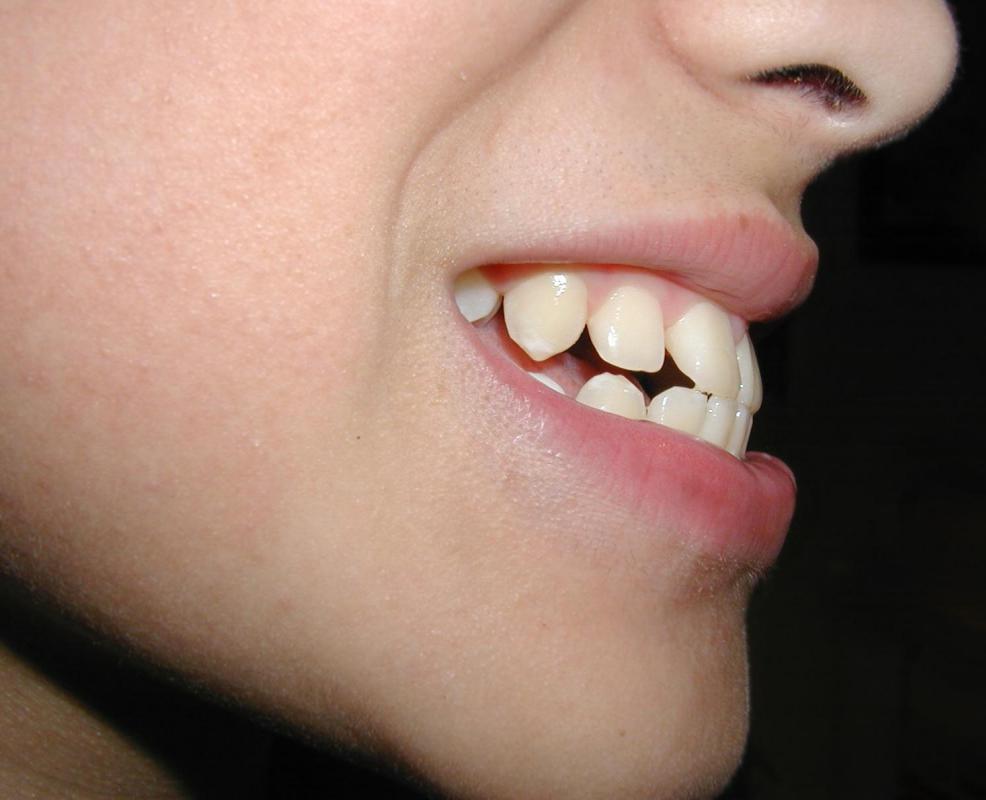
There are three primary classes of malocclusions. Class 1 malocclusions involve a normal bite or alignment, but the patient’s teeth are crowded or positioned in the wrong location. When these problems are present, it is particularly difficult to clean the teeth properly, because they overlap each other or might even grow above or below the line where the rest of the teeth grow.

Class 2 malocclusions are those in which the top front teeth extend too far beyond the lower teeth. This condition is often referred to as buckteeth or an overbite, and it generally is caused by a lower jaw that is too short. It is the most common problem addressed by orthodontists.
In class 3 malocclusions, the bottom front teeth extend beyond the top front teeth. The lower jaw typically too large in these cases. This condition typically is referred to as an underbite.
Other Types

Other malocclusions include an open bite and midline mismatches. With an open bite, the front teeth remain open when the back teeth are closed together, allowing the tongue to stick out between the teeth when the mouth is closed. With midline mismatches, the center of the bottom jaw and the center of the top jaw do not line up.
Causes
There are a variety of factors that can cause these problems. In some cases, they are linked to genetics and are caused by improper skeletal growth. Trauma to the jaw also can cause malocclusions. Baby teeth that stay in the mouth too long can cause the new teeth to be misguided as they grow in, but this can be avoided by removing the baby teeth so the adult teeth can grow in properly.
Treatments

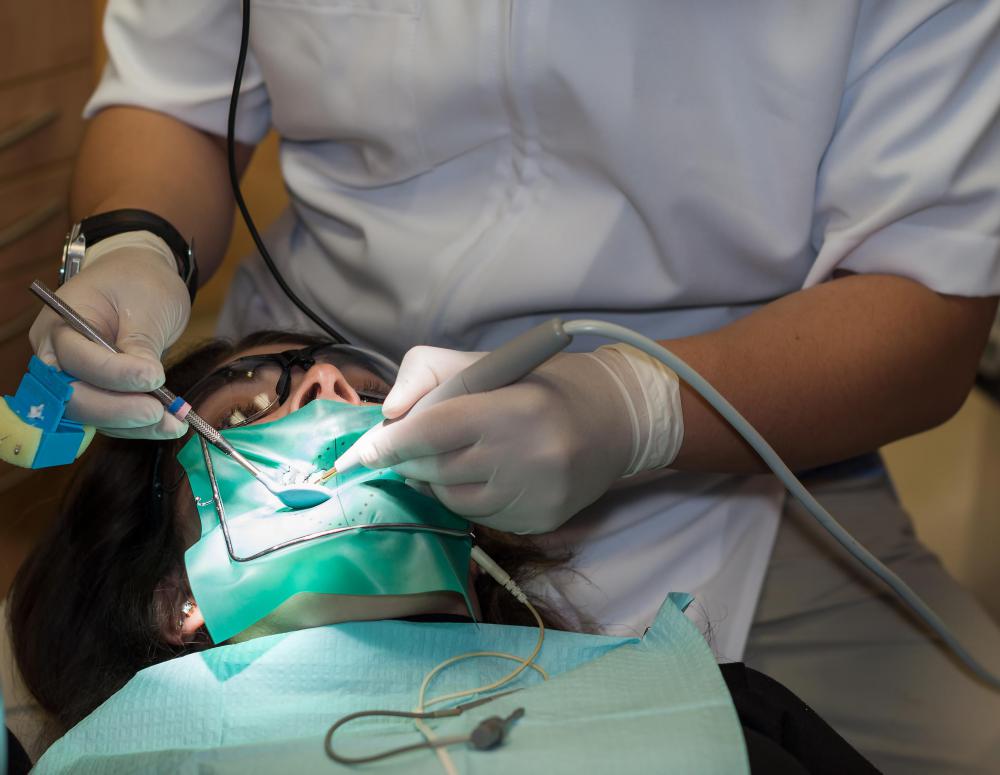
Malocclusions can also be repaired through orthodontic treatment, but not all of them require treatment. In fact, few people have perfect alignment. People who are self-conscious about the way their teeth look, who have difficulty properly cleaning their teeth or who are experiencing pressure on the joint that connects the lower jaw to the skull are primary candidates for treatment.
AS FEATURED ON:
AS FEATURED ON:









-
![People who have malocclusions are more prone to developing oral health problems.]() By: robyelo357People who have malocclusions are more prone to developing oral health problems.
By: robyelo357People who have malocclusions are more prone to developing oral health problems. -
![Trauma to the jaw may cause malocclusions.]() By: Vesna CvorovicTrauma to the jaw may cause malocclusions.
By: Vesna CvorovicTrauma to the jaw may cause malocclusions. -
![Baby teeth that don't fall out as expected can cause malocclusions.]() By: Vera KuttelvaserovaBaby teeth that don't fall out as expected can cause malocclusions.
By: Vera KuttelvaserovaBaby teeth that don't fall out as expected can cause malocclusions. -
![Malocclusions may be treated with braces.]() By: khmelMalocclusions may be treated with braces.
By: khmelMalocclusions may be treated with braces. -
![An overbite is considered a class 2 malocclusion.]() By: maureen plainfieldAn overbite is considered a class 2 malocclusion.
By: maureen plainfieldAn overbite is considered a class 2 malocclusion. -
![Children start to lose their baby teeth by about age 6.]() By: dimedrol68Children start to lose their baby teeth by about age 6.
By: dimedrol68Children start to lose their baby teeth by about age 6.




Discussion Comments
My top front teeth just about completely cover my lower front teeth. Also, my jaws and teeth hurt when I have my mouth closed for too long so I have to walk around with my mouth open (which is also because I feel uncomfortable breathing through my nose). Is there anything I can do?
I suffer from a temporomandibular jaw disorder. My dentist told me this is probably because my bite is “off.” However, I have read articles from experts on the subject that say surgery has not been proven to be all that effective, so I intend to avoid it.
My jaw sometimes aches. It feels a lot like a toothache. When I yawn or open my mouth wide and close it, my jaw pops loudly. Sometimes, it locks in place, and I have to shift my lower jaw back and forth to jar it loose so that I can close it.
I go through long periods of no pain at all. Basically, all I can do is take pain relievers when I need them and avoid chewing gum a lot.
I knew a girl with an underbite in school. Her lower jaw protruded outward, and this earned her the nickname “bulldog girl.” Cruel kids would bark at her when she walked by. She had a really tough time.
Her parents could not afford the surgery to fix it. She told me that one day, she would have enough money for surgery. She studied hard, went to college, and became a dental assistant. It didn’t take her long to save up enough for the procedure.
She came to the ten year high school reunion, and no one recognized her. She was absolutely beautiful. No one barked at her that night.
I have an open bite, but it has never bothered me. It doesn’t look strange, and it doesn’t feel weird. So, I never had it fixed.
I had been going to a dentist for regular checkups, but I stopped when I lost my job. Two years later, I had a new job and an appointment with a new dentist. I wondered what he would say about my open bite.
He asked me if it bothered me. I told him it didn’t, and he said that if it hadn’t caused problems for me by now, it probably wasn’t going to. He also said that he would not refuse to work on me if I didn’t want it fixed. I know that some dentists probably would have pestered me about it every time I went to them, and I was glad I had found one who would not.
When I was thirteen, my dentist decided I needed to have some teeth removed to correct my class 1 malocclusion. I didn’t know that was what it was called at the time, but after reading this, I see that my problem matched that description.
Some of my teeth were being pushed upward into the gum line as new ones grew. I looked sort of like I had vampire fangs, because two of them in front of my mouth grew above the others.
I vaguely remember having them removed. I’m pretty sure I was heavily sedated. I do know that my appearance improved shortly thereafter, and I didn’t feel self-conscious when smiling anymore. My teeth gradually spaced themselves out, and they looked much more natural.
Post your comments