
At TheHealthBoard, we're committed to delivering accurate, trustworthy information. Our expert-authored content is rigorously fact-checked and sourced from credible authorities. Discover how we uphold the highest standards in providing you with reliable knowledge.
What are Macrophages?
 Mary McMahon
Mary McMahon
Mary McMahon
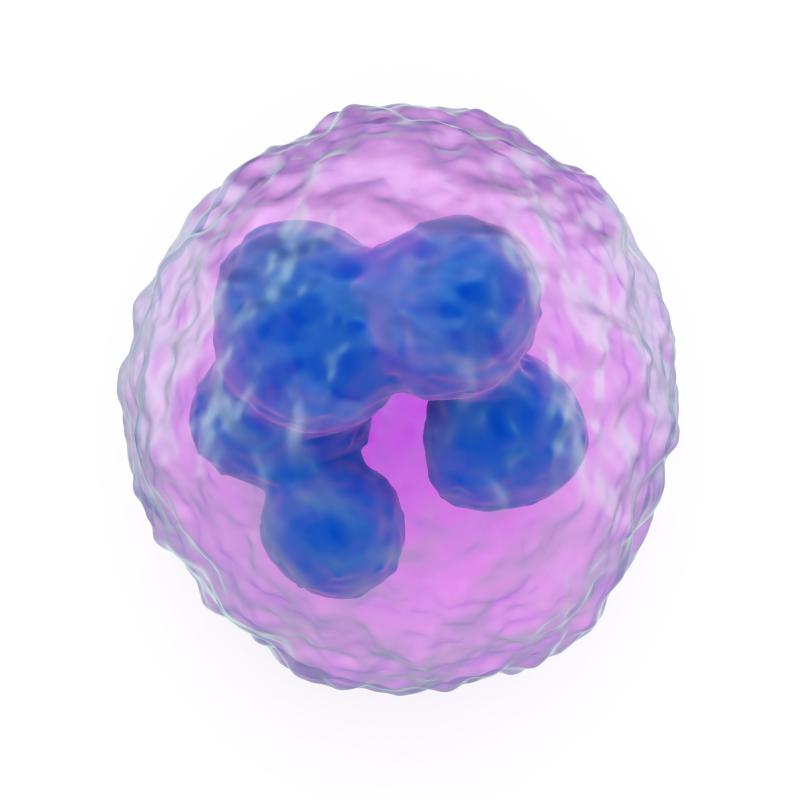
Macrophages are a type of white blood cell which eat foreign material in the body. These cells are involved in the primary or innate immune response to a number of immune invaders, and they also make up an important part of the body's acquired immune system. At any given time, these cells are at work in many corners of the body, quietly cleaning up foreign debris, bacteria, and viruses before they have a chance to cause a problem.
Like other blood cells, these blood cells start out in the bone marrow. The life cycle of these cells actually starts with a type of cell called a monocyte, which has the capability to mature into a macrophage when it is stimulated to do so. Some monocytes drift to specific areas of the body, such as the liver, where they mature into specialized macrophages which remain in place, while others turn into free-floating macrophages.

In a sense, these cells are like security guards for the immune system. Some of them remain stationed at their regular "desks" near areas where foreign material commonly enters the body, routinely screening the materials which pass them to look for things which could be dangerous. Others roam on patrol, looking for intruders who may have slipped past other guards.

When a macrophage encounters something which it thinks might be dangerous, it will engulf it and create enzymes to neutralize it so that it cannot continue replicating in the body. This process is called phagocytosis, literally "eating cells." Macrophages use phagocytosis to collect antigens which they can present to helper T-cells, alerting the T-cells to the fact that there is a foreign invader in the body, and triggering an immune response.

Scientists still have some learning to do with these unique cells. For example, originally researchers thought these cells damaged the DNA of their victims to prevent them from replicating, but studies published in 2009 showed that the enzymes these cells generate actually work differently. More study can provide detailed information about how the body responds to infection, and the ways in which immune cells can go wrong.

These scavenger cells can sometimes cause problems in the body. These cells have been implicated in the development of lesions such as granulomas, caused by chronic inflammation. These cells play a role in inflammatory processes, so when they become overactive, they can actually cause harm, rather than simply protecting the body from something foreign. Some types of cancer also appear to be aggravated by macrophages, and these cells can be hijacked by the HIV virus and used to spread it in the body.
Mary McMahon
Ever since she began contributing to the site several years ago, Mary has embraced the exciting challenge of being a TheHealthBoard researcher and writer. Mary has a liberal arts degree from Goddard College and spends her free time reading, cooking, and exploring the great outdoors.
Learn more...
Mary McMahon
Ever since she began contributing to the site several years ago, Mary has embraced the exciting challenge of being a TheHealthBoard researcher and writer. Mary has a liberal arts degree from Goddard College and spends her free time reading, cooking, and exploring the great outdoors.
Learn more...AS FEATURED ON:
AS FEATURED ON:


-
![Macrophages help clean up bacteria and viruses in the body.]() By: Kirsty PargeterMacrophages help clean up bacteria and viruses in the body.
By: Kirsty PargeterMacrophages help clean up bacteria and viruses in the body. -
![A monocyte is the first stage of life for a macrophage.]() By: Luk CoxA monocyte is the first stage of life for a macrophage.
By: Luk CoxA monocyte is the first stage of life for a macrophage. -
![Phagocytes dispose of cells that have undergone apoptosis, or programmed cell death.]() By: designuaPhagocytes dispose of cells that have undergone apoptosis, or programmed cell death.
By: designuaPhagocytes dispose of cells that have undergone apoptosis, or programmed cell death. -
![Macrophages can be co-opted by HIV cells and aid the spread of the virus.]() By: designuaMacrophages can be co-opted by HIV cells and aid the spread of the virus.
By: designuaMacrophages can be co-opted by HIV cells and aid the spread of the virus. -
![Macrophages are a type of white blood cell that eats foreign material in the body.]() By: extender_01Macrophages are a type of white blood cell that eats foreign material in the body.
By: extender_01Macrophages are a type of white blood cell that eats foreign material in the body.



Discussion Comments
Can you please explain to me, if the macrophage lives about 16 days, what is the way that they are separate from the organism? By phagocitose, or what?
have scientists ever thought of why they can't inject white blood cells in the dead cell area to help fight cancer? Do dead cells form and destroy the organs in our body through meiosis?
Post your comments