
At TheHealthBoard, we're committed to delivering accurate, trustworthy information. Our expert-authored content is rigorously fact-checked and sourced from credible authorities. Discover how we uphold the highest standards in providing you with reliable knowledge.
What are Leukocytes?
 Mary McMahon
Mary McMahon
Mary McMahon
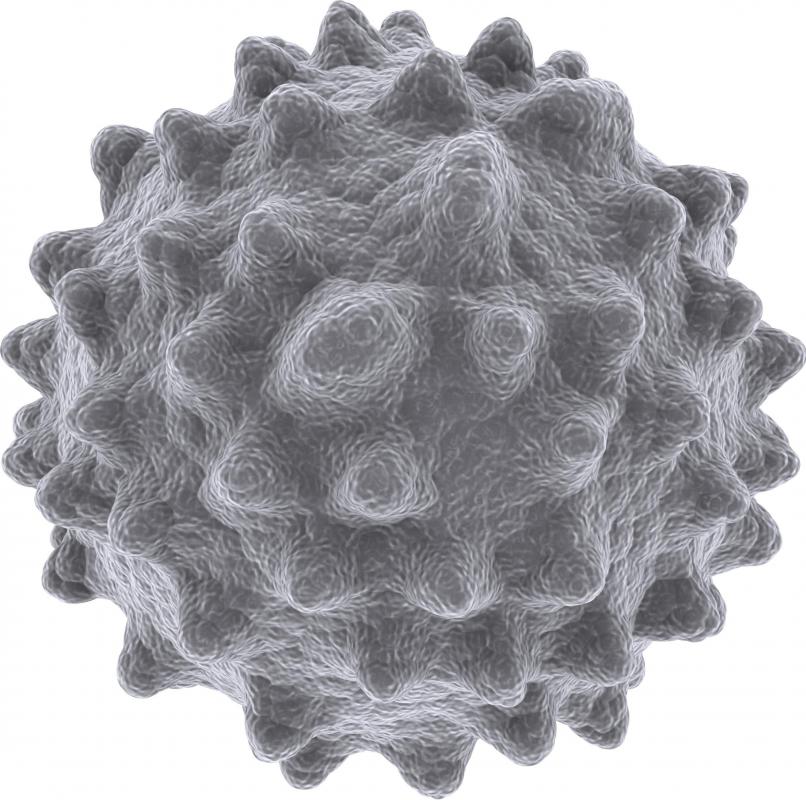
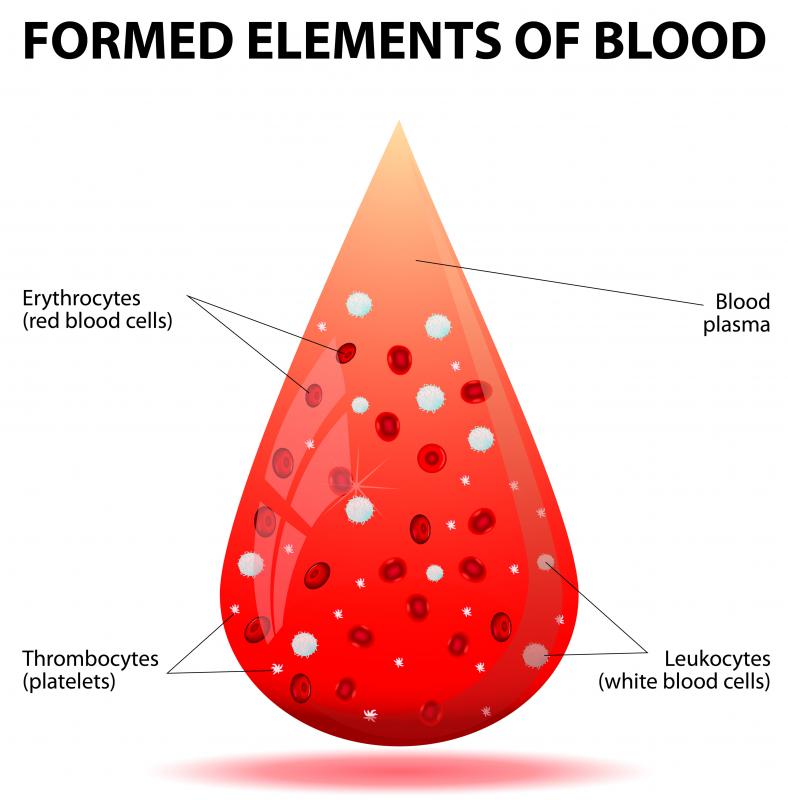
Leukocytes, also known as white blood cells, are an important component of blood and a key player in the body's immune system. There are a number of different types, each with specific functions. An elevation in their count in the blood can indicate the presence of infection or underlying disease, while leukopenia, in which these cells are reduced in number, can also be an indicator of a medical problem.
These cells can be broken into two major types: granulocytes and agranulocytes. Granulocytes have small granules of material inside their cell membranes, which play an important role in their function. They can release the granules to kill bacteria, fungi, and other invaders. Agranulocytes lack granules in their cell membranes.

There are three types of granulocytes: eosinophils, neutrophils, and basophils. Eosinophils are designed to attack parasites, and they also play a role in allergic reactions. Neutrophils target bacteria and fungi, while basophils play a role in immune response. In someone with normal leukocyte levels, around 50% to 60% are neutrophils, with 1% to 4% being esoinophils, and less than 2% being basophils.

Agranulocytes can be broken up into lymphocytes, which make up around 20% to 40% of the total leukocyte count and include B cells, T cells, and Natural Killer cells, and monocytes. Monocytes make up 2% to 9% of the white blood cell count, and they are designed to present antigens to lymphocytes to stimulate immune responses. These cells eventually mature into macrophages, specialized leukocytes that engulf foreign material to neutralize it.

Some leukocytes become fixed in place, such as mast cells, a type of granulocyte involved in immune response. All white blood cells arise from the same pluripotent stem cells generated in the bone marrow, with the body determining which type are needed and directing the stem cells to mature accordingly. These cells are also constantly being replaced, as many have a very short life span in the body.

When a patient goes to see a medical professional, he or she may order blood tests as part of the patient's workup to determine what condition the person has, and to get a general idea of his or her health. Part of this bloodwork includes a count of the red and white blood cells, with specific attention to the numbers of different types of cells, which might provide clues about a patient's condition. A low levels of T cells, for example, could indicate that a patient has HIV.
Mary McMahon
Ever since she began contributing to the site several years ago, Mary has embraced the exciting challenge of being a TheHealthBoard researcher and writer. Mary has a liberal arts degree from Goddard College and spends her free time reading, cooking, and exploring the great outdoors.
Learn more...
Mary McMahon
Ever since she began contributing to the site several years ago, Mary has embraced the exciting challenge of being a TheHealthBoard researcher and writer. Mary has a liberal arts degree from Goddard College and spends her free time reading, cooking, and exploring the great outdoors.
Learn more...AS FEATURED ON:
AS FEATURED ON:


-
![Leukocytes are also known as white blood cells.]() By: Inside Vision LabLeukocytes are also known as white blood cells.
By: Inside Vision LabLeukocytes are also known as white blood cells. -
![A diagram showing different types of leukocytes, or white blood cells.]() By: apple1A diagram showing different types of leukocytes, or white blood cells.
By: apple1A diagram showing different types of leukocytes, or white blood cells. -
![Macrophages promote tissue growth and repair following an injury.]() By: vvoeMacrophages promote tissue growth and repair following an injury.
By: vvoeMacrophages promote tissue growth and repair following an injury. -
![Blood testing may reveal a count of red and white blood cells in the body.]() By: Von SchonertagenBlood testing may reveal a count of red and white blood cells in the body.
By: Von SchonertagenBlood testing may reveal a count of red and white blood cells in the body. -
![Leukocytes are an important component of blood and a key player in the body's immune system.]() By: designuaLeukocytes are an important component of blood and a key player in the body's immune system.
By: designuaLeukocytes are an important component of blood and a key player in the body's immune system. -
![A low level of T cells may indicate that an HIV test should be performed.]() By: jarun011A low level of T cells may indicate that an HIV test should be performed.
By: jarun011A low level of T cells may indicate that an HIV test should be performed.




Discussion Comments
What an interesting article. The last time I was sick my doctor kept throwing around the term "leukocytes count" and I had no idea what he was talking about! I might have had more of a clue had I known leukocytes were white blood cells.
My doctor ordering a leukocyte count makes so much more sense now that I know white blood cells fight illnesses. So it stands to reason if you are ill you will have more white blood cells.
I learned about human leukocytes in Anatomy and Physiology last semester and I must say they are very interesting cells. Leukocytes were also my favorite to look at under the microscope.
You can quite clearly see the granules on the granulocytes under a microscope. It's also very easy to tell which leukocytes are which because you can clearly see the shape of the nucleus. Also the different leukocytes are all usually stained different colors making them extra easy to identify.
I wish all the cells I learned about last semester were so easy to identify!
Post your comments