
At DelightedCooking, we're committed to delivering accurate, trustworthy information. Our expert-authored content is rigorously fact-checked and sourced from credible authorities. Discover how we uphold the highest standards in providing you with reliable knowledge.
What are Legumes?
 Mary McMahon
Mary McMahon
Mary McMahon
Legumes are plants in the pea family that produce pods that dehisce, meaning that they split open naturally along a seam, revealing a neat row of seeds. They are cultivated for both human and animal food, in addition to being grown as ornamentals. The plants can be found growing on every continent, demonstrating the adaptability of the over 18,000 species. Most people eat legumes regularly, and the plants are quite common as well.
The defining feature of legumes is the pods, which can vary in size and length, depending on the plant. When allowed to grow naturally, the pods will split open as they dry out, releasing the seeds and allowing the plant to spread. Some pods even pop open almost explosively, projecting the seeds to cover the area more widely.

Humans have been growing and eating legumes for a very long time, with archaeological evidence suggesting that they may be the oldest crop known to man. Many plants in this family were probably naturally edible before domestication, while others developed more plentiful, large seeds as a result of being grown by humans. Some well known types include beans, peas, peanuts, lentils, and alfalfa, among many others. In addition to having edible seeds, some plants also have useful foliage that can be used to feed animals; others are planted as forage crops for creatures like cattle.

When dried, legumes are known as pulses. Pulses are famous for being able to endure extended periods of storage, making them a very useful food to grow because they can be eaten during lean periods. The seeds are also very high in protein, making them an excellent addition to the human diet, and many have a rich assortment of vitamins and minerals as well. Because of their nutritional value, they play a very important role in the diets of the world's poor, and they are quite popular with wealthier individuals as well.

Legumes are also good for the soil. They are adept nitrogen fixers, meaning that they pull nitrogen from the atmosphere into the soil; this trait can help to restore soil that has been depleted of nitrogen by other crops. The plants are therefore often included in crop rotation, and sometimes planted along with various vegetables to ensure that the soil will not be stripped of its useful nitrogen.
Mary McMahon
Ever since she began contributing to the site several years ago, Mary has embraced the exciting challenge of being a DelightedCooking researcher and writer. Mary has a liberal arts degree from Goddard College and spends her free time reading, cooking, and exploring the great outdoors.
Learn more...
Mary McMahon
Ever since she began contributing to the site several years ago, Mary has embraced the exciting challenge of being a DelightedCooking researcher and writer. Mary has a liberal arts degree from Goddard College and spends her free time reading, cooking, and exploring the great outdoors.
Learn more...AS FEATURED ON:
AS FEATURED ON:


-
![Legumes help enrich soil by adding nitrogen.]() By: Joe GoughLegumes help enrich soil by adding nitrogen.
By: Joe GoughLegumes help enrich soil by adding nitrogen. -
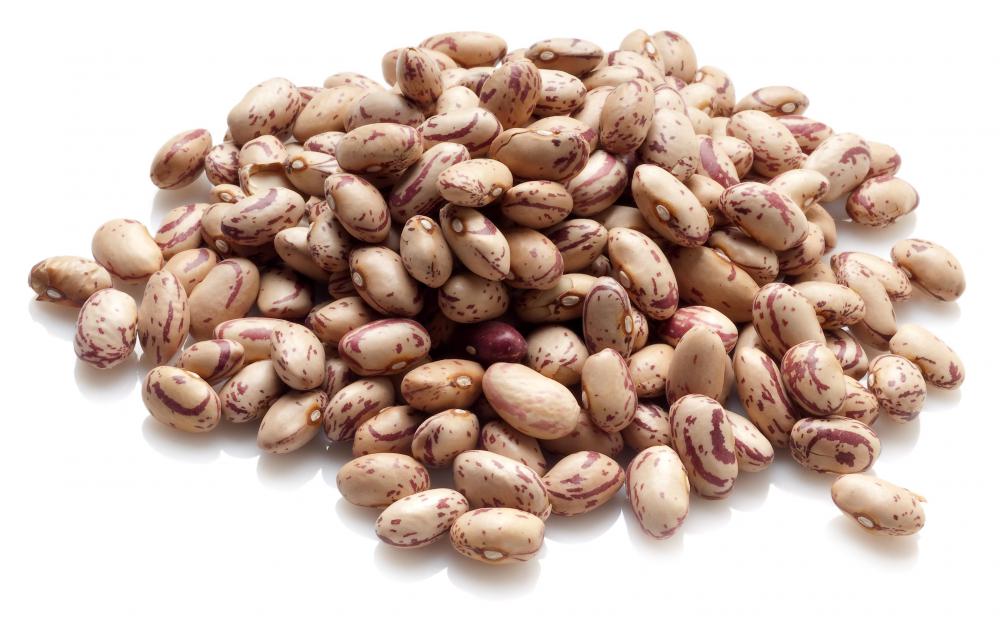
![Beans, a type of legume.]() By: Marco MayerBeans, a type of legume.
By: Marco MayerBeans, a type of legume. -
![Dry great northern beans, a type of legume.]() By: tfazevedoDry great northern beans, a type of legume.
By: tfazevedoDry great northern beans, a type of legume. -
![Peas are a common type of legume.]() By: sevenkPeas are a common type of legume.
By: sevenkPeas are a common type of legume. -
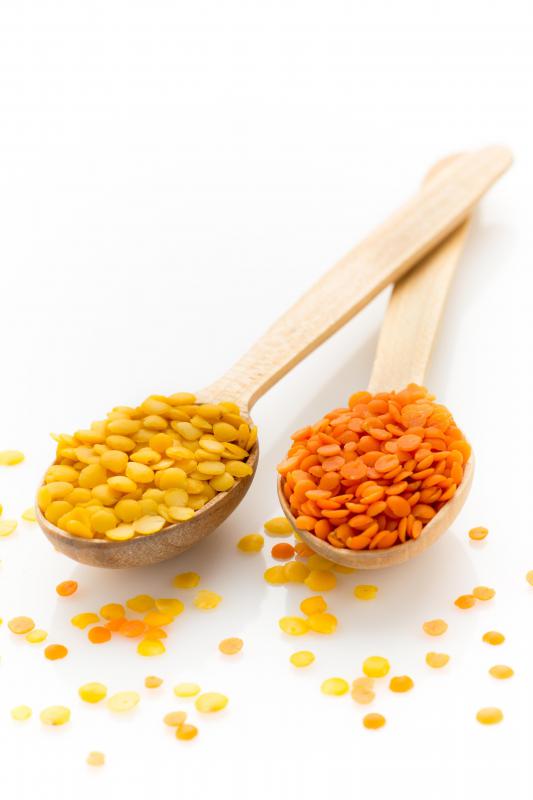
![Lentils are classified as a legume.]() By: gitusikLentils are classified as a legume.
By: gitusikLentils are classified as a legume.



Discussion Comments
I would point out that it's a common misconception that all legumes are able to fix nitrogen. Only a certain subset of them can do this. It's actually a type of fungus that works together with the roots to do it.
I figured this out when I was helping out on a volunteer project where we were planting trees on an old strip mine. Apparently, the mining process removes a lot of the nitrogen from the soils, so they plant a lot of legumes. The person in charge of the project was nice enough to explain to me how legumes work.
@matthewc23 - Good questions. Actually, many of the leguminous trees display the typical characteristics whereas the garden plants don't always have them.
The most common or well-known legume trees in America are the honeylocust, black locust, acacia, and redbud. Hopefully you're familiar with at least one of those, although there are several others.
One of the best characteristics to look for if you can't find pods is the leaves. The vast majority of them will have sets of leaflets along a main stem. The leaflets are usually oval-shaped. Look up some pictures, and you should see what I mean, although redbuds and clover are exceptions to the rule.
Wow, I didn't have any idea things like clover and alfalfa were legumes. They are so much different than beans or peanuts.
I guess it sounds like the pods are kind of an identifying feature of legumes. Are there any other good characteristics that you can look for to figure out if a plant is a legume or something else? After all, plants won't always have the pods. Also, I know there are some legume trees. Does anyone know what some examples are?
@burcidi - I totally agree about dried legumes being too much of a pain. I make a lot of recipes where I use different types of beans. I used to get bags of beans just because they were cheaper. Now, though, I just buy canned beans. With the dried ones, you have to soak them overnight, and I feel like they're harder to cook with. If you by cans, you just dump them in the pot and go.
The one time I still buy dried beans is to make my mom's ham and beans recipe. I've tried making it the easy way with cans, but it just isn't the same as what I had as a kid.
Dry legumes are great for storing. They never go bad and you can eat them even years later. But the downside is that they're harder to cook. You have to soak them in water overnight and then cook them for a long time the next day.
As much as I like legumes, I only eat them fresh or canned. I just don't have the patience to deal with dry legumes.
@CarrotIsland-- Wow, where did you learn that? So vanilla is a legume fruit? That's really cool, I had no idea.
I used to dislike eating legumes when I was young. They didn't seem very flavorful to me. But as I've gotten older, I've learned to appreciate them. Now I eat them on a regular basis, not just for nutrition but for health in general.
Since legumes are rich in fiber, they're really good for the digestive system. Basically, you won't get constipated if you make legumes a part of your diet. And when cooked right, they taste really good too. My favorite legume recipe for example, is dal, the Indian lentil dish with spices.
I recall being very surprised as a child when I saw peanuts on the legume list in my textbook. I had always heard beans and peas referred to as legumes, but peanuts were nuts! They just didn't belong there, in my opinion.
Recently, my friend decided to grow some peanuts. I didn't know this, but if you buy raw peanuts in the food aisle, you can plant them, as long as you don't let them split in two. My friend put them a couple of inches down in some super sandy soil and let them grow.
She said that peanuts don't need a lot of water, but they do need good soil drainage. That's why she mixed so much sand into her soil.
My neighbors own cows and a large pasture, and they plant legumes to use as food for the cattle. They sow red clover seeds, which they say makes a great type of hay.
Since red clover is a legume, it is high in protein. So, the cows get plenty of protein when they feast on this kind of hay.
I think that red clover is very pretty, too. I've seen it growing wild on the sides of the road, so the seed must travel pretty well on its own.
@OeKc05 – That doesn't sound like much fun. I always buy legumes that have already been shelled at the grocery store.
I have bought both frozen and dried legumes, but I have to say that frozen ones are my favorite. When you buy dried legumes, you have to soak them in water overnight before cooking them to rehydrate them. With frozen legumes, all you have to do is toss them in water and boil them for about thirty minutes or so.
My parents used to grow legumes in their garden. I remember spending hours helping them shell purple hull peas. When they were ripe, shelling them was easy.
The pods would be dried out rather well, so all you had to do was get the seam cracked in one spot, and you could easily pop the rest of the pod open. Inside, the legumes would still be moist, as would the little scooped out beds where they lay. So, I would end up with pea juice under my fingernails, which were stained for a few days.
@ccalabama71: Most people consider fruits to be those sweet, juicy foods that we enjoy such as strawberries or oranges. However, there are also legume fruits.
A legume fruit is a dry fruit that forms from a carpel and opens along a seam. These are also called pods. Vanilla and radish are two types of pod fruits.
Are there any fruits that are considered legumes?
Post your comments