
At WiseGEEK, we're committed to delivering accurate, trustworthy information. Our expert-authored content is rigorously fact-checked and sourced from credible authorities. Discover how we uphold the highest standards in providing you with reliable knowledge.
What are IRS Stimulus Checks?
In 2008, the Economic Stimulus Act was put into place in order to avoid an economic recession in the United States. As part of the act, tax-paying Americans were to be sent IRS stimulus checks — money sent to taxpayers that they had been instructed by President George W. Bush to spend immediately in order to stimulate the economy. The checks were essentially tax rebates and varied in value depending on how much a certain taxpayer earned the previous fiscal year.
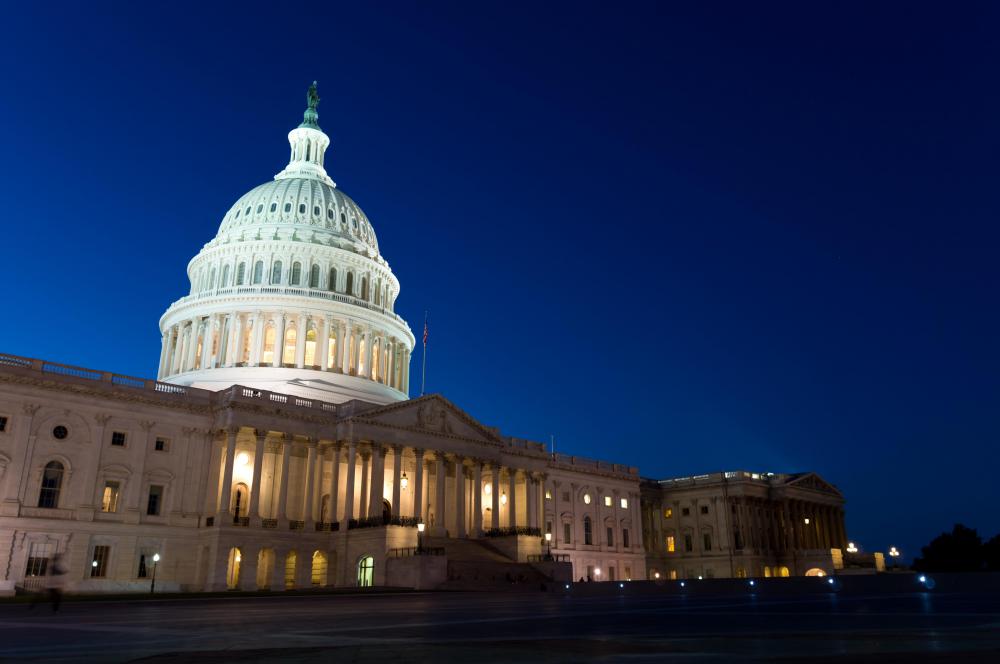
As the year began, economists began to paint a bleak picture for the future of the U.S. economy, citing recession fears and a housing mortgage crisis. In order to head such a recession off at the pass, Congress passed the Economic Stimulus Act of 2008, which would, among other things, send each individual taxpayer in the United States a tax rebate checks. It was signed into law by President Bush in mid-February, and Americans began receiving the money shortly thereafter. The checks were distributed according to Social Security numbers and would be delivered to Americans throughout the course of the year.

Individuals were eligible to receive IRS stimulus checks valued at the minimum of $300 U.S. Dollars (USD) and not exceeding $600 USD. Married couples would receive a rebate of no less than $600 USD if filing jointly, and not to exceed $1,200 USD. These rebates, according to the IRS, would not affect 2008 tax returns. While the effects of the stimulus did provide some benefit, the United States faced a growing economic crisis toward the end of the year.

In an effort to prevent illegal aliens from receiving stimulus checks, an amendment was added to the act to prevent rebates from going to any residents with an individual taxpayer identification number (ITIN) rather than a Social Security number. This meant illegal aliens would not receive a rebate, but it also meant that overseas military families would not receive one either. U.S. citizens could amend their returns to file separately, but the benefit would not outweigh the change because dependent claims would be less when filing separately.
AS FEATURED ON:
AS FEATURED ON:









-
![Congress passed the Economic Stimulus Act of 2008, which would, among other things, send each individual taxpayer in the United States a tax rebate checks.]() By: Konstantin LCongress passed the Economic Stimulus Act of 2008, which would, among other things, send each individual taxpayer in the United States a tax rebate checks.
By: Konstantin LCongress passed the Economic Stimulus Act of 2008, which would, among other things, send each individual taxpayer in the United States a tax rebate checks. -
![Under the Economic Stimulus Act of 2008, married couples who filed joint tax returns received rebates in the amount of $600 - $1200.]() By: darko64Under the Economic Stimulus Act of 2008, married couples who filed joint tax returns received rebates in the amount of $600 - $1200.
By: darko64Under the Economic Stimulus Act of 2008, married couples who filed joint tax returns received rebates in the amount of $600 - $1200.

Discussion Comments
I would like to know when it is not supposed to be taken back from us in our 2008 tax return, why we were penalized for our stimulus check? If you could help me try to figure this out i would appreciate it.
I am having a debate with a friend re: stimulus checks. She states that she as well as her husband & son & friends received a stimulus check back in 2002. I say that the 1st stimulus check offered to citizens of the united states was in 2008. I realize that in 2002 President Bush put together a stimulus package that gave credit for certain issues but never a stimulus check to each & every citizen of the united states. Where can I get a copy stating that the 1st stimulus check given to u.s. citizens were given for the 1st time in 2008? Thank you for any & all information that you can offer me to solve this misunderstanding.
Post your comments