
At DelightedCooking, we're committed to delivering accurate, trustworthy information. Our expert-authored content is rigorously fact-checked and sourced from credible authorities. Discover how we uphold the highest standards in providing you with reliable knowledge.
What are Huckleberries?
 Tricia Christensen
Tricia Christensen
Tricia Christensen
Huckleberry is the name for a number of different shrubs in the Ericaceae family, which also includes blueberries and cranberries. Plants with this name come primarily from two genera: Gaylussacia and Vaccinium. The berries are small and round, with a similar appearance to blueberries, though their color may range instead from deep crimson to eggplant purple. The taste is also often compared to that of blueberries, although it is distinct.
The different types of huckleberries include the black, box, dwarf, and thinleaf. Red ones grow primarily in the western part of North America, preferring slightly acidic soils in the coastal regions. The black and dwarf plants grow mostly in the mid- and eastern part of the continent, while the woolly and Confederate huckleberry grow in the southern US. These plants haven't been domesticated, and different varieties grow wild throughout North America.

The berries ripen in mid- to late summer, often reaching their peak in August, although this can depend of the variety, location, and growing conditions. Very few are available in grocery stores; the best place to look for them is either in the wild or at local farmer's markets. Since they are not grown commercially, they are often more expensive than other berries.

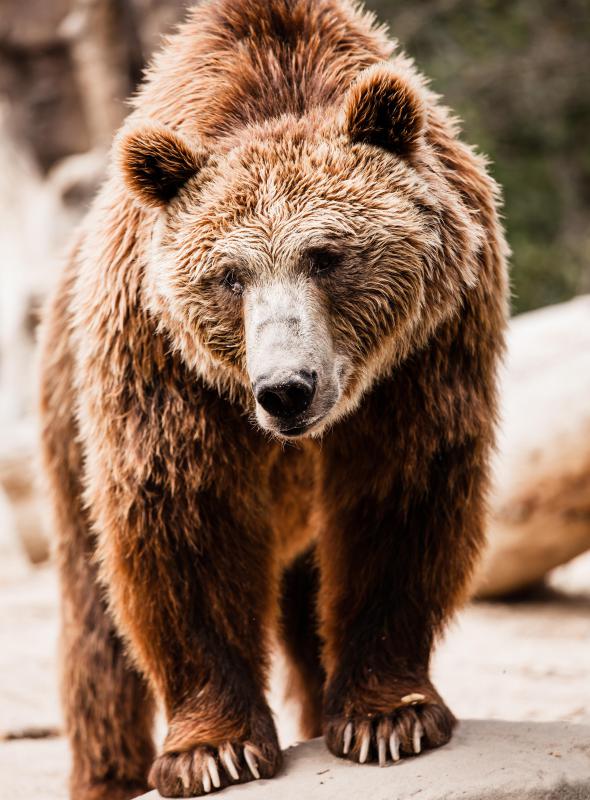
It is generally recommended that people avoid picking the berries in early evening or early morning hours, especially in relatively remote areas. They are a favorite food of bears, including brown and black bears, and grizzlies. In fact, bears are famous for quickly eating huckleberries, since the high sugar helps them store fat for long and lean winters.
The fruit can be used much like blueberries, and they make good jams, pies, cobblers or preserves. It may also be possible to buy jam or syrup and occasionally fresh berries from a variety of Internet sites.

There are a few reasons why this species of berry has not adapted well to commercial farming. The plants take a number of years to grow to maturity and produce fruit, and they also prefer acidic soils. Another reason farmers tend not to bother with them is because they have to be handpicked. Machines that pick blueberries don't work well with huckleberries, so harvesting them is more labor intensive. Research is being done to find ways to make the berry more easily cultivated.
The relative rarity and difficulty in obtaining huckleberries translates to significant cost. They are usually sold in frozen packages. It is much harder to find fresh ones, and their availability is often limited to areas in which they flourish in the wild.
Tricia Christensen
Tricia has a Literature degree from Sonoma State University and has been a frequent DelightedCooking contributor for many years. She is especially passionate about reading and writing, although her other interests include medicine, art, film, history, politics, ethics, and religion. Tricia lives in Northern California and is currently working on her first novel.
Learn more...
Tricia Christensen
Tricia has a Literature degree from Sonoma State University and has been a frequent DelightedCooking contributor for many years. She is especially passionate about reading and writing, although her other interests include medicine, art, film, history, politics, ethics, and religion. Tricia lives in Northern California and is currently working on her first novel.
Learn more...AS FEATURED ON:
AS FEATURED ON:


-
![Huckleberries on the bush.]() By: Alexandr BlinovHuckleberries on the bush.
By: Alexandr BlinovHuckleberries on the bush. -
![Huckleberries may be substituted for blueberries in bread and muffin recipes.]() By: dolphy_tvHuckleberries may be substituted for blueberries in bread and muffin recipes.
By: dolphy_tvHuckleberries may be substituted for blueberries in bread and muffin recipes. -
![Several bear species are known for eating huckleberries.]() By: Mariusz PrusaczykSeveral bear species are known for eating huckleberries.
By: Mariusz PrusaczykSeveral bear species are known for eating huckleberries.


Discussion Comments
The varieties in Idaho that we pick are at higher elevations. If you want to find them, you will more than likely have to prepare yourself for an adventure. Many locals keep locations a guarded secret. It can be done. Get some back road maps and start exploring. Be careful of bears. They love them too. I have not run across one in my adventures, but have seen signs that they are there.
I pick and eat wild huckleberries here in the Beartooth Mountains in Montana. They are so abundant at certain elevations that they carpet the floor with their leaves. the berries are easy to miss as they are small. only in the best locations you can find large ones.
And to the graben huckleberry, it's not a really huckleberry -- just something that sort of looks like one, but not even close. Just look at the scientific names.
No one from northern California has chimed in about our coastal Huckleberries. I imagine that Oregon and Washington coasts have similar berries. They might be slightly smaller and more tart than the Cascade type. I purchased some frozen Cascade Hucks and they were good. But not nearly as good as the coastal variety from Mendocino and Humboldt counties.
Huckleberries make a mighty good pie but it's lots of work picking them, and lots of scratching from the red bugs later -- at least in Mississippi, anyway.
Now I am totally confused! Was I picking blueberries or huckleberries? I grew up in the N.E. part of Pennsylvania. I picked in Freeland and Wilkes Barre what I thought were huckleberries with my aged uncle. The plants were usually in a sunny, rocky area. They were definitely blue and small and did not grow in clusters. The taste was unbelievable and I couldn't wait for my aunt to make a pie from them.
I grew up assuming that blueberries were the same thing, but there is no comparison. To me, blueberries have no taste. I am trying to buy plants to grow in Texas where I now live in "Zone 8." You can all stop laughing now. I know it's a long shot, but I am desperate to try and grow them. I bought two evergreen huckleberry plants last year and they are doing fine. But after doing more reading today, I am not sure this is the right plant that I want. Please some one set me straight.
I received a packet of solanum melanocerasum called garden huckleberry. The berries are black now, but I don,t know when they are ripe to pick. Can I use them in jelly?
I have yet to hear any other way of telling the "real" huckleberries apart from other berries, is the tiny crown on top of the berry. I live in central Mississippi and they are in abundance.
I have been accustomed to eating these pies "cobblers" since I was four to five years old. The bush was at least 10-15 years old and now the same bush is a tree 10-12 feet tall. They do look like the elderberry (which birds love) but very bad tasting, hard and not soft. The leaves are different.
My yard is full of them. I live on six acres and they are in abundance this year. They have started to come in early April instead of the usual May.
I've only started picking huckleberries this year, but I have studied and loved them for many years. Huckleberries do not grow in clusters or twins. Those sound like elderberries or choke cherries, which are very bitter, yet are great for making jams and wine. Huckleberries often hide beneath the leaves, so if you push the plant back to expose the underside, you will find more treasure. Even the largest ones are about half the size of a commercial blueberry--or pea-sized.
Huckleberries can grow as low as 2,000 feet, but chances are that they are a blueberry, bilberry, or gooseberry variety if they are found at lower elevations--this according to Mr. Huckleberry at University of Idaho. The genuses are related, but huckleberry can be one of three. Blueberries are of only one (and naturally I cannot find my notes at the moment. Look it up).
Most berries in North America aren't toxic to the point of death, unless eaten in huge gigantic quantities. Stomach upset and diarrhea are usually the marker of bad berries. I wouldn't eat any berries in large quantities unless I knew what they were for certain anyway. Common sense is the rule. Saskatoon berries also grow in huge numbers around here, but need to be cooked to be eaten by humans. Cooking (high-heating) changes the chemistry of many toxins and makes them tolerable or neutral. Under-ripe berries (or any kind of under ripe fruit) will also irritate or poison the digestive tract. Again, use common sense.
About the smell: I can smell them when I have them in a bag or container all together (and I worry about bears also smelling them and make sure that I sing or talk very loudly to myself), but I guess I haven't found those magical places yet untouched and overpicked by man or critter. They do have a distinctive berry smell, similar to blueberries but slightly different. More, I don't know, acidic--sour -- mysterious.
Please research your subject if you aim to eat it. There is a very good book: Edible and Medicinal Plants of North America. And by all means, stay away from the orange and red mushrooms.
Huckleberries are also found in southern British Columbia, Canada. I know this because you can pick them not far from where I live, Castlegar, BC. My husband and I just love them in pies and made into jam!
I live in Nebraska and I ordered plants through the mail and received huckleberries. There were no instructions or anything. I planted them and they produced purple berries in a cluster. Are there poisonous huckleberry plants? I don't want to pick them if I can't eat them.
I think it's funny when I hear the taste described as "similar to blueberries." Hucks taste *nothing* like blueberries! They have a wonderful, wild, flavor that is completely their own. Blueberries are bland and disappointing by comparison.
I grew up in Spokane, Washington, and we looked forward to huckleberry season every year. There's nothing in the world quite as wonderful as a fresh, homemade, huckleberry pie.
I grew up eating huckleberries from the mountains of Idaho. Yesterday, I purchased some "huckleberry preserves" from a farm stand in central Ohio. They do not taste the same as what I remember from my childhood. Good, but without the label, I wouldn't have identified them as huckleberry. They are lacking that distinctive flavor.
I live in north Carolina and I have growing in a tree like a bush, berries that are clumped together. There are probably hundreds of them on this tree like a bush. Are these huckleberrie?
I always smile when I hear that huckleberries only grow in high elevations, or on mountainsides.
I live in the flattest area you can imagine, South Louisiana, on a river no less and we have huckleberries everywhere! In fact they are in the second week of ripening now and we are struggling to keep up with the picking!
We pick in the early morning before work, then get home by six and there are more to pick the same day. From the looks of my bushes, we will be picking these little wonders for at least another two weeks. All of our bushes still have lots of tiny green berries on them.
So far this season, we have two gallons of berries in our freezer and I made a cobbler last night with the ones we picked yesterday. One of our bushes is so huge and loaded that I picked for two hours on only one side of the bush, and got four cups of berries.
When you consider they are about the size of a large green pea, that is remarkable.
They are very tasty, and are good for you. I read that they are higher in antioxidants than blueberries. All I know is I have been feeding these to my grandchild since she was a year old, and she has not had to be on antibiotics once so far, and she just turned seven years old last month.
She loves to eat them raw for breakfast or snack time. We put them in pancakes, pies, cobblers, muffins -- any recipe that calls for fresh fruit. They make lots of juice so when you put in cobblers or pies, you need to add a little tapioca to thicken the juice. Or, just pour off the extra juice, jar it and use to pour over vanilla ice cream! Yummy!
Get out and look around in the woods if you live in my area of South Louisiana, they are everywhere. There's a tip on locating the bushes: They very often grow at the base of large trees, almost on top of the roots. Wild privet hedge also always grow with them, so if you find the privet, look for the huckleberry bush. They also grow on the river and bayou banks, on land that often floods in the fall and spring.
So don't buy into the belief that they only grow on mountains up in the northwest. They are all over Louisiana, and probably everywhere!
Can you please tell me the health benefits of huckleberries? Thank you.
Huckleberries, like the ones we pick in Idaho, are so fragrant! They have a sweet berry smell that is like no other.
If you want to freeze them, make sure that you double or triple bag them because they will permeate everything in your freezer if you don't. It's a wonderful smell, but huckleberry flavored meat is kind of weird.
I agree with entries 5 and 3. They are very accurate with the huckleberries we have out in Northern Idaho.
#11: They may well be gooseberries, but make absolutely certain that they are not pokeweed. They grow in large clusters (similar to grapes) and also turn a deep purple. These plants are extremely toxic. I also live in michigan and have found these growing near my house.
80 years ago the kids in our rural area picked huckleberries from low bushes (knee-high or slightly higher. No thorns. We ate as we picked. And this was near Cheswick, about 18 miles from Pittsburgh, Pennsylvania.
I grew up in Wayne County, Mississippi. A great treat was for my aunt to pick huckleberries and give us some to make a cobbler (pie). The flavor is different than blueberries and far more delicious! Yes, I will pay a good price for them as they are worth it! Yes, they grow in Mississippi.
Right now they are for purchase at the local farmers markets in MT - probably ID and WA as well. Pricey - but worth it!
huckleberries are the best berry out there. up in northern british columbia, canada you can find a lot of berries the size of your fingernails, and in a good year, ones the size of your thumbnail. bears are so busy eating them, they are not going to bother you.
To the person who posted # 11 it sound like you have gooseberries. They start out green with a stripe(s) and when ripe turn purple. Most of the "old timers" picked them when green and made pies which are rather tart. Ripened gooseberries are one of the sweetest berries of all.
I am still unsure of what I have in my yard (Michigan) if they are huckleberries or not. They started off green with a thin stripe. Now they are deep purple. I haven't checked the flesh of them yet. They are on a bush however there are thorns around..but maybe from another bush. They are all grouped together. What is the best way to tell or does anyone have a link so I can view a pic. Thanks
Huckleberries grow all through New England. I have picked them all my life (60+ years). They can be found along edge of fields/woods and along the banks of lakes and streams and mountain sides. There are *no* thorns of any kind on their bush. Best flavor next to checker berries.
Huckleberries grow in Michigan as well. There are no mountains here and they like to grow along marshy or old bog areas. They are currently ripening in Central Michigan. July 15.
My family has lived and been picking huckleberries in West Central Idaho for over 100 years. My 78 year old mother still picks several gallons each summer. She makes a huckleberry dessert that is to die for each year for our family picnic. The little town we live in, Donnelly, Idaho, has an annual Huckleberry Festival -- that is a hoot. We get red and purple berries here. The red berries tend to be bigger and a bit sweeter. Finding berries usually varies year to year and location to location. Many of the locals have favorite spots and tend to keep the best patches hush hush. But usually if there are berries, even the novice can find some around here. Thorny....not huckleberries. I've seen them grow in the forest near thorny plants such as wild roses. That's it in a nutshell.... Professor Huckleberry
Red, purple, and black huckleberries grow in my yard in Gig Harbor, Washington. The red ones start in early July and the purple and black ones start in August. I eat huckleberries every day for four months. I love these berries, but I wish I knew the health benefits of them.
There are many varieties of the huckleberry found throughout the U.S. and other parts of the world. Huckleberries do have a slight smell to them and the easiest way to tell them apart from a blueberry is the inner core will be blue where as in a blueberry the inner core is whitish. Wild huckleberries are hard to pick unless you have your special spot where they are in abundance. They are best fresh off the plant. They have them frozen year around. The shelf life on them is very short unless they are frozen because they are wild with no preservatives or genetic engineering.
I picked wild huckleberries in the hills of north central Pennsylvania back in the forties. Are these related to the Norhtwestern variety?
Huckleberries are found in Washington, Oregon, Idaho, Montana and also grow in other parts of the world especially in Scandinavia. They are typically called a billberry in Europe. There are many different species of the huckleberry, so depending on where you get them they could be slightly different in flavor, color or size. I personally like the berries from Washington and Idaho.
Huckleberries are a very rare fruit since they are still wild and have yet to successfully be domesticated. You can find them if you know a spot in the mountains where they grow. Huckleberries make a wonderful substitute in any blueberry recipe, giving the recipe much more flavor. Hope this helps. Try them and Enjoy.
Are huckleberries only found in Washington? Are they rare? Do they have a smell to them?
Post your comments