
At TheHealthBoard, we're committed to delivering accurate, trustworthy information. Our expert-authored content is rigorously fact-checked and sourced from credible authorities. Discover how we uphold the highest standards in providing you with reliable knowledge.
What are Hormones?
Hormones are chemicals that carry messages from glands to cells within tissues or organs in the body. They also maintain chemical levels in the bloodstream to help achieve homeostasis, which is a state of stability or balance within the body. There are two types of these chemicals, known as steroids and peptides. The word "hormone" comes from a Greek word that means "to spur on." This reflects how hormones act as catalysts for chemical changes at the cellular level that are necessary for growth, development and energy.
How They Work

As members of the endocrine system, glands manufacture hormones. These chemicals circulate freely in the bloodstream, waiting to be recognized by a target cell, which is their intended destination. The target cell has a receptor that can be activated only by a specific type of hormone, after which the cell knows to start a certain function within its walls. Genes might get activated, for example, or energy production resumed. An autocrine hormone acts on the cells of the secreting gland, and a paracrine hormone acts on nearby — but unrelated — cells.
Steroids

In general, steroids are sex hormones that are related to sexual maturation and fertility. Steroids are made from cholesterol, either by the placenta when the body is still inside the mother's womb or by the body's adrenal gland or gonads — the testes or ovaries — after birth.
Cortisol, an example of a steroid hormone, breaks down damaged tissue so that it can be replaced. Steroids determine physical development and fertility cycles from puberty through old age. If a person's body is not synthesizing the correct steroidal hormones, he or she can sometimes supplement them pharmaceutically, as with estrogen and progesterone.
Peptides

Peptides regulate other functions, such as sleep and blood sugar concentration. They are made from long strings of amino acids, so they sometimes they are referred to as protein hormones. Human growth hormone, for example, helps the body burn fat and build muscles. Another peptide hormone, insulin, starts the process to convert sugar into cellular energy.
Homeostasis

Hormones so perfectly and efficiently manage homeostasis because of negative feedback cycles. The body's goal is to keep the concentration of a certain chemical, such as testosterone, at a constant level for a certain period of time, similar to how a thermostat works. Using negative feedback, a change in conditions causes a response that returns the conditions to their original state. For example, when a room's temperature drops, the thermostat responds by turning on the heat. The room then returns to the ideal temperature, and the heater turns off, keeping the conditions relatively constant.
AS FEATURED ON:
AS FEATURED ON:


-
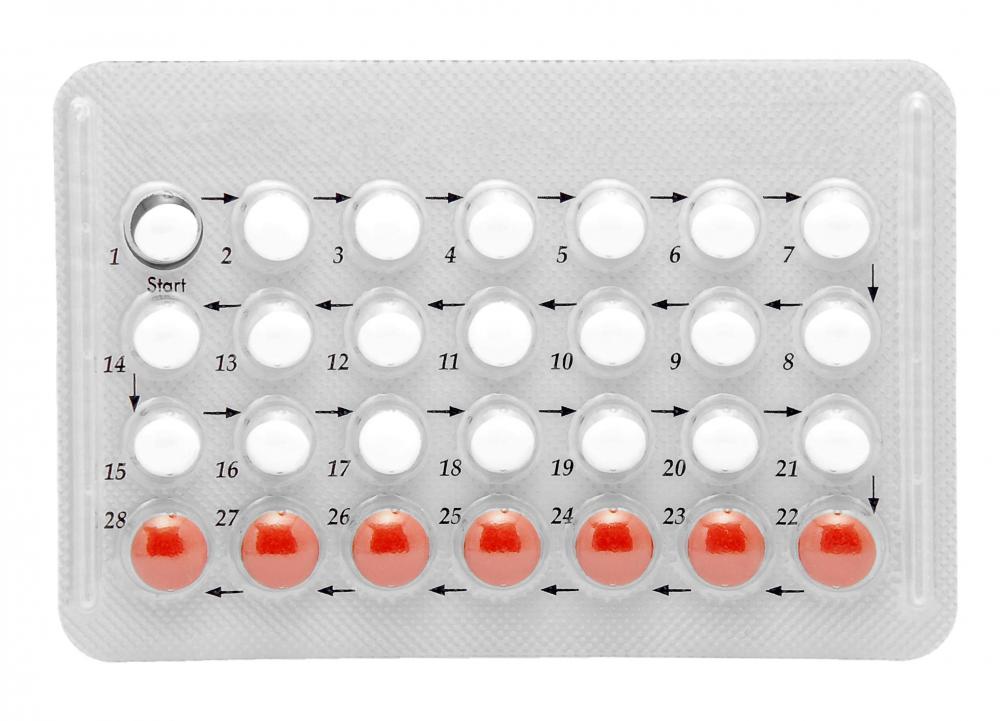
![Birth control pills contain hormones that prevent pregnancy.]() By: cristi180884Birth control pills contain hormones that prevent pregnancy.
By: cristi180884Birth control pills contain hormones that prevent pregnancy. -
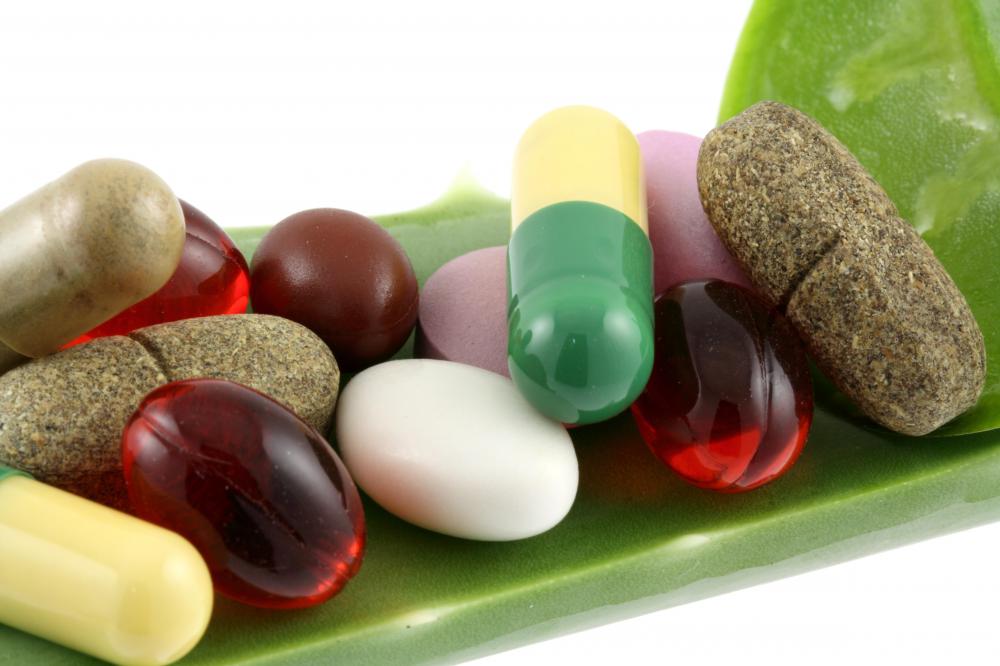
![Doctors sometimes prescribe hormonal supplements to correct imbalances.]() By: UnclesamDoctors sometimes prescribe hormonal supplements to correct imbalances.
By: UnclesamDoctors sometimes prescribe hormonal supplements to correct imbalances. -
![Hormones change drastically during puberty.]() By: Anna OmelchenkoHormones change drastically during puberty.
By: Anna OmelchenkoHormones change drastically during puberty. -
![Steroids affect physical development through old age.]() By: ArtanikaSteroids affect physical development through old age.
By: ArtanikaSteroids affect physical development through old age. -
![The hormone melatonin promotes sleepiness.]() By: AriwasabiThe hormone melatonin promotes sleepiness.
By: AriwasabiThe hormone melatonin promotes sleepiness. -
![Melatonin is a hormone secreted by the brain's pineal gland.]() By: ZerborMelatonin is a hormone secreted by the brain's pineal gland.
By: ZerborMelatonin is a hormone secreted by the brain's pineal gland.



Discussion Comments
What are the three types of hormones?
why are estrogen and progestin hormones not digested when taken as pills, whereas insulin gets digested if taken in the form of pills?
enzymes are used to break food down, whereas hormones carry messages from glands to cells to maintain chemical levels in the bloodstream that achieve homeostasis.
i want to know at what age does menopause start, because i have a friend who acts as if she has entered the stage of menopause.
I recently visited an Indiana hormone optimization doctor, and was amazed by the level of quality care I received. Hormone optimization is so under the radar and should be practiced more by regular physicians.
could you tell me why an excess amount of hormone secretion causes harm to our body or causes disorders?
To Priya Malhotra, I believe you might be thinking of one of human hormones called serotonin, which by the way animals have also.
if your friend is losing her hair she is probably hypothyroid type 2. Tell her to by the book by Mark Starr Hypothyroidism type 2 and it will help her a lot.
Actually I wanted to know what are feel good hormones called?
one of my friends has a problem about losing her hair. She is 48 years old, but she started losing her at age 38.
I'm planning to get a shot for my acne. i didn't mention this but I'm a boy. Will the stuff in the shot or pills i take affect my growth in the private area.
- Do hormones degrade quickly after their function is over?
- does any hormone act on the organ which secretes it?
I want to know if there is hormone problem that can cause skin problems and if it is so, then what is the remedy for that.
I'm a 35 year old male who lifts weights. I bought some HGH online which says to take three a day before bedtime. My question is, is it okay to take them before or after I weight train? And how long will it take before I see results? The Band (GHR 1000 month supply)
I'm 17 years old and i'm pretty small compared to my friends. My father has pretty average body hair but I have very small hairs all over my body. So I don't know if it has something to do with hormones and if it does can I take hormones? Is there a too late age for man to use hormones to grow? - Danny
I would like to know if a women who is in menopause
can get pregnant. I was skinny after i gave birth to twins, and now i have noticed my stomach is getting big like if i am pregnant. i feel like when i became pregnant with twins. could women really get pregnant, even though in menopause?
I have a family member who may have to have her ovaries removed. She believes that the loss of hormones before menopause could be really harmful, however the hormone pills she would be taking can supposedly cause breast cancer. i was wondering what the medical disadvantages of losing the hormones before menopause would be?
What are my chances of getting pregnant while on birth control?
what is the difference between hormones and enzymes?
This is in response to post made by Marshamello. I have the same thing! I feel great those couple of days before,but the rest of the month i am lousy. I had an ovary removed about 8 years ago and was told that my other ovary would take care of hormones for the missing one. But I think i need something, my doctor has told me I do not. Please if you find out, let me know... Maybe time to change Dr's.
hi my name is Nelmar Ranchez from yuba california i'm just wondering if you can help me to my problem i been planning to take a hormones but i don't know what im going to do. Anyway i'm a gay i hope you can help me to my problem. The reason why i want to take hormones its because my friend told me to take hormones and he said if ever im going to take hormones im going to be look like a girl.
There is a chemical or hormone released in the body one or two days before I get my period each month. I would love to know what it is and in which foods I might find it. It's a powerful chemical or hormone that gives me energy, makes my skin and hair look great and makes me feel good. I've been tracking my periods for about ten years now and I know my patterns and my body and this chemical is real. Do you know what it is? Thank you.
anon 17825 - True, glucagon is the less known counterpart to insulin. It springs into action, and is being secreted when blood level sugar is low, among other occasions. However, diseases associated with glucagon, even though they do exist are rare, as opposed to the prevalent insulin related diabetes.
Why do most people talk about insulin, but not glucagon? Kind of like talking about Tom but not Jerry!!!
my dad is 79 years old and he went for routine blood work and was told he needed hormones. why as he is in great shape and has no pains or such? please help us understand why this is and this one medicine was over $500!!!!!
I am approaching peri-menopause and have spent some time looking for sites with good information on what my body is likely to experience. Coincidentally, a colleague of mine is making a documentary film whose purpose is to gather stories & research and to interview top physicians in the field in order to present good, up-to-date information regarding menopause and hormones to the general public. I know that I feel comforted that something like this is being done to address a critical women's health issue.
Kind Regards, Sheila Brennan
What is interesting is that hormones travel from endocrine glands to targeted organs through bloodstream. They do not pass through any kind of special passages.
Post your comments