
At TheHealthBoard, we're committed to delivering accurate, trustworthy information. Our expert-authored content is rigorously fact-checked and sourced from credible authorities. Discover how we uphold the highest standards in providing you with reliable knowledge.
What are Gum Grafts?
 Mary McMahon
Mary McMahon
Mary McMahon
Gum grafts are dental procedures used to replace receding gums. A number of things can contribute to gum recession, including periodontal disease and excessive toothbrushing, and while the problem starts out as cosmetic in nature, it can lead to serious health issues if not addressed. Grafts use either soft or hard tissue, depending on the location, to restore the gum line. Because recovery is painful, patients should plan to take some time off after the procedure to heal.
The dental term for gum tissue is gingiva, and there are actually two types of it in the mouth. Gingiva mucosa is soft, flexible tissue, while keratinized gingiva is a much harder, designed to protect the roots of the teeth. When gums begin to recede, the soft tissue usually disappears first. If caught early, a soft tissue graft can be performed with tissue from other areas of the mouth or another donor. This will restore the gum line, and by working with a periodontist, the patient can prevent it from happening again. If the gums have deeply receded, a connective tissue graft may be needed. Connective tissue grafts user firmer gingiva to protect the fragile areas of the teeth.

Most gum grafts are performed for health reasons. When the roots of the teeth are exposed, it can lead to cavities and infections, which can potentially pose health risks for the rest of the body. In extreme cases, receding gums can lead to bone loss in the jawbone, which will require painful and lengthy bone grafts to regrow. In other instances, the recession is minor, but aesthetically troubling, and the patient receives grafts to even out the appearance of the teeth and gums. Usually, a dentist or periodontist will suggest that a patient may want to consider gum grafts. The patient will be referred to another practitioner if the primary doctor does not offer them in his or her practice.

Like other grafting procedures, gum grafts take time to heal. The oral surgeon will provide directions for care, which commonly include using saline rinses, special mouthwash, and eating a restricted diet. The healing process may be accompanied by pain, which is addressed with moderate use of painkillers. Regular dental checkups will be required for several years after the procedure to ensure that the grafts have taken correctly. During the checkups, general oral health will also be assessed, and the dentist may make additional recommendations for dental care.
Mary McMahon
Ever since she began contributing to the site several years ago, Mary has embraced the exciting challenge of being a TheHealthBoard researcher and writer. Mary has a liberal arts degree from Goddard College and spends her free time reading, cooking, and exploring the great outdoors.
Learn more...
Mary McMahon
Ever since she began contributing to the site several years ago, Mary has embraced the exciting challenge of being a TheHealthBoard researcher and writer. Mary has a liberal arts degree from Goddard College and spends her free time reading, cooking, and exploring the great outdoors.
Learn more...AS FEATURED ON:
AS FEATURED ON:


-
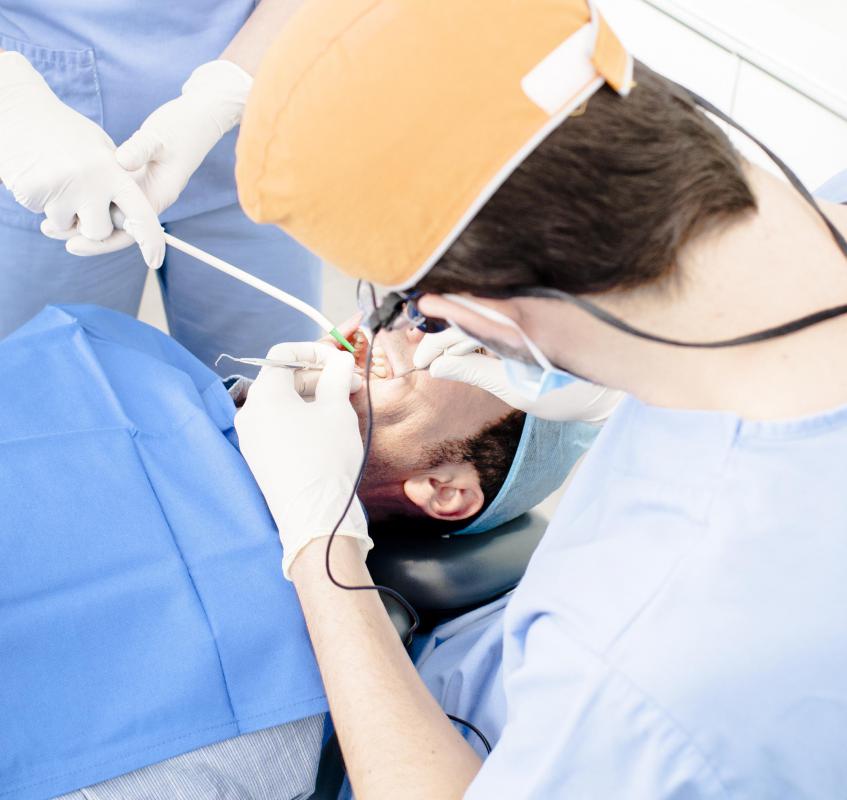
![A gum graft procedure is painful to recover from.]() By: HconQA gum graft procedure is painful to recover from.
By: HconQA gum graft procedure is painful to recover from. -
![Most gum grafts are performed for health reasons.]() By: yanmingzhangMost gum grafts are performed for health reasons.
By: yanmingzhangMost gum grafts are performed for health reasons. -
![Eating disorders such as bulimia may cause receding gums, necessitating a gum graft.]() By: Sylvie BouchardEating disorders such as bulimia may cause receding gums, necessitating a gum graft.
By: Sylvie BouchardEating disorders such as bulimia may cause receding gums, necessitating a gum graft. -
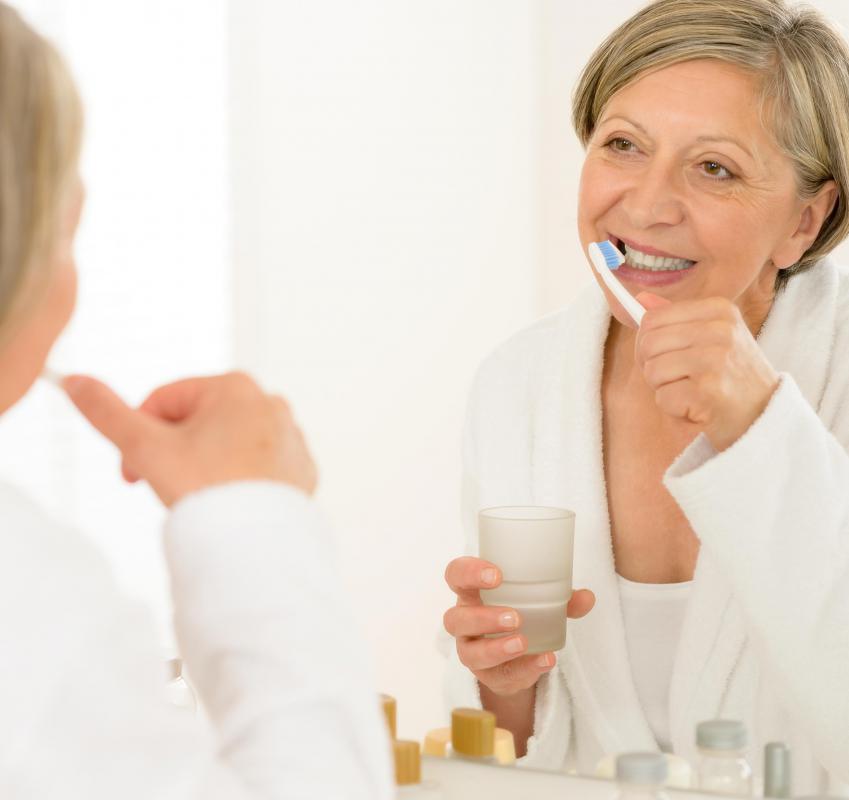
![People who brush their tooth excessively may experience receding gums.]() By: CandyBox ImagesPeople who brush their tooth excessively may experience receding gums.
By: CandyBox ImagesPeople who brush their tooth excessively may experience receding gums. -
![Gum grafts may be done to even out the appearance of the teeth and gums.]() By: vetkitGum grafts may be done to even out the appearance of the teeth and gums.
By: vetkitGum grafts may be done to even out the appearance of the teeth and gums. -
![Smoking cigarettes may increase a person's risks of developing gum disease, which may lead to receding gums.]() By: illustrez-vousSmoking cigarettes may increase a person's risks of developing gum disease, which may lead to receding gums.
By: illustrez-vousSmoking cigarettes may increase a person's risks of developing gum disease, which may lead to receding gums.




Discussion Comments
There's a new procedure called PRP, platelet rich plasma, done in Boston. There's no donor site; they use collagen membranes with bone material, so it's a gum and bone graft in one. It's perfect for people with bone loss as well as gum recession. Half the mouth can be done in one visit, as many teeth on one side as you need. The cost is comparable to regular gum graft procedures and there is no pain at all. It is definitely worth looking into!
Great post. I was looking up dental implants when I came across your post. Thanks so much for sharing such informative details on this. I will have to pass this along.
I've done the procedure four times and it's not that bad. The first two days are the worst and definitely require the prescription pills. After that, over the counter meds are fine. Make sure they make you two stents. Use one to eat and the other for daily activity. Food will stain it and make it noticeable. Take four Motrin before the procedure so the pain isn't so bad and it holds you down until you're home and can take the prescribed narcotic.
The main discomfort is feeling pressure in the gum where the graft was performed. You're limited to soft foods for about a week but the results are worth it.
I had it done a few days ago, two teeth. The pain wasn't too bad, but it looks necrotic now so I have a feeling it has failed.
I am taking antibiotics because I was concerned about swelling, but it doesn't look good at all. My last one went well and it still looks great which was done by a general dentist. Go figure. This time a periodontist did it and I think he did a poor job.
Right now I'm using chorhexidine rinse, antibiotics, and advil for swelling.
If you live in the U.S. and cannot afford dentistry, you need to read my post. Last Thursday, I got to the fairgrounds at 9 p.m. to wait in the freezing cold until 5 a.m. when the doors opened. There were 2,000 people in line that day, abd I was number 94.
Yes it was totally miserable waiting in the cold for so many hours, not knowing what would happen. My pain radiated from two bottom teeth, to my jaw and would come and go similar to labor pains. It had infected my sinuses and my cheek hurt so bad, and there I was in line with 2,000 other people to see one of 200 dentists who were volunteering their time to help people like me (couldn't afford to see a dentist).
If you are hurting, first try to get a prescription for antibiotics today! You can die from an abscess, or have permanent brain damage, so go find a way to get a prescription. The ER room to pay later is expensive, but could save your life. Now check to see if there is a mission of mercy clinic soon in your state. They do fillings, extractions, make partials and much more absolutely free of any charge. And they do not treat you badly. All of them greet you and they even provided coffee and breakfast. This event will not provide narcotic drugs for pain, but they do provide antibiotics, and non narcotic pain meds also free of charge.
O.K., I am in pain right now from my two extractions, but the pain I am in does not outweigh the pain I was in prior to my extractions. That's Mission of Mercy and there are lots of web pages on M.O.M. It was worth the wait in line for me. My mission today is to spread the word so more people can be helped.
I'm very surprised so many people had a bad experience! It scared me a lot. But I had a gum graft done five days ago on two teeth, and it didn't feel like anything. I took a sleeping pill before going in, but was completely conscious of everything. Felt like nothing other than a few pinches from the needles to numb the area. After the surgery, I took ibuprofen 600mg (my perio was really prepared, and already had it for me at the office without me having to even ask for it). And I went home without any pain and minimal swelling. My face swelled up like a balloon the next day, but still didn't feel any pain. I didn't even take any pain meds! but i looked horrible. But I'd rather have that than to be in a lot of pain.
So generally, this gum graft procedure was a pleasant experience. Minimal pain. Slept like a baby that night. And the other nights afterward. The only downside is the horrible swelling.
It's unfortunate that many of you report burning at the roof of your mouth. My perio sutured a dressing onto it, so I don't feel any pain. The site of the gum graft also has a dressing, so even if i try to lift it up and see how it looks, i wouldn't be able to see it. But I'm so scared that it will fail, hearing all the stories! I hope that my gum graft is successful. Paid a load of money for it, and would hate to have to pay that money again! and I'm sick of drinking soup and eating pudding and potatoes.
Due to genetics, late braces, and extractions. Had an allograft done a week ago on eight teeth. Some discomfort the first night. Used plenty of ice packs the first 24 hrs. Taking antibiotics since day one. Salt rinses after each meal and Rx rinse twice per day. Healing good but will know graft results in a week. Female 41 year old.
I had hard a tissue graft upper and bottom left. they removed the tissue from the roof of my mouth on left side. I take pain killers for the discomfort and the burning. Today the craft fell out from the bottom tooth I am so upset with all I have been through. I cried. My doctor is out of town and won't be back for five days. What will happen now to my implant and will he be able to do another graft next week?
I had this procedure last week. It's horrible. The procedure did not hurt while I had it done because I had some valium and "laughing gas" together and it went fast and didn't feel a thing.
That night the roof of my mouth guard fell out and I called the dentist. He said it's OK don't worry all is well. Well after one week I'm still in misery, and can't stand it. I will never have this procedure again ever.
Today my mouth is red and irritated I called to see if I can get antibiotics and the dentist says I don't need it. If I had known it would be this bad I would not have done it. Horrible, horrible, horrible. If you are a person who needs this, investigate other methods.
Had two soft tissue grafts done on my lower canines almost two weeks ago. If I could turn back time, no way would I have done this. I wear a lower partial for missing molars, and at age 49 I'm trying to keep my other lower teeth as long as possible. I feel terrible, and afraid I did this for nothing. The pain isn't as bad as the first five days, but now my gums feel funny and they are constantly sore/burning. I may have been better off just leaving my mouth alone.
Tomorrow will be my third graft procedure in four years. First two were with a different period, but this one seems good too.
I have a decent tolerance for pain, and these haven't been all that bad for me, although the bleeding on the first day is always a bit frightening. I usually use a cool tea bag to help control the bleeding.
After about eight hours the bleeding is usually completely under control. The recovery is long, but you might as well go easy since you don't want to have to do this again. Let's hope this one goes as well as the last two.
The one day on steroids really helped. I can talk without my palate guard and no pain. I still must eat with it on and can only chew on the sides but at least I am eating soft solid food.
My only concern at this point is I don't have complete coverage on at least three of the six teeth. The doctors assistant told me the new tissue will continue to grow and should cover more of it.
I go to the doctor on Tues so I will get more info then. I sure as hell do not want to do this procedure again-it was the worst pain since my major knee surgery in the late 60's. I'd love to hear how everyone else is doing!
I had my gum graft (six bottom center teeth) nine days ago. I normally have a pretty high pain threshold but this was off the charts. Someone described it as brutal and it has been. I took vicodin, 800mg of ibuprofen, and it didn't touch the pain. Ice helped some.
I started antibiotics six days after the surgery. I couldn't eat or drink without the stent but it was still awful. I've had bleeding two times: once from the donor site and twice from the graft site.
My doctor put me on a steroid (today) which I took every three hours and finally got relief. The swelling went down and I am able to talk almost pain free.
My doctor said most people do not have this kind of severe pain.
I found a blog site where almost everyone said it was easy. I didn't believe my doctor until I read those posts. I have been sleeping on the couch so as not to disturb my husband when I have to get up to take more meds, rinse etc.
I was in a fog of pain until today. We will see how tomorrow goes since the steroid was a one-day deal.
I am on day five and this has got to be the worst pain I have ever experienced. Days one and two after the procedure I felt the best, but since the swelling and pain in my lower jaw is horrible! Advil and Vicodin have not even come close to taking the edge off.
I was supposed to have follow up tomorrow morning and the dental office called to cancel because the doctor is sick. How am I going to last through the weekend.
I am one day five and keep on waiting for it to get better. Each day is a new hell. I have swelling and burning and absolutely everything hurts. I could drink liquids on the first few days but now that the plaster has fallen off the roof of my mouth, even drinking is painful.
I ran out of pain meds and am going out of my mind. Tried aleve and it does nothing. I keep checking the boards to see when I can start expecting to feel better. I thought surely I would be eating solids by now!
I had my third gum graft three days ago. The first one went very well. No pain during the procedure and just mild discomfort after. I did get sick from the combination of pills doc had me on: antibiotic, prednisone, high dose advil, vicodin. Make sure the doc gives you an antibiotic you are familiar with and you are sure won't make you ill.
The second procedure also went well. He changed the antibiotic to one I am used to and no prednisone this time made all the difference. Everything went very well. Did not get full coverage this time on a few teeth. doc said it could be because of bone loss and the graft may not take as well so he just regrafted those teeth to try to get more coverage.
This time went well, too. If you need a graft I suggest not putting it off as long as I did. I had 14 teeth done and four may not have gotten the best coverage because I waited too long. Other teeth came out beautifully.
I have serious apprehension about any work done in my mouth and I survived! It was not perfect, there was discomfort but it was worth it to see healthy gums again!
Had the procedure done this morning. I was very nervous after reading some of the posts here. Well, doc numbed me very well and it did not hurt one bit. The sound of the drill used to resurface my teeth and the grinding sound of my gums did bother me but I simply turned up the volume on my movie to drown it out.
Thank goodness they covered my eyes with a towel so I could not sneak a peek. It is 10 hours after the surgery and I have not felt any pain yet. I am only taking 800mg of Motrin for the swelling. I am doing great. The gum line is pretty. My retainer is doing a great job for the cut out on the roof of my mouth.
I would do this again, and I need three more grafting procedures to fix my gum lines. Good luck all!
I had a connective tissue graft done on #11 five days ago. I am what you would consider a dental veteran. I've had braces, one prior free ging. graft, four ortho extractions, and orthognathic surgery. This was by far the hardest thing I have every done. More extreme than foot surgery and they did both mine at the same time! Be prepared for pain meds, soft diet, you won't want to talk much. Still having spontaneous pain and swelling, Yes, I would do it again because the results are worth it.
This is my 11th day after my connective tissue graft surgery. I've had very little actual pain, but discomfort for several days afterward. My worry now is that the graft hasn't worked correctly. One side looks good, but the other side definitely does not. I still see some root of my tooth and the sensitivity to hot/cold hasn't changed. Will the new tissue grow and cover the root of my tooth?
I had gum implant one week ago. Very sensitive the first day and used acetaminophen and ibuprofen twice on first day and once on second day. Needed to be very careful of what I put in my mouth and ensure all food was on opposite side of graft and palate incision. But no further "pain" although achy.
This week the pain increased and I periodontist thinks I may have some infection, so on antibiotics for a week.
Procedure was recommended a year ago and I chickened out but wish I'd had it done as there were fewer problems then and no infection in my pocket!
I had one gum graft done almost three weeks ago and am still experiencing a lot of discomfort - a new place in and around the incisions every day. It has totally disrupted my life and I don't think it has been successful. I strongly recommend not to have this procedure done. I feel like I've aged ten years and embarrassed at having been so deceived.
I am six days post op from having two teeth done. The three xanaxs they prescribed before the surgery helped take the edge off but would have been better if they had put me all the way out. The pain the first day was bad but has gotten better over the last few days. Definitely need to take some time off if you have this done.
As for cosmetic, some insurance companies consider it cosmetic and some do not. I was lucky and mine was covered. Oh, the retainer you wear? Yuck. I'm ready for that to come out! I guess it depends on your own situation how well it goes. It's definitely not a "simple" dental procedure.
i was terribly anxious about having a connective tissue graft done -- the first of three procedures required for me.
Well after much procrastination, i finally made the appointment and you know what? I had no issues. My periodontist did a superb job in placing a gel bandage on my palate, and a gel bandage and sealant around the graft.
i took acetaminophen and ibuprofen around the clock on day one but required no other analgesics. My pain is 0/10 and i generally have a very low tolerance to pain!
I had the procedure five days ago. This is the most pain I ever had from a dental procedure and I have had an implant put in and one removed. My mouth swelled up to the size of a baseball and is still swollen.
I have trouble eating, drinking and talking. The pain meds did not touch the pain. I know I need more done and I am second guessing doing this again.
I am 10 days post recovery. This was truly brutal. Painful because of the amount and depth of the donor tissue at the top of my mouth. Pain medication doesn't even begin to touch it. Unrelenting pain.
I know that doctors always say "oh don't read the stuff on that internet" dismissively. But the truth is it is a long recovery. It does not help the patient to be judged as wimpy or intolerant of pain.
I do not see many people sign up for this twice, and that tells you something. Plan for 10 days of little food, side effects of pain meds, beverages that sting and some folks wondering how a "dental appointment" could result in so much "discomfort".
Technology and science must come up with a better way to facilitate a less brutal solution.
I just had my second oral graft in less than 10 years. My boyfriend accused me of having cosmetic surgery, but I hardly agree. The first graph I had was several years ago only above 1-2 teeth. It was nothing compared to the latest one, over 7 teeth. It has been a week and I am still in some pretty moderate pain. It's not what I would call acute or severe but definitely throbs enough to make you not be able to think about anything else but it. I was given Mepergan Fortis and it doesn't even completely knock out all the pain. I tried to get out of this by getting a second opinion from my regular dentist in addition to what my periodontist told me. Problem is, the receding tissue can go badly quick, so even though I wasn't having any problems or sensitivity in that area yet, I had already lost a lot of the alveolar tissue. Decided it was better to go ahead while I was in good shape gumwise to have this done so the chances of healing would be greater. Or at least that is how my docs explained it to me...
is this procedure considered a cosmetic one??
Post your comments