
At MyLawQuestions, we're committed to delivering accurate, trustworthy information. Our expert-authored content is rigorously fact-checked and sourced from credible authorities. Discover how we uphold the highest standards in providing you with reliable knowledge.
What are Good Samaritan Laws?
 Tricia Christensen
Tricia Christensen
Tricia Christensen
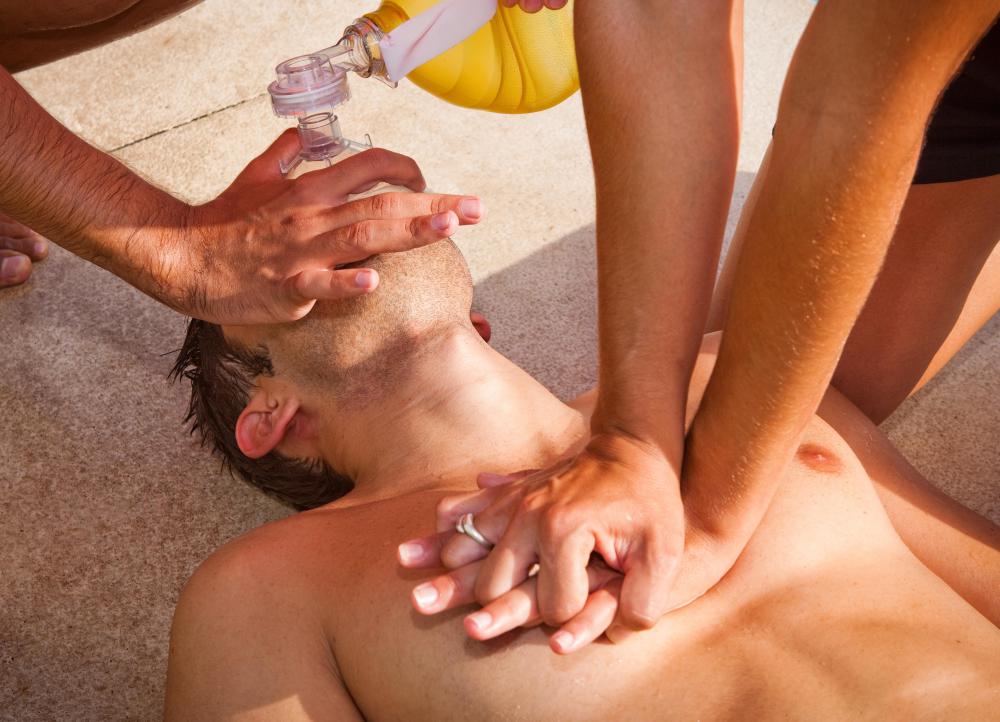
Good Samaritan laws are laws enacted by individual states, in most cases, which protect a person who renders cardiopulmonary resuscitation (CPR) or other medical aid, from frivolous lawsuits. The intent of these laws is to make it possible for those wary of lawsuits to help save a person without fear of legal recourse if the person is hurt by the treatment or dies.
Often, Good Samaritan laws may apply only to medical professionals or those who have completed Red Cross training or the equivalent in CPR. The helping person must act with the person’s consent, when possible, and this must be an entirely voluntary act. These laws do not apply to medical personnel working in a hospital, for example. Even when help is voluntary, these laws do not mean that a person cannot ever be sued for performing CPR that goes wrong.

Most Good Samaritan laws call for the helping person to act in a prudential and responsible way. A medical professional who acts in an irresponsible way, or who can be shown to be inebriated while delivering care may still be subject to a lawsuit if the outcome of the help is not favorable. This can only occur when negligence can be proven.
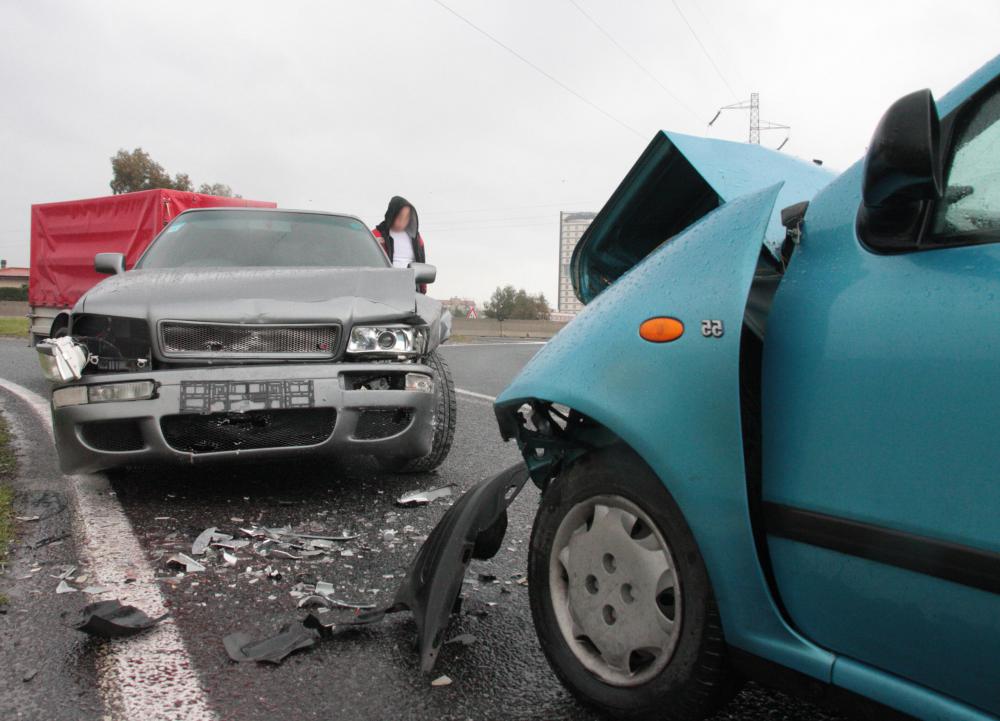
In some cases, Good Samaritan laws may also apply to people without medical training, who attempt to act for the good of the person who might reasonably die without intervention or treatment. For example, a Good Samaritan pulls a person out of a burning car that has been involved in an accident. To not act would surely cause the person’s death, but acting might mean the car crash victim is then paralyzed.

In most cases, the person pulled out of the car could not sue his or her rescuer because of Good Samaritan laws, or simply because of good sense. If, however, the car is not burning and there is no imminent threat to the person in the car, moving the person could result in a lawsuit, since it is medically irresponsible to do so.
Most people wish to be a Good Samaritan in the event of an emergency, but an being in a state of emergency can heighten mistakes of people who are not trained. In an emergency, it is most important to only act when someone more qualified than one’s self is not present. For example a person with CPR training should give way to a doctor in a choking emergency, since a doctor is probably better at performing CPR.

To recklessly push aside the doctor and persist in performing CPR would be considered negligent and not prudent. It might result in a lawsuit should a death or major injury occur. Good Samaritan laws do not protect people against reckless behavior during an emergency even if one’s intentions are good.
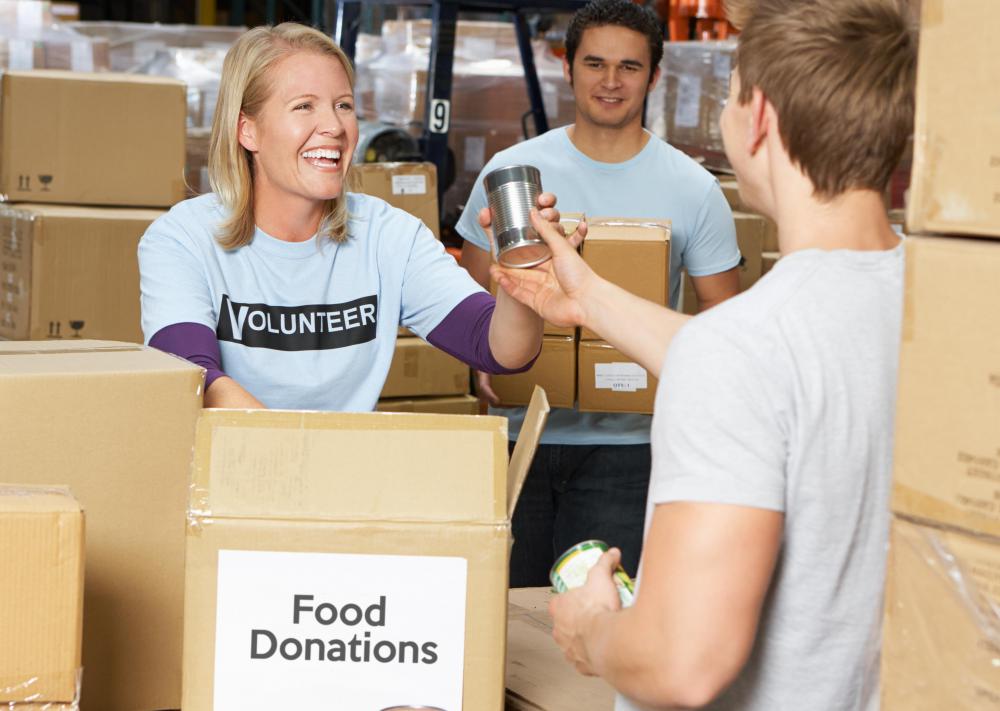
Similar laws exist on the federal level as well. These laws protect grocery stores, food companies and individuals from liability if food donated to a shelter or food program for the poor makes people ill. These laws only apply when the donor acts in good faith and does not willfully donate foods that are known to be past their expiration date, damaged, or contaminated.
Tricia Christensen
Tricia has a Literature degree from Sonoma State University and has been a frequent MyLawQuestions contributor for many years. She is especially passionate about reading and writing, although her other interests include medicine, art, film, history, politics, ethics, and religion. Tricia lives in Northern California and is currently working on her first novel.
Learn more...
Tricia Christensen
Tricia has a Literature degree from Sonoma State University and has been a frequent MyLawQuestions contributor for many years. She is especially passionate about reading and writing, although her other interests include medicine, art, film, history, politics, ethics, and religion. Tricia lives in Northern California and is currently working on her first novel.
Learn more...AS FEATURED ON:
AS FEATURED ON:


-
![Individuals who perform CPR on a person in need are protected from lawsuits by Good Samaritan laws.]() By: davilesIndividuals who perform CPR on a person in need are protected from lawsuits by Good Samaritan laws.
By: davilesIndividuals who perform CPR on a person in need are protected from lawsuits by Good Samaritan laws. -
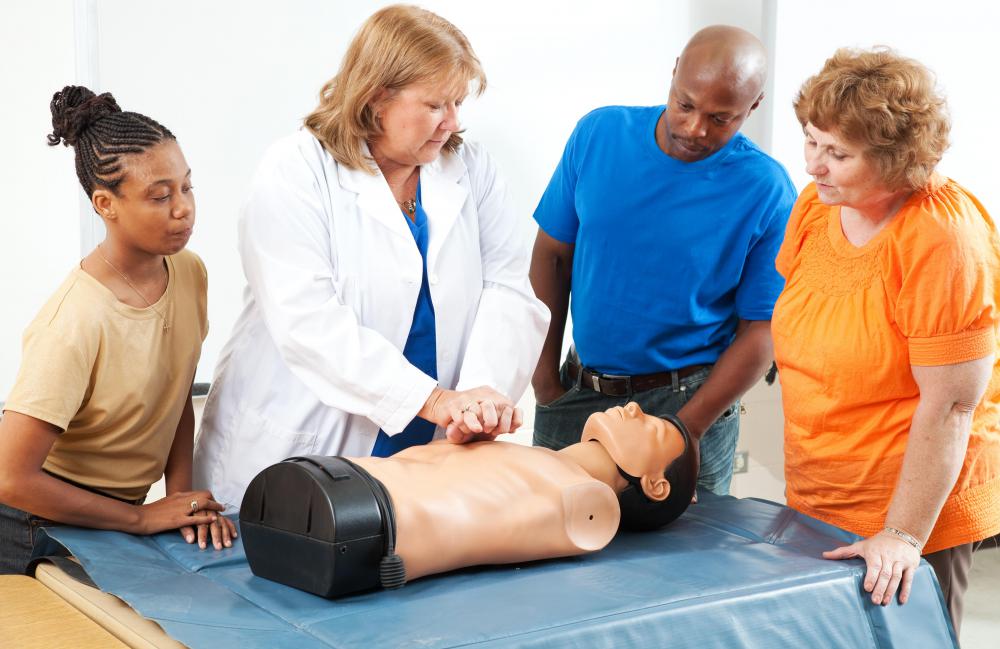
![Those who lack training could cause harm if they attempt to administer CPR.]() By: Lisa F. YoungThose who lack training could cause harm if they attempt to administer CPR.
By: Lisa F. YoungThose who lack training could cause harm if they attempt to administer CPR. -
![Good samaritan laws may come into effect when someone witnesses an accident.]() By: lupoalb68Good samaritan laws may come into effect when someone witnesses an accident.
By: lupoalb68Good samaritan laws may come into effect when someone witnesses an accident. -
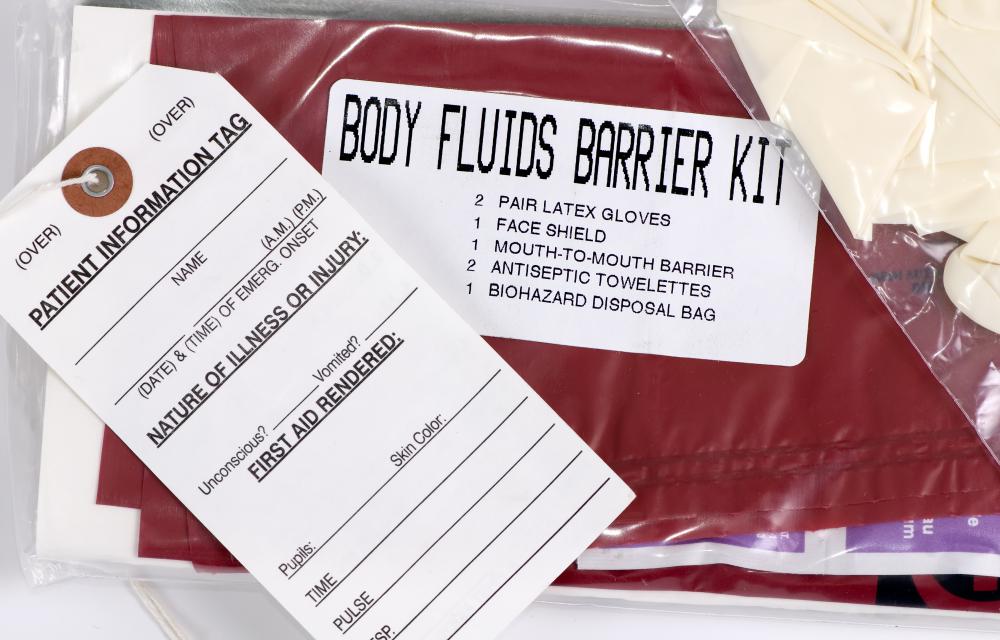
![Good samaritans should always use the proper equipment to avoid bloodborne pathogen exposure.]() By: Thomas PerkinsGood samaritans should always use the proper equipment to avoid bloodborne pathogen exposure.
By: Thomas PerkinsGood samaritans should always use the proper equipment to avoid bloodborne pathogen exposure. -
![Good Samaritan laws can protect food donors from liability if they unknowingly donate food that makes a recipient ill.]() By: Monkey BusinessGood Samaritan laws can protect food donors from liability if they unknowingly donate food that makes a recipient ill.
By: Monkey BusinessGood Samaritan laws can protect food donors from liability if they unknowingly donate food that makes a recipient ill. -
![A person with CPR training should give way to a doctor in a choking emergency.]() By: nebariA person with CPR training should give way to a doctor in a choking emergency.
By: nebariA person with CPR training should give way to a doctor in a choking emergency.

Discussion Comments
Oasis11-I know that Good Samaritan laws are in place to protect people from criminal prosecution by helping those in immediate need or danger.
However, many people have tried to sue the very people that stopped to help and this has caused others to think twice before getting involved.
Icecream17- I just wanted to say that there is also an attractive nuisance law that was set forth to protect children from possible dangers that may attract them to a specific danger.
For example, if someone that owns a pool, they must contain a fence or at least a warning sign regarding the pool so that children won’t jump in the pool and drown.
If you are having a party and children suddenly slip into a pool, or if someone slips and falls at your home you are personally liable under premise liability law.
A Good Samaritan act involves helping a total stranger when they are hurt or injured. For example, a man jumped into the Hudson River, in New York to save a child that had accidentally fallen into the River. The man saved the child and was a national hero and protect from the Good Samaritans Act.
Good Samaritan immunity allows the person offering help the protection of criminal proceeding should something go wrong with the attempted help.
If for example, a student collapses in a school, then a teacher can use a Samaritan Defibrillator called Heartsine in order to save the student’s life without the risk of liability.
This is referred to as Good Samaritan immunity and the teacher does not have to worry about legal ramifications.
Post your comments