
At TheHealthBoard, we're committed to delivering accurate, trustworthy information. Our expert-authored content is rigorously fact-checked and sourced from credible authorities. Discover how we uphold the highest standards in providing you with reliable knowledge.
What are Good Bacteria?
 Margo Upson
Margo Upson
Margo Upson
More than 400 types of bacteria live in the human digestive system. Many of these bacteria types are good bacteria — they help the digestive system to do its job. Beneficial bacteria, like acidophilus and bifidobacterium, may also prevent disease by making an unfavorable environment for less desirable bacteria.
Good bacteria can do several things to promote health. It helps to break down plant starches and other foods that the human body has difficulty digesting. This allows the body to convert more food into energy. Beneficial bacteria also help the body to turn extra calories into fat. This may lead to the idea that a person's inclination towards obesity may be partially due to the type of bacteria in his or her digestive tract.

The human body does not make vitamin K by itself. Bacteria create this, and other essential vitamins, as by-products of the food and other digestive materials they ingest. They also help our bodies to break down drugs and carcinogens, which can cause cancer. This is not the only way that bacteria help to prevent cancer, however. They also help the walls of the digestive tract to renew themselves. This regular renewal gets rid of damaged cells that could lead to cancer.

Although good bacteria find their way into the human digestive system naturally, they don't always remain there. Antibiotics, used for treating illnesses, wipe almost all of the bacteria out of the body, not just the bad stuff. A stomach virus can also drastically reduce the amount of bacterium in the digestive system. The body will build up its supply of good bacteria naturally, but it is also possible to introduce the bacteria through probiotics.

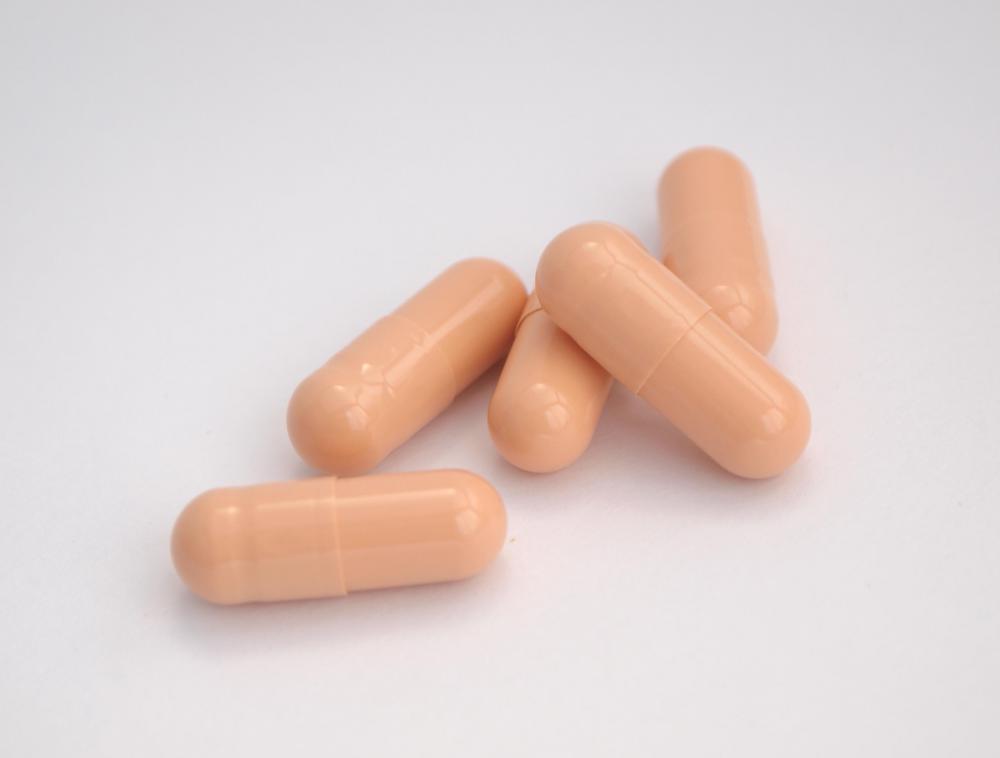
Probiotics are available as nutritional supplements. They are also in yogurt, infants' formula, and some other foods. They are a substance that contains live bacteria, most commonly lactobacillus. When the foods are ingested, the bacteria are deposited into the digestive tract. Probiotics are most beneficial when they are found in yogurt and other products that are kept cold. Heat, too much or too little moisture, or oxygen may destroy active bacteria cultures, making the product less effective.

Good bacteria are essential for good health. They can help to prevent cancer and stomach bugs, and increase digestive times. There have even been studies that prove that regularly consuming probiotics can reduce a person's risk for developing the common cold and respiratory illnesses. Research is being aimed at the possibility of developing probiotics to target specific diseases in the future, perhaps even a cure for the common cold.
Margo Upson
Margo has a varied academic background, which has involved everything from psychology and culinary arts to criminal justice and education. These wide-ranging interests make her an ideal TheHealthBoard writer, as she always enjoys becoming an expert on new and unfamiliar topics.
Learn more...
Margo Upson
Margo has a varied academic background, which has involved everything from psychology and culinary arts to criminal justice and education. These wide-ranging interests make her an ideal TheHealthBoard writer, as she always enjoys becoming an expert on new and unfamiliar topics.
Learn more...AS FEATURED ON:
AS FEATURED ON:


-
![Probiotics contain live bacteria and can help a body build up a supply of good bacteria naturally.]() By: veselabmProbiotics contain live bacteria and can help a body build up a supply of good bacteria naturally.
By: veselabmProbiotics contain live bacteria and can help a body build up a supply of good bacteria naturally. -
![One of the more than 400 types of bacteria that are in a human body at any time.]() By: JezperOne of the more than 400 types of bacteria that are in a human body at any time.
By: JezperOne of the more than 400 types of bacteria that are in a human body at any time. -
![Maintaining a healthy balance of good bacteria can reduce a person's risk of developing respiratory illness.]() By: Lisa EastmanMaintaining a healthy balance of good bacteria can reduce a person's risk of developing respiratory illness.
By: Lisa EastmanMaintaining a healthy balance of good bacteria can reduce a person's risk of developing respiratory illness. -
![Probiotics are found in foods like yogurt.]() By: JackFProbiotics are found in foods like yogurt.
By: JackFProbiotics are found in foods like yogurt. -
![A person's inclination towards obesity may be partially due to the type of bacteria in her digestive tract.]() By: ollyA person's inclination towards obesity may be partially due to the type of bacteria in her digestive tract.
By: ollyA person's inclination towards obesity may be partially due to the type of bacteria in her digestive tract.


Discussion Comments
Cheese has a lot of good bacteria in it. It's also what gives it flavor.
What foods can you eat for good bacteria?
I read recently that one of the ways a baby gets bacteria into its gut is from its mother during the birth. It's kind of gross to talk about but, women generally defecate a little while giving birth, which was always thought of as just an unfortunate consequence and was wiped away because of course doctors and midwives try to keep the birth area sterile.
But, that's the way that the baby gets exposed to the bacteria they need to have a healthy digestive system. One theory goes that by clearing it away doctors are actually making it more difficult for the baby later in life, and this could be linked to higher rates of cancer or obesity.
@musicshaman - I've also heard of a study that looked at obesity rates in people who have polycycstic ovarian syndrome. They discovered that people who had better levels of good bacteria and bad bacteria were more likely to be a healthy weight and it had something to do with the way the bacteria processed the starch in people's diets.
They also discovered that one of the most effective ways of introducing the good bacteria into the diet was through eating a lot of green leafy vegetables. I'm not sure if those vegetables were cooked or raw though.
@copperpipe -- Apparently the University of Maryland did a study on healthy and obese Amish people and compared their gut bacteria.
The study found that those who were obese had less diverse cultures of stomach bacteria, as well as different "taste" genes.
People hope that this could make it easier to control or regulate obesity by introducing more good bacteria into the digestive system of those with obesity.
That's so weird that obesity could be linked to the kind of bacteria in our stomachs. How did people even think to check for that?
I am a big fan of probiotics -- bacteria so often gets a bad rap because of the negative associations with the word, but without the good bacteria, our bodies wouldn't be able to function.
Bring on the l. acidopholus, b. animalis, and l. reuteri!
Post your comments