
At DelightedCooking, we're committed to delivering accurate, trustworthy information. Our expert-authored content is rigorously fact-checked and sourced from credible authorities. Discover how we uphold the highest standards in providing you with reliable knowledge.
What are Glass Noodles?
 Mary McMahon
Mary McMahon
Mary McMahon
Glass noodles are Asian noodles made by combining water with a starch such as potato starch or mung bean starch to create a dough which can be rolled out and cut or forced through an extruder. Classically, the noodles are very thin, although it is possible to find fat noodles in some parts of Asia. These noodles are used in a variety of ways in many Asian nations, including China, Japan, Korea, and Thailand, and they are very popular in areas with a big Asian population, such as Hawaii.
These noodles are also known as cellophane noodles, bean thread noodles, or Chinese vermicelli. The “glass” is a reference to the fact that the noodles turn transparent when cooked. Glass noodles appear in the fillings for dumplings, spring rolls, and other stuffed dishes, and they are also used in stir fries, soups, and salads. Anywhere that a starch like rice or wheat pasta would be used, these noodles can be used.

Producers of glass noodles typically coil the long noodles up into nests for drying, so that the noodles will compact easily for packaging and shipping. Cooks use these noodles by soaking the nest in cool to warm water until the noodles start to soften and pull apart, and then adding the noodles into whatever dish they are to be used in. These noodles cook quickly, so they are usually added at the end to things like stir fries and soups, so that they will not fall apart.

For people who have difficulty digesting gluten, glass noodles are a great alternative to Asian wheat noodles, because they are naturally gluten free. They also have a very mild flavor, and they absorb sauces and flavorings quite readily. As long as they are not overcooked, these noodles have a slightly chewy texture, and they are also quite strong, capable of supporting mixes of large and heavy ingredients such as those found in a stir fry.

Most Asian markets carry glass noodles. You can recognize them in the package because they have a slightly whitish appearance, and they are typically coiled into nests which resemble little packages of Easter grass. As long as the noodles are kept dry, they will keep essentially forever, although it is a good idea to seal packages after they have been opened so that the noodles do not become stale. Dry glass noodles can also pick up flavors from cooking and stored spices if their packaging is left open, so unless you like the thought of meatloaf-flavored noodles, you may want to keep the package sealed.
Mary McMahon
Ever since she began contributing to the site several years ago, Mary has embraced the exciting challenge of being a DelightedCooking researcher and writer. Mary has a liberal arts degree from Goddard College and spends her free time reading, cooking, and exploring the great outdoors.
Learn more...
Mary McMahon
Ever since she began contributing to the site several years ago, Mary has embraced the exciting challenge of being a DelightedCooking researcher and writer. Mary has a liberal arts degree from Goddard College and spends her free time reading, cooking, and exploring the great outdoors.
Learn more...AS FEATURED ON:
AS FEATURED ON:


-
![Glass noodles are popular in many Asian dishes.]() By: paul_brightonGlass noodles are popular in many Asian dishes.
By: paul_brightonGlass noodles are popular in many Asian dishes. -
![Spring rolls sometimes contain glass noodles.]() By: Michael GraySpring rolls sometimes contain glass noodles.
By: Michael GraySpring rolls sometimes contain glass noodles. -
![Glass noodles are naturally gluten free.]() By: ViktorGlass noodles are naturally gluten free.
By: ViktorGlass noodles are naturally gluten free. -
![Thin glass noodles are often combined with other ingredients to make fresh spring rolls.]() By: gloszillaThin glass noodles are often combined with other ingredients to make fresh spring rolls.
By: gloszillaThin glass noodles are often combined with other ingredients to make fresh spring rolls. -
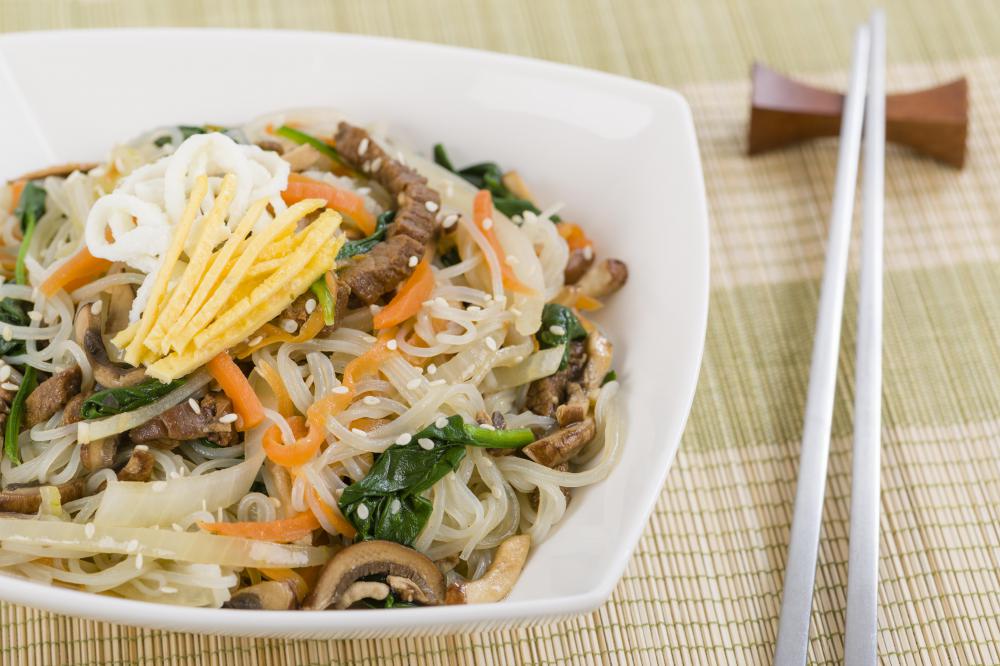
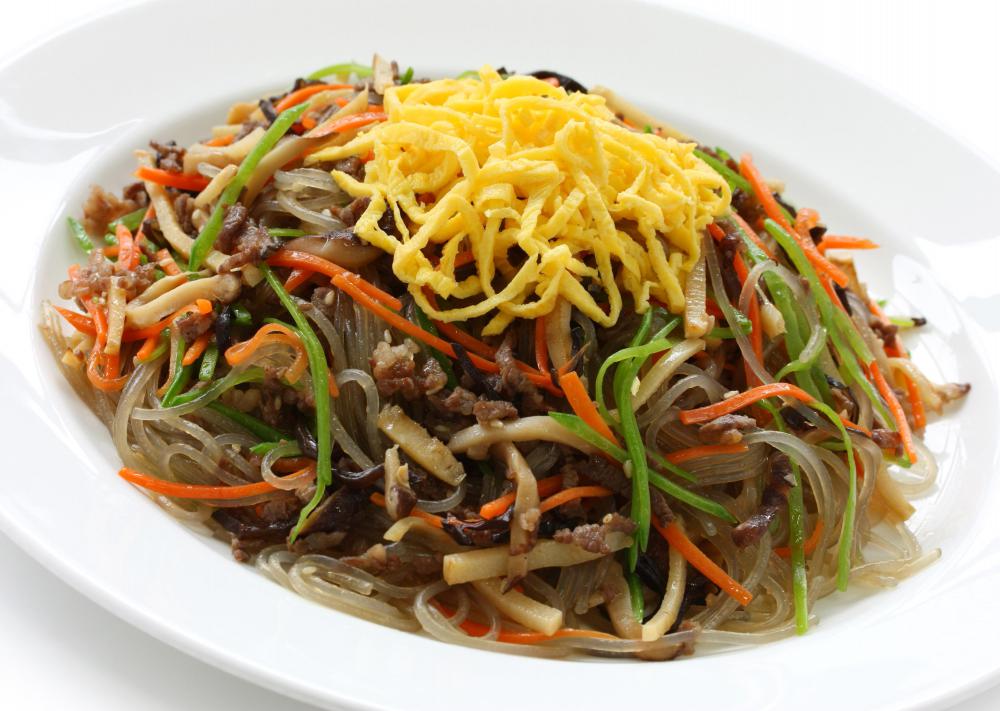
![Bean thread noodles, also known as glass noodles, are used to create japchae.]() By: uckyoBean thread noodles, also known as glass noodles, are used to create japchae.
By: uckyoBean thread noodles, also known as glass noodles, are used to create japchae.


Discussion Comments
@hanley79 - Ooh, spaghetti sounds awesome. I have a serious wheat allergy that led me to quit eating pasta, so I looked up some "alternative" pasta after a friend told me about Korean glass noodles. Even if the sauce doesn't stick very well, this sounds really promising; I'm going to check for them at the grocery store tomorrow. They sell rice noodles and have a pretty big selection of ethnic food, so I'm crossing my fingers that they'll have these glass noodles, too.
Glass noodles take a bit of getting used to if you usually eat wheat pasta; the biggest difference I noticed when I tried glass noodles was that sauces didn't really stick to them. Rice noodles, which I also eat, have the same problem, so I kind of expected it while trying the glass noodles. They tasted great! Like rice noodles, they'll just carry the flavor of whatever sauce or toppings you use. I got the big fat kind of glass noodles and used them to make spaghetti.
Post your comments