
At TheHealthBoard, we're committed to delivering accurate, trustworthy information. Our expert-authored content is rigorously fact-checked and sourced from credible authorities. Discover how we uphold the highest standards in providing you with reliable knowledge.
What are Germ Cells?
 Mary McMahon
Mary McMahon
Mary McMahon
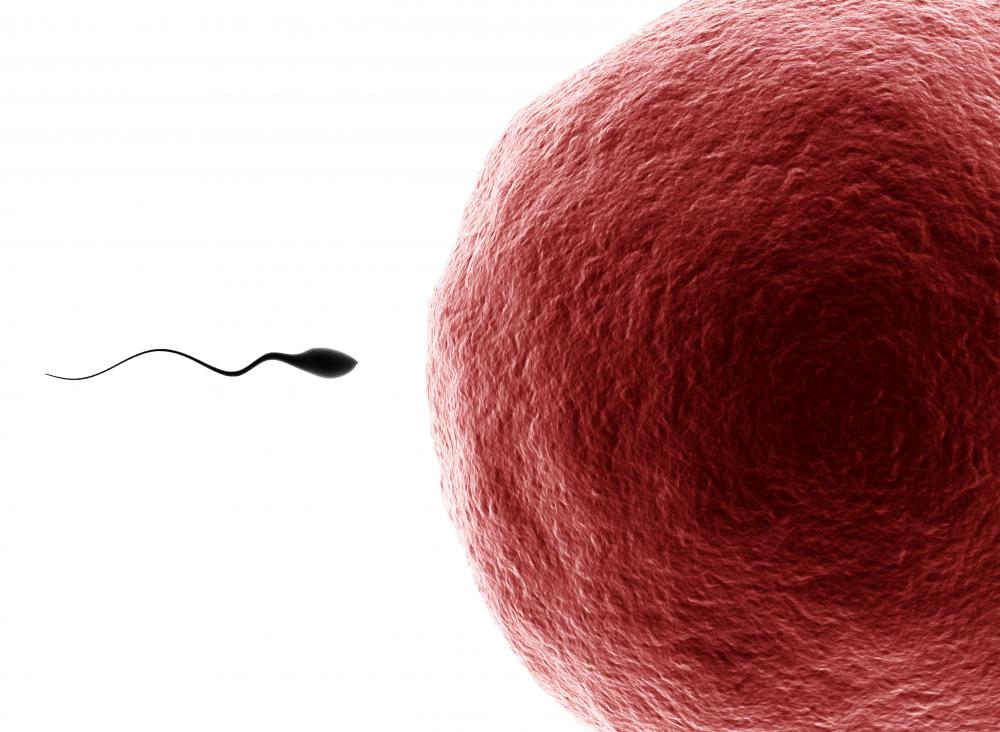
Germ cells are specialized cells which are involved in reproduction. The most well known examples of this type of cell are gametes, the sperm and eggs which come together to create a zygote which can develop into a fetus. In addition to gametes, a number of other cells involved in reproduction are also germ cells, including gonocytes, the cells which regulate the production of eggs and sperm.
All germ cells carry the germline, the genetic material which an organism can pass on to its offspring. In humans, these cells are haploid, meaning that they carry only half the number of chromosomes necessary to create an organism. When germ cells from two different people meet, their haploid genetic material combines to create diploid cells which can replicate themselves through cell division, ultimately building a baby.

Cells which do not carry the germline of an organism are called somatic cells. The bulk of the cells in your body are somatic cells. Somatic cells are diploid, containing all of the information needed to make an organism, and many of them have special tasks. Flaws in somatic cells such as cancers cannot be passed on to offspring, because somatic cells are not involved in reproduction.

In addition to being haploid, germ cells are technically immortal. They are capable of replicating themselves infinitely, unlike somatic cells, which can only duplicate themselves a limited number of times before they start to mutate or division simply fails. However, research has shown that although germ cells are technically immortal, they are prone to errors in the duplication process as they age, which explains why children born to older people are more prone to genetic defects caused by problems with replication.

These cells are involved at every step of the reproductive process. They generate the gametes which have the potential to join with other gametes to create a fertilized egg, and they regulate the cell duplication which allows a fertilized egg to turn into a fetus and eventually a child. Many researchers are very interested in germ cells because they have some potential applications in research and medical treatment. However, germ cell research is sometimes controversial because the cells are often closely linked with fetuses, a hot topic in many societies due to beliefs about when, precisely, life begins for humans.
Mary McMahon
Ever since she began contributing to the site several years ago, Mary has embraced the exciting challenge of being a TheHealthBoard researcher and writer. Mary has a liberal arts degree from Goddard College and spends her free time reading, cooking, and exploring the great outdoors.
Learn more...
Mary McMahon
Ever since she began contributing to the site several years ago, Mary has embraced the exciting challenge of being a TheHealthBoard researcher and writer. Mary has a liberal arts degree from Goddard College and spends her free time reading, cooking, and exploring the great outdoors.
Learn more...AS FEATURED ON:
AS FEATURED ON:


-
![Gametes are germ cells that specialize in reproduction.]() By: CLIPAREA.comGametes are germ cells that specialize in reproduction.
By: CLIPAREA.comGametes are germ cells that specialize in reproduction. -
![In humans, germ cells only carry half the number of chromosomes necessary to create an organism.]() By: Giovanni CancemiIn humans, germ cells only carry half the number of chromosomes necessary to create an organism.
By: Giovanni CancemiIn humans, germ cells only carry half the number of chromosomes necessary to create an organism. -
![After fertilization in humans, a zygote becomes a blastocyst in 5 stages.]() By: designuaAfter fertilization in humans, a zygote becomes a blastocyst in 5 stages.
By: designuaAfter fertilization in humans, a zygote becomes a blastocyst in 5 stages. -
![Eggs are germ cells that are produced in the ovaries.]() By: kocakayaaliEggs are germ cells that are produced in the ovaries.
By: kocakayaaliEggs are germ cells that are produced in the ovaries.


Discussion Comments
@anon183736: I had to chuckle when I read your post, mostly about diet not influencing the sex of the baby. On another topic on this site, someone was wondering if, because she had only one ovary, all her babies would perforce be the same gender. Someone, she said, "told" her that one ovary produced little boys while the other produced little girls. Couldn't believe I was reading that. Goes right back to Henry VIII of England getting rid of wives in hopes of producing a male heir, when in reality, he determined the sex of the baby all along.
Oh, well. C'est la vie!
Germ cell study is controversial due to the fact that they can be manipulated to remove genetic diseases and defects, as well as being used to create 'designer babies'.
Germ cells are gametes, meaning they are haploid cells. Stem cells are different, as they are cells that form shortly after fertilization in the embryo or early fetal stages, meaning these are diploid cells. Germ cell and stem cell research are two different things.
And no, there are no diets or herbs that can be taken to influence the sex of a child, as the sex is reliant on the sperm supplied by the male and whether it contains an x or y chromosome.
Since germ cells are so involved in producing babies, I was wondering if there was any way that you could manipulate the cell to influence the gender of the baby? Does anyone know if there are any special diets you can follow or herbs you can take to do this?
@healthnwell -- Germ cells are only a part of the research. Embryonic stem cells are researched in two different groups, one is germ cells, the other I believe consists of cells called gametes. Kind of confusing unless you are a science major!
The article mentions germ cell study is controversial because of the link with fetuses. Does this mean that germ stem cells are the stem cells that everyone gets so upset about? I mean the ones that they do all the research on?
Post your comments