
At TheHealthBoard, we're committed to delivering accurate, trustworthy information. Our expert-authored content is rigorously fact-checked and sourced from credible authorities. Discover how we uphold the highest standards in providing you with reliable knowledge.
What are Gallstones?
Gallstones are an accumulation of cholesterol and other substances found in the bile that occasionally block a duct connecting the gallbladder and small intestine. One stone can be as tiny as a grain of sand or as large as a golf ball. Many do not cause problems; only 1-2% of those with gallstones develop disease.
Bile is produced by the liver and used to digest fats. When too much cholesterol builds up in the bile or a person’s gallbladder does not empty properly, crystals can form. Symptoms of gallstones include pain in the stomach or just under the ribs. Often, the pain can make it difficult to breathe or get comfortable. The pain sometimes occurs after a meal, can last several hours, and can even wake a person from sleep.

When a stone blocks the duct that drains the gallbladder, other symptoms can include nausea, vomiting, and fever, in addition to pain. Some patients must have surgery to remove the gallbladder. Occasionally, gallstones can cause another condition, pancreatitis, which blocks the flow of digestive enzymes produced by the pancreas. In this case, the symptoms are similar: severe pain, loss of appetite, fever, nausea, and vomiting.

Those at risk for gallstones include females, people over 55, those who are overweight or have a high body mass index, and people who lose weight rapidly. People of Native American or Hispanic descent, along with those who get little exercise or fast periodically, are also at risk. Others at increased risk of gallstones have elevated triglycerides, a disease of the intestines, or family members with a history of gall bladder problems.

Pregnant women and those taking estrogen or high-dose birth control pills can also be at risk for developing gallstones. Sufferers of cirrhosis or sickle cell disease and people who take cholesterol-lowering medicines might have an increased risk as well. Any one experiencing severe abdominal pain should see a doctor. People who are over 60 or have a heart condition, diabetes, or an impaired immune system should seek immediate medical attention.
Ultrasounds and scans are used to diagnose gallstones. Medications are not commonly used to treat them, but might be necessary for patients who cannot withstand surgery. When the gallbladder is removed, the symptoms normally do not return.
AS FEATURED ON:
AS FEATURED ON:


-
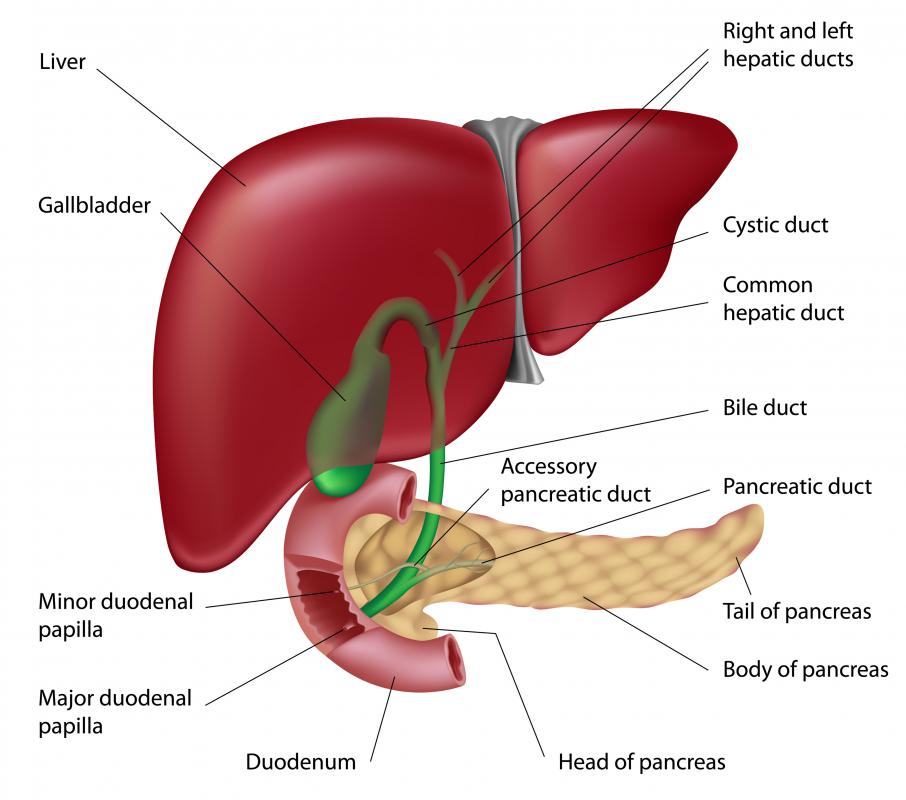
![Several abdominal organs, including the gallbladder, pancreas, and liver.]()
Several abdominal organs, including the gallbladder, pancreas, and liver. -
![A healthy gallbladder and one with gallstones.]() By: AlilaA healthy gallbladder and one with gallstones.
By: AlilaA healthy gallbladder and one with gallstones. -
![Nausea can be an early symptom of gallstones.]() By: ftlaudgirlNausea can be an early symptom of gallstones.
By: ftlaudgirlNausea can be an early symptom of gallstones. -
![An ultrasound can confirm the presence of gall stones.]() By: Alexander RathsAn ultrasound can confirm the presence of gall stones.
By: Alexander RathsAn ultrasound can confirm the presence of gall stones. -
![Women develop gallstones more frequently than men.]() By: Igor MojzesWomen develop gallstones more frequently than men.
By: Igor MojzesWomen develop gallstones more frequently than men. -
![Women who take birth control pills are at a greater risk for developing gallstones.]() By: Kimberly ReinickWomen who take birth control pills are at a greater risk for developing gallstones.
By: Kimberly ReinickWomen who take birth control pills are at a greater risk for developing gallstones.


Discussion Comments
So you've been to the doctor and he diagnoses gallstones. If the gallbladder duct isn't blocked, but you have pain from the gallstones, there are a few natural remedies that you can try.
My friend had gallstones and she tried probiotics, which control cholesterol and triglycerides. She said that she used probiotics and fish oil for a long time to get the gallstones to dissolve and flush out of her body. After all, it took the stones a long time to build up, so they won't go away quickly. She said this option was way better than having surgery.
Wow! There sure are a lot of conditions that put someone at risk for gallstones. But a lot of these risky conditions are caused by lifestyle. You could say that a majority of cases of gallstone are basically caused by unhealthy eating and lack of adequate exercise, and,of course, stress.
The symptoms of gallstones, like vomiting, fever, and nausea are a lot like the flu, but if you get severe abdominal pain on top of these, you should suspect gallstones and get to a doctor.
If for no other reason, we should all eat healthy to feel better and to reduce our chances of getting gall stones. A couple of my friends in college had gall stones and they said it felt like someone was constantly stabbing them in the abdomen. This does not sound like something I want to go through, or anyone else either!
If we can all just pay attention to food labels, we will probably be a lot better off and be a lot less likely to get gall stones. I try to stay away from fried foods because I know they are very unhealthy and I feel like when I do eat fried foods I can feel the grease clogging my arteries instantly! I also try to stay away from high fat desserts.
My Mom says, "if it taste good, spit it out". When I was first eating healthy I basically went by this advice, but now that I eat healthy on a regular basis, I actually love the taste of healthy foods more than unhealthy foods! Just stick with eating healthy, and you will probably eventually find that your taste buds change, and you will actually enjoy and maybe even crave healthier foods.
Just like this article says, if you lose weight drastically in a short amount of time, you can be more susceptible too getting gall stones. If you eat natural foods, like fruits, vegetables, and skinless meat, you should stay pretty healthy. Just don't deprive yourself, especially of the nutritious foods, and don't over-exert yourself with too much exercise. Everything in moderation is key.
My Dad had severe pain in his abdomen, so he went to the doctor and found out he had gall stones. They were many of them, and some were very large, so they decided to have his gallbladder removed. It was supposed to be a fairly simple and quick surgery and procedure, but since he was older it became more complicated.
They got the gallbladder out fine, but since his immune system wasn't as strong, he ended up getting pneumonia, so he had to stay in the hospital for almost an entire month! We were very scared we would lose him at first, but over time he looked better and felt better. Now that that is all over, he is healthier and not having any more abdominal pain.
My dad had a few gallstone attacks before they decided to remove his gallbladder. These attacks would come on very quickly, but it was usually after he ate high fat, greasy foods.
Even though he tried to avoid eating these foods, he still experienced problems, so they finally removed his gallbladder.
I don't know why they didn't recommend surgery after the first attack. I have always wondered what purpose the gall bladder serves when many people get along better once they have it removed.
When I was experiencing some abdominal pain that I never had before, I had to have an ultrasound done to see if I had gallstones.
My ultrasound came back negative, so they proceeded to do another test to see if my gallbladder was bad. If this test came back positive, they would have removed my gallbladder which would have removed the gallstones as well.
Since this test came back inconclusive, they did not remove my gallbladder. My doctor started me on some heartburn medication which cleared up the problem and I haven't had any trouble since.
If you are experiencing any abnormal symptoms like this, I would make sure to get it checked out. There is no reason to continue to suffer and not know what is going on.
@indemnifyme - You should tell your friend. Trust me, she does not want to develop gallstones!
One of my uncles had them, and he was in a lot of pain. He was in a lot of pain. And he also had to have surgery! He lost a lot of time at work and ended up with some pretty high medical bills. Not a fun experience!
I had no idea that fasting periodically could give you gallstones. I feel like I'm always hearing that fasting is supposed to be really good for you, to cleanse your system or whatever.
In fact, I have a good friend that does a juice fast every few months. She's always miserable when she does it, but she claims she feels great afterward. I'm going to let her know she might be at risk for developing gallstones. Maybe she'll stop going on her nutty cleanses.
I had a friend that went on a commercial diet plan with the prepackaged meals and lost so much weight that she developed gallstone symptoms. She eventually had to have the gallstones removed because it was just too painful.
I know that a lot of people would love to have that problem because she lost weight so fast, but she was in a lot of pain. I think that moderation is the key to everything including losing weight.
Post your comments