
At HomeQuestionsAnswered, we're committed to delivering accurate, trustworthy information. Our expert-authored content is rigorously fact-checked and sourced from credible authorities. Discover how we uphold the highest standards in providing you with reliable knowledge.
What are Full Spectrum Light Bulbs?
Full spectrum light bulbs are any of a number of bulbs that produce light that absorbs the full range of colors, and in most cases are designed to emulate sunlight. There is no precise scientific definition for “full spectrum” in this context and it is generally understood to be a marketing term. As such, there can be a great deal of variation when it comes to what, exactly, a bulb carrying this label will deliver. They are popular choices for people with seasonal depression and their brightness and ability to illuminate colors also makes them useful for people who suffer from eyestrain or who need to focus on intricate details, like words on a screen or stitches in a sewing project.
Origins of the Term

The term “full spectrum” was essentially made up by light bulb companies as a way to distinguish products that illuminate all colors from bulbs with a more limited range, like “soft white” or “cool white.” They are called this because, in most cases, they are designed to highlight and intensify colors across the spectrum from neutral to warm to cool, much as the sun does. These sorts of bulbs might also be called “daylight” or “natural light,” depending on the market.
Placement on the Color Rendering Index

One of the most important features of this sort of bulb is its placement on the Color Rendering Index (CRI). The CRI is a measure used by the lighting industry to indicate a bulb's ability to render colors in objects, and different measurements are why some objects look brighter in different types of lighting. Bulbs with an index rating of 90 to 100 are generally the best at simulating the quality of light produced by the sun. There isn’t usually any sort of industry regulation requiring that bulbs labeled “full spectrum” fall within this range, but as a general rule most do.
Importance of Color Temperature

The temperature of the light emitted also factors in. In this instance, “temperature” doesn’t mean how hot the bulb gets, but rather corresponds to the relative intensity of the light emitted. A light source's color temperature describes the color of the light. In general, bulbs with color temperatures of 5000 Kelvin (K) or more produce light that is similar to daytime sunlight.

Standard incandescent bulbs coated with neodymium are a notable exception. These are sometimes marketed under the “full spectrum” name, although they do not usually have a 5000K color temperature. They are usually able to filter out the harsh yellow tint that is common in standard incandescent bulbs, however, which makes them more desirable in many settings.
Marketplace Variations

Full spectrum light bulbs are available in many different sizes, styles, and qualities. There also tends to be a certain amount of variance even within styles. Since there is no standardized definition of what it means to be “full spectrum,” it’s often possible to find bulbs that emit fairly different light all labeled with this common terminology.
Part of the difference may be owing to the sun itself. The sun’s light changes based on atmospheric conditions, time of day, and geospatial location, and it’s all but impossible for a light bulb to reflect this sort of regular change. Manufacturers generally pick one slice of the spectrum on which to focus. Some are broader than others, and some brighter. All have the same general goal of illuminating more than other standardized bulb types, though.
Common Uses
People often choose full spectrum bulbs for use in craft rooms, in lamps used to help see stitching, and in any other context where color and precise illumination are important. This sort of light is also known to reduce eyestrain and screen glare, making is popular for people who spend a lot of time typing or looking at screens. Using these sorts of bulbs in offices, particularly those without many windows, can also help improve mood and brighten spaces that might otherwise feel gloomy. Full spectrum light bulbs are said to not only improve mood, but also energy, learning ability, and behavior.
They are also a popular choice for people who suffer from Seasonal Affective Disorder (SAD), also known as seasonal depression. Many healthcare experts recommend that SAD patients spend a portion of each day in front of a light that mimics sunlight in order to bring their circadian rhythms and hormonal balances back to normal. Not all full spectrum lights are beneficial in this context. Bulbs usually need to emit at least some ultraviolet, or UV, rays in order to be effective; specially designed SAD lamps do, but this isn’t usually true of every bulb in the full spectrum family. Most full spectrum options mimic sunlight in color, but not necessarily in intensity, UV emission, or vitamin absorption.
AS FEATURED ON:
AS FEATURED ON:


-
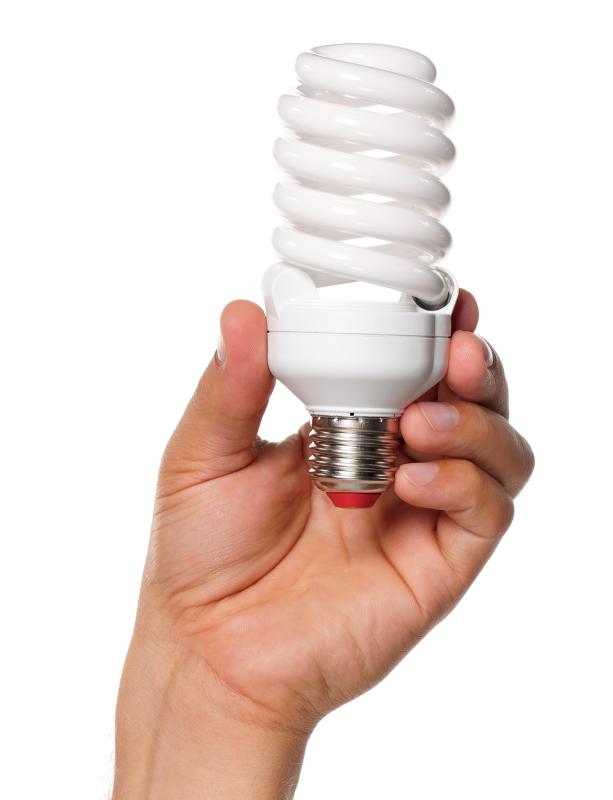
![Full spectrum light bulbs are available in several different forms, including fluorescent.]() By: DenisNataFull spectrum light bulbs are available in several different forms, including fluorescent.
By: DenisNataFull spectrum light bulbs are available in several different forms, including fluorescent. -
![A full-spectrum lamp may help treat seasonal affective disorder.]() By: Igor MojzesA full-spectrum lamp may help treat seasonal affective disorder.
By: Igor MojzesA full-spectrum lamp may help treat seasonal affective disorder. -
![Standard incadescent bulbs coated with neodymium are sometimes marketed under the "full spectrum" name.]() By: iTake ImagesStandard incadescent bulbs coated with neodymium are sometimes marketed under the "full spectrum" name.
By: iTake ImagesStandard incadescent bulbs coated with neodymium are sometimes marketed under the "full spectrum" name. -
![Full-spectrum lightbulbs are designed to emulate sunlight.]() By: Alik MulikovFull-spectrum lightbulbs are designed to emulate sunlight.
By: Alik MulikovFull-spectrum lightbulbs are designed to emulate sunlight. -
![Full spectrum light bulbs may be beneficial for those who suffer from eyestrain.]() By: VoyagerixFull spectrum light bulbs may be beneficial for those who suffer from eyestrain.
By: VoyagerixFull spectrum light bulbs may be beneficial for those who suffer from eyestrain.




Discussion Comments
If you're looking for UV light for SAD or Vitamin D production, you need something that specifically includes UV. Most commercial bulbs don't.
This message is for anon302219. Where can I find these bulbs for true full spectrum?
For several reasons too complicated to go into here, the CRI rating is not a perfect indicator of how complete the light spectrum is, or how well it will render colors. This is not a simple issue, and cannot really be expressed well by a simple numerical rating. Just because it has a CRI of 90 does not mean it will render all your colors well. Especially for artists, subtle colors will still be "off".
Just so everyone is aware, most of the light brands that claim to be "full spectrum" are really not. I have done much research into this. There is actually a brand of halogen, and a few limited brands of fluorescent tubes that are indeed full spectrum, but they are not sold in regular stores. So don't go to the store and expect your "full spectrum" bulb to be the same as natural sunlight. It is just deceptive marketing.
As far as full spectrum LEDs, it is certainly possible, but so far no brand that I am aware of actually makes them. There are a few types of LEDs that are "enhanced spectrum" (a little more like natural daylight, but not quite perfect), but they are very very expensive right now.
There is a difference between reproducing the colours technically correct or commonly appealing. For technical purposes (calibration, image analysis), CRI 100 can be found on 2700K bulbs (incandescent).
For common households, where people perceive "natural daylight" as being the "ideal" standard, indeed a 5000K bulb, which actually has a CRI (color rendering index) between 75 and 90, is preferred.
They really do help! The full spectrum light bulbs are in the real sense a marketing strategy or name and not a scientific description of a thing.
Most high quality full spectrum light uses electronic ballast which prevents flickering.
I have had many benefits from using full spectrum lights. I have changed back to fluorescent and then back to full spectrum lights. I have better vision, feel more calm and can tell it produces vitamin D.
How we define full spectrum Light:
1. Must have CRI >= 96 (Sun = 100, normal energy saving lamps = ~80).
2. Must have as close to 5500K (5500 Kelvin is the daytime color temperature of moderate climate zones).
3. Must have a continuous spectrum as possible (A weakness of most lamps based on fluorescent technology).
4. Must have some UV in non-dangerous but healthy levels.
I would like to know if these full spectrum bulbs produce Vitamin D also. I am vitamin D deficient and I am looking for replacement bulbs that will help me with my condition.
I'm using full spectrum lights in my boutique, so that my customer can actually see the natural color of the clothes, without actually getting outdoors. The full spectrum lights serve better in boutiques, as their color rendering index is closest to 100.
Research by both US and Canadian government agencies and universities show that full spectrum bulbs do not imitate sunlight and that there is no benefit from their use. In addition, studies show that there is little difference in the light emitted by full spectrum bulbs and standard incandescent bulbs. There are good links to these scientific studies found on the web and they are worth reading.
Like the article. Does "Full Spectrum" diminish the effect of fluorescent light flickering at sixty cycles a second? Thank you.
Do the full spectrum bulbs do anything to help the body produce Vitamin D like sunshine does?
Post your comments