
At AllThingsNature, we're committed to delivering accurate, trustworthy information. Our expert-authored content is rigorously fact-checked and sourced from credible authorities. Discover how we uphold the highest standards in providing you with reliable knowledge.
What are Fruit Flies and Where do They Come from?
Fruit flies are small insects that, as their name implies, often are found in and feed on fruits, although they like other foods, too. Falling into two main categories, they prefer to eat matter that is decaying or fermenting, and most varieties are fairly tiny. They are found around the globe and reproduce extremely quickly, which has given them a significant role in research despite their reputation as a nuisance. Many varieties get into buildings simply by finding small cracks and holes to slip through, but they also get transported from place to place in less-than-ideal produce. People typically can get them under control by keeping homes free of rotting items and by using homemade or purchased traps.
Groups

There are two major groups of fruit flies: Drosophilidae and Tephritidae. The first family is thought to have around 1,500 individual species, while experts estimate the number for the second at roughly 5,000. The actual number is likely much higher, because researchers have yet to identify them all.
Physical Description
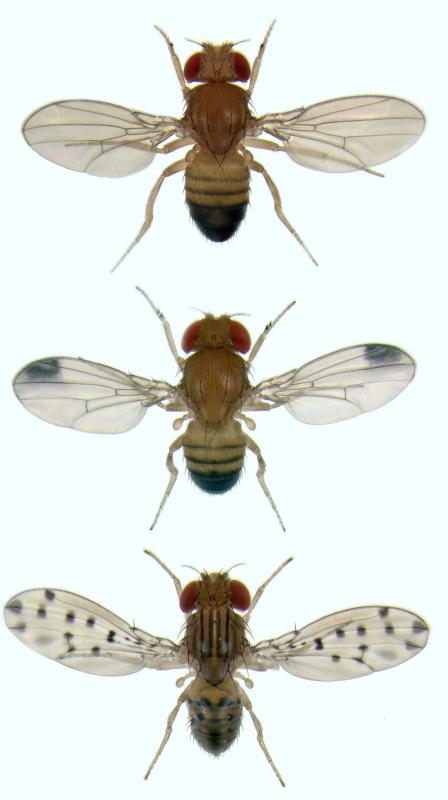
The vast majority of fruit fly species are quite small, with adult flies usually measuring somewhere between 0.08 to 0.2 inches (2 to 5 millimeters) long. Certain types, however, can be extremely large by comparison, looking more like regular house flies. Most varieties in the Drosophilidae family are reddish to reddish brown in color with clear wings. Ones classed as Tephritidae typically have more colorful wings, with some people referring to them as "peacock flies" as a result.
Where They're Found

These bugs can be found all over the world, and they live in many different climates. Warm, tropical climates host more kinds, however, because they tend to promote a sufficient supply of vegetation while also making it easy for organic matter to decay. They usually can spread very quickly from area to area, because most species are excellent fliers that are capable of traveling several miles in a single day.
Diet

Although some species of fruit flies have preferences for particular foods, in general, they usually feed on any decaying matter, especially rotting fruits and vegetables. More specifically, they like the yeast that breaks down the sugar in these items during the fermentation process. As this decomposition occurs, the yeast produces the byproduct of alcohol, which many species also enjoy — incidentally, the preference for alcohol is also why they tend to congregate around wine and beer bottles, and why they are sometimes a problem in bars and restaurants. Some researchers, such as biologist Dr. Todd Todd Schlenke of Emory University, believe that consuming the alcohol helps ward off parasites, affecting the development of enemy eggs and making the flies less attractive to attack.

Even though these insects typically prefer fruits and veggies, they often can be found in other rotting material, including meats and even the scum that forms in drains. Some have adapted, becoming predators or parasites, and many kinds also eat sap and flower nectar. Their ability to eat such a wide range of foods is largely what makes them so difficult to get rid of, and why most people see them as a nuisance. In some cases, they have an extremely negative effect on agriculture, ruining entire crops, but only a few hundred of the thousands of species are considered a serious threat — some varieties actually have been used as a biological tool to control other insects.
Reproduction and Life Cycle

In general, fruit flies lay their eggs in whatever foods they're eating. Depending on the species, a single female can be capable of laying up to 500 eggs, and she can mate more than once during her life cycle. These eggs usually hatch in less than a day, sometimes within just a few hours. After this point, they progress through the larval stage, which usually lasts around four days, and which can be further divided into three separate phrases that include molting. They then enter the pupal stage, where they grow their wings and legs. Finally, they emerge as fully-grown adults, and the process, which typically takes 14 – 30 days, starts all over again.
Where They Come From
Some individuals believe that, because these bugs eat decaying matter and some of the byproducts of the fermentation process, their presence indicates a dirty home or building. This isn't always the case. With their great sense of smell and tiny bodies, they easily can maneuver into a kitchen from outside through window screens, door jams or any other crack. They sometimes catch a ride in grocery bags or hatch from eggs laid in less-than-fresh food brought home from a grocery store.
Control
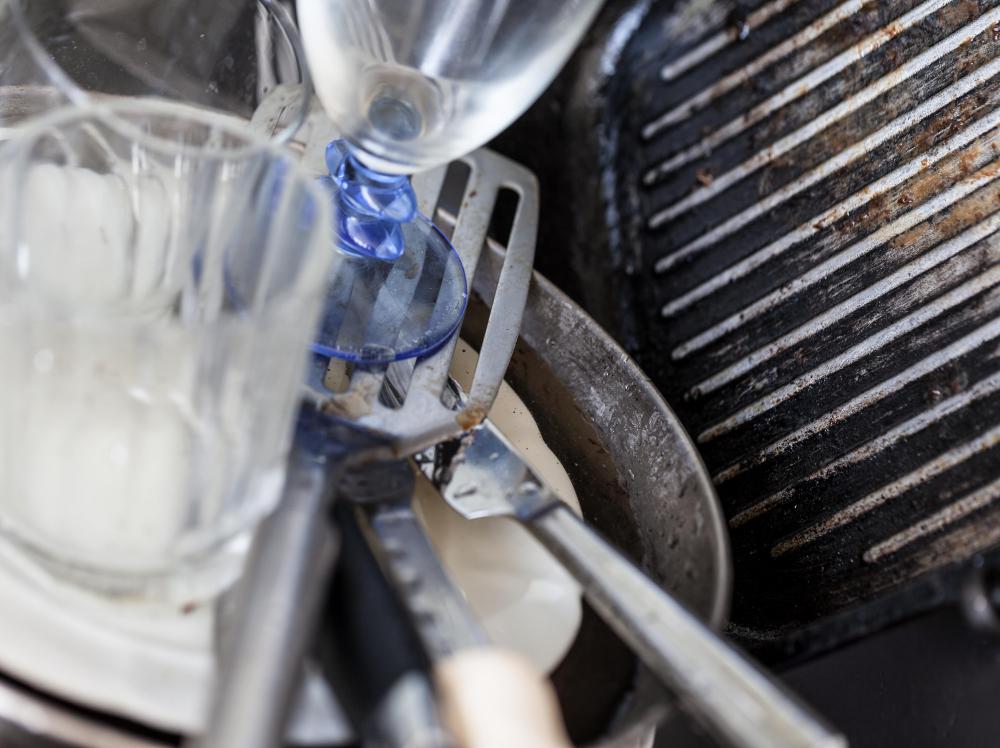
Getting rid of any old, rotting foods is a good start to eliminating fruit flies, as is keeping fresh fruits, vegetables and meats in the refrigerator instead of out in the open. Some non-food items, such as wet mops, dirty dishes and old sponges, hold small particles of decaying material, too, however, so they generally need to be cleared from a home, as well. Consistently wiping down counters often helps.
If any insects remain after a thorough cleaning and even with proper food storage — this sometimes can happen if they are living in a drain, for example — a person easily can trap them. Commercial traps are available, but homemade traps are often cheaper and can be just as effective. People who want to make one at home just need to put a paper funnel in the mouth of a jar or bottle that has some wine, beer, decaying fruit or vegetables or yeast and sugar in it. The bugs will enter the funnel to reach their feast and will not be able to find their way out.
Use in Science
Despite annoying many people, these tiny insects have made a gigantic name for themselves in the field of science. In particular, the common fruit fly, Drosophila melanogaster, has been invaluable to the field of genetics. Its short, ten-day life cycle, avid ability to reproduce and large chromosomes make it an ideal choice for laboratory experiments in heredity.
Debate
Fruit flies have been a source of fuel for the creation versus evolution debate. Creationists, who generally oppose the widely accepted theory of evolution, claim that the use of these insects in the laboratory, specifically the attempt to create new species through the mutation of chromosomes, has yielded no surviving results. Evolutionists rebuke the claim with the fact that fruit flies have too few chromosomes to provide an evolutionary advantage when manipulated. Basically, evolutionists hold that the bugs are successful just as they are and have no reason to change.
Frequently Asked Questions
What exactly are fruit flies?
Fruit flies are tiny insects belonging to the Drosophilidae family, often seen around overripe or fermenting fruits and vegetables. They are known for their rapid life cycle and remarkable reproductive capacity. These insects are pivotal in scientific research due to their genetic makeup, which allows scientists to study genetic patterns and mutations.
Where do fruit flies typically come from?
Fruit flies originate from environments where fermenting organic matter is present. They are particularly attracted to ripe fruits, hence their name. These flies can invade homes through tiny openings or by hitching a ride on produce. Once inside, they can lay hundreds of eggs, leading to a swift population increase.
How can I prevent fruit flies from infesting my home?
Preventing fruit flies involves maintaining cleanliness and reducing access to breeding grounds. Store produce in the refrigerator, dispose of overripe fruits, and seal garbage bins. Regularly clean surfaces and drains where food particles may accumulate. Ensuring window screens are intact and sealing entry points can also help keep these pests at bay.
Are fruit flies harmful to humans or pets?
Fruit flies are not directly harmful to humans or pets, as they do not bite or transmit diseases like some other insects. However, they can be a nuisance and potentially contaminate food with bacteria and other pathogens by walking on unclean surfaces and then on your food, so it's best to keep them under control.
What is the lifespan of a fruit fly?
The average lifespan of a fruit fly is about 30 days, but this can vary depending on environmental conditions. Within their short lives, they progress through a complete life cycle from egg to larva to pupa and finally to the adult stage, which takes about a week under optimal conditions.
Can fruit flies cause damage to plants or crops?
While fruit flies primarily target overripe or decaying fruits, some species can cause significant damage to soft-skinned fruits and crops. They lay their eggs under the skin of the fruit, and the emerging larvae feed on the fruit, leading to spoilage and economic loss for farmers and gardeners.
AS FEATURED ON:
AS FEATURED ON:









-
![Fruit flies.]()
Fruit flies. -
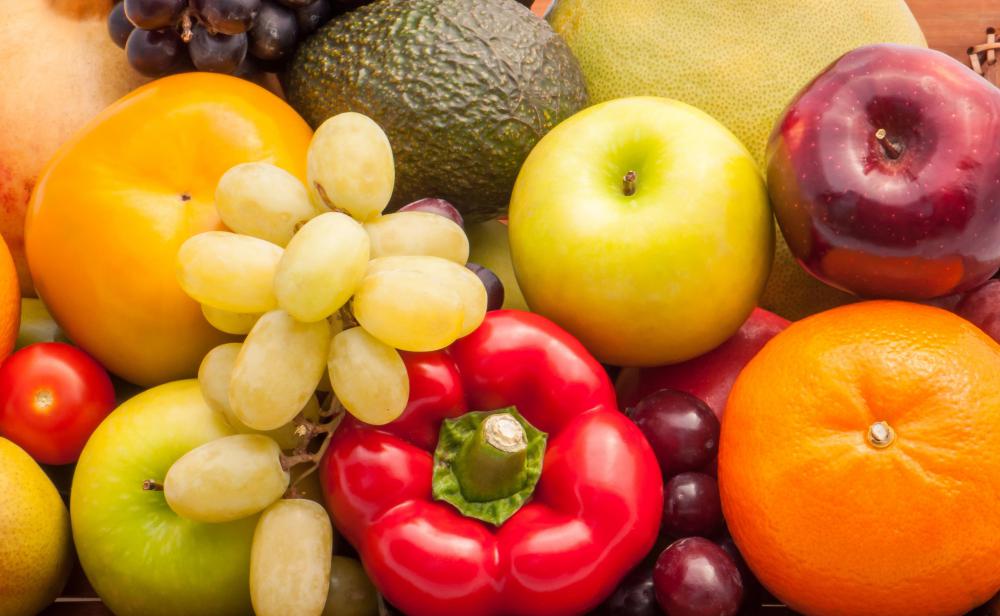
![Fruit flies live on and eat ripe and fermenting fruits.]() By: peangdaoFruit flies live on and eat ripe and fermenting fruits.
By: peangdaoFruit flies live on and eat ripe and fermenting fruits. -
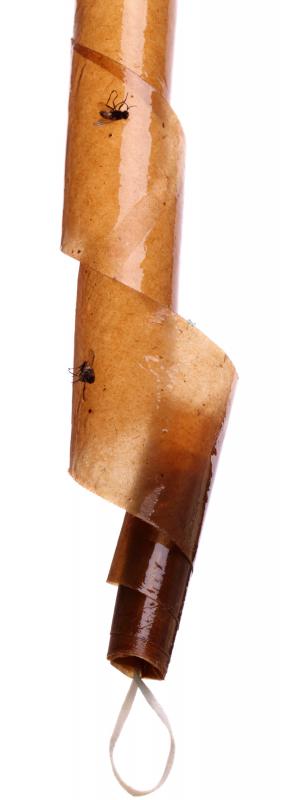
![Some people use fly paper to help control fruit fly infestations.]() By: ra3rnSome people use fly paper to help control fruit fly infestations.
By: ra3rnSome people use fly paper to help control fruit fly infestations. -
![Non-food items like wet mops can hold particles of decaying material that may harbor fruit flies.]() By: Sandra CunninghamNon-food items like wet mops can hold particles of decaying material that may harbor fruit flies.
By: Sandra CunninghamNon-food items like wet mops can hold particles of decaying material that may harbor fruit flies. -
![Dirty dishes may attract fruit flies.]() By: Dario Lo PrestiDirty dishes may attract fruit flies.
By: Dario Lo PrestiDirty dishes may attract fruit flies.

Discussion Comments
Cheap red wine and it doesn't need a cover put out a small glass and it will attract those vermin like it was check day at the welfare office.
The fruit fly posts have been very entertaining and more importantly very educational. I would like to add what I've learned about the war on fruit flies. It's not much but it's stuff I've discovered recently and might be helpful. 1. If you place the dish of your favorite FF juice on a light colored service or a paper towel underneath, it seems to attract them faster. (Plus it's easier to count your "winnings". 2. I use those tiny little "spice dishes" for my FF juice. I put it on a saucer to keep the juice off the counter and discovered you can catch more if you put a several drops of the juice in the saucer. They can drown in just a drop or two. 3. I tested this theory with just a little juice in a shallow dish. It worked like a charm. Thanks to all for your ideas and suggestions.
Put apple cider vinegar in a plastic tray and add dish soap!! I caught like 20 fruit flies! I'm just scared that they'll come back.
The simplest way to rid your place of fruit flies: Pick a clean jar that you will never want to use again for anything else. Place a small portion of fruit in the bottom. Take a piece of plastic wrap over the top of the jar and along the sides so they can't escape, making sure it's snug and taut across the top.
Make about 3 or 4 holes with pencil, just big enough for them to
get in, but not get out. Leave the jar alone. Check it in a few hours. You will be amazed! If you have a bad infestation, do this with several jars. After a day or two, get rid of the bugs, by either spraying very carefully with an insecticide over the top of the jar and dumping the contents or take the jar outside and release them. Begin again until they are all gone.
Nothing helps if you live with a disgusting slob who drops food all the time, or whatever, and doesn't clean up. I found a ton of the huge ones this morning, mostly on the little rug in front of the kitchen sink. They were on the counters, flying around at 5 a.m.! He left for work at 4:30 a.m. and will (lie and) swear he saw nothing. He has a bad habit of rinsing fruit in a strainer and then walking around with it. Nothing I say to this idiot gets through his thick skull.
Do fruit flies breathe?
Just to add some additional information, the fruit fly life cycle (where they come from) is as follows:
Eggs (hundreds dropped in a suitable place); Larvae (maggot appearance, often in rotten fruit); Pupae (metamorphosis stage, kind of like cocoons); Fruit fly (you already know what this looks like).
Flypaper isn't half bad, either. Be sure to clean the gaskets around the fridge and the drip pan under it! Put dirty dishes in the dishwasher right away.
I work at a liquor store and somehow these little buggers have gotten into cans of Summer Shandy. I know it sounds crazy but I have seen it with my own eyes.
Fruit flies are a pain. I have to do an experiment to see which liquids they like best. Any ideas?
@anon44826: I have also found them in tobacco, more so in a fresh pouch. I found turning the heating off for a few days decreased the numbers dramatically.
After that, it was easy enough to capture the rest in a 2L bottle with some beer in the bottom, and a hole punched in the cap with a screwdriver.
Those little monsters are all up in my yogurt! What don't those suckers eat?! Seems like they're attracted to everything! I just want to be fruit fly free, if only for a moment.
Awesome, going to try this right away. Found this after doing a quick google search. --Luke
Why do they try to fly in your eye balls? Best way to kill them is a can of Aquanet and a lighter. You can watch their evil eyeball flying smoke trails fall to the floor!
I've had fruit flies flying around my head all damn day. I turned off all lights in my house except for the one in the bathroom. My bathroom is right off my kitchen, by the way. Anyway, the light attracts them, I think. When it's dark outside and the only light is in my bathroom they swarm in there like a Kardashian to a press release.
So I run in there and shut the door real quick. I then have a field day because such a small area with all those little twerps flying around is an easy way to kill them. I squish their littleness against the mirror. I get a wet washcloth and knock them down mid flight. I turn on the shower and swat them down the drain. Easy breezy solution.
I used the hose to suck them up by the dozen. Cider vinegar with some soap and water, uncovered, captured dozens overnight. How long will these things be around in large numbers? I am on day four!
put your fruit scraps in the oven, wait a couple hours and slam the oven door shut and broil! So satisfying.
Hand sanitizer is a great way to catch and kill fruit flies. Buy a small one and open the lid. They are attracted by it and they go in through the hole and drown.
I tried drying all the areas in my kitchen because eggs seem to grow in there. well, they are not gone, but many of them are.
vinegar works. it is just like wine.
Everywhere, people are trying hard to kill fruit flies but here in Asean, we are trying to produce enough fruit flies to feed swiftlets that produce bird nests. Imagine if we do have your fruit flies.
I just want to add: don't use air fresheners! They think it's food and it attracts them.
I can not believe the amount of these little pests in my house( fruit flies). There must be an epidemic in our state because they're everywhere. Everyone you talk to has the same problem.
Hilarious comments here! I like the one who said "Drown in hell!" LOL. I got some great advice here, so will hopefully eliminate the ones in my house tonight!
My exterminator told me they do come from drains and to pour bleach down each drain in my house. I did and it has really made a difference.
Don't bother with any sprays. They don't work. The ones flying around will die but more will come.You have to get the source. I gave my bathroom and kitchen (where I noticed most of them) a good cleaning and bleached everything making sure there was no trace of old food anywhere. Then I put Drano down every drain in my house every day for about three days. That knocked them out.
I think they were festering on food buildup in the drains. Also if you had a leak anywhere make sure it is fixed and completely dried up. If necessary, you might have to replace anything that is molded.
I put out a bowl of wine with a few drops of dish soap in it. I caught about 30 within two hours.
The soap eliminates surface tension so when they land to drink they sink immediately. Perfect solution!
I had a surprise infestation from a bowl of apples I left out to ripen.
In an earlier post (post 27), someone said that a banana peel would not attract fruit flies. This is not correct. A banana peel will definitely attract fruit flies. I have seen it in my own home!
@anon112583 #46: Those are not fruit flies. they are mosquitoes that have blood in them. That's probably your blood which they sucked out of you!
spraying windex at them worked real well as long as you don't mind wiping up the mess after. they drop and die.
Bingo. I let my kitchen get a bit messy and knew the fruit flies came from that, but I had NO idea why there were bajillions in my bathroom! Wet mop!
I've had a mop in a bucket in my bathroom for a few weeks and they took it up as their home- the twirps.
I covered the bucket with a garbage back and swiftly chucked it onto the porch. Drown in hell!
Thanks for the info!
PS- I've been using Hot Shot Natural Ant and Roach Killer (which kills more than just those bugs) to shoot them out of the air and drown them. It's natural so it can be used around animals (cause I have a cat.) It has lemongrass oil in it. Gross bugs.
why do we have fruit flies in our upstairs bathroom? Help, it's creeping me out!
I think they are fruit flies they are tiny little gnat like things that look like they have blood inside when you squish them? Is that what they are or could I have something else on my hands?
The bit about evolution/creationism at the end is silly. Why even mention creationism?
Two more tricks that help.
1) Get a spray bottle with rubbing alcohol in it. Spray the fly, esp. if it is flying in the air. Spray it more than once, quickly. It will fall to the floor. Then quickly squish it while it is briefly immobilized (I slap down my hand and fingers).
2) Another trick is to wait until close to sunrise or just after sunset while it is still light out. Turn off the lights in your house and kitchen. Look at your windows in the kitchen. They will be on your window panes trying to get outside, attracted by the light in the sky. Swat them with a thin-meshed flyswatter while they are on your window pane.
I had a lot more when I kept the window to my kitchen opened. It has a fly screen on it, but now I realize the screen is useless, they are small enough to come right through the holes in the screen.
Now if I need to open a window, it is a window that is not near the kitchen, and a window where there is always a breeze. Flies seem to congregate in no-wind spots around my house and elsewhere.
Last night, I put out a bowl with 50-50 water and vinegar and a couple drops of Dawn dish soap, uncovered. Next to it, I put a bud vase with a funnel and about a tablespoon of Mogen David wine. This morning the vinegar had three flies and the wine had seven.
.2 inch is a monster of a fruit fly are there different varieties? I've never seen one that big.
Side note: maybe if there was a way to harness the power of the fruit flies we could solve the world's energy problems!
I used orange juice, vinegar, and dish soap, no cover needed, in a glass. Many of the fruit flies were swimming in the concoction in a matter of hours. It will be next to impossible to completely eliminate all of the fruit flies, but I find this recipe seems to get rid of the majority of them.
does regular vinegar work? I don't have cider vinegar (will buy some tomorrow). I have fruit flies in my bathroom, and after reading this, I understand why now! I did have some fruit that wasn't bad, but still attracted the fruit flies. I have no fruit in my house at the moment, but I still have fruit flies!
I did 1/4c white vinegar, 1/4c water and dish soap in plastic wrap and poked holes. We'll see how it works! I'll report back with the results.
I tried the wine glass method for five days and it worked great, but my question is: Can you get sick from consuming them? I talked a drunk friend into drinking the wine. Seemed like a good idea at the time.
Should he/I be worried?
Fruit flies can be eliminated also by using a mixture of water, vinegar and a few drops of dish soap. works fantastic.
Fruit flies aren't very intelligent insects. My house recently became infested with them, and we trapped them in two-liter bottles of pop with fruit in the bottom. Once they got in, they didn't know how to get out, even though it's obvious to just climb back out where you came from. It's very easy to eliminate a fruit fly problem.
A great trap for fruit flies is a little jar with an inch or so of diluted coffee creamer. Even a cup with cold coffee that has the creamer in it attracts them. They fly in and just drown.
in a shallow dish/bowl, pour red wine vinegar or actual red wine, and wrap with cellophane. Poke a few holes in the cellophane and set it on the table where the source was (i.e. fruit bowl, banana bunch etc). the fruit flies will be able to get in, but can't get out. it's a not exactly a PETA solution, but it really works!
This article made me realize that the cause of abundance of fruit flies in my apartment is all the empty liquor containers and other garbage.
Just leave a glass of red wine out. And it will collect them all for you.
I had more than a few fruit flies in my kitchen, and I decided to try the apple cider vinegar and a few drops of dish washing soap in a bowl filled to the top with water, and it works! They swim in there and never come back out! But you have to leave the bowl in the kitchen sink for a day or so! Good luck!
I tried a ton of things before realizing they were coming from a bag of soil that i had in my apartment. Just a thought for people who can't seem to get rid of them.
@24: It is definitely not the banana peel, so don't remove that.
I love the vacuum and what i do in when I bring fruit home I put it in a bowl and put a net over it; that seems to keep the little buggers out. But you just have to wonder when you bring a perfect piece of fruit home, cut it and it feels like minutes later fruit flies are buzzing.
i have an apple, a grape and a banana peel. each has been sitting for six days while i was on vacation. Which item is causing this abrupt mess of fruit flies and if so, which item should be removed first?
I have this hand vac by Electrolux. It is like about 2 feet long. I read a book near the infestation and when I see one I just suck it up real fast. They get trapped in the canister and are alive, so I can just let them all out (like 40 of them all at the same time.) after there are no more :)
I brought fruit to the office and wrapped them tightly in a brown bag. however, within 2 hours a fruit fly appeared. so, my thinking is that the egg was buried in the fruit and hatched, but for the life of me i can't imagine how it got out of the paper bag. Any ideas?
i've recently tried the vacuum! and whoa, why did i not think of that. haha. the vinegar is a good idea but not guaranteed, so if anyone wants to get rid of the flies asap, try the vacuum!
Vacuum has to be the most unique suggestion yet!
I read this article and I was excited to try one of the methods. I used some apple vinegar, some water and added a drop or two of dish washing liquid soap. I did not cover it. I checked it overnight and there were nin dead fruit flies. When I checked today after work, I counted 36. Wow, that stuff really works. Thanks for the tip.
1/4 c water 1/4 c cider vinegar few drops of dishwashing liquid mix in a small bowl and they will come and die. The soap acts to break the surface tension of the vinegar/water mix. So they fall in and drown.
I have really learned a lot about fruit flies. i honestly thought they mutated from the fruit. lol
I simply take a glass with red wine and a few drops of insecticide and leave it on the counter near the fruit and they head for the wine and leave the fruit alone. We never have fruit long in the house, but within 3 hours for bringing in a giant bowl of freshly picked tomatoes saw fruit flies like I've never seen before. We quickly covered the bowl, trapping a great number of flies and inside of 2 hours the rest of them found the wine poison and we were fly-free!
This site has been somewhat helpful. I am going to try the sweet fruit juice/alcohol trick in both my kitchen and the bathroom. I run a childcare business out of my home along with three of my own, so the doors never seem to be shut and it always seems that something has been spilled, left out or forgotten. This however has been the *worst* infestation I have experienced.
I agree that the best method of ridding your home of fruit flies is - to pour apple cider vinegar in something, cover it tightly with plastic wrap, poke tiny holes in it, and watch em drown. They *love* dampness, I have found. They were breeding in the bottom of the bird cage because water had spilled onto the paper in the bottom of it. They can multiply exponentially within hours! It's not just fruit they love - they will check out *any* uncovered food if you leave it out. I have found that keeping the kitchen area and bird cages spotless and dry really helps. The vacuum cleaner trick is great too, as they like to hang out on ceilings and walls.
Can they live in tobacco? I roll my own cigarettes and the fruit flies seem to live in the loose tobacco.
I had a bad case of fruit flies from an old piece of fruit I forgot about. I got rid of them by pouring apple cider vinegar in a dish and covering it in plastic wrap. Use a pen to create little holes. The flies will crawl through the holes to get the vinegar, but won't be able to find the holes to leave so they'll drown in the dish. Leave it there for a few days to make sure you get all the flies!
That option has worked better than any other that I've heard about.
I find that just eliminating the fruit source such as a banana peel or apple peel does the trick. As soon as you get rid of them the fruit flies seem to fly away!
We have fruit flies in our bathroom - it's a brand new home so we don't know what could possibly be in there that's fostering a breeding ground? Any ideas?
Will a "pesticide bomb", set in your house, get rid of them? And does humidity and an old house - clean, but old - make them worse?
My grandma and I are trying the funnel in the jar with alcohol in the bottom of the jar experiment to see if that works.
vacuuming is a fast way of reducing their numbers. Any fly within 2" of the hose is sucked in, even in mid air.
Is it best to keep windows open or closed?
u can have fruit flies in your flowers they have nectar and can cause fruit flies to be in them!
Can I have fruit flies in my flowers and if so how do I get rid of them?
Post your comments