
At SmartCapitalMind, we're committed to delivering accurate, trustworthy information. Our expert-authored content is rigorously fact-checked and sourced from credible authorities. Discover how we uphold the highest standards in providing you with reliable knowledge.
What are Fringe Benefits?
 Tricia Christensen
Tricia Christensen
Tricia Christensen
Fringe or employment benefits, also known as benefits in kind, are compensations made to an employee beyond regular wages or salaries. Some types such as paid vacation are fairly standard, but others such as the use of a company jet are more rare. Different offers a company groups together for an employee are collectively known as a fringe benefits package. These can have significant differentials due to non-financial problems. They usually get better over time, however, reflecting an increase in the employee’s skills and knowledge as well as serving as a reward for company loyalty.
Standard Compensations

Companies have offered some fringe benefits so consistently for so long that the compensations have become standard across most business sectors. An example is a few days of sick time. Paid vacation and bonuses are also common. These benefits typically apply to any company level.
Some of these perks are considered essential to getting along socioeconomically. Perhaps the best example of this is health insurance, where the employer pays part of the expense for the employee’s medical coverage. An important point regarding these offers in the U.S. is that, if an employer's payment is required by law, the compensation is not technically a fringe benefit. The result is that, because of differences in regulations from region to region, some employers cannot count certain standard perks as fringe benefits while others are free to do so.
Non-Standard Compensations

In some cases, it is worthwhile for a company to offer non-standard fringe benefits to employees. These fall into two classes: standard compensation replacements and upper level offers. Both types are useful for attracting new employees and reducing turnover rates.
Standard compensation replacements are found when a company wants to set itself apart and offer something different. Whatever the organization offers in these cases typically is of equal or greater value than a standard benefit. Some companies offer paid housing, hiring bonuses, funding for some or all of continuing education, paid mentorship programs, repayment of student loans and larger employee pension contributions.

Businesses also use replacements when they cannot afford financial increases to regular offers but have other services or items that might help them appear competitive. An example might be the use of a private lake for fishing. These options aren’t always successful because, unlike financial compensations, they are assigned different values based on the personal opinions and habits of the employee.

Upper level offers go to members of higher management, including CEOs. They include things such as use of a company car, jet or timeshare condominium, paid continuing education, access to a company credit card and discounts at places such as health clubs. These types of compensation tend to generate resentment from the lower-level employees, who view them as “cushy.” The upper level employees who get them, however, usually see them as having been earned over time with hard work.
Fringe Benefit Packages

When a company wants to hire or keep an employee, they look at all the standard and non-standard compensation they can offer. The set of perks the business comes up with is known as a fringe benefits package. Creating one of these packages is challenging because even though the company wants to look like a good, competitive employment choice, they cannot make offers that put financial strain on the business. They must find a balance between meeting or exceeding market expectations and maintaining the company budget. Companies also know that employees will want benefits to increase over time, so they need to create a package that has room to grow.
Effect of Non-Financial Difficulties on Packages

Some businesses experience non-financial difficulties that make offering a larger fringe benefits package necessary. An example is a school that has good funding but which is in a crime-ridden area. The school board might approve more vacation, sick time or a pay bonus in order to make up for the risks associated with a teacher living in the high-crime region. Larger packages also often apply to people who work swing or night shifts. The shift differential in these cases can be as much as 10 to 30 percent.

Increases in benefits packages because of non-financial problems are somewhat controversial. Proponents argue that package increases are fair because others in the same job or field might not have to deal with the negative issues involved—that is, they acknowledge that something associated with a particular position or shift isn’t desirable for most people and see the increase as necessary to attract applicants. Critics say that if the work is essentially the same, then all employees should receive the same compensation and the employer shouldn’t be punished through the expectation of providing more.
Package Increases
In general, companies offer the smallest fringe benefits packages to lower-level employees who are just starting with the company. These employees typically do not have the experience or developed skills employers associate with higher compensation. Businesses offer the biggest packages to top executives who have been with the company for a significant period. This means that employees usually get better benefits over time. Changes to packages often occur at the end of the year, the end of the fiscal year or during annual employee reviews.
Tricia Christensen
Tricia has a Literature degree from Sonoma State University and has been a frequent SmartCapitalMind contributor for many years. She is especially passionate about reading and writing, although her other interests include medicine, art, film, history, politics, ethics, and religion. Tricia lives in Northern California and is currently working on her first novel.
Learn more...
Tricia Christensen
Tricia has a Literature degree from Sonoma State University and has been a frequent SmartCapitalMind contributor for many years. She is especially passionate about reading and writing, although her other interests include medicine, art, film, history, politics, ethics, and religion. Tricia lives in Northern California and is currently working on her first novel.
Learn more...AS FEATURED ON:
AS FEATURED ON:









-
![Access to the company jet and other travel perks can be fringe benefits of employment.]() By: Anatoly TiplyashinAccess to the company jet and other travel perks can be fringe benefits of employment.
By: Anatoly TiplyashinAccess to the company jet and other travel perks can be fringe benefits of employment. -
![A company car can be a fringe benefit.]() By: Luis LouroA company car can be a fringe benefit.
By: Luis LouroA company car can be a fringe benefit. -
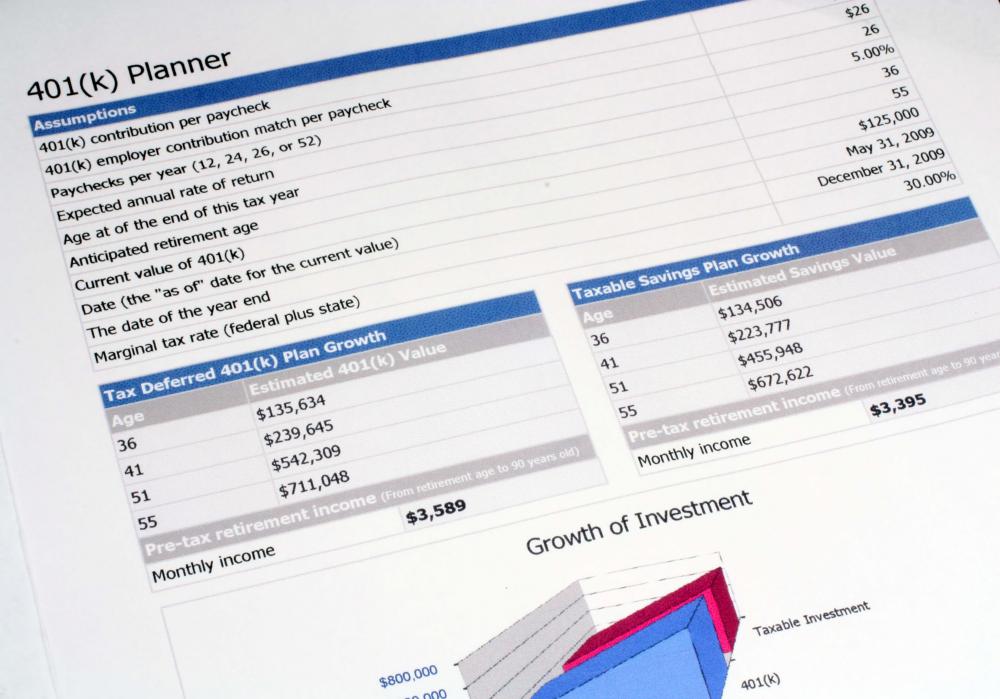
![Many employers offer a retirement plan, such as a 401K, as a fringe benefit.]() By: maxexphotoMany employers offer a retirement plan, such as a 401K, as a fringe benefit.
By: maxexphotoMany employers offer a retirement plan, such as a 401K, as a fringe benefit. -
![Some companies keep timeshare properties to use by senior executives as a fringe benefit.]() By: XtravaganTSome companies keep timeshare properties to use by senior executives as a fringe benefit.
By: XtravaganTSome companies keep timeshare properties to use by senior executives as a fringe benefit. -
![Some companies offer tuition reimbursement as a fringe benefit.]() By: pixelrobotSome companies offer tuition reimbursement as a fringe benefit.
By: pixelrobotSome companies offer tuition reimbursement as a fringe benefit. -
![Fringe benefits include paid sick leave.]() By: jinga80Fringe benefits include paid sick leave.
By: jinga80Fringe benefits include paid sick leave. -
![Fringe benefits might include being able to determine one's own work schedule.]() By: Syda ProductionsFringe benefits might include being able to determine one's own work schedule.
By: Syda ProductionsFringe benefits might include being able to determine one's own work schedule.






Discussion Comments
I work for a government agency and I am a bilingual. I was promised a 10 percent raise if I took and passed a Spanish proficiency test. I took the test, passed and communicated such to the appropriate parties via email. It's been six pay periods and still no 10 percent supplement. I have sent various emails and still no appropriate response. I live in the State of GA. Is this a violation of a fringe benefits?
Don't be surprised when your company makes boat loads of money and still won't give you any sort of raise or help with your insurance or medical needs. It's what Romney calls "taking personal responsibility".
Don't trust your boss. Forget about company loyalty. Change jobs every three to seven years. Take your customer contacts with you to your next job. Look out for number one; you're the only one who will.
I work for a government contractor in va under a service contract and we are not getting the fringe benefits. nothing at all. the company is keeping all the money. what can i do? i need help.
I work for a small company that employees only eight people in NC.I have private medical insurance. My boss writes me a "Bonus" check monthly to cover almost half of it? Is this legal? I hurts me when it comes to filing my taxes, it puts me in a higher tax bracket. It just doesn't seem right.
fringe benefits improve employee's performance to a large extent thereby helps in retaining potential employees.
What's the difference between fringe benefits and perquisites?
the company I work for has benefits insurance which run about $28 a week, and the company puts 11 percent in our retirement for us. But when we go onto a davis-bacon (fed money) everything changes. They start deducting around $248 on 43 hours for insurance a week, take 11 perent a week for retirement, plus I thought fringe pay per diem was supposed to be tax free? so I guess my question is, is this legal?
Under the davis-bacon can an employee be forced to invest all of the fringe benefits paid by government funded projects?
role of fringe benefits in retirement plans?
Post your comments