
At WiseGEEK, we're committed to delivering accurate, trustworthy information. Our expert-authored content is rigorously fact-checked and sourced from credible authorities. Discover how we uphold the highest standards in providing you with reliable knowledge.
What are Fallopian Tubes?
 Tricia Christensen
Tricia Christensen
Tricia Christensen
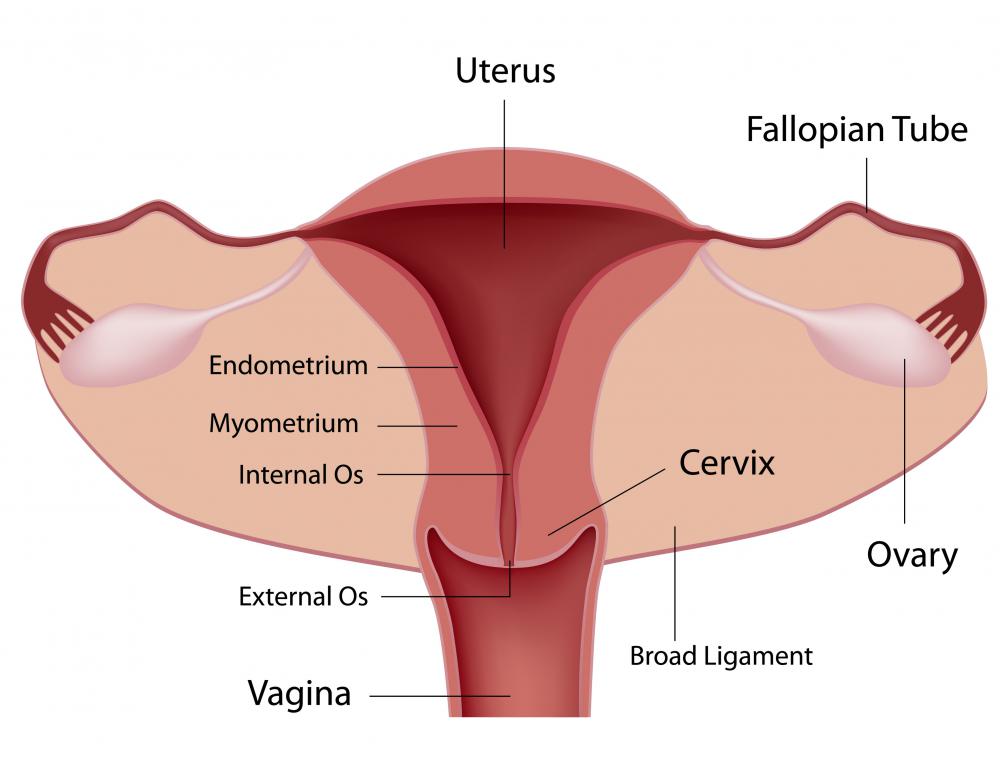
The fallopian tubes are tubes present in women (and female mammals) that serve an extremely important purpose in fertilization. Essentially, they provide a connection between ovaries and the uterus. This allows for an egg or ovum to journey down the tube from an ovary, where it is produced, into the uterus, where it could develop into a fetus.
It is important to note that the fallopian tubes are not directly joined to the ovaries as they are often depicted in drawings. In fact, they open into the peritoneal or abdominal cavity very close to the ovaries. They can even move before ovulation each month. Some studies of the female reproductive system have captured pictures of the fallopian tubes lying on top of the uterus, instead of next to it on each side. They are not the static tubes that form the familiar picture of the reproductive system in females.

During ovulation, however, they are essentially the catchers of the egg. They will accept the egg and push it down the tube by using tiny follicles. The egg does not merely slide down to the uterus, but needs the work of the fallopian tubes to reach it.
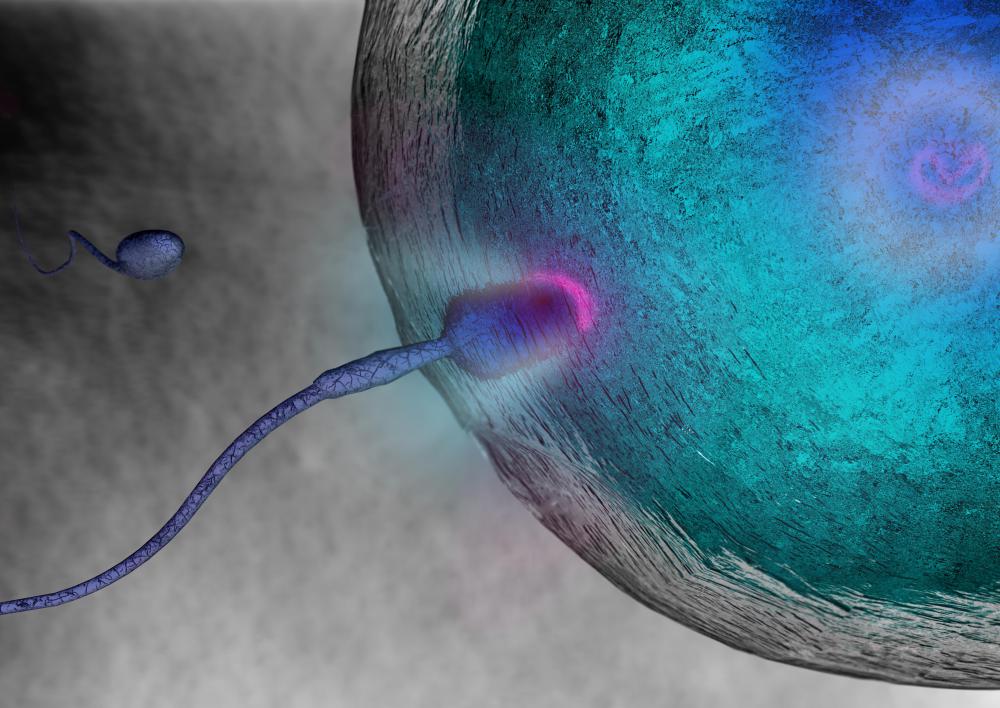
Many people believe that fertilization of an egg occurs in the uterus, but this is actually not the case. Fertilization occurs in the fallopian tubes, which then gently push the egg into the uterus. When the egg successfully attaches to the uterus, implantation occurs. Unsuccessful attachment results in a very early miscarriage, which tends to simply resemble a regular menstrual period. In fact, many women who have unsuccessful attachment never realize they were briefly pregnant.

The size of the fallopian tubes can vary by woman, even after she's reached sexual maturity. They can be anywhere from 3 to 6 inches (about 7 to 15 cm) in length. The tubes are made up of three layers: a mucous membrane on the inside, muscles one the outside, and serosa, which secretes mucus and allows for the passage of the egg into the uterus, in between. It should be noted that, generally, ovulation occurs in only one ovary in the human female, and so only one tube receives an egg each month.

Problems with the fallopian tubes account for about 25% of infertility problems in women. They can become scarred due to disease or to ectopic pregnancy, where a fertilized egg implants in a tube instead of in the uterus. Pelvic inflammatory disease, endometriosis, or a large cyst in the ovary may all cause scarring or blockage of either one or both tubes. If one is damaged, a woman's ability to get pregnant may be slightly reduced. If both tubes are damaged, fertilization problems can be very challenging.

There are some forms of surgery that may help clear blockages, allowing eggs to move freely again. Alternately, many women with fertility problems choose to have in vitro fertilization. In this procedure, one or more fertilized eggs are placed directly into the uterus.
Tricia Christensen
Tricia has a Literature degree from Sonoma State University and has been a frequent WiseGEEK contributor for many years. She is especially passionate about reading and writing, although her other interests include medicine, art, film, history, politics, ethics, and religion. Tricia lives in Northern California and is currently working on her first novel.
Learn more...
Tricia Christensen
Tricia has a Literature degree from Sonoma State University and has been a frequent WiseGEEK contributor for many years. She is especially passionate about reading and writing, although her other interests include medicine, art, film, history, politics, ethics, and religion. Tricia lives in Northern California and is currently working on her first novel.
Learn more...AS FEATURED ON:
AS FEATURED ON:









-
![An egg moves down the fallopian tube into the uterus, where it could become a fetus.]() By: Darren BrodeAn egg moves down the fallopian tube into the uterus, where it could become a fetus.
By: Darren BrodeAn egg moves down the fallopian tube into the uterus, where it could become a fetus. -
![A diagram of the female reproductive system, including the fallopian tubes.]() By: AlilaA diagram of the female reproductive system, including the fallopian tubes.
By: AlilaA diagram of the female reproductive system, including the fallopian tubes. -
![Women with endometriosis sometimes experience pain in the fallopian tubes.]() By: ryanking999Women with endometriosis sometimes experience pain in the fallopian tubes.
By: ryanking999Women with endometriosis sometimes experience pain in the fallopian tubes. -
![Most human fertilization takes places in the fallopian tubes.]() By: Giovanni CancemiMost human fertilization takes places in the fallopian tubes.
By: Giovanni CancemiMost human fertilization takes places in the fallopian tubes. -
![A fallopian tube cyst may cause minor or severe pain in the pelvic area.]() By: michaeljungA fallopian tube cyst may cause minor or severe pain in the pelvic area.
By: michaeljungA fallopian tube cyst may cause minor or severe pain in the pelvic area. -
![Healthy women are typically born with two fallopian tubes and two ovaries.]() By: Marin ConicHealthy women are typically born with two fallopian tubes and two ovaries.
By: Marin ConicHealthy women are typically born with two fallopian tubes and two ovaries. -
![An untreated fallopian tube infection may lead to infertility.]() By: Monkey BusinessAn untreated fallopian tube infection may lead to infertility.
By: Monkey BusinessAn untreated fallopian tube infection may lead to infertility.





Discussion Comments
I just had my right tube removed and the pain doesn't want to go away and I'm having this smelly discharge. I hate this. Please help.
I've heard of these ectopic pregnancies where the fertilized egg implants itself in the fallopian tube instead of in the uterus. These pregnancies can be very dangerous if not detected.
What is it that causes this to happen? Is it something about the fallopian tube itself? Is it a result of damaged fallopian tubes? Or is it just one of those unfortunate things that happen sometimes for no reason at all?
If only one egg travels down the fallopian tubes each month, is one tube used one month, and the next tube the next month? Or is it just whichever tube the egg happens to fall into?
I guess I never really thought about only one tube being used at a time. When fraternal twins occur, is this because an egg was released into each tube?
I'm sorry to admit that I was one of those people who thought that fertilization occurred in the uterus. I had no idea that it actually happens in the fallopian tube!
I thought that the only role of the fallopian tube concerning pregnancy was to get the egg to the uterus so that it could be fertilized. I guess you really do learn something new every day!
Post your comments