
At DelightedCooking, we're committed to delivering accurate, trustworthy information. Our expert-authored content is rigorously fact-checked and sourced from credible authorities. Discover how we uphold the highest standards in providing you with reliable knowledge.
What are Enoki Mushrooms?
 Mary McMahon
Mary McMahon
Mary McMahon
Enoki mushrooms are edible mushrooms that are very popular in Asian cuisine, especially in Japan. The delicately flavored, interesting looking fungi are also cultivated and sold in other parts of the world, although they are most widely used in Asian and fusion foods. Asian grocers and specialty stores often sell them, and they are sometimes also available in regular markets, depending on the region of the world that one is in.
There are actually two different kinds of enoki mushrooms, although both are botanically classified as Flammulina velutipes. One is a wild type, which looks and tastes quite different from the cultivated mushroom, which has been raised under specific conditions to modify its look and flavor. While both versions are perfectly palatable, many consumers prefer the cultivated mushrooms, since they have a more intense flavor.

The wild mushrooms are found naturally growing on the stumps of the enoki tree, and they are also known as enokitake or enokitaki. The mushrooms are golden to dark brown in color, with a dense velvety growth on the lower part of their stems, which leads some people to call them Velvet Foot mushrooms. After collection, the mushrooms can be eaten raw or lightly cooked, and they generally last only a few days in a paper bag under refrigeration, so they should be used quickly after harvesting.

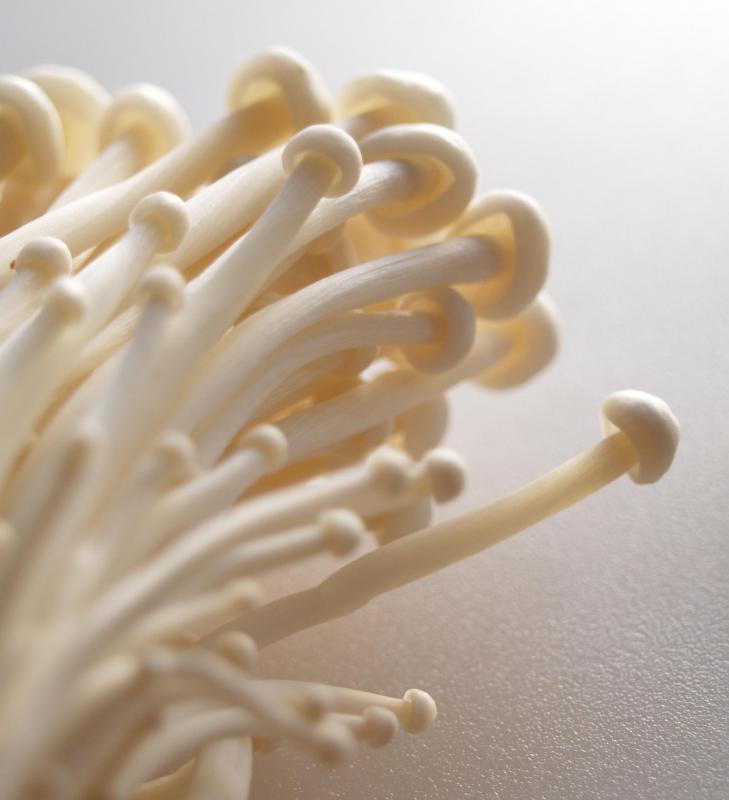
When enoki mushrooms are cultivated, they are grown in dark conditions so that they are bone to cream white. The mushrooms are grown in special jars that encourage them to develop long stems as they reach for an overhead light source. As a result, cultivated mushrooms have long, trailing stems, which are typically used along with the caps. They are also called Snow Puffs or Golden Needles, in a reference to their color and shape.

To use the mild, slightly fruity flavor of these mushrooms in cooking, cooks should start by gently rinsing the mushrooms to remove surface dirt. Next, they should trim the bottom of the mushrooms off, as they come in thick clumps. Most cooks trim right where the mushrooms begin to branch off, so that each is separated from the base. The mushrooms can be tossed into foods raw for extra crunch and flavor, or lightly cooked.

In addition to being available fresh at the market, enoki can also be found canned in some regions. If canned, the mushrooms can be shelf stable for several months. Fresh mushrooms, on the other hand, should be carefully inspected for slime and mold before purchase, and used quickly.
Mary McMahon
Ever since she began contributing to the site several years ago, Mary has embraced the exciting challenge of being a DelightedCooking researcher and writer. Mary has a liberal arts degree from Goddard College and spends her free time reading, cooking, and exploring the great outdoors.
Learn more...
Mary McMahon
Ever since she began contributing to the site several years ago, Mary has embraced the exciting challenge of being a DelightedCooking researcher and writer. Mary has a liberal arts degree from Goddard College and spends her free time reading, cooking, and exploring the great outdoors.
Learn more...AS FEATURED ON:
AS FEATURED ON:


-
![Enoki mushrooms are popular in Asian cuisine.]() By: eugenaklykovaEnoki mushrooms are popular in Asian cuisine.
By: eugenaklykovaEnoki mushrooms are popular in Asian cuisine. -
![Enoki mushrooms.]() By: LovelliEnoki mushrooms.
By: LovelliEnoki mushrooms. -
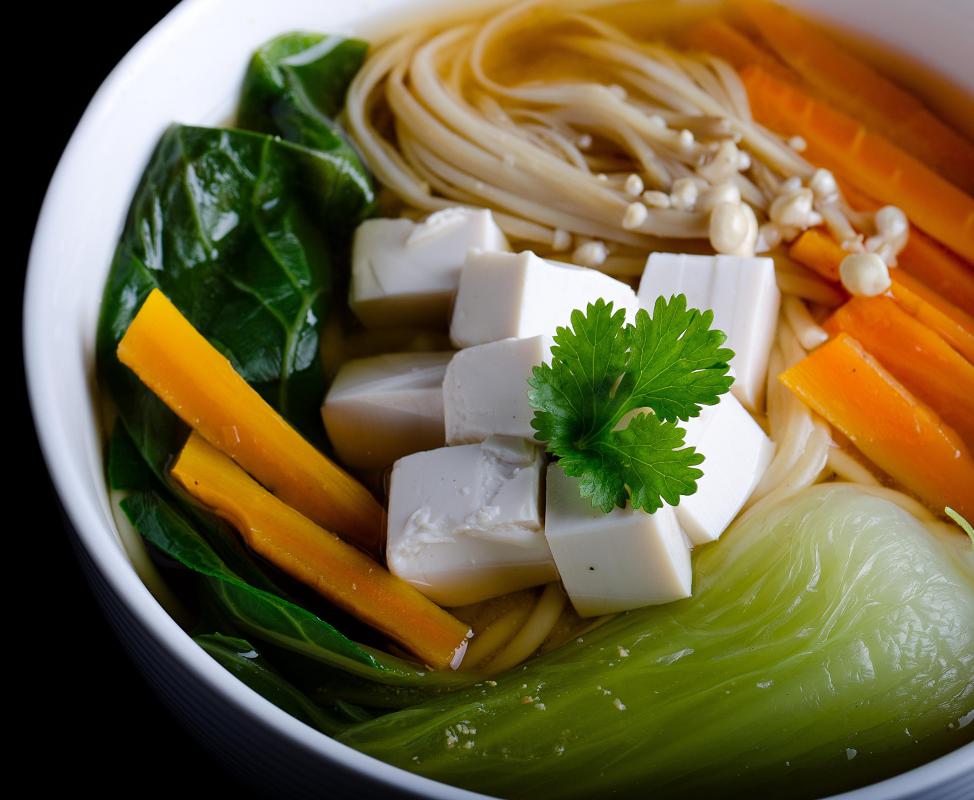
![Many Japanese dishes use enokitake, or enoki mushrooms.]() By: sergei_fish13Many Japanese dishes use enokitake, or enoki mushrooms.
By: sergei_fish13Many Japanese dishes use enokitake, or enoki mushrooms. -
![Cultivated Enokitake is very popular in Chinese cuisine.]() By: seksanwangjaisukCultivated Enokitake is very popular in Chinese cuisine.
By: seksanwangjaisukCultivated Enokitake is very popular in Chinese cuisine.


Discussion Comments
I bought an enoki mushroom. It has a large white bulb with stems growing from it that end with a little head. What is edible?
Try eating them fresh in a salad. You can make enoki salad with some soy sauce, rice vinegar and green onions.
If you don't like them fresh, make it the last ingredient you add to a dish and only cook it for a few seconds.
Has anyone cooked with enoki? I tried to yesterday but they just fell apart in the pan. They're so delicate!
@anon238930-- I don't know of any research that has been done on mushrooms and breastfeeding and there are certainly none on enoki mushrooms.
However, I would guess that it's best to stay away from all mushrooms until you no longer breastfeed. I believe there are some ingredients in mushrooms that remain in the body for a long time and I'm sure it will find its way into breast milk. It's better to be safe than sorry.
I love mushrooms too and once my husband and I were invited to a dinner where they served shitake mushroom soup. Shiktake and enoki are my favorites. but I didn't have any because I was breasfeeding.
Can Enoki mushrooms be eaten while breastfeeding?
I knew about mushrooms reducing cholesterol, but I also recently heard that fungi such as enoki or maitake mushrooms can also be beneficial for cancer patients.
For instance, in a study of Japanese farmers, those who ate enoki mushrooms regularly had a forty percent lower chance of dying from cancer than those who did not eat them regularly.
But the enoki mushroom/cancer connection isn't all. Besides being cancer-killers, enoki mushrooms are chock full of vitamins, and can also help your body to digest sugar and fat, which can help you to lose weight.
They're also beneficial for brain development, and can help prevent hypertension. So next time you think about making a mushroom dish, pass up the classic shiitake mushrooms and choose some enokis! They're tasty and extremely healthy.
Can anybody tell me a little bit about growing enoki mushrooms? I have a little bit of mushroom growing experience from using those shiitake mushroom logs, but I've never done enokis before.
Is it even possible to grow these at home, and if so, do you need a special kit? I live in a fairly moist area that's pretty conducive to mushroom growing, if that makes a difference.
So can anybody clue me in on the ins and outs of growing enoki mushrooms? Thanks!
I absolutely adore enoki mushrooms. My favorite is to use them to make a chicken mushroom soup. They just have that great, delicate flavor that seems to work so well with the slight saltiness of the chicken.
Of course, when making the soup I usually stick with dried mushrooms, since they take longer to soak in the water, and don't get soggy as easily as the fresh ones do.
If you decide to add some mushrooms to your chicken soup as well, then you can also try dried shiitake mushrooms -- they work pretty well with chicken too, although I prefer them in a beef broth.
Mmm, just writing this made me hungry...
Mushrooms such as enoki have the ability to reduce cholesterol.
Post your comments