
At HomeQuestionsAnswered, we're committed to delivering accurate, trustworthy information. Our expert-authored content is rigorously fact-checked and sourced from credible authorities. Discover how we uphold the highest standards in providing you with reliable knowledge.
What are Different Types of Tape Measures?
Tape measures are special types of rulers that can be made of metal, cloth, or plastic. They all include linear-measure markings, with many including both imperial and metric units. Imperial measurements are those commonly used in the United States, including feet, pounds, and seconds. Metric units, on the other hand, are those used in the metric system, commonly used by many countries outside of the United States.
Surveyors, individuals who work to accurately determine the position of points on land and the angles and distances between these points, commonly use tape measures in order to determine hectometers. Often, surveyors are called upon to help create land maps and to establish land ownership boundaries. The flexibility of a tape measure makes it an easy to use measuring device, because they can follow along curves and corners. They can also be rolled up neatly and conveniently stored in a toolbox or a pocket.

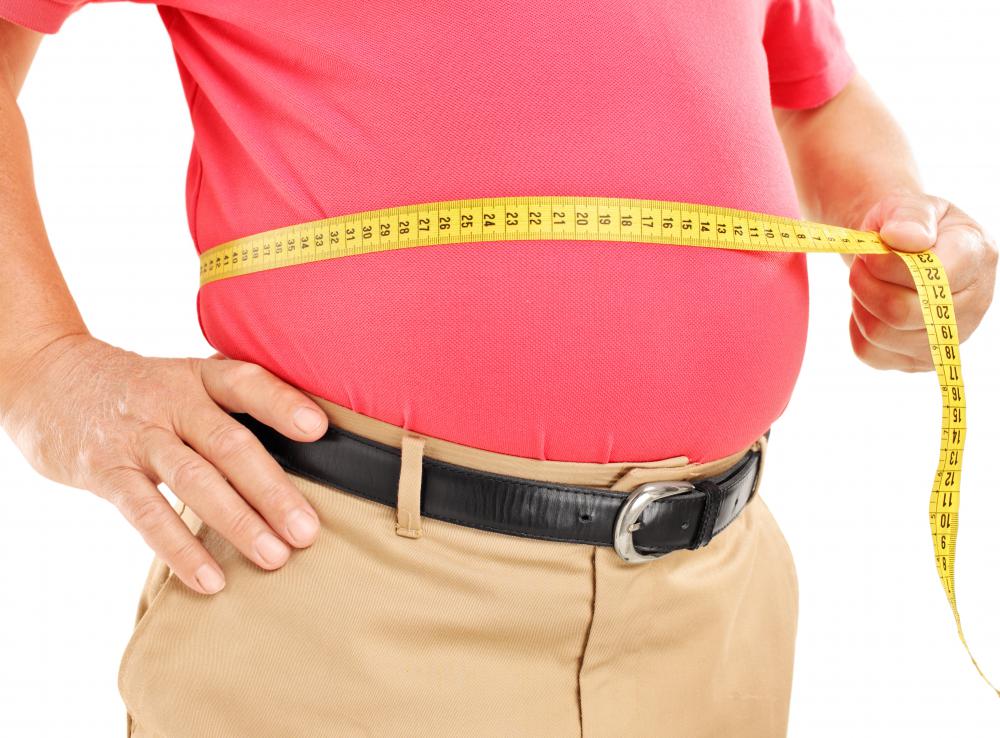
Tailors also use this measuring tool. Typically, theirs are made of cloth and are used to take measurements of the person for whom the clothing is being made. As such, these tape measures are used to measure around a person’s waist, chest, and hips. They are also used to measure the length of a person’s arms and legs in order to ensure the best possible clothing fit.

Carpenters and construction workers also use them. Those used in this capacity are generally stiff, yet somewhat flexible, and are made of a metallic ribbon that is slightly curved on its sides. These tape measures are capable of remaining stiff and straight when properly extended. At the same time, they can retract and coil up when not in use. They have a tang at the end that allows them to be hooked onto the object being measured as the user walks to the other end of the object.
The first modern day tape measure was patented on 14 July 1868 by Alvin J. Fellows. According to Fellows, his design was simply an improvement on a design already being used.
AS FEATURED ON:
AS FEATURED ON:


-
![A tape measure.]()
A tape measure. -
![A tailor's tape measure.]() By: SchliernerA tailor's tape measure.
By: SchliernerA tailor's tape measure. -
![Surveyors commonly use tape measures in order to determine hectometers.]() By: CandyBox ImagesSurveyors commonly use tape measures in order to determine hectometers.
By: CandyBox ImagesSurveyors commonly use tape measures in order to determine hectometers. -
![Some tape measures are designed specifically for determining the circumference of the waist and other body parts.]() By: Ljupco SmokovskiSome tape measures are designed specifically for determining the circumference of the waist and other body parts.
By: Ljupco SmokovskiSome tape measures are designed specifically for determining the circumference of the waist and other body parts.



Discussion Comments
From my experience, it seems like a lot of people don't know how to measure, and do it accurately. It's one of the most important things you can learn. Though estimating is always easier, precision is a key feature. In fact, has anyone noticed that we usually tend to forget the things we learn when we were a kid? Whether it's measuring, or even learning about length, width, and height.
Post your comments