
At HomeQuestionsAnswered, we're committed to delivering accurate, trustworthy information. Our expert-authored content is rigorously fact-checked and sourced from credible authorities. Discover how we uphold the highest standards in providing you with reliable knowledge.
What are Different Types of Ribbons?
Ribbon may be divided into two main types: woven and non-woven. Woven types are essentially narrow bands of cloth with specially finished edges. Non-woven may be made from textile yarns bonded by adhesive, but more commonly are manufactured from plastics.
The flexibility and durability of woven ribbons make them well suited for use in clothing and home décor, as well as crafting. Non-woven ribbons may be given qualities that allow them to be curled, shredded, and treated in other ways that make them particularly useful for crafting and gift wrapping. Both types may be further identified by texture, pattern, or embellishment.
Acetate Ribbons are stiffer, with a satin-finish, and are often used for floral arrangements, pew bows, and packaging.
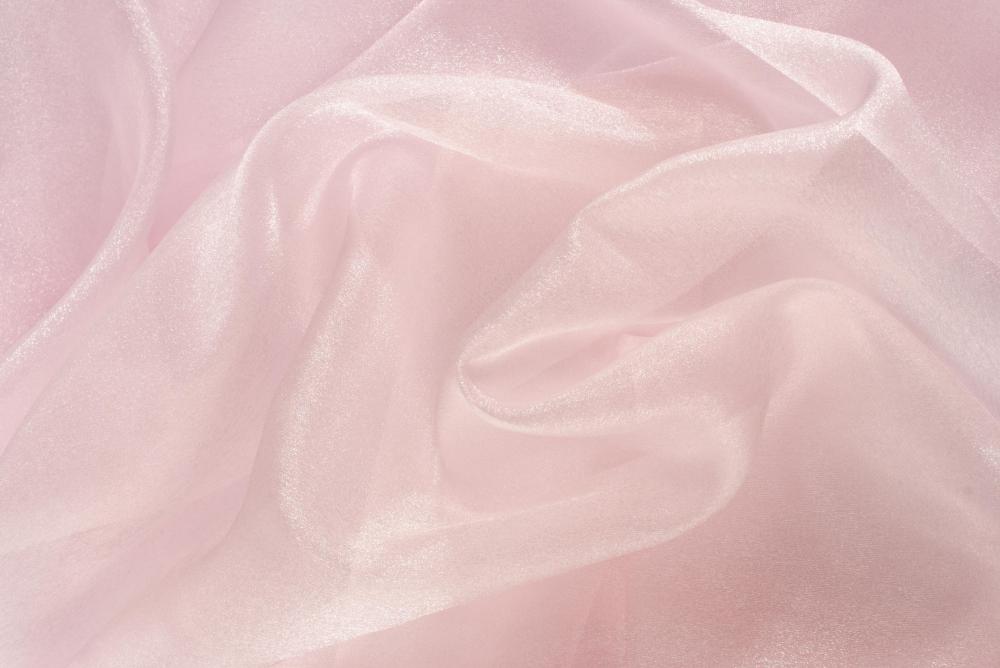
Chiffon, organdy and organza are varieties of very light weight, open weave variety commonly referred to as “sheers.”
Curling ribbons are coated or crimped so that when pulled against a sharp edge, like that of a scissors, the strand acquires a corkscrew aspect.
Grosgrain Ribbons are a durable yet supple woven type. The characteristic crosswise ribs give grosgrain enough body for a crisp appearance.
Iridescent ribbons have a pearl-like finish revealing changeable colors depending on the light or the angle of view.
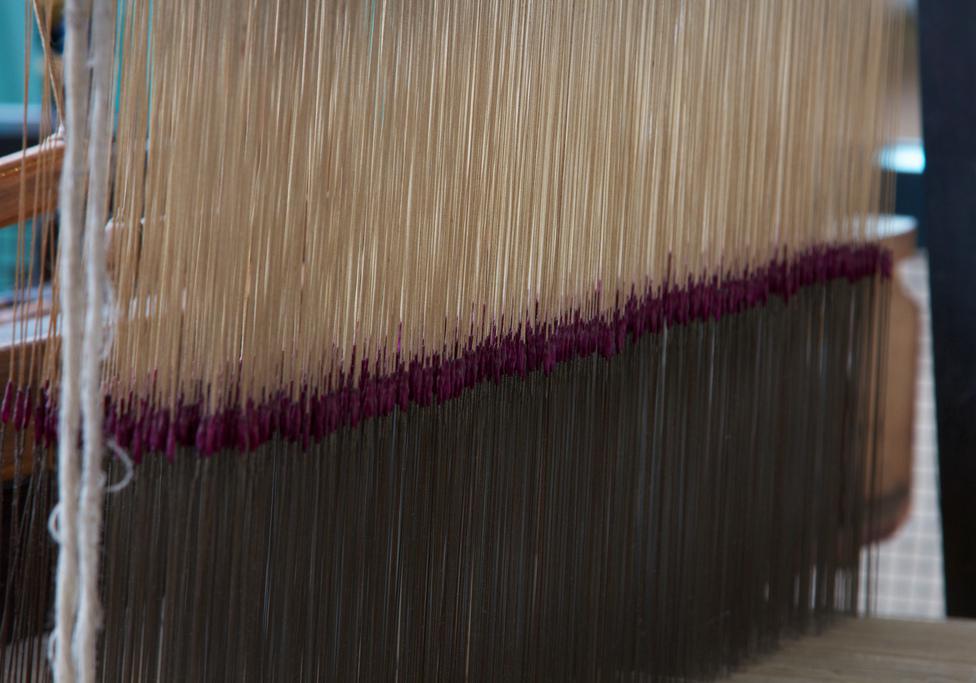
Jacquard is a type of weave used to produce pictorial effects. The term sometimes refers to ribbons with embroidery on them. Both embroidered and the true Jacquard ribbons have pronounced “right” and “wrong” sides.
Moiré Ribbons have a rippled or “watermark” appearance.
Ombre describes those with coloring that transitions from one hue to another.
Poly ribbon, made from polypropylene, is typically very shiny and can be made waterproof for outdoor use.
Satin Ribbons have a very smooth, shiny finish. They may be single-faced, which is shiny on one side and dull on the other; or double-faced, which is shiny on both sides.
Taffeta Ribbons are made of lightweight fabric, which may or may not be translucent. The ends tend to fray easily, so it is recommended they be cut on the bias, or at an angle, rather than straight across.
Velvet Ribbons have a tight weave and a low cut pile surface — the velvety side — with a plain underside. They require particular care so that the plush surface does not get flattened and shiny.
Wired Ribbons have fine wires placed in the selvage edges so that, once placed, the arrangement keeps its shape.
AS FEATURED ON:
AS FEATURED ON:


-
![Organza may be used as ribbon.]() By: Oleg SviridovOrganza may be used as ribbon.
By: Oleg SviridovOrganza may be used as ribbon. -
![Jacquard is a type of weave used to produce pictorial effects.]() By: Gary DenhamJacquard is a type of weave used to produce pictorial effects.
By: Gary DenhamJacquard is a type of weave used to produce pictorial effects.
Discussion Comments
@Lambsfan: I found a product -- Ribbon to Bead -- that is ribbon with a wire attached at the end so you can easily thread beads on it. Well maybe not easily -- they need to be large holes -- but the idea is cool.
I like using one large bead and either a short piece of sheer or satin, so it is like a choker.
Ribbons seem to be everywhere I look, worn as symbols of support for particular causes or charities. I don't mind making a donation but I will admit to being confused about which color represents which issue!
I am going to guess that the type used for these campaigns is grosgrain. Buying bulk ribbon for this purpose is probably an economical way to raise awareness for your group.
@Lambsfan - That's a great idea if you are handy enough to be able to fix the jewelry to the ribbon securely.
I like to use cheap velvet ribbon as a hair accessory. It's a simple way to control wayward strands, especially when you are trying to grow out a short cut.
Satin ribbons are great for using as necklaces. For a classic look, I usually put a pendant on a satin ribbon and tie it around my neck. It has a very Victorian feel to it.
Post your comments