
At AllThingsNature, we're committed to delivering accurate, trustworthy information. Our expert-authored content is rigorously fact-checked and sourced from credible authorities. Discover how we uphold the highest standards in providing you with reliable knowledge.
What are Diatoms?
 Mary McMahon
Mary McMahon
Mary McMahon
Diatoms are unicellular algae which form distinct and beautiful cell walls from silica. They are widely distributed throughout the upper layers of the oceans of the world, and can also be found in fresh water or moist environments, such as the undersides of plants. There are over 16,000 recognized diatom species, with many more being constantly identified. Because diatoms are so plentiful, they form an important part of the pelagic food chain, serving as a food source for most of the animals in the ocean, either directly or indirectly.
Like many other algae species, diatoms photosynthesize their energy. They also have very limited mobility; some species of diatoms are capable of a slow oozing motion, but others rely on currents to carry them around the ocean. When they die, diatoms sink to the ocean bottom, contributing to the layer of sludge which makes up the sea floor. In parts of the world where oceans no longer exist, this sludge forms a fossilized layer of diatomaceous earth, a substance used in manufacturing and as a natural pesticide.

All diatoms belong to the class Bacillariophyta, although some biologists dispute over their precise classification. As a general rule, they are considered to be protists. They have a simple internal structure, and at some point in their life cycle, diatoms secrete silica to create strong cell walls. The cell walls take the form of two identical halves which interlock, much like the halves of a clam or mussel. The silica forms in a radially or bilaterally symmetric pattern, and it is often extremely complex and astounding to look at. Diatoms reproduce asexually, dividing themselves to create more diatoms.

In many cases, a diatom floats on its own through the ocean. In others, diatoms form huge colonies of individuals, linked together in a variety of ways. The unique organisms are sometimes called the jewels of the sea because of their distinctive cell walls. Many beginning biology students look at diatoms under the microscope to learn about the incredible detail which can be found in microscopic organisms. Any sample of sea water from the surface of a healthy ocean will contain a plethora of diatoms in an array of shapes to look at under a microscope.

Diatoms are similar to dinoflagellates, another large class of protists which inhabits the ocean. Dinoflagellates are more capable of motion than most diatoms, using flagellating arms to propel themselves. Some dinoflagellates also form symbiotic relationships with other organisms. Both were identified and described by early biologists, and numerous pamphlets demonstrating the powers of the microscope used drawings of these minute organisms as illustrations.
Frequently Asked Questions
What exactly are diatoms?
Diatoms are a major group of algae, specifically microalgae, found in oceans, waterways, and soils of the earth. They are unique for their beautiful and intricate cell walls made of silica, which form a wide variety of patterns and structures. These single-celled organisms are important for their role in oxygen production, with estimates suggesting they contribute about 20% of the world's oxygen, which is comparable to the amount produced by the Amazon rainforest.
How do diatoms reproduce?
Diatoms reproduce primarily through asexual reproduction, where one cell divides into two daughter cells, each inheriting one of the parent's silica shells. Over time, this can lead to a reduction in size. To counteract this, diatoms can undergo sexual reproduction to restore their maximum size. This process involves the fusion of gametes to form a new cell that grows to the full size of the species.
Why are diatoms important to the environment?
Diatoms play a crucial ecological role as primary producers, forming the base of aquatic food webs. They are highly efficient at converting carbon dioxide into organic carbon via photosynthesis, thus helping to regulate atmospheric CO2 levels and mitigate climate change. Additionally, their dead remains contribute significantly to marine sediment, and they are used as bioindicators to assess environmental conditions and water quality.
Can diatoms be found in both fresh and saltwater?
Yes, diatoms are incredibly versatile and can be found in both freshwater and marine environments. They inhabit virtually every moist habitat where light can reach, including oceans, lakes, rivers, and even damp soil. Their widespread presence is a testament to their adaptability and the vast number of species, estimated to be between 20,000 to 2 million, though only about 12,000 have been formally described.
What is the significance of diatomaceous earth?
Diatomaceous earth is a naturally occurring soft, siliceous sedimentary rock that is easily crumbled into a fine white to off-white powder. It is composed of the fossilized remains of diatoms. This substance has a variety of uses, such as a filtration aid, mild abrasive in products like toothpaste, a mechanical insecticide, and as a stabilizing component of dynamite, known as nitroglycerin.
How can diatoms be used in scientific research and industry?
Diatoms are utilized in various scientific and industrial applications due to their unique properties. In research, they serve as model organisms in studies of silica biomineralization and aquatic ecology. Industrially, diatoms are used in the manufacturing of reflective paints, cosmetics, and as bioindicators for monitoring environmental health. Their fossilized forms, diatomaceous earth, are used in filtration, as abrasives, and as a natural pesticide.
Mary McMahon
Ever since she began contributing to the site several years ago, Mary has embraced the exciting challenge of being a AllThingsNature researcher and writer. Mary has a liberal arts degree from Goddard College and spends her free time reading, cooking, and exploring the great outdoors.
Learn more...
Mary McMahon
Ever since she began contributing to the site several years ago, Mary has embraced the exciting challenge of being a AllThingsNature researcher and writer. Mary has a liberal arts degree from Goddard College and spends her free time reading, cooking, and exploring the great outdoors.
Learn more...AS FEATURED ON:
AS FEATURED ON:









-
![A sample of sea water will have an array of diatoms that may be viewed under a microscope.]() By: WavebreakMediaMicroA sample of sea water will have an array of diatoms that may be viewed under a microscope.
By: WavebreakMediaMicroA sample of sea water will have an array of diatoms that may be viewed under a microscope. -
![Diatoms can grow on moist land as well as in the water.]() By: linjerryDiatoms can grow on moist land as well as in the water.
By: linjerryDiatoms can grow on moist land as well as in the water. -
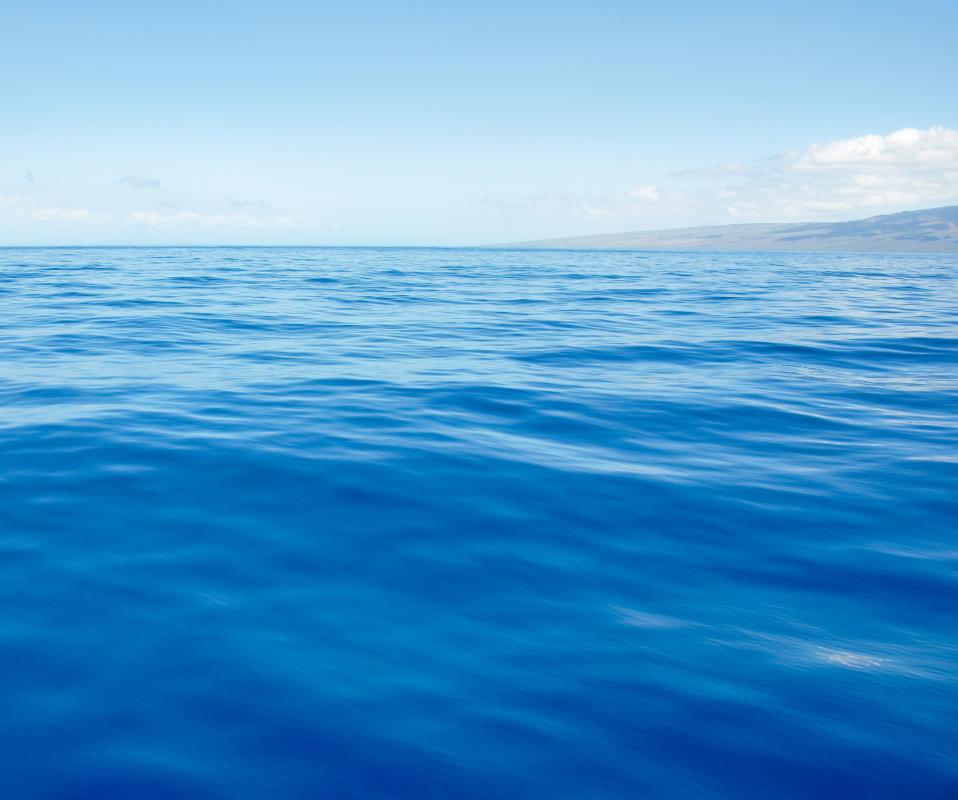
![Diatoms can be found in the upper layers of the ocean.]() By: ALCEDiatoms can be found in the upper layers of the ocean.
By: ALCEDiatoms can be found in the upper layers of the ocean.


Discussion Comments
Six years ago it was a very prolific year for fleas in Washington State.
We had a rental house (a big one: five bedroom, two bath house on 3/4 acre) that came empty and it was grossly flea infested. I'm allergic to flea bites, so it was especially horrible for me. I had never seen anything like it -- still haven't. Even so, I didn't want to use harsh pesticides to kill them in case our new renters had children, possibly a baby that would be crawling around on the floors. I tried twice to use natural methods to kill the fleas. (I'm sorry. I don't remember what I used. There was salt involved, Boron, and something else?) Anyway, I kept going back every hatch cycle, to try to kill the offspring and vacuum and reapply. (We live nearly an hour away, each way.)
Unfortunately, we still had fleas and were still getting covered with bites every time we'd go there. The house had been vacant for a month at this point, so they were mean and hungry and waiting for us.
I was told by professionals that we would have to go with a strong pesticide in order to kill them all. I felt I was left with no choice. After all, a baby could not live in that environment like it was. So, I set off a couple series of bombs, waited, vacuumed, set them off again, waited, vacuumed. We still had fleas.
I went online and research until I came across someone who mentioned diatomaceous earth. I had never heard of it before. I didn't expect much but followed through with his instructions. I was desperate.
We went to the feed store and bought a big bag of DE. We first sprinkled it all over the property. Then went inside and sprinkled all three levels of the house. We could see dead bugs everywhere on our way out the door. A few days after the next hatching time, we returned. We vacuumed everything again. Ta-da! No fleas. We did not get one bite. The flea nightmare was finally over!
I've spent a lot of my life not feeling well. But during the past six years, my husband and I have both been ill, without knowing why. We went organic, cut the sugar, ate only healthy fats, drank only filtered water,and lost a few pounds; but kept getting sicker. (Together, during this time, we probably had 80 doctor visits: MD's, neurologists, internal medicine, endocrinologist, rheumatologist, naturopathic doctors, even massage therapists; and all kinds of testing: MRI's, blood tests, ultrasounds, X-rays, scopes, injections, and medications, in addition to eating very healthy and taking excellent supplements.)
I started seriously researching -- again -- and Diatomaceous Earth showed up! (Food grade this time -- not sure what we bought from the feed store for the fleas.)
We have been taking it for three weeks now and we've both seen many changes. DE just might be our answer, our miracle cure! To our surprise, both of us found out we had parasites and have passed literally thousands upon thousands of them in the short time we’ve been taking it. (Bluck!) We’ve been reading articles that tell how they cause many diseases and illnesses.
My husband’s improvements are more impressive than mine. Some of his neurological issues (his tremor, which is obvious in his ever-shaking hands, a constant and strong vibration in his chest, and imbalance/constant falls, lack of coordination with his entire body, can’t make his hand release objects to set them down) have noticeably improved. Some days he can go hours at a time without any of these problems -- a few days ago, he didn’t experience any of them at all during the whole day! He has used a cane for years (he’s in his 50s), but he did not have to use it at all during the four or five days he had his balance back. That was unexpected and is a huge bonus. Hopefully that will become a full-time benefit soon. We assume the parasites that were doing the damage to his central nervous system are gone. Hopefully there will be no more future damage.
To my delight, my toenails, that were thick and yellow from (impossible to treat) fungus, have now turned a charcoal gray, as the parasites are dead and/or dying. (I had forgotten that I had read about someone else’s doing that. She said they got clipped off as they grew out, and the toenail fungus never returned.) Also, I had near-constant pain in my back and stomach/liver and gallbladder areas. Along with that came pain, belching and miserable heartburn for hours after every meal. Some days I would choose not to eat because I knew if ate, I would be thrown into hours of agony with burning and bloating and pain. (I started taking it after my appointment with a surgeon who told me he thought I would be one of the people who still had pain after the gallbladder was removed.) I admit that I continued to be miserable the first week I took DE, and it may take a long time to get total relief. But I have only had a few hours of pain (combined total) over the last 14 days. I’d say over 90 percent relief. I am not going forward with the surgery. And, hopefully in time, I will have 100 percent relief.
Only time will tell, but we are both very excited about it and have hope that many more of our health issues will begin to improve and/or disappear.
I'm trying to find out if it eats anything, or if something else eats it because I have to do a worksheet on it.
Some fresh water diatoms are brown, but many ocean diatom blooms look light green. I have seen both, and I think that the oceanic diatom blooms are less disgusting.
I have a pond behind my house that sometimes gets lines of rusty brown scum on top during the spring and summer. I've been told that this is actually a diatom bloom, but I've always just called it algae or pond scum.
I have seen streaks and swirls of yellowish-green in the ocean. My brother-in-law is a marine biologist, and he informed me that these are diatom blooms. While not particularly attractive, they do look better than the brown pond scum.
I had been having a lot of problems with brown algae in my aquarium. It was starting to cover the rocks, and a friend of mine told me that though it was called “algae,” it was actually a kind of diatom.
She had experienced the same problem in her tank. She told me that if I did not get rid of the brown diatoms, then they would turn into green algae.
She said that what I should try first is turning off my aquarium lights overnight. I didn't know this, but too much light could actually make the diatoms grow. She said I should only run the lights for about eight hours a day.
Turning off the lights took care of the problem. The brown diatoms were really disgusting to look at, and I'm glad I had her expertise to aid me.
@OeKc05 – Diatomaceous earth is totally safe for you and your dogs. Be sure to buy the food grade, though, because it is the one that doesn't contain anything but diatoms. Other kinds might have chemicals added.
I have actually heard of people eating diatomaceous earth, because it is supposed to cleanse your colon. I've heard of farmers giving it to their animals, because it is supposed to get rid of parasites. They also sprinkle it wherever they store their grains to keep bugs from eating them.
The only thing that sounds bad about it is the way that it kills the bugs. It actually cuts into their bodies and zaps out their moisture, so they get sliced and dehydrated. I don't like to think about this.
Has anyone here ever used diatomaceous earth as a pesticide? I've been considering putting it around my vegetables and fruit in my garden, but I want to make sure it is nontoxic first.
If my plants absorb it, will they still be safe to eat? Also, I have several dogs as pets. If they eat it, will it harm them?
I would love to give it a try, because it doesn't contain bad chemicals that could harm the environment. I just want to be sure it won't harm me or my dogs before I go dumping it on my food in an area to which the dogs have easy access.
Post your comments