
At Sports&Hobbies, we're committed to delivering accurate, trustworthy information. Our expert-authored content is rigorously fact-checked and sourced from credible authorities. Discover how we uphold the highest standards in providing you with reliable knowledge.
What are Cleats?
Whether they play football, soccer, baseball or even golf, athletes who play on turf or dirt need cleats. Athletes wearing regular sneakers may slip or fall on muddy or wet playing surfaces. Cleats are athletic shoes with plastic or metal studs on the sole designed to help the shoes grip the playing surface.
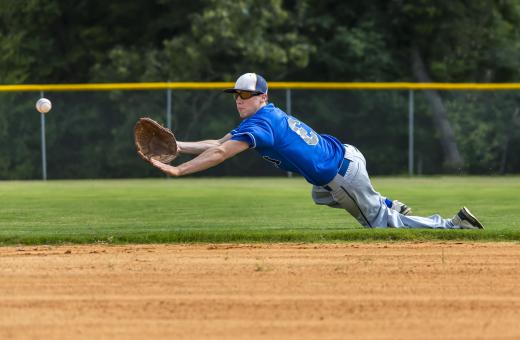
How cleats look and what they are made of are determined both by the sport and personal preference. For instance, all of those for school and youth baseball leagues must be made of molded plastic. Metal varieties are illegal in these leagues because they pose a danger to the other players. Metal baseball cleats are thin metal rectangles, rather than rounded studs, which provide excellent traction on the hard dirt of a basepath.
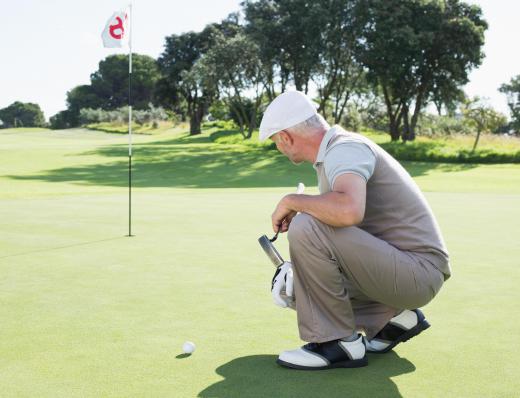
In general, athletes playing on harder surfaces, such as artificial turf, need shorter studs on their cleats, while those playing on wet, muddy surfaces need longer ones. Football players may have a combination of plastic and metal studs for this purpose, while golf shoes generally have all metal ones.
Some players, particularly football players, find that replaceable cleats are their best option. These shoes have studs that can be removed from the sole with a wrench and replaced with another kind. In this way, players can customize their shoes to meet specific needs. An athlete should have ones that provide proper traction and grip, but the studs should not be so long that they cause the athlete to stop suddenly and risk a knee injury.
Most cleats are superior athletic shoes in their own right, since they must provide proper padding and support for the foot. They usually feature leather uppers, some in exotic leathers such as kangaroo, and start are typically more expensive than regular sneakers.
Because athletes depend so heavily on their feet, they should always look for shoes that give them the best fit. Many athletes have a trainer, who they should consult about fitting shoes. At the very least, they should talk to their coach. Athletes may need to try on shoes by different manufacturers, since sizes and support vary. They need a comfortable shoe that is durable and has appropriate foot support. Parents should also be willing to spend a few more dollars if it means their child's feet will be better protected by their shoes.
AS FEATURED ON:
AS FEATURED ON:


-
![Golf shoes have metal cleats, or studs, on their soles.]() By: WavebreakmediaMicroGolf shoes have metal cleats, or studs, on their soles.
By: WavebreakmediaMicroGolf shoes have metal cleats, or studs, on their soles. -
![Cleats enable infielders to maintain some traction against the dirt that forms the baseline while fielding a hit.]() By: ASP IncCleats enable infielders to maintain some traction against the dirt that forms the baseline while fielding a hit.
By: ASP IncCleats enable infielders to maintain some traction against the dirt that forms the baseline while fielding a hit. -
![Some cleats are made with exotic leathers, such as those from kangaroo.]()
Some cleats are made with exotic leathers, such as those from kangaroo. -
![Some youth leagues prefer players wear leagues while others disallow them.]() By: Dusan KosticSome youth leagues prefer players wear leagues while others disallow them.
By: Dusan KosticSome youth leagues prefer players wear leagues while others disallow them. -
![How cleats look and what they are made of is determined both by the sport and by personal preference.]() By: llandreaHow cleats look and what they are made of is determined both by the sport and by personal preference.
By: llandreaHow cleats look and what they are made of is determined both by the sport and by personal preference. -
![Replaceable cleats are usually preferred by football players.]() By: BrocreativeReplaceable cleats are usually preferred by football players.
By: BrocreativeReplaceable cleats are usually preferred by football players. -
![Soccer players may use cleats.]() By: massimhokutoSoccer players may use cleats.
By: massimhokutoSoccer players may use cleats. -
![Cleats that are too long may cause an athlete to stop suddenly and suffer a knee injury.]() By: ShakzuCleats that are too long may cause an athlete to stop suddenly and suffer a knee injury.
By: ShakzuCleats that are too long may cause an athlete to stop suddenly and suffer a knee injury.


Discussion Comments
thanks for the information. I used it for my report!
Not all cleats are created the same! And not all molded cleats are plastic or rounded - some are made of hard rubber also. Tanel 360 has a circular cleat pattern with diamond shaped cleats on most of their cleat and turf shoes.
The idea behind this patented technology is that the circular pattern allows an athletes foot to rotate slightly (think of your leading foot while in the batters box) while the diamond shaped cleat actually cuts into the turf to help facilitate this movement. These two critical factors reduce strain and stress on knees and ankles.
Post your comments