
At WiseGEEK, we're committed to delivering accurate, trustworthy information. Our expert-authored content is rigorously fact-checked and sourced from credible authorities. Discover how we uphold the highest standards in providing you with reliable knowledge.
What are Circadian Rhythms?
 Mary McMahon
Mary McMahon
Mary McMahon
Circadian rhythms are cyclic and persistent patterns of behavior, physical changes, and mental characteristics exhibited by most life on Earth, from the smallest bacteria to the largest redwood tree. These rhythms roughly follow 24 hour periods, reflecting the amount of time it takes for the Earth to complete a rotation. The study of circadian rhythms and the internal clocks that most creatures seem to have is known as chronobiology. Researchers study them to learn more about life on Earth, and how to treat various conditions such as sleep disorders.
Several characteristics distinguish these rhythms. The first is that the changes will be retained through dramatic changes in environmental conditions. For example, an animal in the dark will still have periods of increased and decreased activity that correspond with a 24-hour cycle. Repeated input from external stimuli can also reset the internal clock, as anyone who has switched time zones is probably aware. In addition, fluctuations in temperature do not appear to impact circadian rhythms.

The term was coined by Franz Halberg, a researcher at the University of Minnesota. Halberg was fascinated by the cyclical patterns of behavior that could be observed in things like plants, which actually slowly move over the course of a day to take advantage of changing light conditions. The word is derived from the Latin words circa, meaning “around,” and dies, for “day.” The study of these patterns links a number of disciplines, including chemistry, general biology, genetics, physiology, and even psychology. Halberg is widely regarded as the father of chronobiology, although circadian rhythms have been observed and described since the 1700s.

Humans tend to be most interested in these patterns in terms of how they affect sleep. When people experience sleep disorders such as insomnia, these problems can sometimes be linked to a disruption of their internal clocks that could potentially be fixed. It also explain why people experience periods of more alertness at certain times of the day, and when humans feel sleepy or hungry as well.

A clear genetic link to circadian rhythms has been established by researchers, who suggest that these very basic patterns have probably been on Earth almost as long as living organisms have. Primitive bacteria demonstrate circadian patterns, for example. Animals with brains also clearly have an internal biological clock.
Mary McMahon
Ever since she began contributing to the site several years ago, Mary has embraced the exciting challenge of being a WiseGEEK researcher and writer. Mary has a liberal arts degree from Goddard College and spends her free time reading, cooking, and exploring the great outdoors.
Learn more...
Mary McMahon
Ever since she began contributing to the site several years ago, Mary has embraced the exciting challenge of being a WiseGEEK researcher and writer. Mary has a liberal arts degree from Goddard College and spends her free time reading, cooking, and exploring the great outdoors.
Learn more...AS FEATURED ON:
AS FEATURED ON:









-
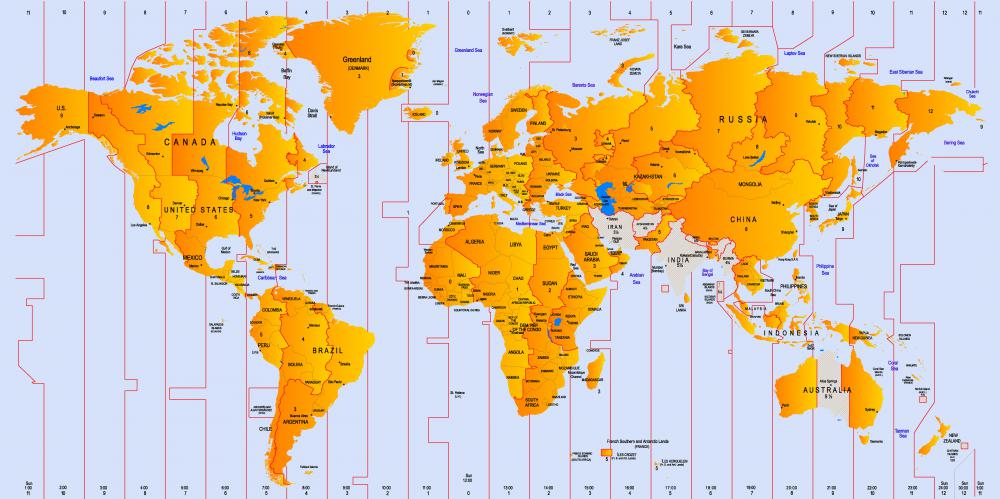
![Traveling across time zones can confuse a person's circadian rhythms.]() By: Ruslan OlinchukTraveling across time zones can confuse a person's circadian rhythms.
By: Ruslan OlinchukTraveling across time zones can confuse a person's circadian rhythms. -
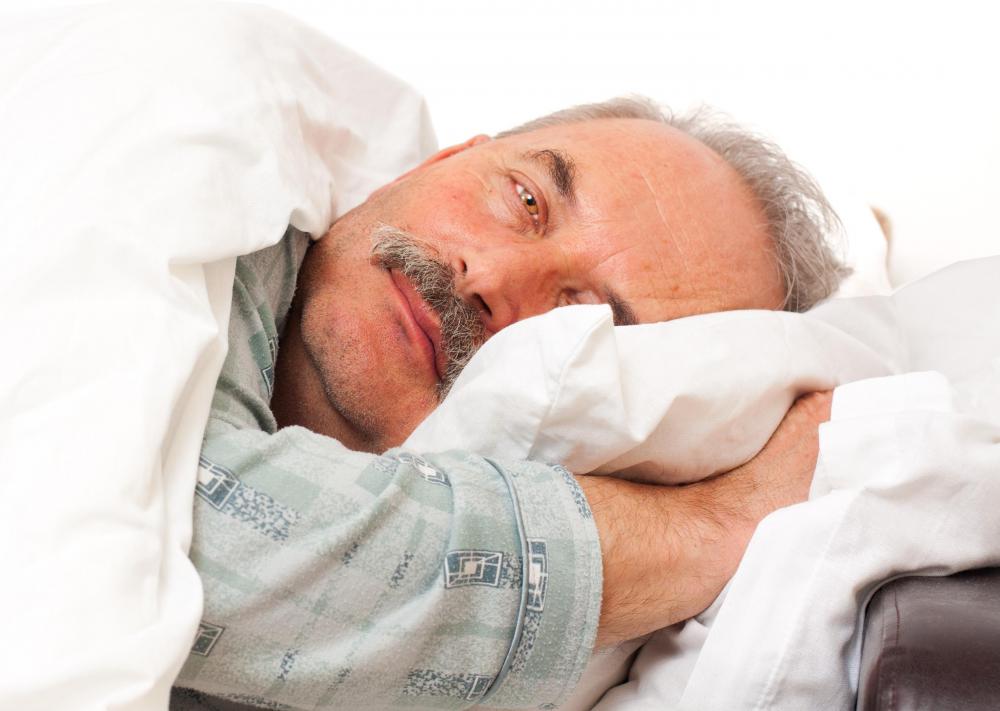
![Sleep disorder can often be linked to a disruption of an individual's internal clock.]() By: Sandor KacsoSleep disorder can often be linked to a disruption of an individual's internal clock.
By: Sandor KacsoSleep disorder can often be linked to a disruption of an individual's internal clock. -
![Disruption of circadian rhythms, especially if inadequate light exposure is achieved during the day may increase risk for heart disease.]() By: jedi-masterDisruption of circadian rhythms, especially if inadequate light exposure is achieved during the day may increase risk for heart disease.
By: jedi-masterDisruption of circadian rhythms, especially if inadequate light exposure is achieved during the day may increase risk for heart disease. -
![Circadian rhythms help to explain why people feel more sleepy or alert at certain times of the day.]() By: AllianceCircadian rhythms help to explain why people feel more sleepy or alert at certain times of the day.
By: AllianceCircadian rhythms help to explain why people feel more sleepy or alert at certain times of the day. -
![Chronic migraines, cluster headaches and other health issues may interrupt a person's circadian rhythm.]() By: inesbazdarChronic migraines, cluster headaches and other health issues may interrupt a person's circadian rhythm.
By: inesbazdarChronic migraines, cluster headaches and other health issues may interrupt a person's circadian rhythm. -
![Melatonin is sometimes taken as a supplement to help regulate sleep/wake cycles for individuals with circadian rhythm disorders.]() By: Andy DeanMelatonin is sometimes taken as a supplement to help regulate sleep/wake cycles for individuals with circadian rhythm disorders.
By: Andy DeanMelatonin is sometimes taken as a supplement to help regulate sleep/wake cycles for individuals with circadian rhythm disorders.




Discussion Comments
Great article! I heard that the circadian cycle is roughly 24 hours (a little bit more than 24 hours) because the days used to be longer in our early history.
Does that mean that if we did not have a way of checking the time, we would function according to an internal clock that runs closer to 25 hours?
Whenever I fly across the ocean, I experience jet-lag. It is actually worse when I fly towards the east. I am unable to adjust to the new time zone for at least a week. I wake up extremely early in the morning and take naps during the day. It's not as bad when I fly west, although I'm not sure why.
I knew jet lag happened because of time zone difference. But I never realized that it's caused by a disruption of our circadian rhythms and can be serious. I can't imagine what pilots and air hostesses go through.
I read a book on nutrition and weight loss which talked about the cycle and patterns of eating and energy use in our bodies.
For example, the author said that our metabolism kicks up at sunrise and slows down at sunset, no matter what we are doing. So even if we sleep until noon and go to bed at two in the morning, our metabolism still functions the way it has been as long as we existed.
I think this is a good example and also proof of circadian rhythms.
A lot of spiritual beliefs, such as shamanism, take circadian rhythms into account to some degree. I have known people who believed almost all illnesses could be pinned down to a problem in a person's daily cycles. While I would not go that far, I do think it makes a difference.
Post your comments