
At HomeQuestionsAnswered, we're committed to delivering accurate, trustworthy information. Our expert-authored content is rigorously fact-checked and sourced from credible authorities. Discover how we uphold the highest standards in providing you with reliable knowledge.
What are Charcoal Pencils?
 Mary Elizabeth
Mary Elizabeth
Mary Elizabeth
Artist’s charcoal comes in various forms, including pencils. To understand the place of charcoal pencils in an artist’s repertoire, it is important to put them in context.
Vine and Willow Sticks. Vine and willow charcoal sticks, which are long and thin, are one of the main media for uncompressed charcoal. The vine variety is dark gray, while willow charcoal is black. Willow charcoal is available in a range of widths, which may be indicated by names such as thin, medium, thick, and jumbo, ranging from about 0.11 to 0.94 inches (3 to 24 mm). Willow charcoal is used in classrooms; by professional artists, architects, and draftsmen; and by painters for their preliminary canvas sketches.

Compressed Charcoal. Compressed charcoal, when sold in sticks, is usually shaped into larger sticks than uncompressed charcoal. It may be sharpened to a point and is less messy than uncompressed charcoal. This form of charcoal is rated for hardness, and is sold in extra soft, soft, medium, and hard varieties. Some manufacturers use the range for art pencils, from 4B to HB — very soft to hard. Some compressed charcoal can be heat fixed at 250°F (121°C).

Other Forms of Charcoal. There are several other forms in which charcoal is sold. Compressed charcoal is sold by the 8 oz. (about 28 grams) chunk. Another variation is sticks of white compressed charcoal, for which there is special black charcoal paper. Uncompressed willow charcoal is sold in blocks. The charcoal crayon, made of compressed charcoal with little or no binder, was developed in the 19th century. Charcoal crayons are often used by caricaturists. Finally, there is charcoal powder, which is used for pattern work and pouncing, a method of transferring patterns used, for example, in bisque pottery.

Charcoal Pencils. This form is sold individually and in sets, often in cedar casings. They have a more developed rating system than compressed charcoal, using the European pencil hardness schema that is used for graphite drawing pencils. There are 20 ratings of drawing pencils in the full range, though charcoal is only offered in certain of the softer ratings. They are rated for hardness (H) and blackness (B), where the harder the pencil, the less black it is, and vice versa.
| 9B | 8B | 7B | 6B | 5B | 4B | 3B | 2B | B | HB | F | H | 2H | 3H | 4H | 5H | 6H | 7H | 8H | 9H |

Charcoal pencils are found in H, HB, B, 2B, 3B, 4B, 5B, and 6B. Sometimes 4B pencils are sold as “carbon sketch pencils.” There are a couple of special varieties as well. One type to which the blackness rating does not apply is the white charcoal pencil. A less common variety is wrapped in paper rather than cedar, like a grease pencil.
Paper. Although charcoal works well on vellum newsprint and multi-media drawing paper, there is special charcoal paper in white, gray, black, and a range of other colors. Charcoal paper is available with more or less tooth, depending on the artist’s preference. Larger and heavier charcoal products — like the block or the chunk — are likely to require more robust paper.

Accessories. Matte and gloss fixatives are both available for charcoal products. Matte fixative can be erased, and in some cases, products with this ability are labeled “workable,” whereas permanent fixatives are styled “non-workable.” Stumps and tortillons are spiral-wound gray paper used for smoothing and blending charcoal, as well as pastels. Kneaded erasers are popular for cleanup.
Mary Elizabeth
Mary Elizabeth is passionate about reading, writing, and research, and has a penchant for correcting misinformation on the Internet. In addition to contributing articles to HomeQuestionsAnswered about art, literature, and music, Mary Elizabeth is a teacher, composer, and author. She has a B.A. from the University of Chicago’s writing program and an M.A. from the University of Vermont, and she has written books, study guides, and teacher materials on language and literature, as well as music composition content for Sibelius Software.
Learn more...
Mary Elizabeth
Mary Elizabeth is passionate about reading, writing, and research, and has a penchant for correcting misinformation on the Internet. In addition to contributing articles to HomeQuestionsAnswered about art, literature, and music, Mary Elizabeth is a teacher, composer, and author. She has a B.A. from the University of Chicago’s writing program and an M.A. from the University of Vermont, and she has written books, study guides, and teacher materials on language and literature, as well as music composition content for Sibelius Software.
Learn more...AS FEATURED ON:
AS FEATURED ON:


-
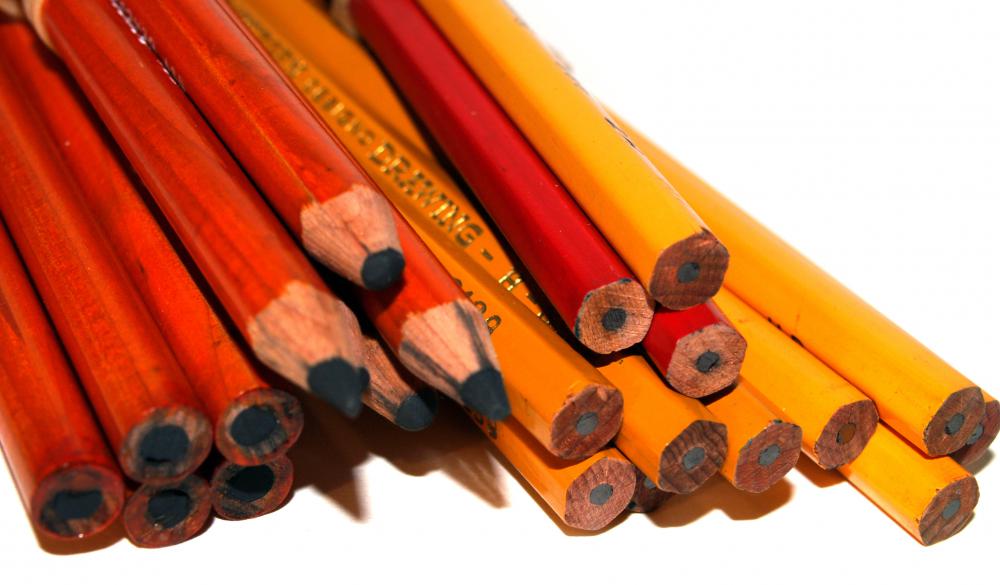
![Charcoal pencils can be purchased in sets or individually, and are rated by hardness.]() By: travis manleyCharcoal pencils can be purchased in sets or individually, and are rated by hardness.
By: travis manleyCharcoal pencils can be purchased in sets or individually, and are rated by hardness. -
![Compressed charcoal sticks are categorized as extra soft, soft, medium, and hard.]() By: Graça VictoriaCompressed charcoal sticks are categorized as extra soft, soft, medium, and hard.
By: Graça VictoriaCompressed charcoal sticks are categorized as extra soft, soft, medium, and hard. -
![Illustrators often use charcoal pencils to make drawings.]() By: M&S Literary AdventuresIllustrators often use charcoal pencils to make drawings.
By: M&S Literary AdventuresIllustrators often use charcoal pencils to make drawings. -
![Many pencils are made of graphite.]() By: 4restMany pencils are made of graphite.
By: 4restMany pencils are made of graphite. -
![Willow charcoal is used by professional artists, architects, and draftsmen.]() By: Ded PixtoWillow charcoal is used by professional artists, architects, and draftsmen.
By: Ded PixtoWillow charcoal is used by professional artists, architects, and draftsmen.



Discussion Comments
Ekfrey- I think that you would be better off with the 6B because the higher the number the softer the pencil. There is a slight difference between the 4B and the 6B, but if you really want an even softer pencil go with a 9B.
I personally love the 9B for sketching because I like to add definition and contrast in my picutures and this pencil makes it easier to do that.
The best thing to do is to go to an art supply store like Pearl. They should have samples for you to try so that you can actually see which ones work best for you.
What is the difference between a 4B and a 6B charcoal pencil? I want a black, thicker pencil. Something like stick charcoal in blackness.
Post your comments