
At WiseGEEK, we're committed to delivering accurate, trustworthy information. Our expert-authored content is rigorously fact-checked and sourced from credible authorities. Discover how we uphold the highest standards in providing you with reliable knowledge.
What are Catheters?
 Tricia Christensen
Tricia Christensen
Tricia Christensen
Catheters are hollow tubes, usually made of plastic or rubber, which can be inserted into the body to remove or deliver fluids. Most often, they are used in medical settings and are placed in the body by health care professionals. They can be used in the short or long term, depending on the need, and the length and size varies among different types. Some of the more common types include urinary and intravenous catheters, and those used for cardiac catheterization.
Urinary Catheter

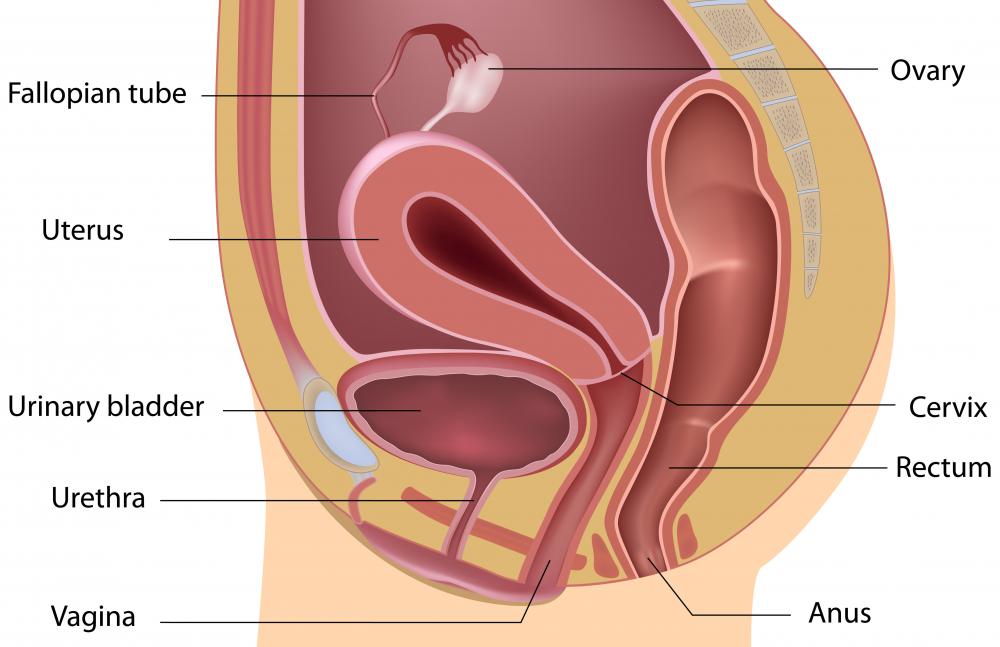
The urinary catheter is primarily used to drain urine from the bladder. In most cases it is inserted through the urethra and drains urine into an external bag. This type of catheter may be used to treat people with urinary dysfunction problems, such as urinary retention or urinary incontinence, or during long medical procedures and surgeries. Women who have an epidural during childbirth will usually use one because the epidural anesthetics cause a loss of bladder control. Urinary catheters may also be used for other medical conditions that disrupt bladder control, such as dementia or spinal cord injuries.

The three main types of urinary catheter are the intermittent catheter, the indwelling catheter, and the external catheter. The intermittent catheter is generally used by people with small bladders or those who cannot totally drain their bladders on their own. It is inserted through the urethra and removed each time the bladder is completely drained. Some intermittent catheters are reusable, while others are disposable.

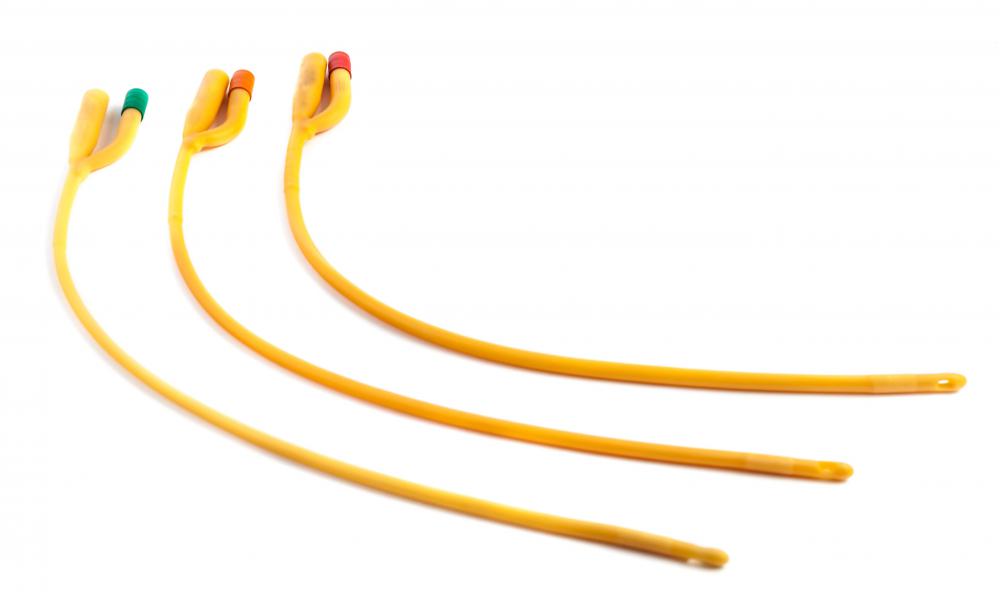
For long-term use, the indwelling catheter is more common, as it can be left inside the bladder for an extended period of time. Also called a Foley catheter, it is inserted through the urethra. A balloon holds it in place and is deflated once the catheter needs to be removed. In some cases, a suprapubic catheter is used instead, which is inserted into the bladder through the small hole just above the pubic bone.

As the name implies, the external or condom catheter is not inserted into the bladder. Rather, it is placed on the outside of the body, over the opening of the urethra, where the urine is caught and transferred to a drainage bag. It is more popular with men and is not known to be quite as effective for women.
Intravenous Catheter
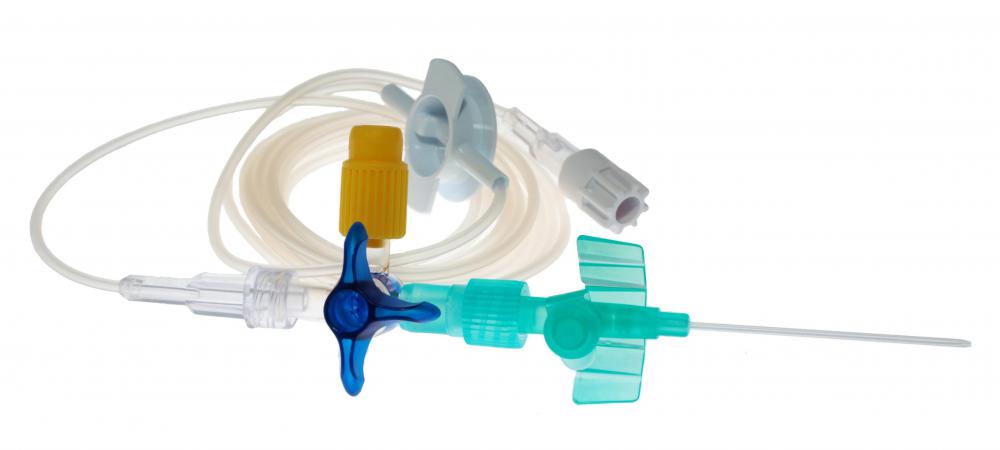
Intravenous (IV) therapy usually relies on a catheter to transfer fluids, such as medications, into the body. IVs can also be used to extract fluids from the body; for example, an IV is used to collect blood from a donor, which passes through the catheter and is stored in plastic bags for later use. Completing the circle, patients who need blood transfusions receive the blood by way of a catheter. The hand and forearm are common places for an IV to be inserted into a patient's body; the catheter is removed once the fluids have been transferred.
Cardiac Catheterization

Catheters are also used to diagnose and treat various heart conditions, such as coronary heart disease. During a procedure called cardiac catheterization, a cardiologist inserts a catheter directly into a patient's blood vessel and gently guides it to the heart. This allows the doctor to visualize the heart, blood vessels, and any blockages or anomalies in order to diagnose and treat the patient.

Cardiac catheterization is a minimally invasive procedure and is usually performed with only mild sedation, as opposed to general anesthesia. Most seriously ill patients, who are at the greatest risk under general anesthesia, may safely undergo cardiac catheterization. It is generally considered an outpatient procedure and recovery is relatively quick.
Other Uses

Catheters also prove useful in chorionic villus sampling, where they are one method of obtaining a sample from the placenta. The sampling provides expectant parents with information about whether their child has certain types of birth defects. The extraction of amniotic fluid when testing for abnormalities in a fetus also relies on the catheter, as does harvesting eggs or implanting embryos in women who cannot conceive by other means.
Risks
There is a chance of complications when using any type of catheter. Complications can vary depending on the type of catheter, but some common problems that may arise include an allergic reaction to the catheter material or bleeding when the catheter is placed. Urinary catheters can sometimes cause urinary tract infections (UTIs). Any potential complications and risks should be discussed with the patient before the catheter is inserted. If any complications do arise, the patient should contact a health care professional immediately.
Tricia Christensen
Tricia has a Literature degree from Sonoma State University and has been a frequent WiseGEEK contributor for many years. She is especially passionate about reading and writing, although her other interests include medicine, art, film, history, politics, ethics, and religion. Tricia lives in Northern California and is currently working on her first novel.
Learn more...
Tricia Christensen
Tricia has a Literature degree from Sonoma State University and has been a frequent WiseGEEK contributor for many years. She is especially passionate about reading and writing, although her other interests include medicine, art, film, history, politics, ethics, and religion. Tricia lives in Northern California and is currently working on her first novel.
Learn more...AS FEATURED ON:
AS FEATURED ON:









-
![A condom catheter.]() By: Dave WillmanA condom catheter.
By: Dave WillmanA condom catheter. -
![An IV catheter.]() By: Aleksandrs JermakoviAn IV catheter.
By: Aleksandrs JermakoviAn IV catheter. -
![A urinary catheter is inserted into the urethra and then the bladder.]() By: Alila Medical MediaA urinary catheter is inserted into the urethra and then the bladder.
By: Alila Medical MediaA urinary catheter is inserted into the urethra and then the bladder. -
![Urinary catheters types include intermittent, indwelling, and external.]() By: Dario Lo PrestiUrinary catheters types include intermittent, indwelling, and external.
By: Dario Lo PrestiUrinary catheters types include intermittent, indwelling, and external. -
![Catheters may be used for the diagnosis and treatment of heart diseases.]() By: Robert KneschkeCatheters may be used for the diagnosis and treatment of heart diseases.
By: Robert KneschkeCatheters may be used for the diagnosis and treatment of heart diseases. -
![Urinary catheters connect to an external bag where urine is collected.]() By: sudok1Urinary catheters connect to an external bag where urine is collected.
By: sudok1Urinary catheters connect to an external bag where urine is collected. -
![Catheters are used with IVs to transfer fluids and medications into the body.]() By: ShpilbergStudiosCatheters are used with IVs to transfer fluids and medications into the body.
By: ShpilbergStudiosCatheters are used with IVs to transfer fluids and medications into the body.



Discussion Comments
@chrisinbama: Just wanted to let you know that I saw on TV that there are several medical supply companies that have been able to get patients over 100 catheters per month through Medicare. You might want to check into that.
My aunt has had to use a bladder catheter for many years. It is amazing to me that her insurance company will only allow her to have 15 catheters per month.
Post your comments