
At DelightedCooking, we're committed to delivering accurate, trustworthy information. Our expert-authored content is rigorously fact-checked and sourced from credible authorities. Discover how we uphold the highest standards in providing you with reliable knowledge.
What are Button Mushrooms?
 Tricia Christensen
Tricia Christensen
Tricia Christensen
Agaricus bisporus is usually called the common or commercial mushroom. These fungi are available at many grocery stores, and have a white cap. The species may be sold under many different names, some of which refer to its size. Small white versions of A. bisporus are generally referred to as button mushrooms, while larger versions may be given a more generic name.
True button mushrooms are picked when they are very young and when the caps of the mushroom are still closed. They should be free of any marks or discolorations, and the stems on their bottoms should not have hardened. Generally, when a cook buys fresher mushrooms, they are easy to slice and the whole mushroom, stem included, can be used. Those that have sat for a few days in the grocery store, or that are larger, may feature a hardened bottom stem that needs to be removed prior to slicing or preparing it.

The name "button" tends to refer to a specific size, but they are not the only mushrooms that are A. bisporus. Portobello mushrooms are large, brown versions, for example, as are smaller Italian brown mushrooms. Consumers might also find wild mushrooms in button size, simply meaning that they’re smaller and picked at an earlier stage.
Many people prefer smaller versions of A. bisporus because they tend to be freshest and are most likely to feature the closed cap. A closed cap means that a person can’t see the tiny black fibers inside the mushroom when it's turned upside down. Open cap button mushrooms should be avoided, as they are of inferior quality.

When preparing button mushrooms, most chefs suggest merely wiping off the mushroom to remove any dirt. The cook can wash them too, but they are porous and likely to absorb liquids. Cooks who do plan to wash them, which is not a bad idea since many are grown in manure, should do so right before they plan to serve or cook them. Though sliced mushrooms are available, most chefs suggest that they be sliced just before they are used so that they have the freshest taste. People who are concerned about the dirt in which they’re grown will also find it challenging to wash pre-sliced mushrooms.

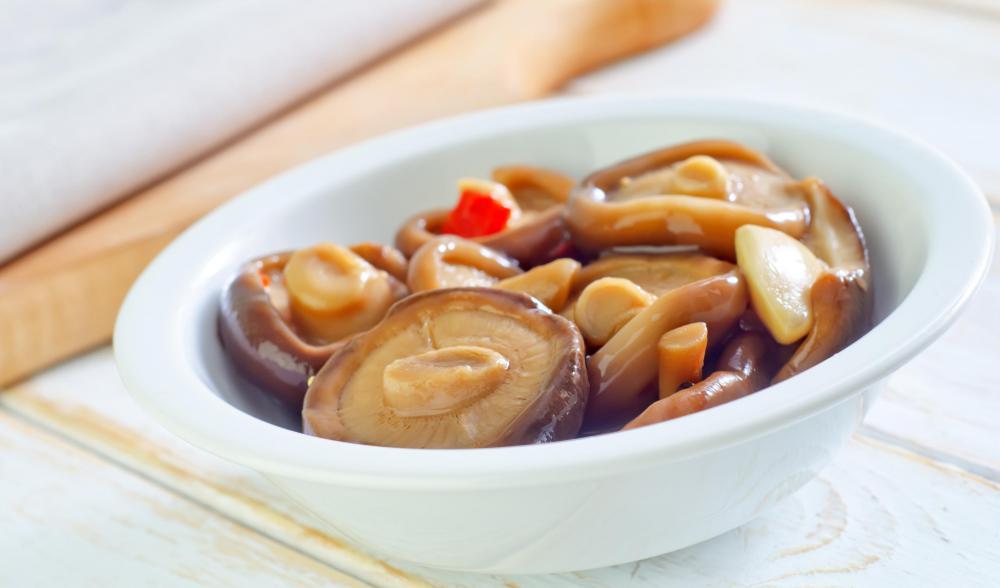
Button varieties are also available in the canned food section. Some are canned in water, while other sare pickled or packed in oil and vinegar. They make great toppings for individual pizzas because of their convenient size, and they can be a good addition to stir-fried dishes and salads. With all mushroom sizes or ages, cooks should be careful not to overcook them, or they can get rubbery and slimy. Cooks who are adding mushrooms to a stew, for instance, should wait until the last five to ten minutes to add them.
Mushroom enthusiasts can find button mushrooms in the wild, but they can easily be confused with A. Californicus, a look-alike that is mildly toxic. Because of the similarities, gathering wild mushrooms should only be done with an expert.
Tricia Christensen
Tricia has a Literature degree from Sonoma State University and has been a frequent DelightedCooking contributor for many years. She is especially passionate about reading and writing, although her other interests include medicine, art, film, history, politics, ethics, and religion. Tricia lives in Northern California and is currently working on her first novel.
Learn more...
Tricia Christensen
Tricia has a Literature degree from Sonoma State University and has been a frequent DelightedCooking contributor for many years. She is especially passionate about reading and writing, although her other interests include medicine, art, film, history, politics, ethics, and religion. Tricia lives in Northern California and is currently working on her first novel.
Learn more...AS FEATURED ON:
AS FEATURED ON:


-
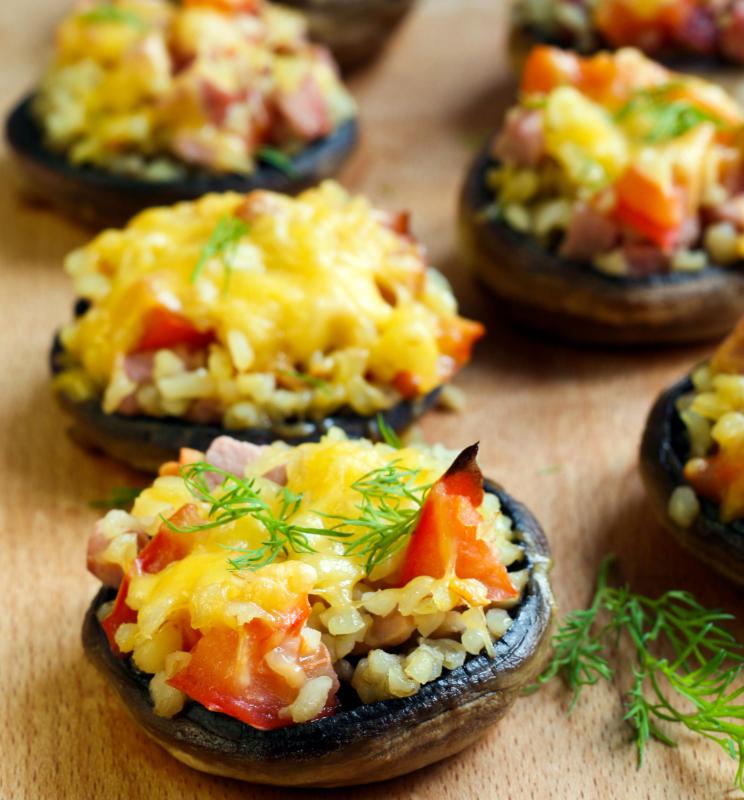
![Stuffed mushrooms make a delicious bite-sized appetizer.]() By: manyakoticStuffed mushrooms make a delicious bite-sized appetizer.
By: manyakoticStuffed mushrooms make a delicious bite-sized appetizer. -
![Button mushrooms should be sliced just before you plan to cook them.]() By: Aaron AmatButton mushrooms should be sliced just before you plan to cook them.
By: Aaron AmatButton mushrooms should be sliced just before you plan to cook them. -
![Chicken Marsala and other hearty Italian dishes call for button mushrooms.]() By: annie1961Chicken Marsala and other hearty Italian dishes call for button mushrooms.
By: annie1961Chicken Marsala and other hearty Italian dishes call for button mushrooms. -
![Mushrooms, depending on the variety, are often rich in ergosterol, or pro-vitamin D2, as well as fiber and certain minerals, such as selenium.]() By: tycoon101Mushrooms, depending on the variety, are often rich in ergosterol, or pro-vitamin D2, as well as fiber and certain minerals, such as selenium.
By: tycoon101Mushrooms, depending on the variety, are often rich in ergosterol, or pro-vitamin D2, as well as fiber and certain minerals, such as selenium. -
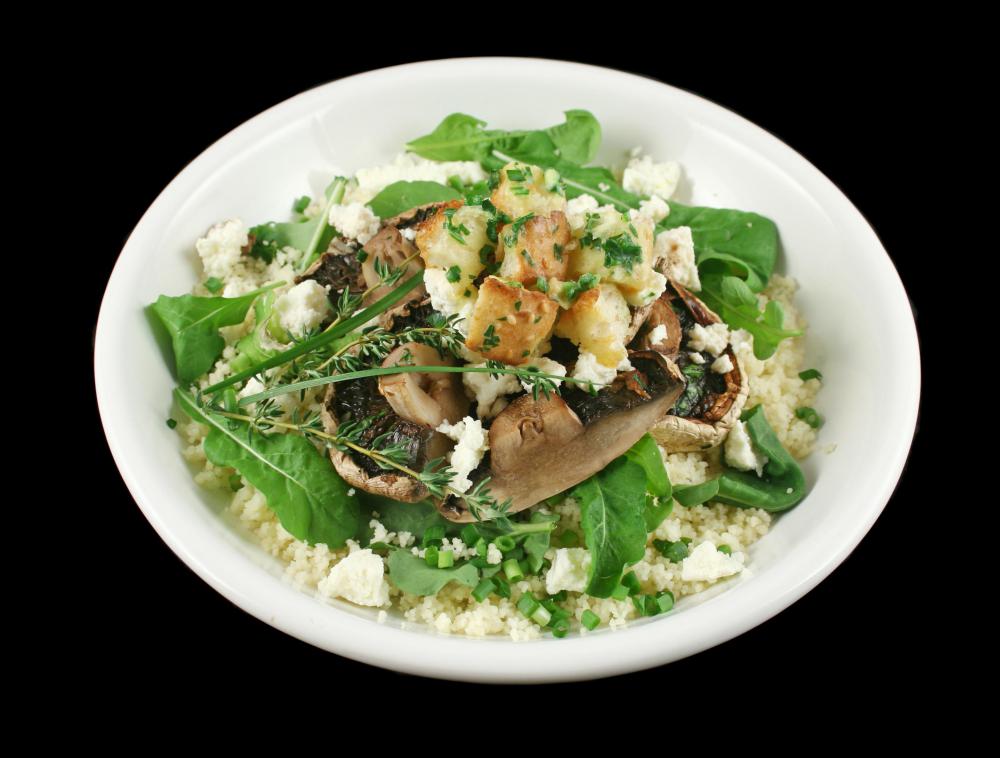
![Mushrooms may be featured in salads.]() By: Brett MulcahyMushrooms may be featured in salads.
By: Brett MulcahyMushrooms may be featured in salads.


Discussion Comments
@OeKc05 – If you are going to eat mushrooms that are growing outside, it is always best to grow the mushrooms yourself. That way, you know exactly what kind they are.
However, if you eat what is called a “mock meadow mushroom,” you shouldn't die. My cousin ate one once, and though he had painful cramps, diarrhea, and extreme nausea, he didn't have to go to a doctor. Once he got the mushroom out of his system, he got well.
He never ate another wild mushroom, though. Even though the mildly toxic ones won't kill you, they will make you so sick that you will curse yourself for eating one!
What happens if you eat one of the A. Californicus mushrooms by accident? I have what looks like white button mushrooms growing in a field beside my house, but I've been afraid to try them. If I did eat one and it turned out to be the toxic kind instead, what would happen to me?
I have heard of growing white button mushrooms in cow manure before, but I know that they aren't the only type of mushroom that grows well in dung. I had some friends in college who liked to harvest hallucinogenic mushrooms, and they would go out into their grandparents' cow pasture to get them.
From what they have told me about the appearance of these mushrooms, I don't think it would have been easy to confuse them with white button mushrooms. They are yellowish-brown and can turn blue when you bruise the gills and stems.
However, with the big variety of mushrooms that can grow naturally out of cow dung, I don't see how they keep from getting confused. I have heard of a toxic mushroom that also turns blue when bruised, so it's risky business!
I've never been good at cooking raw button mushrooms. If a recipe calls for them, I just use the canned kind and then eliminate some of the salt.
I like pouring canned mushrooms into beef and broccoli stir-fry. They taste really good mixed in with the soy and teriyaki sauce.
I substitute canned foods for fresh ones a lot for convenience. I know this isn't a healthy practice, but I just don't have the time to cook all the components of a meal from scratch.
@galen84basc -- I've never grown button mushrooms before, but I do have a little mushroom growing insight, since I've grown shiitakes before to make dried mushrooms for my farmer's market.
It's not too hard, but you do need to be aware that it's sort of a messy undertaking. For instance, mushrooms need a warm, moist temperature, and some good compost in order to grow properly, which can be kind of smelly.
So it may not be the best thing to do indoors -- try growing a patch outside, or in room where you don't go too often, like a basement. That way your whole house doesn't get that fungus-y smell.
You may also want to just google "how to grow button mushrooms" to get some more tips -- it's not too hard, I would think, but it's better to do your homework before you get involved.
Best of luck.
I usually end up using dried baby button mushrooms for convenience's sake, but now I'm really curious about growing them.
Is it really that easy? I do love mushrooms, and I tend to use them a lot when cooking, so this could be a big money saver for me.
What exactly is involved in growing mushrooms? I've never done anything like that before, although I'm pretty good at keeping my houseplants alive, so it's not like I've got a black thumb or anything.
So can anybody tell me how to get started with button mushroom growing, for instance, what equipment is involved?
Do you need to buy button mushroom spores or something, or can you get a starter tray that sets it up for you? Any input?
Nice article -- I've been growing button mushrooms from spores for a few years now, and it's amazing how many little things you can learn about them.
For instance, most people have no idea that an open cap mushroom is generally of lower quality, or that it's better to wipe them off than wash them off, if they're relatively clean already.
I would definitely recommend people to try their hand at growing button mushrooms though, if given the chance. Though most stores do provide a decent standard of mushrooms, they tend to be a little pricy (at least in my area), and the quality just can't measure up to a home grown mushroom.
Besides, it's pretty easy to grow button mushrooms in your home, since they're so small, and it can be a great science project if you've got kids. Best of all, you control what goes onto your mushrooms, and can be absolutely sure that you don't consume harmful chemicals.
I would definitely recommend it for any mushroom lovers.
Did you hear this one? Mushrooms have a compound that helps prevent plaque buildup in arteries. How great is that?
Post your comments