
At TheHealthBoard, we're committed to delivering accurate, trustworthy information. Our expert-authored content is rigorously fact-checked and sourced from credible authorities. Discover how we uphold the highest standards in providing you with reliable knowledge.
What are Blood Clots?
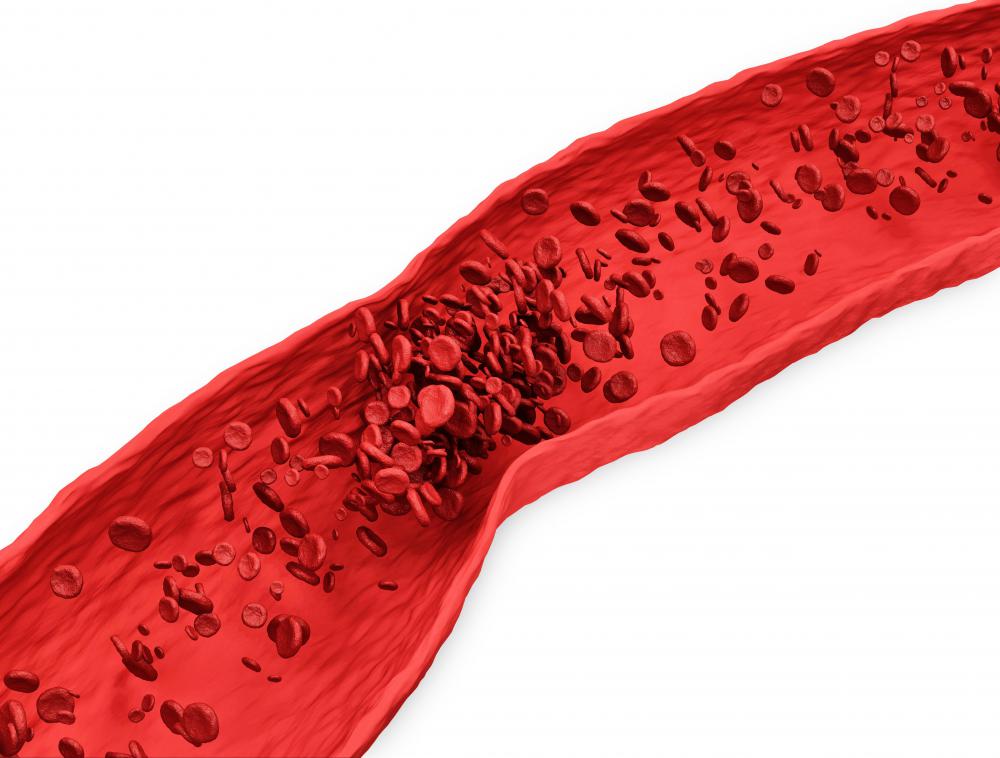
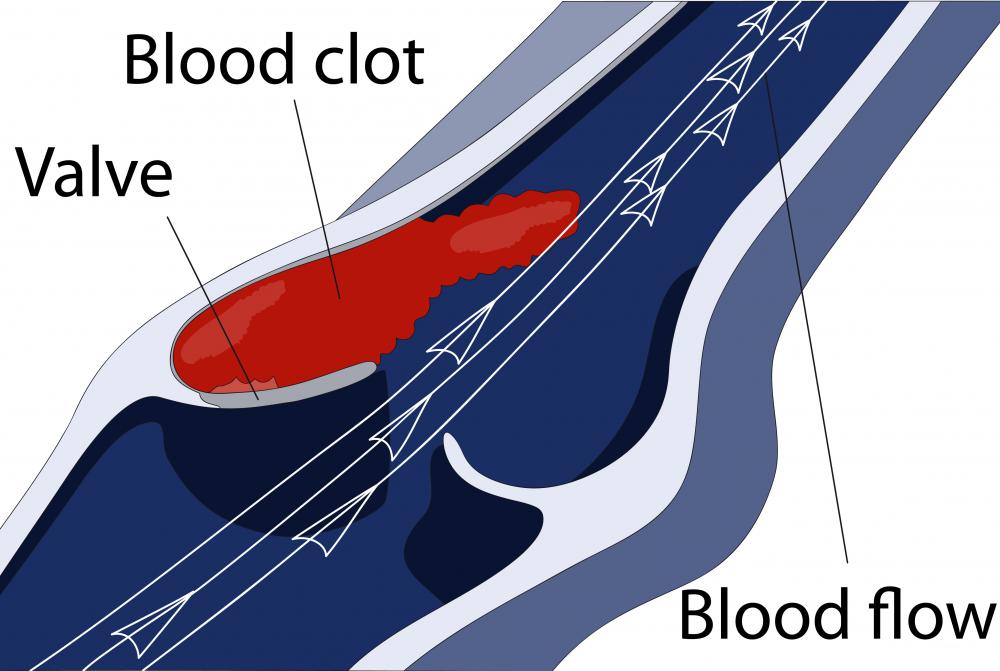
Blood clots are not a normal condition, but they occur when blood coagulates or hardens. They typically form after the body is injured to prevent excessive bleeding. Also called a thrombus, it is made when blood cells lump together with fibrin, a stretchy, thread-like protein. Research has shown fibrin to be a strong material that can absorb blood from cuts to help heal them, but is also responsible for making blood clots hard to break down. Medications are now available to help destroy clots by working to break up the fibrin.
In the bloodstream, clots that develop and remain in the heart or in a blood vessel are called thrombi. Emboli are those that are located somewhere in the body besides the heart or a blood vessel, and they create an embolism. A thromboembolism occurs when a part of the thrombus causes a blockage to the heart, brain, or lungs and stops or restricts blood flow. When this happens, it could cause a heart attack or stroke.

Blood clots can also destroy body tissues because, as the blood flow is restricted, oxygen is kept out of the tissues in that part of the body. Ischemia is the name of the condition that occurs when no blood flow or oxygen reaches the tissue. If ischemia is left unchecked, body tissues in the affected region can be damaged or die.
Deep venous thrombosis (DVT) is a condition in which blood clot develops in a vein in the lower part of the body, such as the pelvis, thighs, or lower legs. This can seriously restrict the blood flow in the limb and may cause swelling and redness, although some people do not experience any systems. Other people experience a lot of pain when blood clots form. Genetic factors are thought to be partly responsible for the causes of deep venous thrombosis, although poor circulation caused by sitting in long airplane flights is thought to be another causative factor in some cases. If the clot breaks free and travels to the lungs or heart, it can be fatal.
AS FEATURED ON:
AS FEATURED ON:


-
![Going on long airplane flights may lead to blood clots.]()
Going on long airplane flights may lead to blood clots. -
![Blood clots, which form when blood cells stick together, can obstruct blood flow leading to a serious medical emergency.]() By: ras-slavaBlood clots, which form when blood cells stick together, can obstruct blood flow leading to a serious medical emergency.
By: ras-slavaBlood clots, which form when blood cells stick together, can obstruct blood flow leading to a serious medical emergency. -
![A blood clot, also known as a thrombus, is the result of several blood cells lumping together with fibrin.]() By: clearviewstockA blood clot, also known as a thrombus, is the result of several blood cells lumping together with fibrin.
By: clearviewstockA blood clot, also known as a thrombus, is the result of several blood cells lumping together with fibrin. -
![Blood vessels are part of the circulatory system and are responsible for transporting blood.]() By: stockshoppeBlood vessels are part of the circulatory system and are responsible for transporting blood.
By: stockshoppeBlood vessels are part of the circulatory system and are responsible for transporting blood. -
![Those prone to getting blood clots are recommended to wear compression stockings during flights.]() By: fflyThose prone to getting blood clots are recommended to wear compression stockings during flights.
By: fflyThose prone to getting blood clots are recommended to wear compression stockings during flights. -
![Blood clots occur when blood coagulates or hardens.]() By: p6m5Blood clots occur when blood coagulates or hardens.
By: p6m5Blood clots occur when blood coagulates or hardens.



Discussion Comments
How is a blood clot formed at the base of the skull?
Why is that when I stand too long red spots on my legs to my feet are appearing and when I touch it I feel pain and sometimes I can't walk. It's just like having arthritis. Please help me.
After I came off of Prednisone, I experienced superficial blood clots in lower leg. Ended up in hospital because of clots in lungs. Would Prednisone have been a factor in this? Never, never had this before (am 81) Treated for gout with Prednisone. thanks
Is it normal to have blood cots when your period is on?
1. What is DVT?
2. If the blood clots occurs in the head, can it cause death too?
3. What can we do with it? Is there a cure?
thanks for answering..
Thanks for your comments, sevenseas. Yes, it is a good idea to get up and walk around as much as possible when traveling in cramped quarters. Leg pain, swelling etc. should be checked out by a doctor to rule out conditions such as deep vein thrombosis.
To sit for a long period of time in close or tight places such as car, airplane or train can increase the chances for formation of deep vein thrombosis. It is advisable therefore, when traveling long distances, to get up and walk around every few hours. It might be wise too, to wear compression stockings.
It is always a good idea to drink plenty of water to prevent dehydration.
Post your comments