
At WiseGEEK, we're committed to delivering accurate, trustworthy information. Our expert-authored content is rigorously fact-checked and sourced from credible authorities. Discover how we uphold the highest standards in providing you with reliable knowledge.
What are Blackheads?
 Tricia Christensen
Tricia Christensen
Tricia Christensen
Blackheads are the result of hair follicles being blocked by skin cells and a material called sebum, which is naturally secreted by the sebaceous glands. Sebum is excreted in much larger numbers as kids reach adolescence, accounting for red colored pimples, blackheads and whiteheads. These blockages are very similar to whiteheads, but the main difference lies in the fact that the follicles involved are larger and remain open.
When an open pore becomes blocked with dead skin cells and sebum, this material is exposed to air and begins to oxidize. This causes the material to discolor and turn black, resulting in blackheads. Whiteheads, on the other hand, are covered by a tiny amount of skin that prevents this oxidation, so they remain white in color.

Both blackheads and whiteheads are also called comedones, which are essentially plugs of the hair follicle. They are also called open comedones closed comedones, respectively. They tend to be most prevalent on the skin of the face, neck, and chest, though technically any place where one has hair follicles can yield these blemishes.
Using a good exfoliant, which helps to clean dead skin material out of pores, can often reduce number of blackheads. Also, an astringent may help reduce oil excreted by the pores, which tends to block skin material and form these annoying plugs. Most dermatologists recommend having blockages removed professionally, since improper removal can lead to scarring of the skin. In time, however, most people can remove them merely through use of daily exfoliation and daily application of astringent.

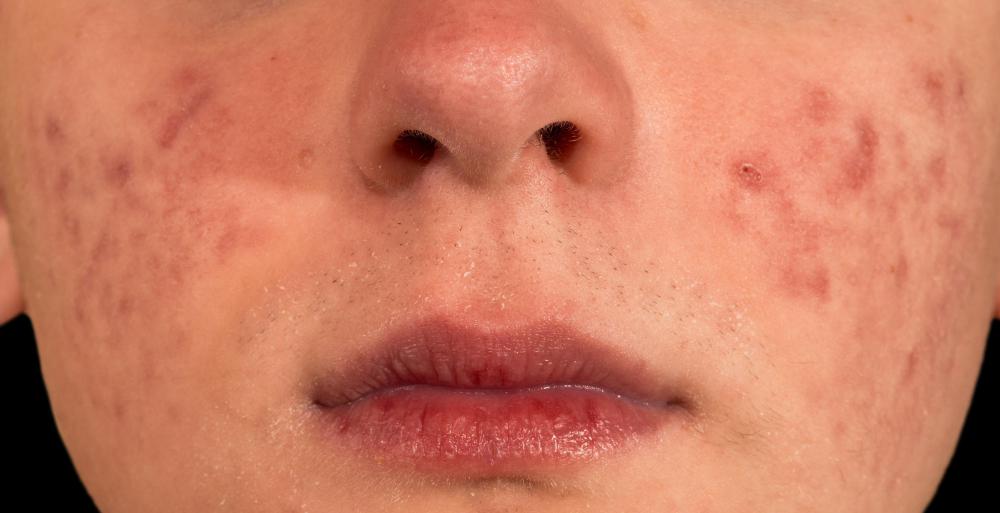
As with all pimples, some blackheads are stubborn, and may not respond to over-the-counter medications or treatments. In these cases, dermatologists can prescribe medications that help slough off dead skin so that fewer plugs form. Teens and adults who have a few blackheads are certainly not alone. About 85% of teens suffer from one form of acne or another.
Tricia Christensen
Tricia has a Literature degree from Sonoma State University and has been a frequent WiseGEEK contributor for many years. She is especially passionate about reading and writing, although her other interests include medicine, art, film, history, politics, ethics, and religion. Tricia lives in Northern California and is currently working on her first novel.
Learn more...
Tricia Christensen
Tricia has a Literature degree from Sonoma State University and has been a frequent WiseGEEK contributor for many years. She is especially passionate about reading and writing, although her other interests include medicine, art, film, history, politics, ethics, and religion. Tricia lives in Northern California and is currently working on her first novel.
Learn more...AS FEATURED ON:
AS FEATURED ON:









-
![Using an exfoliant can help clean out pores.]() By: kubaisUsing an exfoliant can help clean out pores.
By: kubaisUsing an exfoliant can help clean out pores. -
![About 85 percent of teens suffer from one form of acne or another.]() By: F.C.G.About 85 percent of teens suffer from one form of acne or another.
By: F.C.G.About 85 percent of teens suffer from one form of acne or another. -
![Improper blackhead removal can lead to scarring of the skin.]() By: Piotr MarcinskiImproper blackhead removal can lead to scarring of the skin.
By: Piotr MarcinskiImproper blackhead removal can lead to scarring of the skin. -
![Using a gentle cleanser can help keep pores clean and reduce the chances of a breakout.]() By: ipagUsing a gentle cleanser can help keep pores clean and reduce the chances of a breakout.
By: ipagUsing a gentle cleanser can help keep pores clean and reduce the chances of a breakout. -
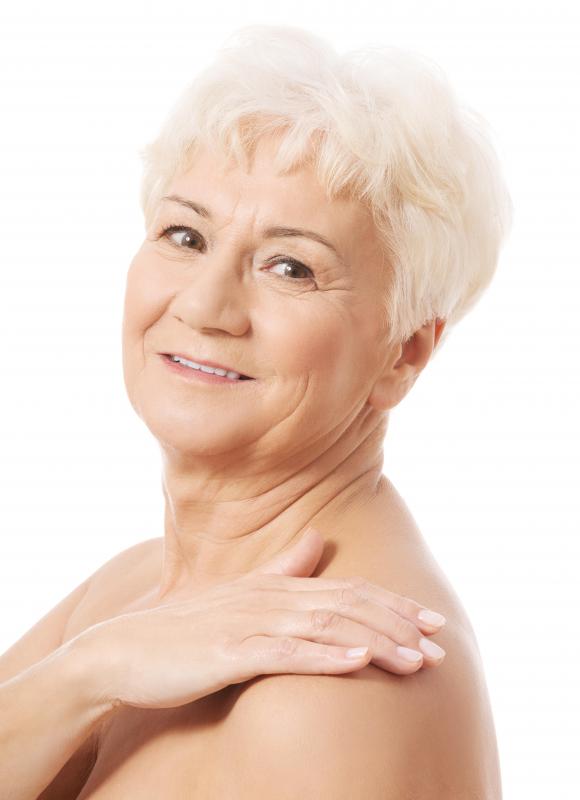
![Older individuals, who may be more prone to dry skin, may also be less prone to experiencing blackheads.]() By: Piotr MarcinskiOlder individuals, who may be more prone to dry skin, may also be less prone to experiencing blackheads.
By: Piotr MarcinskiOlder individuals, who may be more prone to dry skin, may also be less prone to experiencing blackheads. -
![Applying a steamed towel to the face can help unclog the pores and reduce the occurrence of acne.]() By: miya227Applying a steamed towel to the face can help unclog the pores and reduce the occurrence of acne.
By: miya227Applying a steamed towel to the face can help unclog the pores and reduce the occurrence of acne. -
![Individuals suffering from acne may consider using products that contain benzoyl peroxide.]() By: Olga LyubkinIndividuals suffering from acne may consider using products that contain benzoyl peroxide.
By: Olga LyubkinIndividuals suffering from acne may consider using products that contain benzoyl peroxide.





Discuss this Article
Post your comments