
At TheHealthBoard, we're committed to delivering accurate, trustworthy information. Our expert-authored content is rigorously fact-checked and sourced from credible authorities. Discover how we uphold the highest standards in providing you with reliable knowledge.
What are Bifocals?
Bifocals are a type of prescription eyeglasses designed for people who need both near and farsighted vision correction. Different from single vision lenses, they have two corrective lenses on each side of a pair of glasses, for a total of four lenses per pair.
Many people wear single vision corrective lenses for a number of years until their vision changes and they require bifocals for total vision correction. However, there remains a misconception that only aging people require this type of glasses. While its true that a person’s vision may change with age, requiring a switch from single vision lenses to bifocals, many people suffer from a combination of near and farsightedness long before they realize it. In some cases, bifocals can also help correct astigmatism that is present in combination with other refractive defects.

There are a few different types of bifocals, and a licensed optician can help patients with a prescription choose the best kind for their needs. Developments in the engineering of the lenses have been made over the years to eliminate the lines in many corrective bifocals. Progressive lenses, for example, correct vision at different powers depending on where one looks through the lens, but the lines are absent.

Though most people who require bifocals have difficulty focusing on objects both up close and far away, they have always been designed with the corrective lens for close range focusing at the bottom and the corrective lens for distance vision at the top. While this design once made sense, because close range focusing was generally required for reading and writing, activities traditionally preformed while looking down, more and more people find it awkward to use such lenses with a computer. Since the computer monitor is directly in front of the user, the up close corrective lens seems out of place on some glasses.

There are new lenses in development to correct this common problem, but in the mean time, many people who require bifocals have found that contact lenses are the best option for their vision correction. There are many advantages to wearing contact lenses rather than glasses, including improved visual acuity. Contacts provide better peripheral vision and eliminate the need to adjust the angle of the head for computer use.

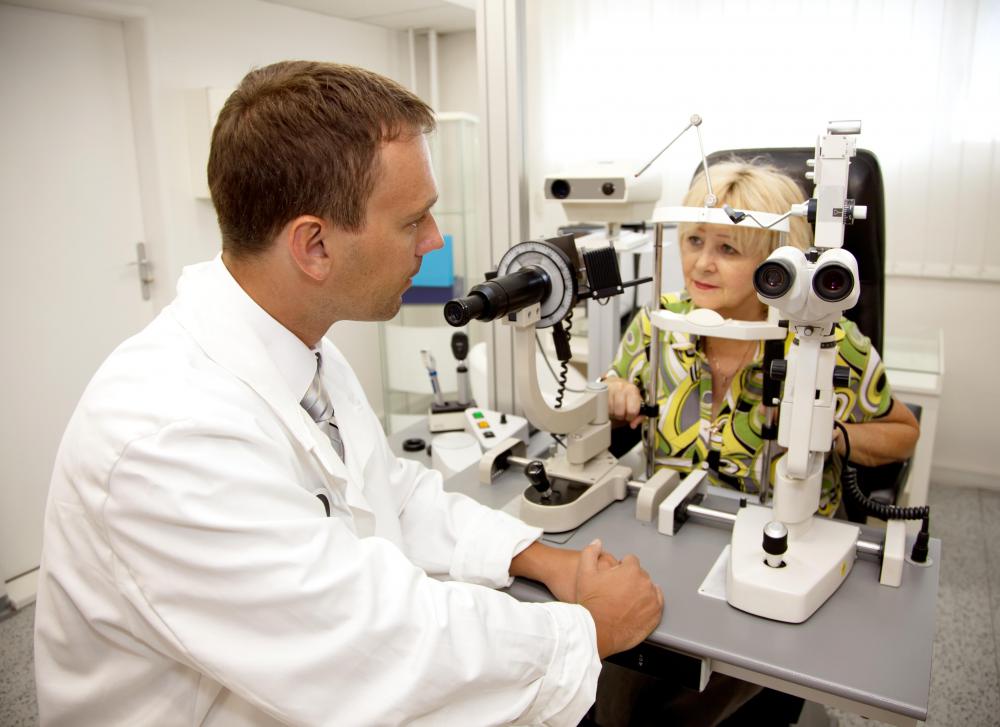
Not all vision problems can be corrected with contact lenses, but people should consult their optometrist or ophthalmologist if they would like to change from bifocals to contact lenses. Because visual acuity can change over time, people should have their eyes checked at a minimum of every two years.
AS FEATURED ON:
AS FEATURED ON:


-
![Contacts may be helpful for someone who requires bifocals.]() By: chrisdorneyContacts may be helpful for someone who requires bifocals.
By: chrisdorneyContacts may be helpful for someone who requires bifocals. -
![Consult with your optometrist if you're thinking about switching to bifocals.]() By: RemziConsult with your optometrist if you're thinking about switching to bifocals.
By: RemziConsult with your optometrist if you're thinking about switching to bifocals. -
![Bifocals are designed for people who need both near and farsighted vision correction.]() By: robert lerichBifocals are designed for people who need both near and farsighted vision correction.
By: robert lerichBifocals are designed for people who need both near and farsighted vision correction. -
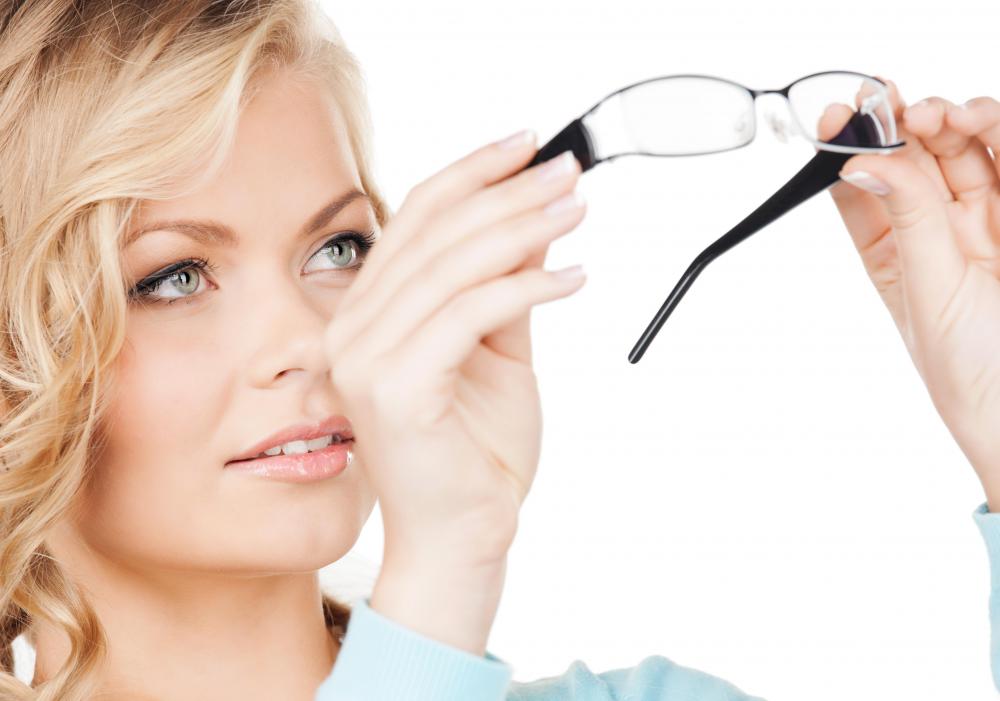
![Bifocals can help correct astigmatism in some cases.]() By: Syda ProductionsBifocals can help correct astigmatism in some cases.
By: Syda ProductionsBifocals can help correct astigmatism in some cases. -
![Those who are nearsighted -- a condition also known as myopia -- can see nearby objects but things that are far away appear blurry.]() By: bellemediaThose who are nearsighted -- a condition also known as myopia -- can see nearby objects but things that are far away appear blurry.
By: bellemediaThose who are nearsighted -- a condition also known as myopia -- can see nearby objects but things that are far away appear blurry.



Discussion Comments
I have had bifocal glasses for years. People say I have very messed up vision.
Who would have thought that all of the technology we have these days, would affect something like the design of bifocal eyeglasses?
It makes perfect sense though -- as I type this I am looking directly at my computer screen. I can imagine how hard it would be to do this while wearing bifocals. You would probably have to hold your head at a weird angle. And, ironically, that could probably result in a whole different medical issue if you were to do it often enough.
I had no idea that bifocals could help people with astigmatism. How is that possible? I have an astigmatism, but I have no problem seeing things up close, so how would bifocal glasses help me?
I want to get a smaller pair of glasses but people have told me because the bifocal is up higher than with larger glasses that it makes your eyes look magnified.
Post your comments