
At AllThingsNature, we're committed to delivering accurate, trustworthy information. Our expert-authored content is rigorously fact-checked and sourced from credible authorities. Discover how we uphold the highest standards in providing you with reliable knowledge.
What are Battery Hens?
 Mary McMahon
Mary McMahon
Mary McMahon
Battery hens are laying hens that are confined in battery cages for the duration of their short lives. A number of factors combine to make the battery cage environment extremely uncomfortable for such hens, and some animal rights organizations have vigorously protested the practice of keeping hens in such cages. Most eggs in the market are produced by battery hens, unless the packaging on the carton explicitly states otherwise.
The earliest version of the battery cage was developed around the 1930s, and it quickly became a runaway success in the poultry industry. Several things distinguish a battery cage, also known as a laying cage. The first is the slanted floor, which is designed to allow eggs to roll out of the cage and onto a collecting conveyor belt. The cage is typically also all wire, allowing droppings and feathers to fall through the floor of the cage and onto another moving conveyor belt.

Food and water are delivered to battery hens using large conveyor systems, which deliver set amounts at specific intervals. Depending on the farming practices being used, the food may be supplemented with antibiotics to forestall infection, a common problem in battery hens, and the food may also be amended with vitamins and minerals in an attempt to get the hens to produce more eggs.

Perhaps the most distinctive feature of the battery cage is the size. Most battery cages are barely larger than the hens they contain, and in many instances, hens are unable to move or turn around. Typically, battery hens are installed in battery cages within weeks of hatching, and they spend around nine months in cages before being disposed of because they are no longer productive.
Like many animals, chickens can develop some curious responses to stress. Many battery hens, for example, will attempt to attack each other through the wire. As a result, most commercial egg producer debeak their battery hens periodically, removing their beaks with a heated knife so that they cannot attack each other. The hens may also throw themselves against the bars of the cage or wedge body parts into the wire, in some cases severely injuring or killing themselves.
Several nations around the world ban the practice of keeping hens in laying cages, under the argument that it is inhumane. It may also be unhealthy; confined conditions are a breeding ground for bacteria, which can be transmitted through the eggs of the battery hens to human consumers. Such bans can sometimes be disingenuous, as they do not ban caging outright, but rather the practice of using extremely small cages. Many animal welfare groups would like to see free range farming adopted as a universal practice, allowing chickens to live more natural lives outdoors, rather than being confined.
Frequently Asked Questions
What are battery hens?
Battery hens are chickens raised in intensive farming systems, specifically in closely-packed cage systems known as battery cages. These cages are designed to maximize space efficiency at the cost of the animals' welfare, often leading to severe physical and psychological stress for the hens. They are primarily used for egg production and are a controversial topic due to animal welfare concerns.
Why are battery cages considered inhumane?
Battery cages are deemed inhumane because they confine hens to extremely small spaces, restricting their natural behaviors like wing-flapping, dust-bathing, and foraging. According to the Humane Society, each hen has less space than a single sheet of letter-sized paper to live on, leading to muscle atrophy and bone weakness, as well as high levels of stress and aggression.
How does battery farming affect hen health?
Battery farming significantly impacts hen health, leading to problems such as osteoporosis, feather loss, and foot lesions due to lack of movement and constant rubbing against cage wires. The European Food Safety Authority reports that hens in cages suffer higher levels of bone fractures compared to those in alternative systems, highlighting the physical toll of battery cages.
What is the difference between battery hens and free-range hens?
Battery hens are kept in restrictive cages with limited movement, while free-range hens have access to outdoor spaces where they can exhibit natural behaviors. Free-range environments typically provide better living conditions, including opportunities for pecking, scratching, and social interaction, which contribute to improved welfare and health of the hens.
Are eggs from battery hens different from those from free-range hens?
Eggs from battery hens can differ from those from free-range hens in terms of nutritional content and quality. Studies suggest that free-range eggs may have higher levels of omega-3 fatty acids and vitamins, according to research published in the journal "Poultry Science." Consumers often report a preference for the taste and color of free-range eggs as well.
What are the alternatives to battery hen farming?
Alternatives to battery hen farming include free-range, organic, and barn systems, where hens have more space and opportunities for natural behavior. Enriched colony cages, which offer more space and environmental enrichments like perches and nesting areas, are also an alternative. These systems aim to balance egg production with better animal welfare standards.
Mary McMahon
Ever since she began contributing to the site several years ago, Mary has embraced the exciting challenge of being a AllThingsNature researcher and writer. Mary has a liberal arts degree from Goddard College and spends her free time reading, cooking, and exploring the great outdoors.
Learn more...
Mary McMahon
Ever since she began contributing to the site several years ago, Mary has embraced the exciting challenge of being a AllThingsNature researcher and writer. Mary has a liberal arts degree from Goddard College and spends her free time reading, cooking, and exploring the great outdoors.
Learn more...AS FEATURED ON:
AS FEATURED ON:









-
![Battery cages do not allow much room for movement.]() By: emirkooBattery cages do not allow much room for movement.
By: emirkooBattery cages do not allow much room for movement. -
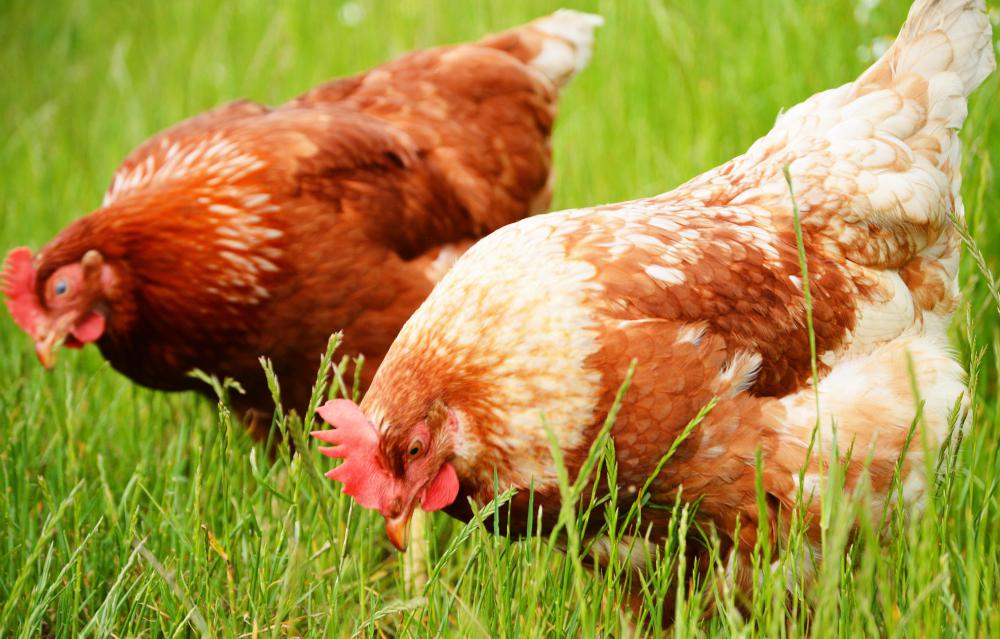
![Many animal welfare groups would like to see all chickens to be allowed to live natural lives outdoors and not be confined.]() By: monticelllloMany animal welfare groups would like to see all chickens to be allowed to live natural lives outdoors and not be confined.
By: monticelllloMany animal welfare groups would like to see all chickens to be allowed to live natural lives outdoors and not be confined.

Discussion Comments
Why are you ranting about animal rights and all that? If we don't mass produce eggs, meat, etc., how do you expect the consumers' demand to be met? We're a population of 7 billion. Think about it. You'll say about how it's wrong to treat animals that way, but everything has a price. We have bigger problems to take care of.
Just so you know, free range systems have a far higher mortality, disease and cannibalism rate than any other system of poultry farming. It's not all sunshine and roses.
@anon11019: Fresh eggs have about half the cholesterol of store eggs, and up to seven times the amount of other nutrients! When an egg gets wet, it begins to decompose and has to be refrigerated. It weakens the shell, and allows air to leak inside the egg. Store eggs have been washed, and for this reason, they spoil quickly. Fresh eggs can be kept on your counter top for six months! A real yolk is bright orange - a store egg is anemic and yellow.
Here, people sell farm eggs for $3 a dozen, which is comparable to in stores. Even "cage free" usually means an overcrowded warehouse. Keeping a few chickens in your backyard isn't expensive or time consuming.
I've been buying free range eggs from local farms. When I go there to buy, I can see the chickens running around, fat and happy. At this one farm I went to, I noticed the ends of the beaks of some of the hens were cut off. I asked if they did that or if they are rescued. The one guy said he wasn't sure, but how they ended up with all the chickens was every once in a while a truck would drive by and toss some chickens into their yard.
I've had free range eggs, and I did not like them as much as normal eggs. It must be the adrenaline from the frightened battery hens that makes the eggs taste so much better.
I am part of the Bloubosrand Animal Welfare Group, a volunteer organization helping destitute animals and guiding their owners. We work in Cosmo City, South Africa.
We see lots of stinking cages packed with 'end of lay' chickens who look terribly abused (red skin and no feathers). They are further abused by buyers and sellers. This totally contravenes our Animals Protection Act. I am complaining non-stop left, right and center including to the government. Nobody is interested.
This is totally scandalous! Children as young as 12 years old, sent by their parents, are buying the chickens, and when I ask what is going to happen to the chicken, I am told: I am going to kill it. No wonder our society becomes more brutal by the minute. Why, for crying out loud, does out government not stop these atrocities? Klarika - Johannesburg - South Africa
It's absolutely disgusting how man treats animals. Did these folks who treat these hens this way have no mothers themselves? Are they brainless robots? I hope they all rot in hell, sooner than later.
This makes me feel physically sick. I recently visited an animals enclosure in a local park which had recently rescued some hens. The state they were in was horrible, it made me cry! Their whole necks were raw as were their underneath and they had barely any feathers. One of them had obviously had her feathers cut off. It's so sad to think that free range eggs don't even cost a lot more than eggs from caged hens yet people still buy them. To me, if you can't afford free range then do without, eggs are not important enough to have chickens tortured.
I had no idea that hens were tortured so much to mass produce eggs for us. I usually buy free range, vegetarian fed chicken eggs now (when the store has them) because I feel they're healthier. Because of my elevated cholesterol, I don't use many eggs but from now on, I will only buy free range or do without and will encourage others to do the same. I realize that this will be more expensive and I don't have a great budget, but some things cannot be ignored. B
Post your comments