
At SmartCapitalMind, we're committed to delivering accurate, trustworthy information. Our expert-authored content is rigorously fact-checked and sourced from credible authorities. Discover how we uphold the highest standards in providing you with reliable knowledge.
What are Bail Bonds?
 Michael Pollick
Michael Pollick
Michael Pollick
When a person is arrested, he or she may have the opportunity to pay bail. This is a payment that the arrested person may be able to make to the court in order to leave jail until trial. The payment is a way that the court can help ensure that the accused will appear at any future court dates. In some cases, the amount of bail may be more than the accused can pay by him or herself. In these cases, bail bonds may be useful since they allow people to pay some percentage of their bail — often 10% — with a bail bonding agency putting up the rest. Courts typically refund the original bail amount if the accused shows up for all of his or her court dates. Since that amount goes to the agency that posted bail for the accused, in cases that go well, the agency gets its money back and keeps the percentage put up by the accused as its profit.
Depending on the crime, bail may be determined by a preset schedule or in a bail hearing. In some cases, this hearing may be combined with an arraignment, when the judge hears the charges and asks the detainee to enter a plea. In order to create a financial incentive to return to court voluntarily, courts routinely ask for bail money commensurate with the seriousness of the charges. For many people, the amount of bail set is higher than they can pay easily. It's set a low enough amount to be worth putting it up to avoid more jail time but also it's also high enough to want it all back by going to future courts dates.

If the accused cannot come up with bail, he or she might ask a bail bonds person for help. In this case, the accused will put up a percentage of the bail and the bail bonds person will put up the rest. In this way, bail bonds are surety bonds used to guarantee the entire bail amount if the accused party fails to maintain the terms of his or her release.

Bail bonds can be obtained in most areas of the United States 24 hours a day, 7 days a week. When a person is released on bond, he usually has more opportunity to provide for his family or prepare for the upcoming court dates. Bail bonds also help reduce overcrowding and lower costs as there are fewer people that a jail must house and feed.
Bail bonds are generally issued by private bail bonding agencies and their fees are usually non-refundable. Most bonding agencies also require collateral; by paying the bail for the accused, the agency is taking the risk that he or she might not show up to court, forfeiting the bail. Collateral helps ensure that the bonding agency recovers its money. When the accused does appear in court and bail is refunded, the agency returns the collateral, but keeps any fees.

The concept of bail bonds for the release of jailed individuals is generally limited to the United States. Many other countries have other methods for creating financial or moral incentives for accused parties to appear in court. Most states in the US allow private bail bonds, and every state has its own laws concerning fees charged by bonding agencies.
Michael Pollick
A regular SmartCapitalMind contributor, Michael enjoys doing research in order to satisfy his wide-ranging curiosity about a variety of arcane topics. Before becoming a professional writer, Michael worked as an English tutor, poet, voice-over artist, and DJ.
Learn more...
Michael Pollick
A regular SmartCapitalMind contributor, Michael enjoys doing research in order to satisfy his wide-ranging curiosity about a variety of arcane topics. Before becoming a professional writer, Michael worked as an English tutor, poet, voice-over artist, and DJ.
Learn more...AS FEATURED ON:
AS FEATURED ON:









-
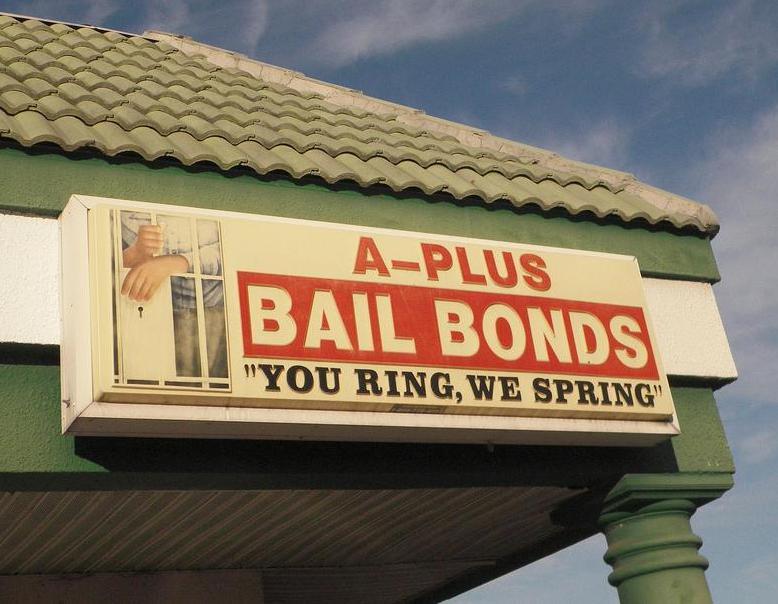
![Bail bonds storefront.]() By: Daniel OinesBail bonds storefront.
By: Daniel OinesBail bonds storefront. -
![A bail bond is a payment that an arrested person may be able to make to the court in order to stay out of jail until their trial.]() By: smicheliA bail bond is a payment that an arrested person may be able to make to the court in order to stay out of jail until their trial.
By: smicheliA bail bond is a payment that an arrested person may be able to make to the court in order to stay out of jail until their trial. -
![Individuals who are arrested may secure a bail bond to gain pre-trial release from custody.]() By: AmmentorpIndividuals who are arrested may secure a bail bond to gain pre-trial release from custody.
By: AmmentorpIndividuals who are arrested may secure a bail bond to gain pre-trial release from custody. -
![A bail bond agent often works with bounty hunters, who track down fugitives.]() By: Uros PetrovicA bail bond agent often works with bounty hunters, who track down fugitives.
By: Uros PetrovicA bail bond agent often works with bounty hunters, who track down fugitives. -
![Most courts refund the original bail money if the accused attends all court dates.]() By: kanvagMost courts refund the original bail money if the accused attends all court dates.
By: kanvagMost courts refund the original bail money if the accused attends all court dates.




Discussion Comments
First the bail bondsman that you used to post there bond is liable. Then he will turn around and go after you for the balance or whatever you left as collateral.
I don't think people may be aware that there are such things as free bail bonds available. These are called personal recognizance bail bonds based on a promise to appear in court. Before anyone dishes out money to hire a bail bondsman, they should consider if this might be an option for them.
My neighbor broke in my house and was arrested and they set the bail at only 1500. Does that sound normal? I was thinking it would be a lot higher.
This is really useful information you have summarized in your post. Most people are unaware what bail bonds are. You have answered the question perfectly. Thanks for explaining the process!
Should the Ohio courts notify the bail bond company when the courts keep a person on bond after sentencing?
A contract signed signature bond was posted at 10 percent of the bail amount to get my son out of jail. He made a court appearance and was ordered to report back to court in a month. I contacted the bail bond office expressing concern about a possible flight risk. The bail agency decided to come to my home to put a GPS on him. However, once they arrived at my home, after one of the staff member shot three bullets at my son, one bullet hit him in the chest, one in his belly and one in his groin, and he bled, they took him back into custody instead of putting a GPS on him under their expressed intention.
A week later, I received a statement from the office requesting an additional $10,000 for the rearrest of my son. These circumstances cause me to question whether there has been fair treatment of me. I am of advanced age and appears to be being taken advantage of by the bail bond company. Your comments are appreciated.
My wife posted bond for her son. She caught wind he was going to run and leave the state, so she called and revoked his bond. He did run and is still running. Is she still responsible for his bond?
Our daughter, 32, owes back child support, was given chances with the court to pay it, court liaison program, etc. She owes over $3,000 in back child support, she doesn't work and is basically homeless. She lives here and there with friends. Even though I don't think jail time will help the child in question, we have tried to help and nothing has seemed to work. She needs to go to jail. We live in Oklahoma. She owes $3,800 in child support. How much jail time would she get?
I posted bail for a felony through a bail bondsman. I went to court and the felony count was dropped. Should I get any of my money back?
To anyone talking about leaving criminals where they belong, or helping family by letting them serve their time: The legal system is unfairly harsh. For those of you who have never been in any trouble or been accused of anything, good for you. You don't understand unless you've been involved yourself.
How much time should someone get for punching a guy in the face? Thirty days? Ninety days? Community service plus a fine? Sounds reasonable, right?
Suppose you caught your girlfriend cheating on you, then punched the guy she was cheating on you with in the face? Suppose this happened at her apartment (where you practically lived for the last year and had a key to enter)? Suddenly, you're being hit with a first degree burglary charge against her wishes and there's nothing she or anyone else can do about it. You're looking at 15 years to life. Such is my situation. It's been an absolute hell so far and it's absolutely unfair. If my family hadn't posted bond I'd be sitting in jail waiting two years to go to trial.
Does that sound reasonable to you? I'm no criminal! I spent nearly every night over her place! I helped her pay bills, moved her in, and half the stuff in there freaking belonged to me. Do I deserve 15 years in prison?
When it happens to you, when you end up in a situation where you decide to act, and the police get involved, then you'll see exactly how many of these "criminals" are stuck in jail without their families, losing years of their lives to a system built around prosecution, not truth finding or fair punishments, and then you'll understand.
Good luck to everyone else here! I really feel for you and your accused loved ones. I pray things go well for all of you and everyone gets what they deserve (and no more).
I have a friend who is jail on two counts of sexual matter involving a minor and has a $200,000 bond, one for each charge. Would I have to put my house up to get him out?
What can happen to me if I bond out my boyfriend and he went back to jail, because I have the bailmen calling me and telling me that he's going to take me to court and make a case on me. Can he do that?
If someone was bailed out by a family member and the attorney on the case was arrested and gave them the OK to go to another country to finish their marriage and was told to just be back in time for their court date, could they be charged with bail jumping?
My question is: If you miss court and you notify them ahead of time and also your bondsman and they set up a surrender date to reinstate the bond, does the bondsman have an obligation to reinstate the bond if there are no serious violations of the law, or can he choose not to reinstate bond, due to the fact you have an issue that there are no merits to the case.
My son came down here to Tennessee on an interstate compact deal with his probation officer from Tennessee and Michigan. In a year's time, he got in a lot of trouble and violated a lot of his parole. They sent him back to Michigan to prison but still has open courts here in Tennessee, and of course I am being harassed by the bail bondsmen for payment because he didn't make court. What do I do?
If I got my brother out of jail with a bail bond, paid the percentage ($2,000), and he went to the first two court dates, but now he missed, am I still responsible for the $10,000 bond?
My friend has been remanded (I presume by that that he has been found guilty) and am told that he is likely to be fined. Can anybody tell how much he is likely to be fined? If so, who?
If you get bonded out and your case was dropped before you paid the bond off, are you still responsible for the amount owed and what is the penalty for not paying?
Bail bonds are also known as surety bonds, and from what I know, they are basically a contract between the person posting bail and the bail bondsman that assures that the defendant will make to court or be responsible for the full amount of the bail. I know that there are jail specific bail bondsman and fees which you can find online, as well as other information.
The person responsible for the other 90 percent is the person who posted bail. It's the family! So that's why it's a risk and you have to be careful.
In response to @anon5340 - The family is responsible, or the person who posted the bond in the first place.
It's the family who posted the 10 percent. As far as I know. We had a family member go to jail, and my mother posted his bail but he messed up and the bail bondsman came after my mother for the rest of the money.
My husband and I have been separated since May. I believe he bonded out his girlfriend for a fairly large amount of cash. My question: is this information accessible to me?
My fiance is in jail under a $6000 bond. can I use my car title as collateral with no cash payment ever? if so, when his trial is over, do i get my car title back or what?
I put up bail for my girlfriend's sister's boyfriend. she talked me into it now I think it was a mistake. the reason I say this is the amount due on it is $200 a month and he only paid $100.00 on it. That can hurt my credit rating if he does not pay all of it. I have already paid the amount to get him out, which was $300, and $100 of his bill last month.
Would I be better off just letting him try and pay then pay only if they say he doesn't and will he go back to jail if not paid? They told me it is a 30,000 bond and he owes along with me due to co-signing his bail 10 percent of it that will take a year to pay off.
My girlfriend's sister lied to me about him paying me back or paying on his bill every month. This was why I didn't want to bail him out.
In response to comment anon25552: A bail bond company can bail out anyone with any record if the company chooses to do so. It's up to them and it's up to the bail bond company to charge whatever fee they want (not to exceed the bond amount of course). Jesse C., Frontera Bail Bonds, Texas.
In response to comment anon126119: With over 20 years of experience in the bail bond business, I have never heard that a bail bond company actually had someone move out of their house via a court order.
In Texas, they have strong homestead laws. If I would want collateral, I would make sure that the property that is being used as collateral for bail is not a homestead because I would not be able to acquire the property in any court. You should read the contract.
If the property was established and was used as a "rental property" and was stated on the contract, then yes, the bail bond company has the upper-hand. But if the contract never mentions that the property is a rental and was a homestead, then they cannot get the property.
Some unscrupulous bail bond companies tend to threaten to take a homestead, but it is highly unlikely they can be successful in court. It's just a bluff. If it's a vacant lot, investment property or rental then you lose.
My bail bond company never uses those type of tactics. Its immoral, unethical and just plain "dirty pool". What I can tell you? If the defendant does not comply with any rules set out by the bail bond company, they can obtain a warrant for the defendant's arrest. So, bail bond companies can place you back in jail.
Take your homestead? Nope. Highly unlikely. -Jesse C.
This goes out to anon106659. I read your comment and you are truly right. If you don't have the money or the right lawyer who is willing to battle for you, you are surely to be charged for something you did not do. Due to the fact that we don't know the statutes and don't have the right resources.
for every wrong you do, other people need to pay for your mistakes. for every right you do, members can save a whole lot!
Can the bail bondman make you move out of your home if the person you put bail up for doesn't show up to court? The bail was $100,000.00 and the house was used for collateral.
received a check in the mail. the next day I found out the check was no good, the check was cashed but the people who cashed the check keep on harassing me for the money.
How about the police stop charging me with ridiculous offenses I did not commit. They are all driving related btw and do not involve and alcohol or drugs.
If a bond is set (in Florida) for $250 (he went for owing child support), and no one pays, how long will he have to stay in jail?
You can often avoid being locked up if you have a good lawyer to call. I work with a company that provides legal protection on a prepaid basis that everyone can afford. It is definitely better to have it and not need it than to need it and not have it.
It's my friend's first time going to court tomorrow and his offense was for drinking and driving. Any clue on what will happen next? He also missed out his first trial in may, which he couldn't attend. write back asap, please. thanks.
I find it absolutely depressing how many people here know or are related to someone in jail. I mean, seriously people. Sometimes the biggest favor you can do for your "friend" or relative is letting them serve their time, not spending your life savings or bankrupting yourself to fix their wrongdoings. Save the money for a good lawyer if you want to help them.
My bond was $500 and I only had $500 on me, so I stayed in jail because then I wouldn't have any money to eat. So they paid for my food and three days later they reduced my bail to $250 to get me to go away and I did. So you may try that.
My son was arrested for a domestic situtation,and my other son posted bond for him, $2500.00. I reimbursed my eldest son for his check and then the charges were dropped. Can I get my money back from the courts?
How about everyone just staying out of trouble and obeying the law! Then there wouldn't be a need for all of this drama.
And how about not bailing criminals out when they may be right where they need to be! Then everyone else is safe and they can think about what they did so they can finally be accountable for themselves instead of them blaming everyone else their whole lives for their poor decisions! Thanks!
If i show up for court and make a date with the court will my family be able to get a refund?
it would be easier if people had an option of house arrest with work privileges (so they can care for family, still work etc) instead of wait in jail, or pay some outrageous amount to be free if they truly are innocent until proven guilty.
What if there was an error in the bail option paperwork saying we only have to pay $2000 but they really meant to put $5000. Is it legal if they call you and tell you to turn yourself in? Is there something you can do or say to them about this. I feel injustice is in place here.
I love how people just put their random questions on any page they stumble across -- as if great legal minds will be reading and responding to their questions.
I was bailed out for $5000. I went to court and plead guilty. I received a small fine and probation. My friend put up $2000 as a down payment and I was to pay $200 a month. I was just laid off and am broke. what happens if i can't make the payments? I signed all the paperwork. his name is on nothing. I'm in california by the way.
My bail was set for 100,000 dollars. Meaning I had to pay 10,000 to get out. we paid 5,000 and i'm making vicious payments to the bondsman to keep my freedom until court. if i am proven innocent, do i get any of that money back?
if a person is charged 900 dollars for a bond by a local bonding office and then goes to court and pleads guilty and serves his time, is he still responsible to pay the bonding company the 900 or when he pled guilty and served the time was the bail bondsman released from the bond?
There is an error in paragraph 4. In California most bail agents offer payment plans with 0 percent interest. So there is no "brutal repayment".
These are all excellent questions.
hello my girlfriend got a fine of 550 dollars and she can't afford it and she said she's going to turn herself in. however i will have the money a week later. can a bondsmen bail her out or i would have to bail her out myself?
What if you have no money to pay for the person who you bailed out? And the bail bonds is spending all there time hounding me instead of looking for the criminal!
my son can get out on a $5,000 bail. i signed a check with no funds to the bailsman. my son left and didn't go to court. what can happen to me? i have no house, no car or no money to pay the $50,000.
When there is more than 1 person who signs for a defendant's bond and the defendant fails to appear, the bond company wants their money. Are both parties equally responsible (50 percent) for the total bond amount, or if 1 refuses or can't pay, the other party is 100 percent responsible? How long do the parties have to repay the bond?
My son was out on a 190,000.00 bond for which I put up my home as collateral. He went to court on time and is now in jail. Can they take my house to cover the repayment of the 19,000 to the bonding agent or was my property released once he returned to court?
Why would an accused person use a bail bondsman instead of the court to post bond? Are there any advantages to using an intermediary as opposed to the court directly?
The court is only open on certain days at certain times. This may be inconvenient for some people.
My friend was arrested in bishop. He ended up going down to independence. I was able to bail him out 250,000 bond, $2,000.00 i had to come up with. He was bailed out before his arrainment in the morning. The next day, he went to the bail bonds person and got me my check back and gave them *his* check, which in turn bounced. the only paperwork i got from bail agent was a receipt for 2,000.00, which has the date he is to appear. When he gave her his check and retrieved my check back from her, she did not give him a receipt for that. anyway, i cannot get ahold of this guy and am very concerned about his court date if he is going to appear. I did not give any collateral, no deed to my house,or anything. what happens if he does not show up in court? Can i revoke the bail right now? Am i responsible for that 2,000.00, in which i got my check back and he replaced with his bounced one?
What is the answer to anon5340?
My husband is in a federal detention center on alleged mortgage fraud charges. He has two felonies on his records. The court has not provided a bail amount and it's up to the family to get as much property and as many signers as possible. How would your company be able to assist the family in getting him home while going through his trial which may take a year or two?
My husband has a $75,000 bond on him in Erie Pa. The bail bondsman there will take $4500.00 with an Ohio transfer bond of $3000.00 payable at $300.00 a month for 10 months. Now he also wants a promissory note on property for $75,000 with two signers. I can't find any one to put their house up for this. Is this the usual way to do this? Is there a better way to get him out?
My fiance is suppose to be out of jail the latest is April of next year 2010, but now they're trying to send him home unless I can come up with like $5000 to keep him here to be with his family. Can I get bail bonds? How much would it be?
In Washington state there is a Minimum bond fee of 10%. What that means is if you go threw a bondsmen the fee has to by law be 10% of the bond or more. 100,000.00 would be a minimum of 10,000.00 the good news is that some bondsmen my self included can go as low as 5% down with payments to make up the other 5% spread out overtime.
Can you bail someone out if you have a felony record?
My 17 year old, bi-polar daughter was arrested for unauthorized use of a motor vehicle. I don't have the money to Bond her out. How long will she have to stay in jail? Her bail was set at $2,500.
if a person is arrested and released on bail, 10% they go to court, and no charges are filed is that family still responsible to pay the remainder of the bond?
What is the statute of limitations for surety bonds?
Why would an accused person use a bail bondsman instead of the court to post bond? Are there any advantages to using an intermediary as opposed to the court directly?
Do bail bonds usually require periodic (annual) renewals and payment of the premium again?
The person who entered into the contract for the bail bond is responsible for the full amount of the bail. If the family posted bail, then the family is responsible for the full amount of the bail if the defendant skips bail -- does not comply with the terms of his bail.
If you post the 10% bail option (meaning family) and the accused does not show to court, who is responsible for the other 90%? (The accused or the family who posted the 10%)
Post your comments