
At DelightedCooking, we're committed to delivering accurate, trustworthy information. Our expert-authored content is rigorously fact-checked and sourced from credible authorities. Discover how we uphold the highest standards in providing you with reliable knowledge.
What are Anasazi Beans?
 Mary McMahon
Mary McMahon
Mary McMahon
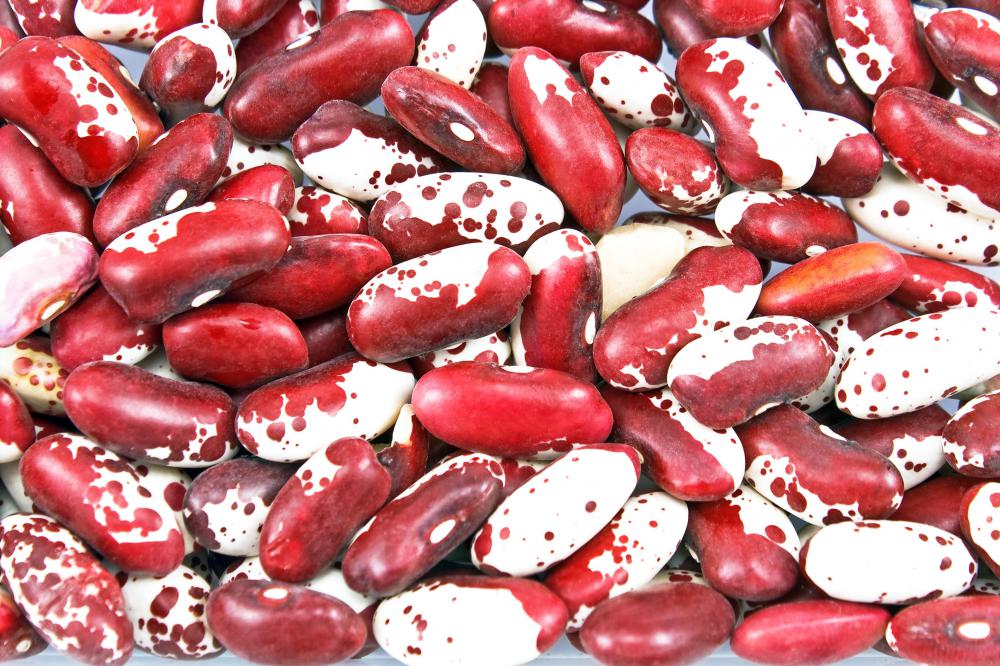
Anasazi beans are small, kidney-shaped, purple and white beans in the same family as pinto beans. They are used in Latin American and Southwestern cuisines, and have a mild, sweet flavor that pairs with a mealy texture. The beans cook much more quickly than regular beans, and they appear to have been a part of the human diet in the Americas for thousands of years. They are also marketed as New Mexico cave beans, Aztec beans, New Mexico appaloosas, and Jacob's Cattle beans.
The story of Anasazi beans varies, depending on who is telling it. In popular mythology, the beans were uncovered by an anthropologist, who discovered a 1,500 year old tightly sealed jar of them at a dig in New Mexico. Some of the beans germinated, and the new variety of bean entered cultivation again. Since most botanists agree that most beans are unable to germinate after approximately 50 years, it is more probable that the beans remained in constant cultivation in the Southwest, probably in Native American gardens, and that they were picked up by companies looking for new “boutique beans.”

Beans have played an important historic role in Native American cuisine because they are an important source of protein and other nutrients. They also enrich the soil they are grown in, and they are commonly grown in tandem with crops such as corn. Under extensive cultivation, beans and corn are literally grown side by side, with the beans using the corn as a trellis to grow on. After being harvested, the beans are dried for use throughout the year.

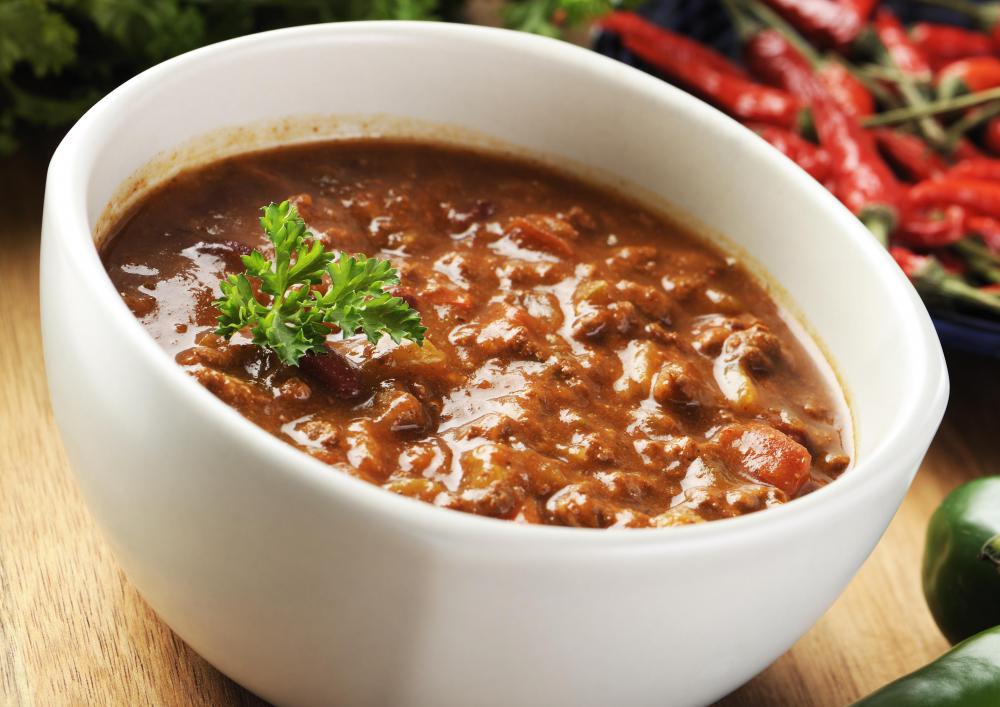
When selecting Anasazi beans to eat, cooks should look for plump, glossy specimens without signs of withering or disease. They should store them in a cool dry place until they are ready for use. The beans should be washed before being soaked for approximately eight hours or overnight. After soaking, the beans can be cooked in an assortment of recipes including soup, chili, and burritos. Their slightly sweet flavor makes them excellent for spicy Latin American food.

In any recipe which calls for pinto beans, Anasazi beans can be used as a replacement. They can also be used as refried beans, or combined with other beans for rich bean soups and stews. Like all legumes, they should be thoroughly cooked to prevent gastrointestinal distress and the sometimes socially unacceptable symptoms that accompany it.
Mary McMahon
Ever since she began contributing to the site several years ago, Mary has embraced the exciting challenge of being a DelightedCooking researcher and writer. Mary has a liberal arts degree from Goddard College and spends her free time reading, cooking, and exploring the great outdoors.
Learn more...
Mary McMahon
Ever since she began contributing to the site several years ago, Mary has embraced the exciting challenge of being a DelightedCooking researcher and writer. Mary has a liberal arts degree from Goddard College and spends her free time reading, cooking, and exploring the great outdoors.
Learn more...AS FEATURED ON:
AS FEATURED ON:


-
![Anasazi beans, mild, sweet-flavored beans often used in Latin American and Southwestern dishes.]() By: gavran333Anasazi beans, mild, sweet-flavored beans often used in Latin American and Southwestern dishes.
By: gavran333Anasazi beans, mild, sweet-flavored beans often used in Latin American and Southwestern dishes. -
![Beans and corn are considered complimentary sources of dietary protein.]() By: Ðиколай ÐÑигоÑÑевBeans and corn are considered complimentary sources of dietary protein.
By: Ðиколай ÐÑигоÑÑевBeans and corn are considered complimentary sources of dietary protein. -
![Anasazi beans may be featured in chili.]() By: Fotocat4Anasazi beans may be featured in chili.
By: Fotocat4Anasazi beans may be featured in chili. -
![It's likely that anasazi beans were constantly cultivated by Native Americans.]() By: namwar69It's likely that anasazi beans were constantly cultivated by Native Americans.
By: namwar69It's likely that anasazi beans were constantly cultivated by Native Americans. -
![Anasazi beans that are not thoroughly cooked may cause gastrointestinal distress.]() By: slasnyiAnasazi beans that are not thoroughly cooked may cause gastrointestinal distress.
By: slasnyiAnasazi beans that are not thoroughly cooked may cause gastrointestinal distress.



Discussion Comments
The Anasazi Beans I grow are about 3/4 inch long. The brown speckled beans produce fragrant red flowers, and the white beans have fragrant white flowers; both draw hummingbirds.
The beans are climbers - 10-15', have fragrant red or white flowers that last all summer long and attract hummingbirds.
I live in Colorado Springs, Colorado and the closest Wal-Mart carries these beans. They are now my favorite bean as they cook in about half the time of pintos.
@anon287273-- You can get them online! There are several brands online that offer dried Anasazi beans. That's where I get mine.
I suggest making baked beans with it and serve it alongside pork. It's fantastic.
@anon287273-- You can try organic stores.
Unfortunately, Anasazi beans are not found easily in all states. They're more common in New Mexico and Colorado. I live in New Mexico and my neighbor grows them so I can get some anytime I want. I'm very lucky.
If you do find them though, I think you will love them. I prefer these over Pinto beans because they have less carbohydrates. I have a sensitive digestive system and I've noticed that Anasazi doesn't irritate my system as much as other beans. All beans are notorious for causing flatulence. But Anasazi is not that bad, I think it's much better than other beans.
@anon24182-- That's so cool! So it is true!
Do you know how old the beans were estimated to be when they were found? It's not 1500 years right?
I'm so glad that student planted those dry Anasazi beans. Otherwise, I would have never tasted them. This is my favorite bean and I love making stews with it.
Where can one buy anasazi beans? To cook, not to plant.
Are the beans bush or climbing?
Yes, the beans will be good. They start out red and white, but as they cook, they become completely dark red/brown and are huge and delicious! I'm guessing you bought them at a farm store in central Colorado? I did, too, without knowing what they were or how they'd taste, but five years later, I finally drummed up the determination to find out and I was glad I did. I wish they were more plentiful. Enjoy.
We bought anasazi beans in colorado and we still have a bag in our cool pantry downstairs. Are they still edible after ten years? Would appreciate hearing from someone. Thanks a lot. --Fred
What is the royalty fee for selling Anasazi beans?
At what point during the growing season do you harvest the anasazi bean?
With respect to the origin of the beans, they were discovered in a sealed jar at Mesa Verde, Colorado. They were turned over to Colorado State University Department of Agronomy for study and safe keeping. Many years after receiving them, an Agronomy graduate student found the jar with the few beans in an old cabinet, and took half of them and planted them. When the major professor discovered the jar out of the cabinet and half the beans gone, he became more than concerned, but the beans were already planted in the hothouse. By a miracle, part of the planted beans sprouted and grew plants which did set seed. That seed was harvested and replanted, each time increasing the seed on hand until there was enough to plant a field.
I am an a KSU agronomist, and this was told to me by associates in the agronomy department at CSU.
Post your comments