
At PracticalAdultInsights, we're committed to delivering accurate, trustworthy information. Our expert-authored content is rigorously fact-checked and sourced from credible authorities. Discover how we uphold the highest standards in providing you with reliable knowledge.
Should I Tell a Potential Employer That I Was Fired from a Job?
 Tricia Christensen
Tricia Christensen
Tricia Christensen
Being fired from a job is never easy, but the situation is something that almost always needs to be discussed with potential employers. You don’t usually need to go into a lot of detail about what happened, but acknowledging that you lost a job is usually considered the honest thing to do. Preparing yourself for questions and deciding how you will frame the topic is usually the hardest part. It’s usually a good idea to practice talking about the subject and think hard about what you learned from being fired before you’re faced with questions, and bring the topic up yourself if at all possible. When you introduce it, in many ways you can control it.
The Importance of Honesty

The general rule when discussing having lost a job is to be honest but brief. There’s no need to list how you left a job on a resume, but be prepared for the question to come up in an interview. Employers often want to know why you stopped working in a certain capacity, particularly if the job you left and the one you’re applying for are similar. It often helps to have a standard response ready so you can comfortably answer the question, then move on to other, more positive topics.

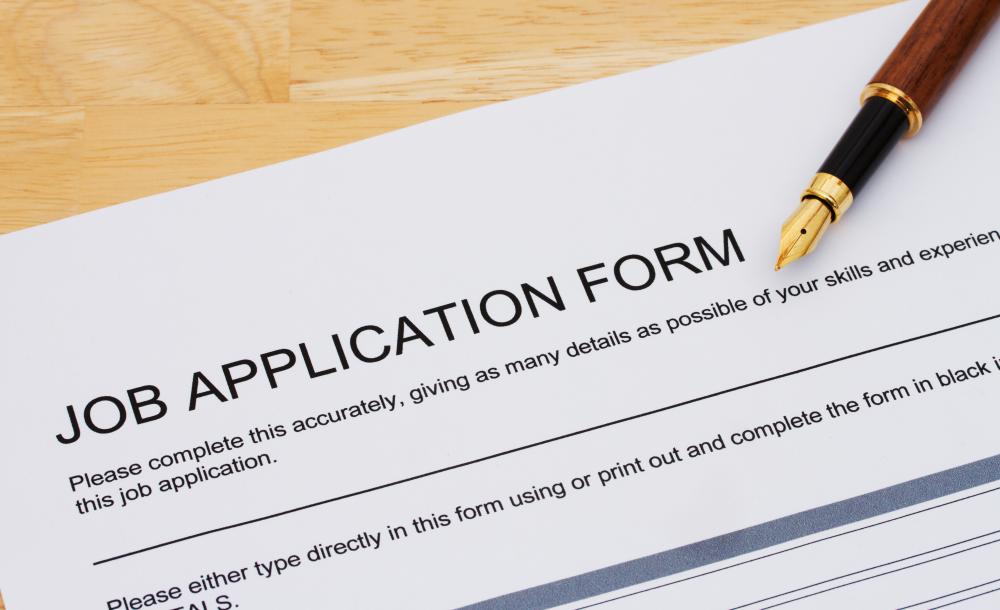
Some job applications may also ask if you’ve ever been fired in the past. If you see a question like this, it’s very important to answer truthfully — be sure to check “yes,” but be prepared to discuss the details in more depth. Depending on the application, it might make sense to add a short addendum with a few explanations.
Framing Things Positively

Preparing an explanation usually starts with self-reflection. Think about what caused you to lose your job and determine how the experience has helped you to become a better worker. Particularly in written applications, you will want to stay brief but positive. What you should strive for is a quick, simple explanation of the situation. Don’t give a lot of details — strive to simply be open about the reason and briefly explain in one or two sentences how the experience makes you a more valuable worker now. At the very least, state that you’ve learned from your termination and leave it at that.
Layoff Situations

When you’ve been fired from a job through no fault of your own, as with company or department layoffs, merely state that the company reorganized, shut down, or cut its workforce. In this sort of situation, it may make sense to ask someone like a co-worker or former supervisor to write you a letter of recommendation. Most of the time, people will have no problem doing this since your termination was not related to your performance. Personal letters can eliminate fears that you were fired because your work did not meet the company’s standards, which often eases the minds of prospective employers.
When You Were Fired for Cause

Being fired “for cause,” which basically means “for good reason,” is not usually as damaging as it might seem at first. The key is in the presentation, and you can almost always find a way to spin even the worst situations into something positive and encouraging. If you were fired from a job because of constant tardiness, for instance, you could consider what you’ve done to remedy this situation, or develop a plan to ensure on-time arrivals in the future. If you made a mistake or series of mistakes that cost you your job, you might think about what these errors taught you.
Prospective employers tend to be more interested in what you will bring to the company in terms of skills and integrity than what your past says. Acknowledging errors and mistakes can demonstrate maturity and growth if you are also able to show that you learned from them and they made you stronger.
Wrongful Termination
Things often get a bit harder when deciding how many details to share about wrongful termination decisions. Although disputed firings often reflect poorly on your previous employer at the outset, they can carry ramifications for you, too, if you aren’t careful. Discussing a past company’s discrimination or retaliation sometimes runs the risk that future employers will consider you a liability, or may view you as eager to sue.
If you sued the company and resolved the matter, you can state this in a few words. “I was illegally terminated, reported the matter and resolved it” is one example. There’s no need to talk about the specifics of the circumstances. It’s best to be very brief when explaining specifics, and perhaps express that it was an unfortunate situation best forgotten.
Disparaging Past Employers
There is often a temptation, particularly in wrongful termination situations, to say negative things about past employers. It may be true that working under a certain person was simply unbearable or that certain colleagues made life so difficult that getting good work done was all but impossible, but it's usually best to keep these thoughts to yourself, no matter how true they are. Sharing them runs the risk that you will be viewed as a whiner or a nag, and a prospective boss may worry that someday you will talk that way about him or the company. It is usually best to stick to the bare facts, put a positive spin on the situation, then move on to discussions about how your other skills and interests make you a good fit for the advertised job.
Tricia Christensen
Tricia has a Literature degree from Sonoma State University and has been a frequent PracticalAdultInsights contributor for many years. She is especially passionate about reading and writing, although her other interests include medicine, art, film, history, politics, ethics, and religion. Tricia lives in Northern California and is currently working on her first novel.
Learn more...
Tricia Christensen
Tricia has a Literature degree from Sonoma State University and has been a frequent PracticalAdultInsights contributor for many years. She is especially passionate about reading and writing, although her other interests include medicine, art, film, history, politics, ethics, and religion. Tricia lives in Northern California and is currently working on her first novel.
Learn more...AS FEATURED ON:
AS FEATURED ON:


-
![Is is important to always be honest but brief when discussing having lost a job during an interview.]() By: WavebreakMediaMicroIs is important to always be honest but brief when discussing having lost a job during an interview.
By: WavebreakMediaMicroIs is important to always be honest but brief when discussing having lost a job during an interview. -
![Employers will want to know if an applicant has been fired from a previous job and why.]() By: Alexander RathsEmployers will want to know if an applicant has been fired from a previous job and why.
By: Alexander RathsEmployers will want to know if an applicant has been fired from a previous job and why. -
![Some job applications may ask if you’ve ever been fired in the past.]() By: Karen RoachSome job applications may ask if you’ve ever been fired in the past.
By: Karen RoachSome job applications may ask if you’ve ever been fired in the past. -
![If you were fired from a past job, rehearse a standard response to interview questions about the termination.]() By: WavebreakMediaMicroIf you were fired from a past job, rehearse a standard response to interview questions about the termination.
By: WavebreakMediaMicroIf you were fired from a past job, rehearse a standard response to interview questions about the termination. -
![Applicants may choose to only tell a potential employer if asked specifically about the firing.]() By: jivan childApplicants may choose to only tell a potential employer if asked specifically about the firing.
By: jivan childApplicants may choose to only tell a potential employer if asked specifically about the firing.




Discussion Comments
I live in a "Right to Work" state, which means employers can fire employees for good reasons, bad reasons or no reason at all. I used to live in a state with a lot of unions, and employers up there usually had to show good cause for a termination. When I got fired from my first job down here, the employer never really gave me a reason. He just changed the schedule and my name wasn't on it. I thought finding another job would be much harder because I didn't voluntarily quit or got laid off.
To my surprise, I got a call for an interview two days later. The interviewer looked at my application, and I had answered, "Fired, no reason given" under the "reason for leaving last position" section. He didn't even pursue it during the interview. I found out later that a lot of employers in "Right to Work" states don't really care why you got fired from your last job, as long as you didn't do anything violent or illegal.
I'd say if you happen to live in a non-union state like I do, you could probably tell an interviewer you were fired from a job and not worry about it. I'd wait until the interviewer brought the subject up, however. No sense revealing more personal information than necessary.
@anon351846- I'd say that is a pretty serious thing to reveal to a potential employer. If I were an interviewer and you told me you got fired for violence in the workplace, I wouldn't call you back for a second interview. What guarantee would I have that you wouldn't do something similar to one of MY employees? You might get away with saying something like "I was terminated after having a conflict with a co-worker", but using the word "slapped" in a sentence would not be good at all.
If the interviewer does find out about the incident, however, you might be able to say you were extremely sorry the incident happened and you agreed to anger management therapy immediately after the termination. That's probably not a bad idea in general, if you find you have trouble working out your frustrations without resorting to violence.
I was terminated due to physical assault on another employee (slapped the other person in the office). Is it OK to disclose such an incident to the new potential employer?
I was asked to resign, then was fired because I got accused by my supervisor and director of the same issues they have encouraged me to report when I got hired few months earlier. My supervisor, a very tight player, was mingling with other workers. I took overtime shifts from them by working overtime often and being punctual. It was a really excellent, quick and immersive work environment lesson on how, even in the private sector, it's not about honesty and performance; it is always about respecting the local status quo by knowing the players, game rules, groups and adhering to one of them.
I was fired for this reason: I was asked to go home.
The reasons: I was checking some papers that were on the desk I use every day at work, and this Russian lady came to me and asked me to not touch her paper. I responded that I wasn't messing with her paper but I was checking to see it belonged here or somewhere else, so I could put it in the right place.
Then she said just don't touch it and was very mad and said something in Russian. Because I don't understand this language and had no clue what she was saying, I responded literally: "Look! I don't know Russian!" She said, "I wasn't speaking Russian," and then we were done.
A few minutes later the manufacturing leader came and told me that what I said had offended her ("Look! I don't know Russian!") and he said that was racist or something like that, and I kept swearing like tens of times that she said something in Russian and that's why I responded to her like that, plus that was the first time I have a conversation with her, so why should I offend her?
They didn't want to listen to me and asked me to go home for now.
I believe that was unjust. Is that a good or legal reason for them to fire me and can I mention this cause when in interviews for jobs? I was fired two days ago.
@anon305806: Good grief. Your boss sounds like my old boss in his younger years. Same thing: tell you something is fine one day, then wants it done another way the next day; had a rotating schedule of people who were in his crosshairs; wanting you to take vacation time instead of personal time for something family-related.
My mom had outpatient surgery and I had something at work that really needed to be done. Her surgery was in the afternoon, so I wanted to get to the office in the morning and then leave that afternoon, and take half a personal day. My boss had this "thing" about people taking half days and he said I needed to go ahead and take the whole day, but as a vacation day.
Well, the general manager had to approve all personal days, anyway, so going to him was sort of like going over my boss's head, but he would have to approve the day anyway. He didn't have a problem with it. I admit it -- I picked a time when my boss had someone in his office to stick my head in and tell him I was leaving. My other supervisor told me the next day the boss was boiling mad about me taking the half day, telling the general manager about it and then waiting until he had someone in his office. The boss didn't speak to me for six weeks. I think he thought he was punishing me or something. Not exactly. But I also knew I was under the microscope that whole time.
Fortunately, I was able to weather that storm. He retired, I'm still doing my job, and my new boss is great. Sometimes the motto is like the one on "Survivor": Outwit, Outplay, Outlast.
Anyway, in this particular situation, everyone -- and I do mean everyone -- in the area in the same profession knew what my boss was like, and some had hired people from him who just couldn't take it anymore. So that was always an advantage. It never seemed to work against anyone when they said who their former boss was. The interviewers understood immediately.
Your situation is a little different, though. If you interview for a position where you're doing what you really want to do, then if the interviewer asks why you left the last job, you can say in all honesty that you wanted a position where you were doing what you truly wanted to do, that design is your passion.
Obviously, don't ever criticize your former boss. You don't know who your interviewer knows. If the interviewer asks you if you were fired, you can say you left by mutual agreement and leave it at that. If pressed for details, you could say something like, "We didn't see eye to eye on client priorities." If you're tactful, uncritical and diplomatic, it usually shows that you don't have an ax to grind, and you're ready to work if you're hired.
I have been working for a flooring company for a little over a year. I was doing a good job, but was not happy doing flooring as I would have preferred doing kitchen and bathroom design.
I was very busy and doing well in sales as we are paid on a commission basis, and I loved my co-workers, so I decided to stick it out for a bit longer. My boss has always been moody and it's a bit like walking on eggshells. He seems to take turns picking on people and will tell you to do one thing and than change his mind when you do it and say that is not what he meant or said.
My grandfather passed away and he told me that I would have to use my vacation time towards my funeral leave. I told my boss that I thought it should be considered personal time off. I contacted Kirk, who is the vice president/ HR, and he agreed that it would be personal time off and was explaining this to Tim, my boss. My boss began to be extremely rude to me and would yell at me for things that were not my fault. I felt like I could not do my job because I never knew when he would say something rude or degrading. I truly felt like I was working in a hostile work environment.
My boss gave me busy work to complete and design a mock kitchen to show him that I knew how to use the software. I told him that I did not know if I could complete the task due to the fact that I was working on another kitchen design and had a large workload. I asked him if he wanted me to put this mock design in front of my other customer’s bids and he said to make my clients my priority and do that first.
I informed him that I would not be able to complete the drawing in the one week time period he gave me because I had so many revisions and additional client bids to do.
I have always been able to get my work out in the past, but this time I was unable to get it done and he seemed okay with it.
That same week I was fired because of not completing that project and my lack of communication with him. I know that the real reason is because he did not like me going over his head on company policies. What do I say when I am interviewing at companies and they ask me why I am not working at my last position?
I reported my boss for abusive behavior (of which she had a very long history) and was a fired a few days later after I refused to meet with her before speaking with someone from HR. I have had a hard time finding a job since. I don't know how to handle it and I am not sure honesty is the best policy.
My employment was terminated because someone accessed my Facebook account messages and printed out messages I wrote to a former employee. This was considered breaching confidentiality. I did not disclose anything about clients but did mention co-workers by name since this former employee knew them. I have no idea how to broach this during an interview and would appreciate some advice please.
My supervisor gave me a choice: continue to work under distress from my co-worker or take a severance package. I took the severance package. Should I say this during a interview?
It is true that bad employers can make it impossible for employee's to succeed.
During the interview, the candidate might, understandably, be tempted to 'confess the employer's sins'.
I would urge reticence - or at least caution - because slagging off a previous employer or manager might convey the message that the interviewee is disloyal, or a whinger, or unwilling to be accountable for hir own failings.
Or the interviewers might be concerned that the applicant might, in time, tell stories about their company or its management.
A bare outline that acknowledges mutual contribution should serve: "There were personality clashes and, in the end, I felt I had to move on."
Honesty is best, of course, but some people think they have to give every detail and bare their souls in the name of Truth. Go well.
@ GiraffeEars- You are absolutely right. I have hired candidates that have had previous terminations, and wondered why they could not succeed at their last job (because they were such good employees).
When I am evaluating a potential candidate, I look at their entire resume, and evaluate their entire application. If they are habitually terminated, I will usually take a pass, but if they have only had one termination, and the rest of the evaluation process is all right, I will probably take a chance. If an employer treats their employees like real people, they will usually retain a creative, energetic, and loyal staff. Sometimes the second chance makes people work even harder.
If a job is bad enough that it will lead to you getting fired, it may be best to quit instead of wasting your time and adding negatives to your resume. However, if you have ever been fired from a job, honesty is the best remedy. Tell your interviewer the circumstances surrounding why your last job fired you. Like the article said, keep it short and sweet, but impress upon your interviewer maturity and honesty.
I worked as a general manager in the restaurant industry, and I would not let a previous bad experience disqualify a candidate that I believe to be honest. Everyone makes mistakes, and sometimes that can be the employer. A bad employer can be just as responsible for an employee’s termination as the employee him/her self. Sometimes the employer makes it impossible for the employee to succeed.
Post your comments