
At WiseGEEK, we're committed to delivering accurate, trustworthy information. Our expert-authored content is rigorously fact-checked and sourced from credible authorities. Discover how we uphold the highest standards in providing you with reliable knowledge.
Should I Go to Work if I Am Sick?
 Tricia Christensen
Tricia Christensen
Tricia Christensen
Many people feel like they must go to work whether they are sick or well. Sometimes employees are the only people who can get certain work accomplished, or you might only get paid if you show up. Though many employers offer sick days to employees, workers may feel that it is frowned upon to not come in, even when they are sick. It might be best to go in if you have a minor complaint, like allergies or a slight headache, but if you are really sick, it's best to stay home so that you get better faster and don't risk sharing a contagious bug.
If you have pneumonia, bronchitis, or the flu, a day or two of rest may help your recovery. The body needs to dedicate its resources to fighting off the illness, so getting lots of rest will usually help. Not every employer will see things this way, however, so it might be best to take a day off only when you really need the time to recover. If you stay home for every sniffle or vague complaint, you might get a reputation for not being reliable.

Some employers are happy to see an employee skip work when he or she is really sick. The last thing most employers want or need is a number of employees who all get sick because someone came in with a contagious virus. Some employers may require a note from a medical professional if you skip work for more than a day. Such a note can be useful in calming an employer’s doubts why you did not go to work, and healthcare professionals are often happy to specify the number of days you should take off.

There are some occupations where you should really not go to work when you are ill, and where — hopefully — your employer will support you staying home. In the food service industry, for example, serving food to people when you are sick can be a dangerous practice. Some conditions that first manifest as mild illnesses, like hepatitis A, can be extremely dangerous to pass on.

If you work with people who have medical conditions, should definitely not go to work when you are sick. This includes not just doctors and nurses, but medical assistants, social workers, and others who regularly interact with those who might have compromised immune systems. Many hospitals actually institute policies regarding staying home when employees are ill, which can be helpful to limiting virus transmission to people with significant medical conditions.

People who work with customers regularly, like in the banking industry or at a grocery store, might try to stay home if they are ill to prevent passing any viruses on. That's not always possible, however, so regularly washing your hands and politely declining to shake hands, if necessary, may be the best solution. If you have a mild cold, for example, you might take a decongestant so that you're not sneezing or sniffling in front of clients, wash your hands and/or use hand sanitizer regularly, and, if invited to shake hands, politely say that you're a little under the weather and think it would be best not to risk it. In most cases, a mild illness is not a good excuse to stay at home, and some employers may look on taking time off for any illness with disfavor.

There are not specific rules for when you should not go to work in most jobs, and individual employers will have their own opinions about when it's acceptable to take a day off. When possible, you should stay home if you can and if you are really sick. When staying home might cost you a job, however, it may be better to go in, even if you feel awful, so that your employer can see that you really are ill.
Tricia Christensen
Tricia has a Literature degree from Sonoma State University and has been a frequent WiseGEEK contributor for many years. She is especially passionate about reading and writing, although her other interests include medicine, art, film, history, politics, ethics, and religion. Tricia lives in Northern California and is currently working on her first novel.
Learn more...
Tricia Christensen
Tricia has a Literature degree from Sonoma State University and has been a frequent WiseGEEK contributor for many years. She is especially passionate about reading and writing, although her other interests include medicine, art, film, history, politics, ethics, and religion. Tricia lives in Northern California and is currently working on her first novel.
Learn more...AS FEATURED ON:
AS FEATURED ON:









-
![If an individual is really sick, it is best to stay home from work.]() By: lichtmeisterIf an individual is really sick, it is best to stay home from work.
By: lichtmeisterIf an individual is really sick, it is best to stay home from work. -
![Sometimes the human body needs rest rather than work in order to recover.]() By: olesiabilkeiSometimes the human body needs rest rather than work in order to recover.
By: olesiabilkeiSometimes the human body needs rest rather than work in order to recover. -
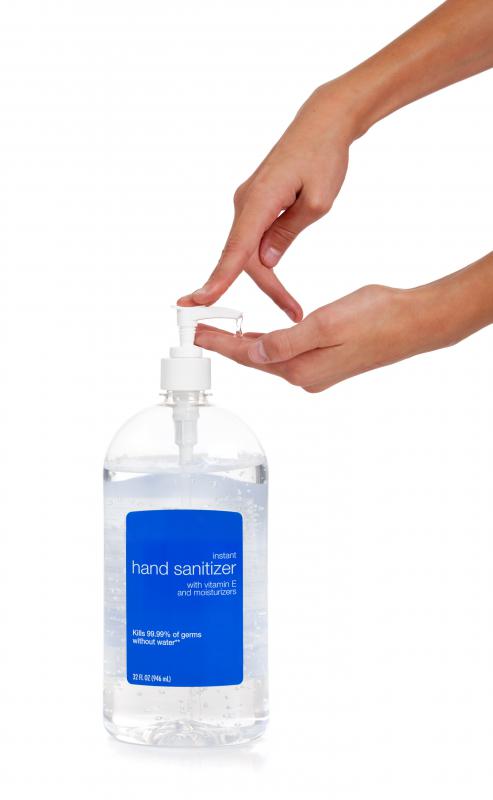
![Use hand sanitizer often to prevent spreading germs to other people.]() By: Michael FlippoUse hand sanitizer often to prevent spreading germs to other people.
By: Michael FlippoUse hand sanitizer often to prevent spreading germs to other people. -
![People who go to work sick risk infecting others.]() By: roboriginalPeople who go to work sick risk infecting others.
By: roboriginalPeople who go to work sick risk infecting others. -
![Using antibacterial wipes can help prevent the spread of germs around the office.]() By: Scott MillessUsing antibacterial wipes can help prevent the spread of germs around the office.
By: Scott MillessUsing antibacterial wipes can help prevent the spread of germs around the office. -
![A slight headache shouldn't keep you from going to work.]() By: ikoA slight headache shouldn't keep you from going to work.
By: ikoA slight headache shouldn't keep you from going to work.




Discussion Comments
Are there any legal avenues one could pursue for being fired for being sick, but not showing up to work with a doctor's note?
This individual did not have health insurance, and had the flu, and couldn't afford an Emergency Room visit to get a prescription that they could easily get over the counter.
With the new business environment, my employer discourages employees from staying home while sick. Consequently, one person after the other is getting sick and many people are walking around sick at work and hardly able to do their work. Even the supervisors come to work sick and spread their germs around.
that's what i thought. i'm thinking i may have bronchitis, two out of five symptoms and it's highly contagious. my friend came over and had it and i felt it the next day, but my employer laughed when i called in because of it. i was thinking of the overall big picture of me not getting our entire staff sick and/or getting our food customers ill as well.
Why would organizations discourage employees from coming to work when they are sick?
Please don't go to work when you're contagious! If your employer gives you a hard time, remind him or her how much it will suck for them when their whole staff is out sick! There's no reason to spread the germs around.
Post your comments