
At WiseGEEK, we're committed to delivering accurate, trustworthy information. Our expert-authored content is rigorously fact-checked and sourced from credible authorities. Discover how we uphold the highest standards in providing you with reliable knowledge.
Is There a Cure for Genital Herpes?
 Tricia Christensen
Tricia Christensen
Tricia Christensen
Approximately 20% of adults and teenagers in the US are infected with genital herpes, called herpes simplex virus 2 (HSV-2). Unfortunately there is currently no cure for genital herpes, but there are some things that can help reduce the number of herpes outbreaks and also outbreak time. There are products that claim that they can cure this virus, but there is no scientific proof for such claims.
Medical professionals and researchers are working on curing the herpes virus, and some in the field of holistic medicine claim they already have an effective treatment. There is no scientific proof that the work, however, and any evidence cited by the companies that promote them is anecdotal. The 90-day money back guarantee on some of these products is far too brief, as herpes can lay dormant in the system for many years. This makes it difficult to tell if any product has actually eliminated the virus.

There are a few approved medications that can help treat genital herpes. Acyclovir can be taken either orally or used in a lotion or ointment to reduce the time of an outbreak. When taken orally, this drug can cause fairly severe stomach upset or nausea. Lotions containing the medicine have fewer side effects and are applied directly on the site of the herpes outbreak. Symptoms can take a few days to a week to clear.

A person with herpes should use particular caution when applying acyclovir. The hands should be washed for two minutes with warm soapy water after using the topical versions, and individuals may also want to consider using gloves. It is technically possible to spread the infection from the genitals to the mouth or eyes, so using good sense safety and keeping the hands away from the face can help reduce risk.

Famciclovir is another oral medication that can reduce time of a break out and also suppress further breakouts. Such suppression is not a cure for genital herpes, but it can help people with frequent outbreaks live a more normal life, since outbreaks can be both painful and uncomfortable. Famciclovir takes about five days before an outbreak begins crusting over and then clears. It also has several potential side effects like nausea and headache, with HIV-infected patients reporting the most frequent side effects.

This medication is not considered safe for use with those with kidney impairment. Women who wish to use famciclovir when pregnant should weigh risk versus benefits carefully. The drug also passes through breast milk, and there is no clear evidence what its effect on infants and young children might be.
Valacyclovir is a newer herpes suppression medication that is taken orally to minimize outbreaks and cut down on outbreak time. It is most effective in patients with healthy immune systems, and those with kidney disease may need to take a different dosage. It may offer the most effective option for reducing outbreaks, as it has about half the rate of side effects as famciclovir and acyclovir. Since the medication is relatively new, few tests have evaluated its possible risks during pregnancy or for breastfeeding mothers.
Tricia Christensen
Tricia has a Literature degree from Sonoma State University and has been a frequent WiseGEEK contributor for many years. She is especially passionate about reading and writing, although her other interests include medicine, art, film, history, politics, ethics, and religion. Tricia lives in Northern California and is currently working on her first novel.
Learn more...
Tricia Christensen
Tricia has a Literature degree from Sonoma State University and has been a frequent WiseGEEK contributor for many years. She is especially passionate about reading and writing, although her other interests include medicine, art, film, history, politics, ethics, and religion. Tricia lives in Northern California and is currently working on her first novel.
Learn more...AS FEATURED ON:
AS FEATURED ON:









-
![Antiviral ointments are often used to treat genital herpes.]() By: TingaAntiviral ointments are often used to treat genital herpes.
By: TingaAntiviral ointments are often used to treat genital herpes. -
![Those with HIV may be prescribed breakout prevention medications as a part of their treatment protocol drug cocktail.]() By: danilkorolevThose with HIV may be prescribed breakout prevention medications as a part of their treatment protocol drug cocktail.
By: danilkorolevThose with HIV may be prescribed breakout prevention medications as a part of their treatment protocol drug cocktail. -
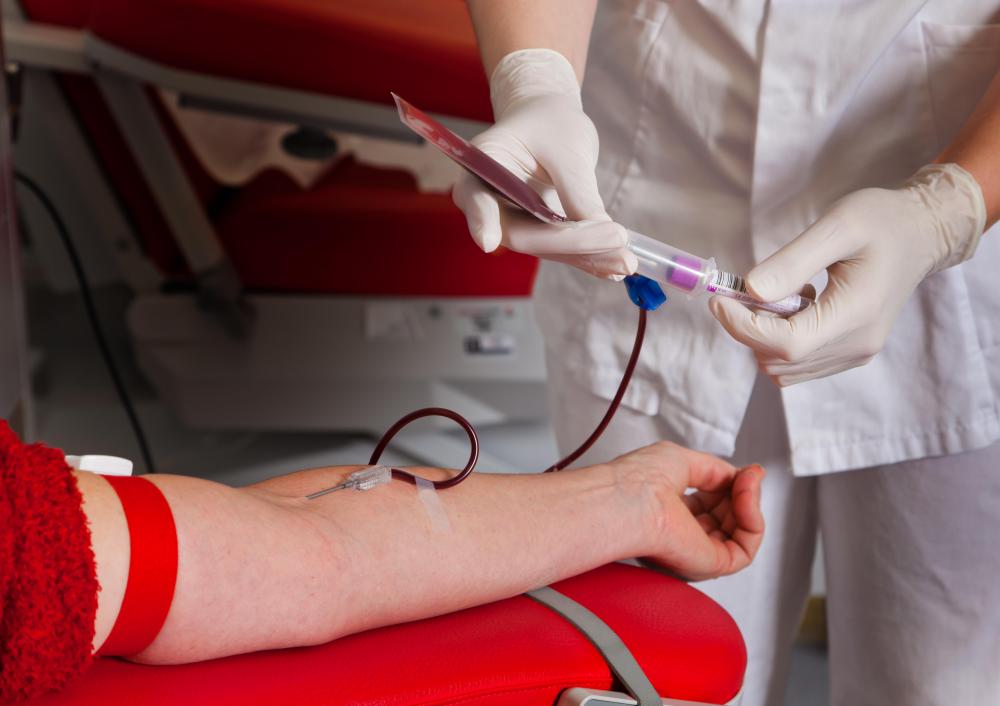
![Individuals with genital herpes are able to donate blood as long as they are feeling well.]() By: Gina SandersIndividuals with genital herpes are able to donate blood as long as they are feeling well.
By: Gina SandersIndividuals with genital herpes are able to donate blood as long as they are feeling well. -
![Condoms may not necessarily protect against genital herpes.]() By: Peter AtkinsCondoms may not necessarily protect against genital herpes.
By: Peter AtkinsCondoms may not necessarily protect against genital herpes. -
![Acyclovir, a medication used to treat genital herpes, may cause nausea.]() By: dragon_fangAcyclovir, a medication used to treat genital herpes, may cause nausea.
By: dragon_fangAcyclovir, a medication used to treat genital herpes, may cause nausea. -
![Antiviral creams can help manage genital herpes outbreaks.]() By: Picture-FactoryAntiviral creams can help manage genital herpes outbreaks.
By: Picture-FactoryAntiviral creams can help manage genital herpes outbreaks. -
![Side effects of acyclovir may include stomach upset.]() By: Photographee.euSide effects of acyclovir may include stomach upset.
By: Photographee.euSide effects of acyclovir may include stomach upset.




Discussion Comments
Please do your research on any company that is selling a product that may effect your health. Not all treatments for herpes has been tested in a lab for purity and results. Not all are manufactured and packaged in a sterile environment. Not all companies are licensed of recognized by the FDA. Not all companies put out correct information about their product or their company.
Protect yourself by doing your homework before purchasing a product online. Be sure they have a business license, ask what is in the product, ask and get names and numbers of the people/manufacture to makes and packages the product. Know that not all the people on the forums are real people. Anyone can get more than one e-mail address and use a different name.
So the comments you read about a product can be the company giving good reviews. There are pharmacies that can help you find over the counter products that can help you with treatment. Your physician is a good source of knowledge.
The science is moving forward constantly. There are several research projects that may result in a cure or vaccine. There are also some leading edge efforts that have already begun to be launched.
An example of one of these new products on the market is Viradux-au which I have been using since last summer. No outbreaks in eight months, but I know that is anecdotal. I can't wait for studies to be released because this one seems very promising. It might not work for everyone, but it's good to know there are many new approaches in the pipeline.
I was diagnosed with HSV 2 three years ago. That was the first time I had an outbreak and it was horrible, I didn't know what was going on. I went to the doctor they did blood tests and told me.
Yes, we need sex education but @anon215081, it doesn't matter. If people don't protect themselves and others, the education won't matter. Someone gave it to me protected! I have always been careful and if they knew they had it and gave it to me, that is horrible, but if they didn't know how could I be mad. Education is important.
I just had a baby and I was put on Valtrex at 36 weeks to prevent an outbreak, it worked and I had a great, normal delivery and she is perfect! If you are not having an outbreak, the doctors will let you deliver naturally, but if so, they will do a C section to protect the baby.
We need herpes education. It's very important!! The number of members on the largest herpes dating and support site has reached 1,560,000. Why are so many sexy people are infected by herpes? There is no doubt that we need sex education.
@baileybear - Actually, lmorales is right. There are just a bunch of quick fixes. As the article states above, there's not a cure for herpes because the disease comes and go. It's like a peek a boo game. I know that's a bad analogy, but the best way to prevent spreading the disease to a baby is to have a c-section. It might seem drastic, but that child has to live with it their entire life and they didn't even do anything! It's very sad....
@lmorales - The genital herpes remedies - will they stop the baby from actually contracting herpes? I mean, I know it's too late now, but I would just like to be educated on this topic as it seems to be a good one to know about.
@baileybear - I am not sure of the entire situation surrounding the birth of your friend's child, but I would be furious at that doctor! Obviously he had no desire to give her another test. Did he even prescribe any herpes treatments for her or her child?
As for genital herpes treatments to prevent passing it to your baby, I don't really think that's possible. Since there's no "cure" for it, there are just a bunch of herpes remedies.
I have a friend who was pregnant and tested for herpes by her OB. He said the tests came back negative, but she was actually positive. She had her son naturally and now she and her son both have to live with it. Are there any treatments for genital herpes that would allow you to have a baby naturally without spreading the disease to your baby?
Post your comments