
At TheHealthBoard, we're committed to delivering accurate, trustworthy information. Our expert-authored content is rigorously fact-checked and sourced from credible authorities. Discover how we uphold the highest standards in providing you with reliable knowledge.
Is Maltodextrin Unsafe?
 Michael Pollick
Michael Pollick
Michael Pollick
When it comes to determining the relative safety of a food product, there are few absolutes. A food additive called maltodextrin, a powder often found in snack foods such as flavored potato chips or crackers, is a case in point. Because few consumers would ever have the need to eat a significant amount of this substance, it is considered to be safe by the US Food and Drug Administration (FDA). The FDA does not necessarily equate "safe" with "healthy," however. Many artificial sweeteners and additives are considered to be safe in the sense of non-toxic, but many experts question their unhealthy effects on the human body.
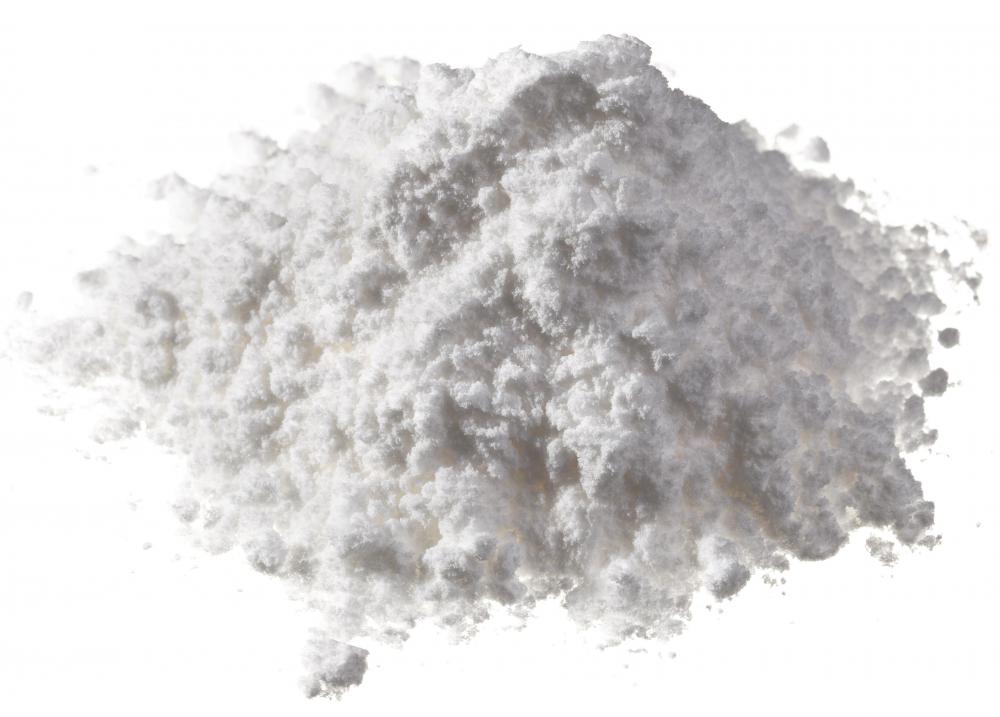
Maltodextrin is a white powder derived from either corn or potatoes, at least in the United States. It is often used in combination with other additives and spices to form a dry savory or sweet coating for fried snack foods, such as corn chips and potato chips. The substance is considered to be a polysaccharide, which qualifies it as an alternative sweetener to sucrose or fructose. Although rarely marketed by itself, it can often be found as an ingredient in a number of other artificial sweetener blends.

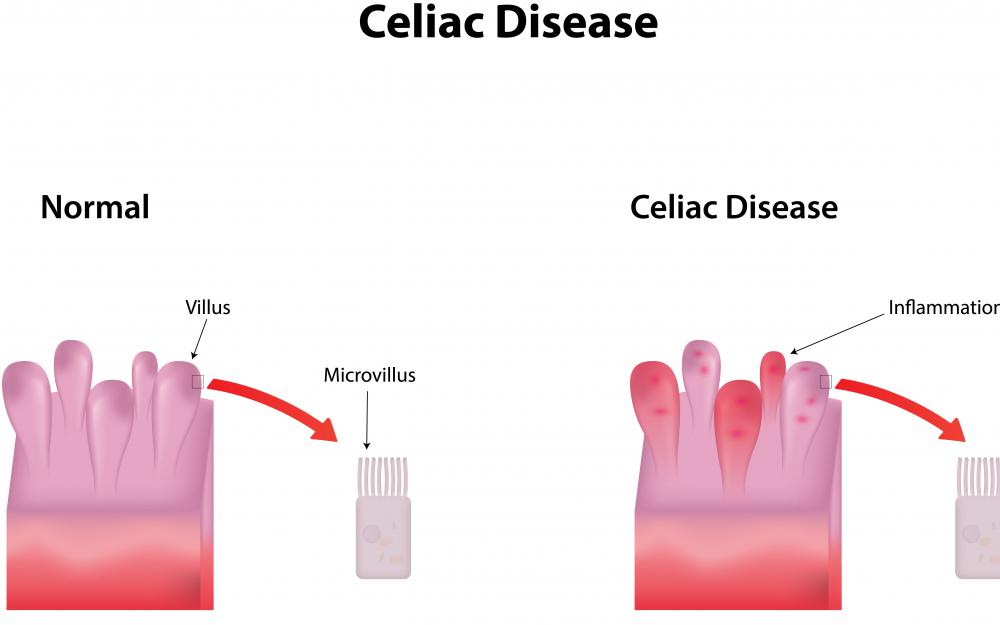
The primary concerns over the safety of maltodextrin lie mostly with the sources used to create it. If the product in question is derived from corn or potatoes grown in the United States or Canada, it is generally considered safe for all consumers. Corn or potato-based products are gluten-free, which makes them safe for those with Celiac disease to consume in small quantities. Celiac disease is a condition triggered by the ingestion of food products that contain wheat gluten, such as traditional breads and many grain cereals.

Wheat-based maltodextrin, commonly processed in Asian countries, is not gluten-free, however. If it is used in a food product, it should be clearly listed in the list of ingredients. Sometimes, the enzymes used to convert the corn or potato starch into this additive may be derived from other grains that contain glutens, such as rye, barley or wheat. Manufacturers should make any possible use of gluten-containing enzymes clear to commercial or private customers.

Maltodextrin derived from corn or potatoes grown in the United States or Canada should be considered safe for moderate consumption. For those with Celiac disease, avoiding any product containing maltodextrin from wheat or processed with other grain enzymes is a good idea. Further research on the effects of alternative sweeteners, some of which contain this substance, is still being conducted, so it would be difficult to say with any certainty that its use as an alternative sweetener is completely safe in the long term.
Michael Pollick
A regular TheHealthBoard contributor, Michael enjoys doing research in order to satisfy his wide-ranging curiosity about a variety of arcane topics. Before becoming a professional writer, Michael worked as an English tutor, poet, voice-over artist, and DJ.
Learn more...
Michael Pollick
A regular TheHealthBoard contributor, Michael enjoys doing research in order to satisfy his wide-ranging curiosity about a variety of arcane topics. Before becoming a professional writer, Michael worked as an English tutor, poet, voice-over artist, and DJ.
Learn more...AS FEATURED ON:
AS FEATURED ON:


-
![Maltodextrin, a food additive considered safe by the US Food and Drug Administration.]() By: HamsterManMaltodextrin, a food additive considered safe by the US Food and Drug Administration.
By: HamsterManMaltodextrin, a food additive considered safe by the US Food and Drug Administration. -
![Maltodextrin is often used as part of the flavoring on potato chips.]() By: andersphotoMaltodextrin is often used as part of the flavoring on potato chips.
By: andersphotoMaltodextrin is often used as part of the flavoring on potato chips. -
![Avoiding anything with maltodextrin is important for anyone with Celiac disease.]() By: joshyaAvoiding anything with maltodextrin is important for anyone with Celiac disease.
By: joshyaAvoiding anything with maltodextrin is important for anyone with Celiac disease.

Discussion Comments
What would you say about stevia mixed with maltodextrin? I'm afraid to try it because the maltodextrin is from GMO corn. It looks like I'm going to return the sweetener to the store.
Last night I took my first starter dose -- 15 grams -- and I just have to say that I slept very lightly. I had to go to the bathroom almost every hour for the whole night. I feel really bad and tired this morning. I have traced everything that I ingested yesterday. I feel this is the culprit!
Unknown to me at the time, Maltodextrin sent me to the hospital and now I have six stents in my chest I never needed. Maltodextrin causes full body inflammation, affects my higher reasoning and I can't think. That's how safe Maltodextrin is.
Maltrodextrin made from GM corn = Bad!
Wake up and smell what our own government is doing to us. Everything -- and I mean everything -- in this country is about the almighty dollar. No one including government, politicians, Monsanto, Cargill or any other company that develops genetically modified food additives cares about human health or our mortality. They do it for money and to make money. As soon as people realize this, then maybe then we as a country can stop these monsters from poisoning us and stop them.
Sigh. Reading the comment thread made me lose my faith in the internet, again. Made up statistics and facts, inferences presented as truth, really weird conspiracies presented as news. I guess it is business as usual.
People, do yourself a favor: stop eating processed food. Then you won't worry about additives. You can just make yourself crazy worrying about the source of your vegetables, grains, fruits and meats. And go fight on those threads about organics vs conventional, feed lots vs farms, etc. Have fun!
Anything with maltodextrin (splenda, breads, most canned soups, etc., etc., etc.) makes my stomach hurt within a couple of hours. The problem went on for years before I realized it.
First, I figured out that it was triggered by Splenda. Later, I figured out any food with maltodextrin caused problems. Cooking from scratch is a great solution, but I miss the convenience foods.
Please do not misunderstand "I am not allergic" and "It's safe for me". As with gluten, there are many products that we as humans should not be eating. Some see the adverse effects right away, others do not.
For example, we have eaten bread as a people for centuries, however most of the ingredients in any kind of bread are bad for us. They lower the immune system, destroy the walls of the digestive tract, and most do not even realize it. We are accustomed to the way these types of things feel and put it off to having that "full feeling".
Our bodies are trying to warn us that, just because it does not have an effect on you that you can instantly feel, does not mean it's good for you or that your body is "handling it". When a person starts smoking there are no adverse effects; there is even an uplifting feeling. However, years down the road your lungs and body are destroyed.
It's the same for any of these artificial additives. It might be natural to begin with, but the process and abuse it goes through makes it unnatural and it becomes bad for you. One drink with maltodextrin will not kill you, but one smoke won't either. If you are concerned with your health, avoid things that are possibly destroying you. Otherwise, move along and please try not to bother the people who want health in their lives.
I eliminated Maltodextrin or anything ending in (trin), eliminated all the crap ending with (tol) like the additives in our great tasting gum, etc. I also stopped dextrose, high fructose corn syrup, soy and quit drinking diet colas and other drinks with caffeine.
All it took was a little extra time looking at ingredients and these food companies, (in the last three years I've been looking) are eliminating these non-sugar additives, (which are way worse than sugar!), but people just see that it has no or low calories like all the fat free, no sugar added, etc. crap that's out there that's making fat people even fatter and diabetic! I know -- I was one of them! But not anymore! I've got to get the bread without the high fructose corn syrup and it's out there now!
Maltodextrin should not be consumed by Type 1 Diabetics.
Well, I was curious about maltodextrin after using a sports gel called "gu" for a long distance run. When I saw the ingredients, I became curious about it, because I am like most people posting to this thread: less is more.
I don't like junk in my food. My experience with the gel was positive. I can pop a few gel packs during a long run and my brain and body feel renewed. So yes, I know enough to know that the brain needs glucose and this product worked wonderfully. No more trying to go through half-marathons fueled by what's in my fat stores. After about an hour, your body just does not like to run on what is in your stores alone! Obviously, I am not allergic to it and it's O.K.
I started using "True Lemon-unsweetened" because the other flavors clearly had artificial sweeteners in them, which I avoid at all costs. I noticed a white, powdery substance stuck to each glass I drank. I called the company and they told me I "didn't stir it right". I researched one of the ingredients, maltodextrin, and sure enough, that was it. I never got that from a real lemon, so if that is left behind in my glass, it must also be inside of me as well. To each their own, but I'm choosing not to ingest this product any further.
If the FDA says it's safe, it's not. Anything that is not natural (plants are natural) is simply not. When it comes to health, our nation rates very low.
I don't know if artificial sweeteners are similar to maltodextrin. However, I do know that when I was pregnant I wasn't supposed to have any artificial sweeteners so what would be the difference be when I'm not?
What the FDA says is safe is usually safe in moderation so in my opinion anything processed or with a funny name is safe and too much of a bad thing is well, bad.
If you have an allergic reaction to maltodextrin, then it doesn't mean its unsafe for the rest of us. If I were allergic to almonds, it doesn't mean that they are unsafe. So before you tell everyone that its unsafe you should consider the fact that your body simply can't handle it. Everyone is different.
I guess since my mother is lactose intolerant then I should contact the FDA and tell them they should prohibit all forms of lactose in US foods. Sounds reasonable, right? How about we just take out anything and everything that any single person is allergic to and completely rid the planet of those supplements? Some of you people are just delusional.
I am extremely allergic to Maltodextrin. Within 20 minutes of eating it, in anything, my body starts to reject it and will continue until every iota is gone. Sucralose is made with Maltodextrin and not listed. About 80 percent of grocery store articles contain Maltodextrin. It needs to come out of foods.
I'm going to start writing to the FDA because I can't even eat at a party any more with out seeing the ingredients people have used. The drug Homax can help with the intestinal spasms.
Due to coeliac disease being confirmed three or four years ago i have been on a gluten free diet. It's not an easy life but it saved my life.
to regain my lost weight i was put on Fortisip by my hospital dietitian. i was half way back to my normal weight when my doctors surgery went on a cost cutting exercise. They changed my Fortisip drink to Complan Shake -- another, cheaper nutritional drink.
Within weeks, my legs started to get progressively weaker by the day then the rest of my muscles and body followed. A load of blood tests plus a biopsy showed that a form of gluten had again reared its ugly head and was slowly killing me.
I did my own research. The Complan contains the highly controversial Maltodextrin with its genetically altered structure.
Maltodextrin is used in all kinds of sports supplements as the main form of carbohydrates. It is simply a bunch of glucose molecules bonded together. If you are allergic to maltodextrin you are probably allergic to glucose.
Maltodextrin alone has a relatively bland taste. So alone, it won't do much as a sweetener and it is nowhere near as bad for you as splenda and such that your body is not able to do much with. Your body can actually use maltodextrin. The only real risk is if you are gluten intolerant or if you are afraid of a little weight gain. I have consumed a large amount of maltodextrin and have had no bad side effects. I am a very healthy athlete.
So before you get all freaked out about maltodextrin being in a product maybe we should be more concerned about our general eating habits as obesity is the biggest health concern in the united states at the moment.
Maybe this info could help you. I had a severe, chronic case of perineal pressure and microhematuria for several months.
Believe it or not, when I cut out all artificial sweeteners - I was using a lot and several different kinds - (thought they were better for me than sugar) - the perineal discomfort disappeared!
The microhematuria will probably always show up on lab tests once it starts, according to the urologist, but is not significant in light of normal urea/cysto studies.
maltodextrin from corn or soy can be very unsafe/poison for anyone. As all GMO products like corn and soy are genetically engineered from the monsanto company. they insert a bacteria in all GMO products, and this changes the natural organic developing of corn or soy. do not buy anything that contains maltodextrin or titanium for your own health.
It's basically a complex form of glucose, which is a million times better for your body than fructose (which is in table sugar, HFCS, etc).
After careful study of what i eat, i found i am very allergic to maltodextrin --- in other words, as soon as i eat it i get stomach cramps followed by days of oily stools, bleeding and watery stools.
Now that I have eliminated only maltodextrin (that is having to cook all my food from scratch and never eating out) I have no problem. By the way, in Europe I have no problem eating there -- and they don't allow it. I have no idea how sick I would become if I did not carefully restrict this additive.
Maltodextrin is widely used in infant formula. Does this gives the children enough of the carbs needed for brain and muscle function and development?
Maltodextrin made in the US is made from corn.
Corn in the US is a GMO food so Maltodextrin as derived from a Gmo is extremely unsafe.
All GMO foods create a strong allergic reaction in the human and animal body.
I have been informed by my GP that I am severely allergic or intolerant to Malt and therefore any product containing it i.e Maltodextrin.
Your article says it is a safe product. Could my GP be mistaken or would my intolerance be very rare? It is found in everything yummy!
If you eat products such as Splenda and eat nothing else what effect does it have on a body?
what is the percentage of gluten that can be added in a food product, for instant premix in powder form.
The consumer has little ability to determine whether gluten containing ingredients are in a product containing maltodextrine. I have found all products that are not labeled "derived from corn" to be a problem.
Kindly provide information regarding "if we use maltodextrin as animal feed"
Post your comments