
At AllThingsNature, we're committed to delivering accurate, trustworthy information. Our expert-authored content is rigorously fact-checked and sourced from credible authorities. Discover how we uphold the highest standards in providing you with reliable knowledge.
Is Bottled Water Bad for the Environment?
 Michael Pollick
Michael Pollick
Michael Pollick
While the contents themselves are not especially harmful, the process of producing bottled water does not do the environment any favors. Many health-conscious consumers strongly believe that it is preferable to ordinary tap water, and the water industry's profits run in the billions of US dollars (USD) annually. Even if the bottling and shipping aspects of the industry have a negative impact on the environment, the end result is still viewed as a healthier alternative than tap water processed through municipal treatment plants.
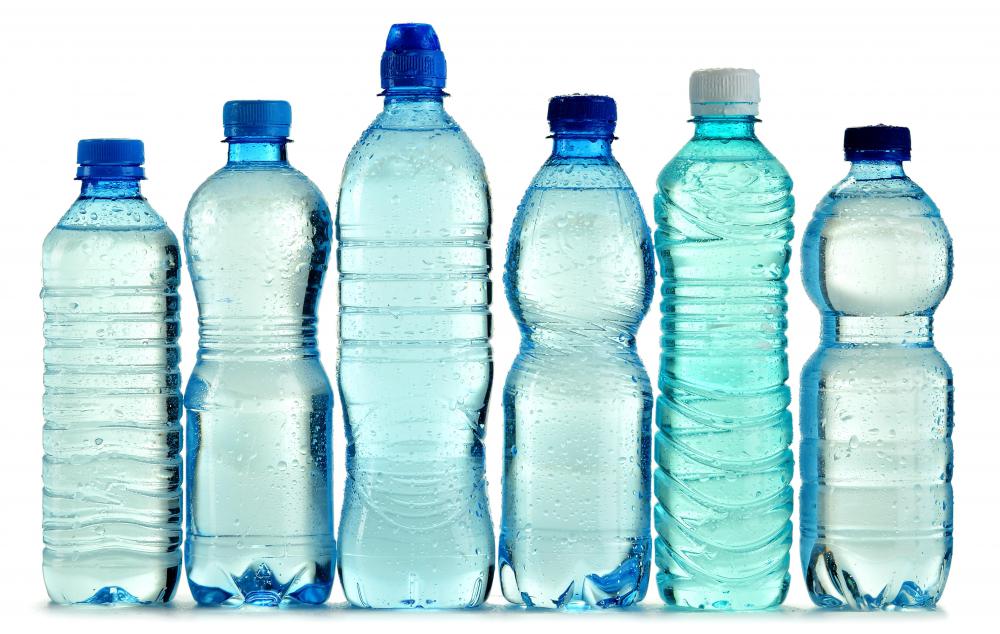
One of the main problems with bottled water production is the reliance on fossil fuels. Raw plastic must be heated before it can be injected into bottle-shaped blow molds, and this heat source is often electricity or natural gas, both of which are produced by fossil fuels. The finished bottles must then be shipped out by trucks or trains, which also burn natural fossil fuels. Add to this the use of additional packaging materials, such as plastic wrap and cardboard. Merely producing the bottles has a negative impact on the environment.

There is also a question about the viability of plastic bottle recycling programs. Although the plastic used in most bottling facilities is considered recyclable, the majority of used containers never see the inside of a recycling center. They are either sent to landfills or are left behind as trash. These plastic bottles do not degrade very quickly, and many generate harmful gases as they disintegrate. As long as recycling efforts remain voluntary, used water bottles will continue to generate these gases and take up valuable space in landfills.

Some experts question the need for bottled water in the first place. Several studies have shown that many of these waters are not produced from the natural or protected sources touted by their manufacturers. Some is little more than purified tap water derived from the same source as municipal drinking water. So-called "spring water" or "Artesian well water" can also contain natural contaminants as the water percolates through the ground before bottling. Side-by-side taste tests between bottled and treated municipal tap water have often revealed very few discernible difference in taste or quality.

Because bottled water is considered to be a "food," regulation and testing in the US falls to the Food and Drug Administration (FDA). The FDA currently requires manufacturers to test their products for harmful contaminants once a week. Municipal tap water is under the jurisdiction of the US Environmental Protection Agency (EPA). The EPA's testing requirements are much more stringent for tap water, requiring water treatment plants to test for contaminants several times a day. In terms of potential harm to people and animals, unchecked bottled water could prove to be much more hazardous than municipal tap water.

Some water treatment experts recommend not refilling plastic water bottles with fresh water from the tap since the plastic might leach toxic chemicals into the water as they degrade, which only becomes more problematic as the bottles become older. Fresh drinking water should be kept in glass or more permanent plastic containers, not in disposable plastic bottles.

While bottled water certainly has its appeal as a portable source of rehydration, it does have some negative impact on the environment. Some experts suggest using a home filtration system to improve the taste and quality of standard tap water instead of buying additional water for drinking purposes. Filters can remove almost all of the most dangerous contaminants and foreign agents found in water, and the purified tap water can be stored in more permanent containers with far less environmental impact than disposable plastic bottles.
Frequently Asked Questions
Why is bottled water considered bad for the environment?

Bottled water has a significant environmental impact due to its production and disposal processes. The manufacturing of plastic bottles requires petroleum and emits greenhouse gases. Moreover, plastic waste contributes to pollution, as it takes hundreds of years to decompose. According to the Container Recycling Institute, over 60 million plastic bottles end up in landfills and incinerators daily.
How does bottled water consumption contribute to carbon footprint?
The carbon footprint of bottled water is substantial, as it includes the energy used in bottle production, water extraction, bottling, transportation, and refrigeration. The Pacific Institute estimates that producing the bottles for American consumption required the equivalent of more than 17 million barrels of oil, not including the energy for transportation.
What is the environmental impact of transporting bottled water?
Transporting bottled water over long distances involves burning fossil fuels, which contributes to air pollution and climate change. The transportation of bottled water from one country to another can be particularly carbon-intensive. Food & Water Watch reports that nearly a quarter of all bottled water crosses national borders to reach consumers, amplifying its carbon footprint.
Can recycling mitigate the environmental issues caused by bottled water?
While recycling can help, it is not a complete solution. The recycling rate for plastic bottles is relatively low; the EPA notes that only about 29.1% of PET plastic bottles and jars were recycled in 2018. Additionally, recycling requires energy and resources, and not all plastic can be recycled indefinitely, leading to eventual waste.
Are there any health benefits to drinking bottled water over tap water?
Most developed countries have stringent regulations for tap water, making it safe to drink. The perceived health benefits of bottled water are often debated. In some cases, bottled water is simply filtered tap water. The CDC states that the United States enjoys one of the safest drinking water supplies in the world.
What are the alternatives to bottled water that are better for the environment?
Alternatives to bottled water include using a reusable water bottle and filling it with tap water, possibly filtered if necessary. Installing a home water filtration system can also improve tap water taste and safety. These options significantly reduce plastic waste and the environmental footprint associated with bottled water. Organizations like the Environmental Working Group provide resources to help consumers find water filters that meet their needs.
Michael Pollick
A regular AllThingsNature contributor, Michael enjoys doing research in order to satisfy his wide-ranging curiosity about a variety of arcane topics. Before becoming a professional writer, Michael worked as an English tutor, poet, voice-over artist, and DJ.
Learn more...
Michael Pollick
A regular AllThingsNature contributor, Michael enjoys doing research in order to satisfy his wide-ranging curiosity about a variety of arcane topics. Before becoming a professional writer, Michael worked as an English tutor, poet, voice-over artist, and DJ.
Learn more...AS FEATURED ON:
AS FEATURED ON:









-
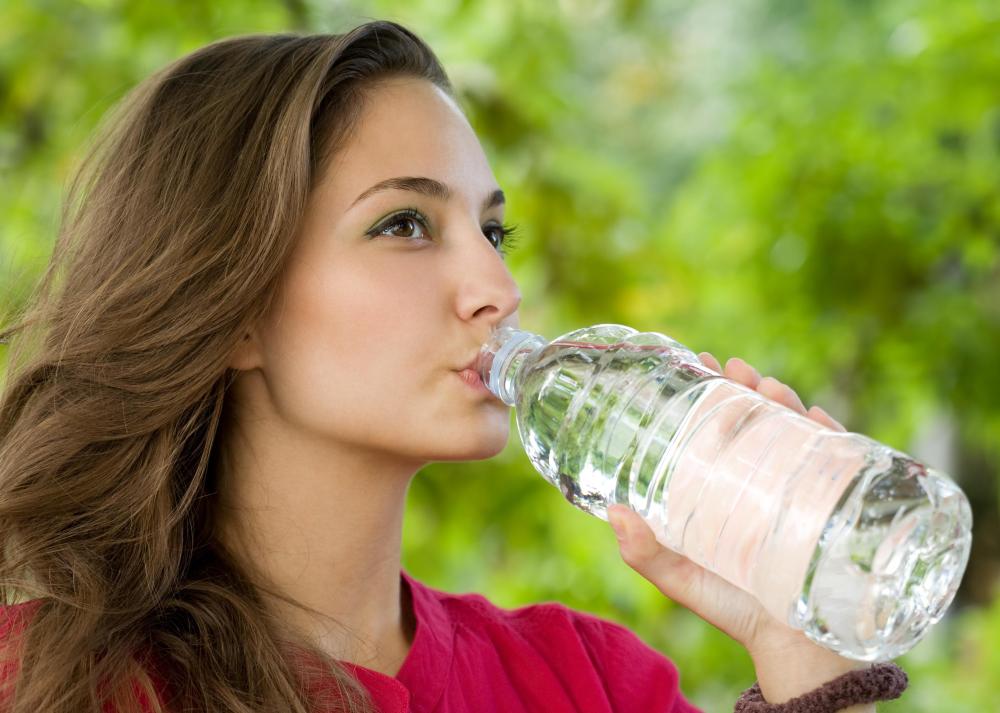
![Some health-conscious people believe it is preferable to drink tap, rather than bottled, water.]() By: cdrcomSome health-conscious people believe it is preferable to drink tap, rather than bottled, water.
By: cdrcomSome health-conscious people believe it is preferable to drink tap, rather than bottled, water. -
![Many bottles end up in landfills.]() By: MoultipixMany bottles end up in landfills.
By: MoultipixMany bottles end up in landfills. -
![Many water bottles are made of plastic.]() By: monticelllloMany water bottles are made of plastic.
By: monticelllloMany water bottles are made of plastic. -
![Some experts have found that so-called "spring water" can also contain contaminants.]() By: shyshkaSome experts have found that so-called "spring water" can also contain contaminants.
By: shyshkaSome experts have found that so-called "spring water" can also contain contaminants. -
![The process of producing bottles of water is not always great for the environment.]() By: lithianThe process of producing bottles of water is not always great for the environment.
By: lithianThe process of producing bottles of water is not always great for the environment. -
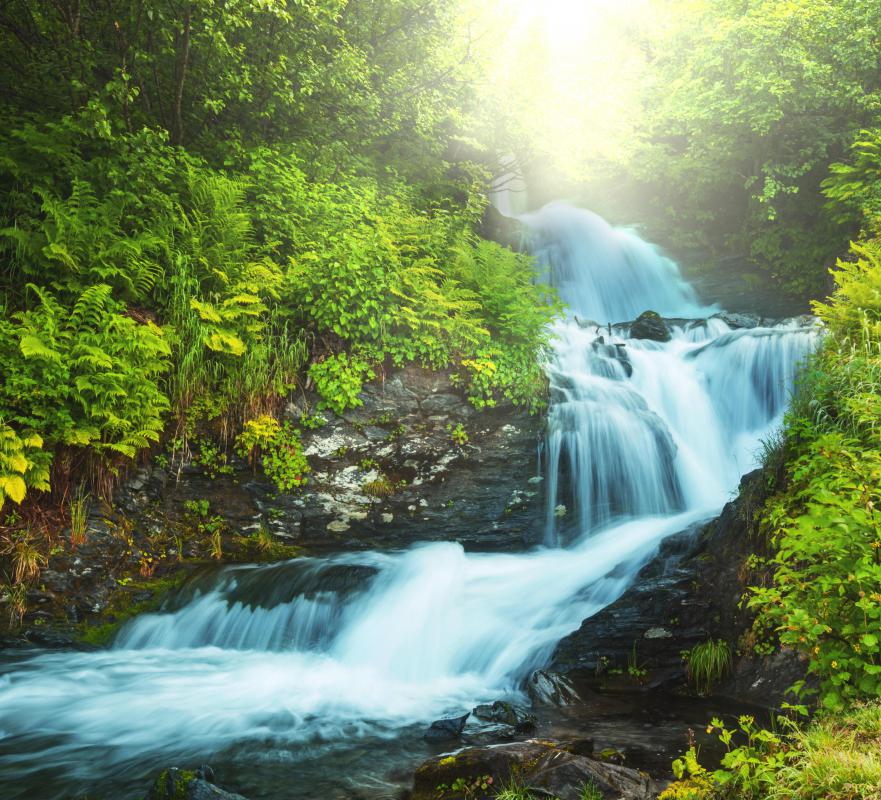
![Spring water may have natural contaminants.]() By: Galyna AndrushkoSpring water may have natural contaminants.
By: Galyna AndrushkoSpring water may have natural contaminants.


Discussion Comments
I find that bottled water tastes very strange. That's why I always drink tap.
I drink tap water and it tastes exactly the same to me. Tested several times a day compared to once a week, and people still think there's something wrong with tap water.
Water and soda bottles are largely responsible for the plastic island floating in the upper water column of the North Pacific Gyre. A Gyre is a region where currents meet to form a sort of current vortex; trapping floating debris in a concentrated area. Estimates from the National Oceanic and Atmospheric Administration (NOAA) approximate the size of the "island" to be between the size of Texas and the Continental United States.
In some places, the plastic and debris is simply a thick soup of partially broken down pieces of plastic. In other places the plastic and debris is so fresh and dense that people can actually stand on it. Albatross populations are shrinking because of ingested plastics, and all kinds of marine life are dying from swallowing large amounts of indigestible plastic.
Every time someone throws away a plastic bottle rather than recycling it, it has the potential to end up as part of this island. Plastic bottles are the worst culprits because they hold air and take much longer to begin to sink to the sea floor.
@ Bloomusa- I am in total agreement with you. I have a water filtration system installed under my sink and I think the water tastes better than most store bought bottled water. Many bottled water brands simply use municipal water that is treated through reverse osmosis (in some cases originating from water treated at sewage treatment plants). These different brands of water only get their unique crisp tastes by adding salts and minerals in certain combinations after the purification process.
IF I need to take water with me I use a stainless steel water bottle. They do not leech harmful chemicals, they are reusable almost indefinitely, and they are recyclable an unlimited number of times. Another bonus is metal retains heat or cold better so my water stays refreshing for longer. I'm with you; say no to salty water that tastes like plastic.
Did you know that it takes 8 fresh gallons of water to make just one gallon of bottled water? That is such a waste, also the petroleum that it takes to make the bottles and transport them is bad for the environment. The water is not any better than tap water and it is toxic sitting in those plastic bottles. The only solution is to make your own healthy water right from your own tap. Re-Use and Refill, save your health and the environment at the same time. stop buying corporate water! Stop getting ripped off by these bottling companies and take control of your own water supply.
Post your comments