
At HomeQuestionsAnswered, we're committed to delivering accurate, trustworthy information. Our expert-authored content is rigorously fact-checked and sourced from credible authorities. Discover how we uphold the highest standards in providing you with reliable knowledge.
Is Ammonia a Safe Cleaning Agent?
 Malcolm Tatum
Malcolm Tatum
Malcolm Tatum
Ammonia (ammonium hydroxide) is commonly used as an ingredient in household cleaning supplies, such as glass and surface cleaners, disinfectant aerosol sprays, and jewelry cleaning solutions. When it is exposed to the open air, it turns into a gas with a distinct sharp smell. Most household cleaners contain a 5% to 10% concentration of the substance, which is generally not strong enough to harm an adult, but it can cause eye, nose, mouth, and lung irritation in sensitive individuals or when not used correctly. By taking basic precautionary steps, such as properly ventilating a room during use and wearing rubber gloves, this inexpensive liquid can be both a safe and effective cleaning agent.
Safety

Like many other chemicals that are used to clean things in the home, ammonia has the potential to harm to people and pets. Before a person starts cleaning, he should open any windows and air vents, and turn on ceiling fans. If there aren't any air vents or ceiling fans nearby, he should place a small box fan in the window to circulate the air in the room that he is working in. Pets and children should not be around while ammonia is being used since the fumes are likely to affect them more seriously than an adult.
Avoid Bleach

Ammonia should not be mixed with any other common household cleansers or soaps, as they may contain chlorine bleach. When the two compounds come into contact, they chemically react and release toxic gases into the air. Inhaling these gases causes nose irritation, swelling of the throat and lungs, and fluid build up in the lungs. Some people may also experience chest pain, coughing and wheezing, watering eyes, and nausea when they breathe it in. Anyone who is exposed to high levels of chlorine gas may require medical attention.
Cleaning Surfaces

Stainless steel surfaces, tempered glass stove tops, glass windows, porcelain fixtures, and most types of kitchen counters can be cleaned with ammonia. Individuals can make a cleaning solution by mixing roughly one part ammonia to two parts water and adding it to a spray bottle. It can be used in the same manner as any window or surface cleaner. The spray is particularly good for shiny surfaces, since it will not leave streaks.

The cleanser is also handy in the bathroom, as it removes soap scum buildup and hard water stains from porcelain sinks, tubs, and wall tiles. People can use it to remove soap and water spots from mirrors and glass shower doors, and return dingy metal fixtures to their original shine. While the cleanser does not need to be rinsed, people who are concerned about lingering odors or chemical traces may want to take this extra step.
Exceptions

Ammonia can damage no-wax floors, specialty tiles, and fabrics such as upholstery and carpeting. While some people may recommend using it to remove stains from sofas or carpets, it is important to do a spot test first. There is a good chance that the cleaner could discolor the material and leave a spot that looks worse than the stain.
Because ammonia reacts with bleach, it should never be used on any surface that might also be cleaned with bleach at some point in the near future. Even when they are not mixed directly, the chemical traces left by one could interact with the other, leading to very serious results.
Toxicity

According to the Agency for Toxic Substances & Disease Registry (ATSDR), ammonia is a toxic, or poisonous, substance. The pungent gas is an irritant that can chemically burn mucous membranes located in the eyes, nose, mouth, and lungs. Exposure to high concentrations of the substance can kill. Symptoms of poisoning include coughing, wheezing, chest pain, and burning, watering eyes. Other symptoms include throat and mouth pain, lip swelling, hallucinations, blindness, and rapid heart beat.

Pets that are exposed to ammonia will show symptoms similar to those experienced by people, particularly breathing difficulties. Since household animals may walk on surfaces that have been cleaned with this substance, they can get it on their hair and skin, and may lick it off. Most pets are also smaller and so are closer to the fumes released by the cleaning solution, so many experts recommend that pet owners not use ammonia or use it only with caution. Anyone who has a pet that may have been exposed to the substance should take the animal to a veterinarian immediately.
Malcolm Tatum
After many years in the teleconferencing industry, Michael decided to embrace his passion for trivia, research, and writing by becoming a full-time freelance writer. Since then, he has contributed articles to a variety of print and online publications, including HomeQuestionsAnswered, and his work has also appeared in poetry collections, devotional anthologies, and several newspapers. Malcolm’s other interests include collecting vinyl records, minor league baseball, and cycling.
Learn more...
Malcolm Tatum
After many years in the teleconferencing industry, Michael decided to embrace his passion for trivia, research, and writing by becoming a full-time freelance writer. Since then, he has contributed articles to a variety of print and online publications, including HomeQuestionsAnswered, and his work has also appeared in poetry collections, devotional anthologies, and several newspapers. Malcolm’s other interests include collecting vinyl records, minor league baseball, and cycling.
Learn more...AS FEATURED ON:
AS FEATURED ON:


-
![A bottle of ammonia. It can be a good cleaner, but should never be mixed with bleach.]() By: picsfiveA bottle of ammonia. It can be a good cleaner, but should never be mixed with bleach.
By: picsfiveA bottle of ammonia. It can be a good cleaner, but should never be mixed with bleach. -
![A woman washing a window with an ammonia-based window cleaner.]()
A woman washing a window with an ammonia-based window cleaner. -
![Ammonia is dangerous for pets.]() By: Michael PettigrewAmmonia is dangerous for pets.
By: Michael PettigrewAmmonia is dangerous for pets. -
![Ammonia can come in aerosol form.]() By: picsfiveAmmonia can come in aerosol form.
By: picsfiveAmmonia can come in aerosol form. -
![If a person wants to use ammonia to clean a couch, they should do a spot test first.]() By: jonnyju29If a person wants to use ammonia to clean a couch, they should do a spot test first.
By: jonnyju29If a person wants to use ammonia to clean a couch, they should do a spot test first. -
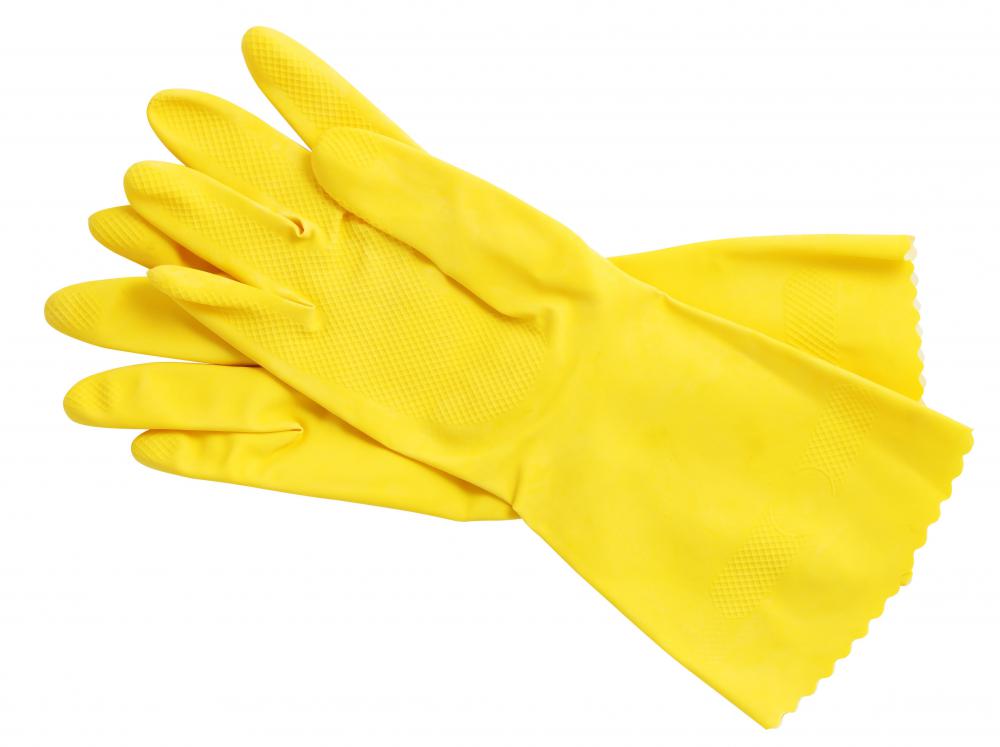
![Rubber gloves should be worn when handling ammonia.]() By: aleksandra_1981Rubber gloves should be worn when handling ammonia.
By: aleksandra_1981Rubber gloves should be worn when handling ammonia. -
![Bleach should always be kept away from ammonia, as the two combined create toxic gases.]() By: design56Bleach should always be kept away from ammonia, as the two combined create toxic gases.
By: design56Bleach should always be kept away from ammonia, as the two combined create toxic gases.



Discussion Comments
I just adopted a puppy the Thursday before Easter and on Monday noon time she got really sick. The vet thinks it might be parvo but won't know until he runs some tests on her. Some of the floors in the house are wood and I've heard ammonia is a good for cleaning and sterilizing areas where the puppy may have accidentally peed or got sick, but is it safe for me to use on the wood floors and how much would I use and do I dilute it? Can I just use glass cleaner that has ammonia in it.
My puppy is at the vet's office and I figure I could wipe down the floor before I have to pick her up and bring her home. Thanks to anyone who can help me out.
I know someone who uses Windex extra strength spray on all surfaces that he deems need cleaning. My concern is that there are three very young children in the home. Could these fumes be toxic to them?
Is ammonia solvent based? I need to clean carpets of pet urine and I know ammonia would do it, but don't know if it is safe to run through my machine. --julie
I also spilled windex on my car leather seats and it looks terrible. wonder what to do. Glad to see i'm not the only who did it.
#6 - just a clarification, it's a natural reaction in water that changes Urea to Ammonia, not bacteria.
A very good window cleaner without ammonia is "Clear Power" by Melaleuca. I use it all the time. Its a company that I work for.
What does ammonia smell like? My grandmother told me that it smells like pee so I have never tried it, but I need something that is safe to use around my kids so I try and make my own cleaners. Problem is that everything that I find a recipe for calls for ammonia.
I'm very concerned of the fumes from ammonia. I use it a lot, but even with my windows open, I still get a upset stomach after smelling it. Anyone else have this issue?
use some landscape grade charcoal. i sell it all the time for that reason.
I bought a bottle of clear ammonia for a spot on my carpet that my dog regularly pissed on when we didn't lock her up in my room. I poured about four ounces out on the spot and opened my windows.
I figured my carpets are white almost. If the carpets get bleached, then cool -- the dog smell will be gone and my rug would come clean. Well I locked myself in my room and like on the left side of my chest I felt like either my chest or heart was tweaking. I could literally feel something with my hand tweaking. Why, I don't know. Any suggestions or advice on what it could be?
Sanitize the yard? You are after cleaning the yard and all the potential pathogens there? Good luck.
Ammonia is a great cleaner. The bad part is a lot of cleaners don't say if it contains ammonia.
To the user with the leather seats, ammonia has no place in a vehicle -- nada, nil, nowhere. Ammonia is prone to "shrinking" plastics, which sounds like what happened. Most likely your "leather" seats are likely not completely leather, and perhaps "pleather" (some plastic mixed in) so that's the effect you're seeing.
Personally, for automotive detailing/window cleaning, vinegar/water mix works great.
I'd never use ammonia; it's likely to mess up the dashboard, steering wheels, window strip/weather stripping (which are usually plastic).
Dog (and human) urine do not contain ammonia, they contain urea. Bacteria turn the urea into ammonia after you urinate.
We spilled some windex on our leather car seats. One portion has lost a thin layer of leather, another is discolored. Has anyone had this experience, and any thoughts on whether it's a warranty item?
Spread lime all over the surface where the dogs have urinated. It will help sanitize and neutralize the ammonia. If it's really bad, you might want to work it into the soil and apply another layer on the surface. It will sweeten your soil as well as sanitize and neutralize it.
Why would you want to put more ammonia in the back yard where your dogs uses it as a toilet... their urine is ammonia.
Can a diluted solution of ammonia, be used to disinfect the soil in the outside yard that is used as a toilet by dogs. If so, can they use the yard straight away, or left for a period of time.
Post your comments