
At DelightedCooking, we're committed to delivering accurate, trustworthy information. Our expert-authored content is rigorously fact-checked and sourced from credible authorities. Discover how we uphold the highest standards in providing you with reliable knowledge.
In Bartending, what is a Well Drink?
 Mary McMahon
Mary McMahon
Mary McMahon
A well drink is a mixed drink made with inexpensive, generic liquor, rather than a specific brand. As one might imagine, such drinks tend to be cheaper, and some bars even offer specials on them to encourage customers to settle in for a few. Depending on the bar, the quality of liquors used may vary widely, with some upscale bars using very good liquors for their well drinks, while dives tend to scrape the bottom of the barrel, sometimes literally.
The term is a reference to the “well,” the rack of liquor kept directly below the bar. These alcohols are easy for the bartender to reach, and they carry less cachet than those in the “call,” the rack above the bar that is visible to customers. The high-value alcohol is often kept in the call to appeal to customers, encouraging them to order more expensive brands and creating an overall feel of quality in the bar.

As a general rule, when clients order a drink, the bartender will reach for the well, unless the customer specifies otherwise or the bartender has a soft spot for the customer. In some bars, bartenders are trained to upsell more expensive liquors, so a customer may be asked if he wants a specific brand of spirit in the drink.
For people who don't have a lot of money, or who don't want to spend a lot on alcohol, well drinks are a good way to socialize at bars without breaking the bank. Prices for mixed drinks can get extremely expensive, especially if a number are consumed over the course of the evening; drinking from the well can keep the costs down. Customers should be aware, however, that a complex drink made with a generic alcohol will still be expensive, because the bartender will still need to do more work to mix the drink correctly.

Some people actually acquire a taste for the well drink, preferring the generic brands of alcohol for various reasons. This might not necessarily be a bad thing, according to a study in 2008 in which subjects were asked to drink various wines in an MRI, allowing scientists to study their reactions. When subjects drank an expensive wine and knew it was expensive, they often had the same reaction as they did when they drank a cheap wine and were told it was expensive. On the flip side, when subjects drank cheap wines and were told they were cheap, they registered less delight in the taste, and the same held true when they were given samples of expensive wines and told they were cheap. This suggests that the perceived cost of a beverage may have more of an influence on the taste than people think, so if they can ignore the “bargain basement” connotation of the generic drink, they might find themselves enjoying them.
Mary McMahon
Ever since she began contributing to the site several years ago, Mary has embraced the exciting challenge of being a DelightedCooking researcher and writer. Mary has a liberal arts degree from Goddard College and spends her free time reading, cooking, and exploring the great outdoors.
Learn more...
Mary McMahon
Ever since she began contributing to the site several years ago, Mary has embraced the exciting challenge of being a DelightedCooking researcher and writer. Mary has a liberal arts degree from Goddard College and spends her free time reading, cooking, and exploring the great outdoors.
Learn more...AS FEATURED ON:
AS FEATURED ON:


-
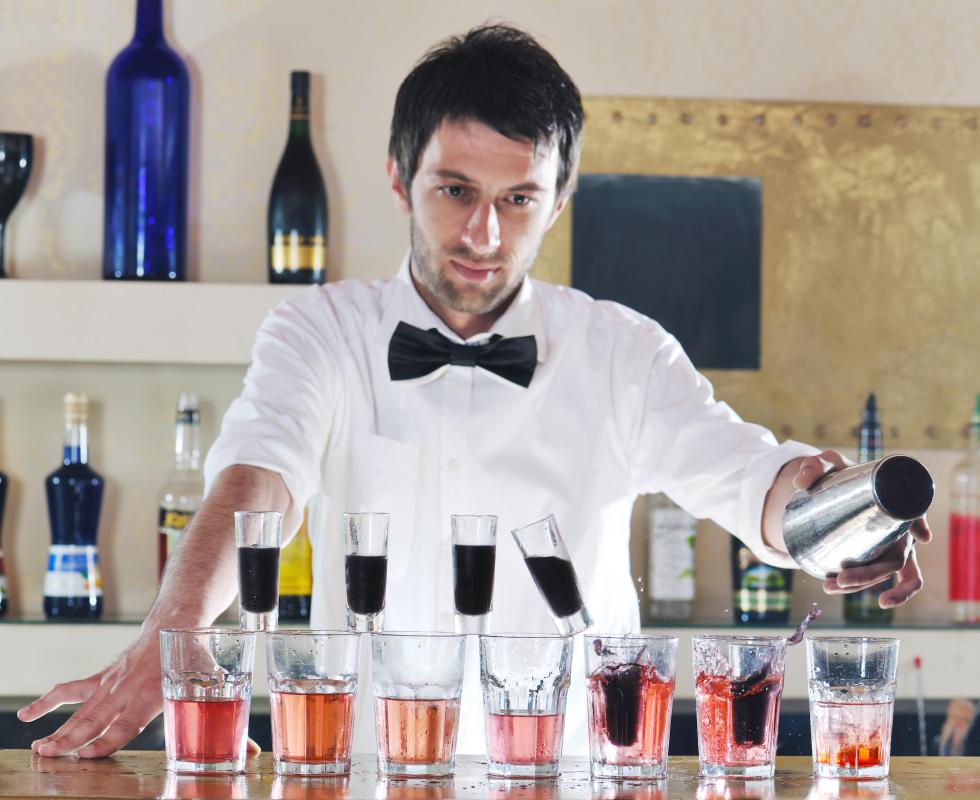
![A bartender will use a generic, inexpensive liquor for a well drink.]() By: .shockA bartender will use a generic, inexpensive liquor for a well drink.
By: .shockA bartender will use a generic, inexpensive liquor for a well drink. -
![Well drinks allow patrons to socialize without breaking their wallets.]() By: draghicichWell drinks allow patrons to socialize without breaking their wallets.
By: draghicichWell drinks allow patrons to socialize without breaking their wallets. -
![Many bars run specials on well drinks during late afternoon and early evening happy hours.]() By: Andres RodriguezMany bars run specials on well drinks during late afternoon and early evening happy hours.
By: Andres RodriguezMany bars run specials on well drinks during late afternoon and early evening happy hours. -
![Excessive consumption of alcohol, such as well drinks, may lead to high blood pressure.]() By: DangubicExcessive consumption of alcohol, such as well drinks, may lead to high blood pressure.
By: DangubicExcessive consumption of alcohol, such as well drinks, may lead to high blood pressure. -
![As a general rule, when clients order a drink, the bartender will reach for the well, unless the customer specifies otherwise.]() By: AhileosAs a general rule, when clients order a drink, the bartender will reach for the well, unless the customer specifies otherwise.
By: AhileosAs a general rule, when clients order a drink, the bartender will reach for the well, unless the customer specifies otherwise. -
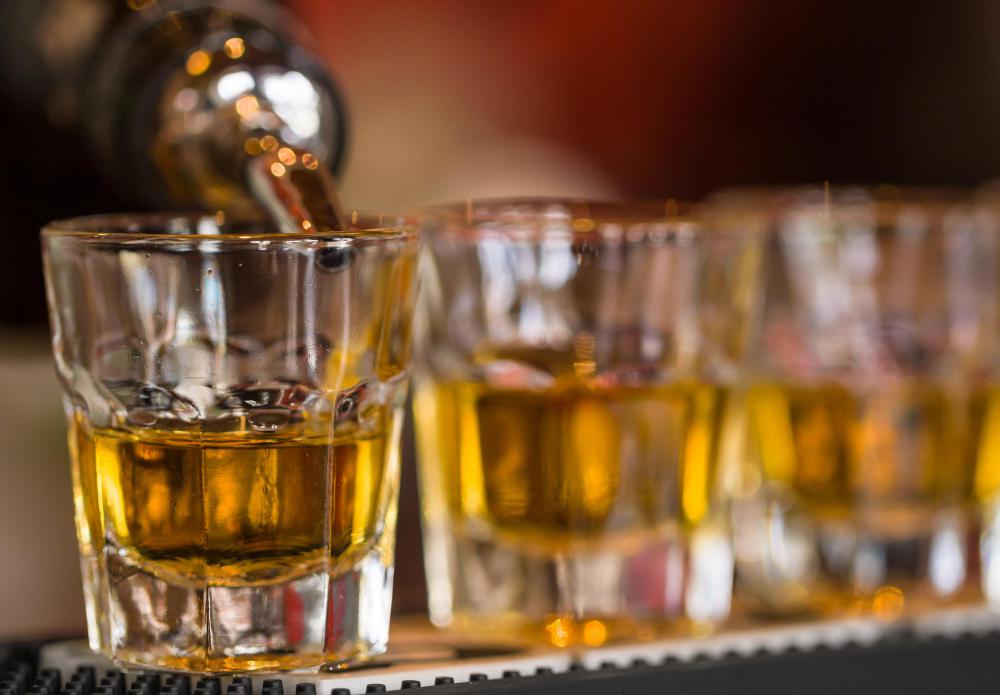
![Well drinks use ice to allow for less actual liquor to be in the glass.]() By: Vinicius TupinambaWell drinks use ice to allow for less actual liquor to be in the glass.
By: Vinicius TupinambaWell drinks use ice to allow for less actual liquor to be in the glass.



Discussion Comments
I'm drinking 'well rum' right now. I call it "bum rum," and it does the trick every time.
It is not that your brain wants you to spend more money, it is that your brain associates more money with better quality.
Skinnylove..... I don't know about well drinks tasting as good as the "good" stuff. I completely agree that marketing has fooled us in a ton of ways, but I made vodka soda with a cheaper brand vodka and it tasted like rubbing alcohol. Maybe it also has to do with the type of liquor but after that I only drink some of the top shelf vodkas.
Black Velvet is also an excellent, cheaper alternative to Crown Royal.
I always order well drinks unless the calls are priced better. Always ask specifics regarding special pricing while at bars. Sometimes certain "call" liquors don't sell and are priced low as a means of moving the product.
@desertdunes- I think the brain's perception of alcohol tasting "expensive" when told it's expensive is deeply rooted within societal influence. With the concept of celebrity running rampant, there is no surprise that the illusion of high-priced products might make consumers feel as though they are enjoying a higher quality good.
For a long time I was hesitant about purchasing "well" brands both while at the bar and while shopping for alcohol in liquor stores. However, in an effort to save money, I finally tried a plastic bottle of vodka called Aristrocrat after seeing an advertisement that the off-brand was a best-seller. I saved ten dollars and could not tell a difference when the liquor was mixed with various juices and sodas. In addition, I recommend buying store brand mixers to save an extra buck while stocking your personal bar.
I grew up with a "well drink" being a fountain soda from the corner store or fast food place.
The results from the study about cheap vs expensive drinks and how our brain reacts is rather ironic. Our brain is trying to make us spend money lol!
Post your comments