
At TheHealthBoard, we're committed to delivering accurate, trustworthy information. Our expert-authored content is rigorously fact-checked and sourced from credible authorities. Discover how we uphold the highest standards in providing you with reliable knowledge.
How Serious is a Sinus Infection with Fever?
 Nicole Madison
Nicole Madison
Nicole Madison
A sinus infection, also called sinusitis, is marked by swelling and inflammation of the sinuses. At its outset, an infection with a fever may not be cause for alarm, as it can usually be cleared up through self-care or antibiotics. Sinus infections may become serious if left untreated, however, and it is possible for it to spread and cause meningitis or blood clots that increase a person’s risk of having a stroke. A sinus infection with fever may also contribute to asthma symptom flare-ups, develop into a chronic sinus infection, or lead to an ear infection.
When a person has a sinus infection and a fever, he is often advised to see a healthcare professional. Individuals with minor cases of sinusitis, however, may be encouraged to care for it at home and seek help if symptoms get worse or do not go away in a reasonable amount of time. When a person has a fever, on the other hand, the infection may become serious if left untreated, and a medical professional may need to evaluate it to determine whether antibiotic treatment is warranted. Still, a basic sinus infection with fever isn’t usually serious. This type of infection usually responds well to antibiotics and, other than discomfort caused by the sinus infection symptoms, a patient may not experience any troubling effects.

Some people do develop serious complications, however. Some patients may develop meningitis, which is marked by inflamed membranes of the brain and spinal chord. This may occur when the infection that normally affects the sinuses and nasal passages spreads and infects the lining of the affected person’s brain. This type of infection can be severe and could be deadly.
A person who has a sinus infection with a fever may also develop blood clots as a complication. In some cases, the infection can also have an affect on the veins in the surrounding area. Any blood clots that do develop could contribute to a stroke.

In some cases, a person who has a sinus infection with fever may also develop other complications that may be troubling but less potentially devastating. For example, a person with a history of asthma may have asthma flare-ups as a result of a sinus infection. Some people may also develop ear infections or chronic sinus infection, which means their symptoms may last for longer than eight weeks.
Nicole Madison
Nicole’s thirst for knowledge inspired her to become a TheHealthBoard writer, and she focuses primarily on topics such as homeschooling, parenting, health, science, and business. When not writing or spending time with her four children, Nicole enjoys reading, camping, and going to the beach.
Learn more...
Nicole Madison
Nicole’s thirst for knowledge inspired her to become a TheHealthBoard writer, and she focuses primarily on topics such as homeschooling, parenting, health, science, and business. When not writing or spending time with her four children, Nicole enjoys reading, camping, and going to the beach.
Learn more...AS FEATURED ON:
AS FEATURED ON:


-
![A sinus infection with a fever should be evaluated by a medical professional.]() By: Kaspars GrinvaldsA sinus infection with a fever should be evaluated by a medical professional.
By: Kaspars GrinvaldsA sinus infection with a fever should be evaluated by a medical professional. -
![Antibiotics may help cure a sinus infection with a fever.]() By: DenisNataAntibiotics may help cure a sinus infection with a fever.
By: DenisNataAntibiotics may help cure a sinus infection with a fever. -
![Fever accompanying a sinus infection may lead to further complications.]() By: unpictFever accompanying a sinus infection may lead to further complications.
By: unpictFever accompanying a sinus infection may lead to further complications. -
![People with a sinus infection may also develop ear infections.]() By: Syda ProductionsPeople with a sinus infection may also develop ear infections.
By: Syda ProductionsPeople with a sinus infection may also develop ear infections. -
![A sinus infection with a fever can cause asthma flare-ups in asthmatics.]() By: Ocskay BenceA sinus infection with a fever can cause asthma flare-ups in asthmatics.
By: Ocskay BenceA sinus infection with a fever can cause asthma flare-ups in asthmatics. -
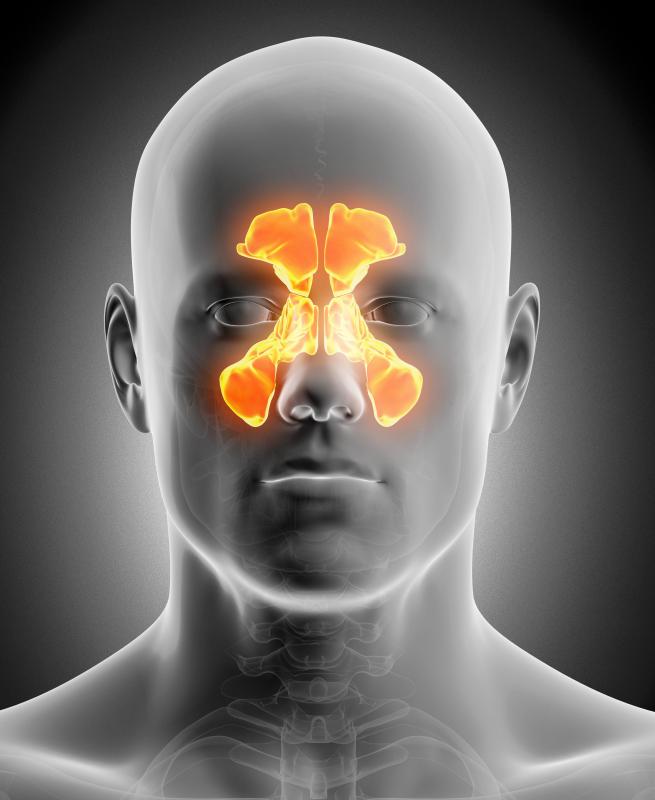
![The symptoms of sinus infection include facial pain and headache.]() By: Junial EnterprisesThe symptoms of sinus infection include facial pain and headache.
By: Junial EnterprisesThe symptoms of sinus infection include facial pain and headache. -
![Sinus infections may spread and cause meningitis or blood clots.]() By: Sebastian KaulitzkiSinus infections may spread and cause meningitis or blood clots.
By: Sebastian KaulitzkiSinus infections may spread and cause meningitis or blood clots.






Discussion Comments
I'd say a good rule of thumb is to see a doctor if you have fever for more than 48 hours, or if it goes above 103.0 degrees Fahrenheit. That usually means you've got a serious infection working and they are no fun at all.
Sinus infections are miserable, and can turn into bronchitis or pneumonia if left untreated. Several years ago, I worked a low grade sinus infection for weeks, and then it got nasty and turned into bronchitis. I was on antibiotics for a month and could hardly walk up the steps to my apartment. It was awful and could have become pneumonia. Don't let a sinus infection go for too long.
Post your comments