
At HomeQuestionsAnswered, we're committed to delivering accurate, trustworthy information. Our expert-authored content is rigorously fact-checked and sourced from credible authorities. Discover how we uphold the highest standards in providing you with reliable knowledge.
How Much Electricity do Appliances Use?
 Tricia Christensen
Tricia Christensen
Tricia Christensen
Household appliances use a varied amount of electricity, depending on their efficiency. Newer appliances are generally built to be more efficient, and the location at which the appliance is placed also affects how much power the appliance will use; most new appliances include information regarding their average usage rate. In most countries, the amount of electricity used is measured in kilowatt hours, with one kilowatt hour equaling about $0.06 US Dollars (USD). Large appliances, especially air conditioners, use the most power, with central air conditioning units averaging 2,000 kilowatts per year, while a newer, small refrigerator averages only 450 kilowatts each year.
Kilowatt Hours

In many countries, including the United States, China, the European countries, and Australia, electricity is measured in kilowatt hours; however, in India, a kilowatt hour is referred to as a "unit of energy." To figure how many kilowatts an appliance uses, take the wattage of the appliance, multiply it by the number of hours used, and divide by 1,000. For example, if a new refrigerator has a wattage of 300, multiplied by 730 hours, and divided by 1,000, it averages 219 kilowatt hours.

The price of a kilowatt hour varies in the US, depending on location and peak usage times, but on average, one kilowatt hour costs about $0.06 USD. Electric bills will usually state exactly how many cents are being charged per kilowatt hour, which can help determine the cost of running an appliance. Rates can be different depending upon location, and on the total energy usage per month.
Factors Affecting Power Consumption

The location of an appliance can affect how much electricity is used; for example, a clothes dryer in an open location like a garage, is likely to be somewhat less efficient than one located in a house because of the difference in temperature. Similarly, a water heater with improper insulation is likely to be less efficient and will use more electricity than a well-located and insulated water heater. Placing appliances in the correct locations can increase efficiency.

Another factor affecting electricity usage of an appliance is the age of the appliance. Refrigerators over forty years old, for example, typically produce higher power bills because they run less efficiently. If a refrigerator has been purchased within the last five years, it is more likely to be an energy efficient appliance, which usually represents significant savings.
Refrigerator and Freezers

The average freezer and refrigerator purchased before 1985 uses about 100 kilowatt hours per month; this means it costs approximately $6 USD a month to run an older refrigerator. A relatively small refrigerator purchased after the year 2000 only uses only about 37.5 kilowatt hours per month, representing a significant savings on power bills, while larger refrigerators will use more electricity.
Washing Machines and Dryers

Relatively new washing machines use about 360 kilowatt hours per year, and newer dryers use about 765 kilowatt hours per year. Top loading washing machines hold more water, which means the machine should require more power to run; however, because the machine is typically built to be more efficient than a front load washer, the power bill is about the same for either model.
Small Appliances

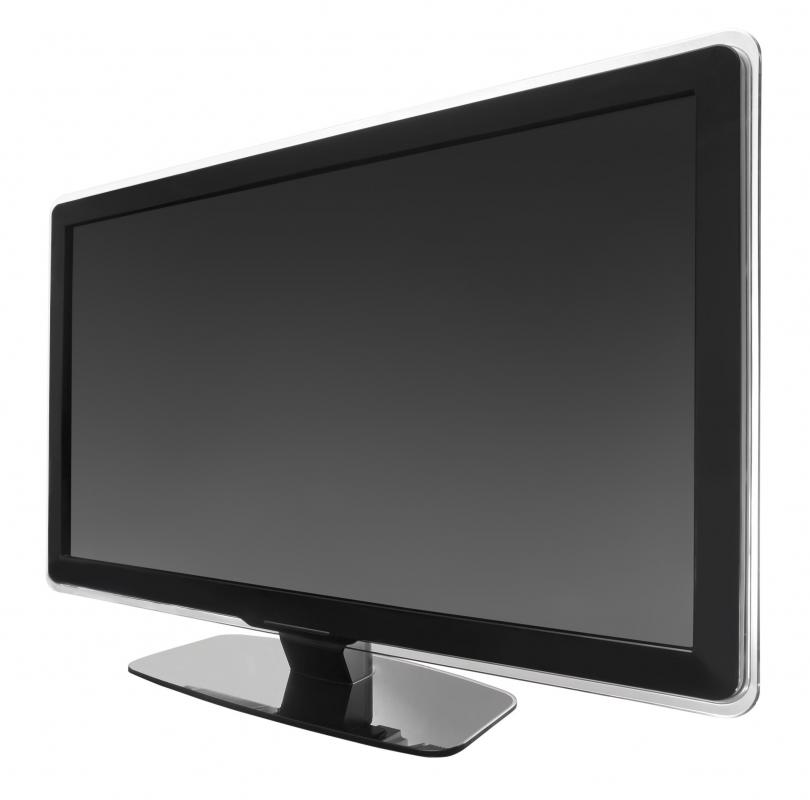
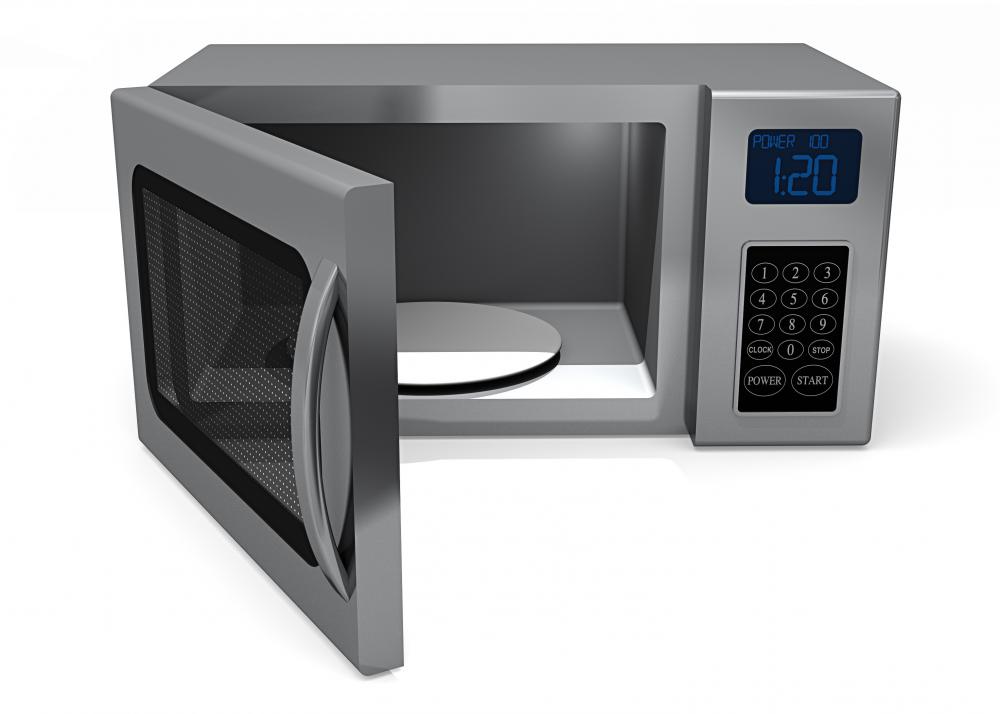
Small appliances or household electrics can often use a surprising number of kilowatt hours despite their size. A computer and monitor without sleep mode can use up over 400 kilowatt hours per year, and a standing fan may use twice that amount. Most televisions average 80 to 400 kilowatt hours per year, while a microwave oven uses 0.36 kilowatt hours every 15 minutes it is running.
Large Appliances

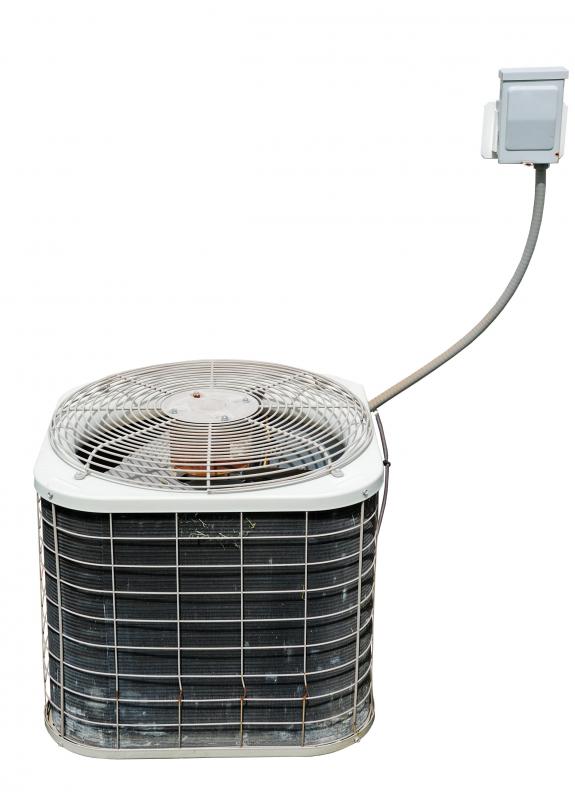
Large appliances, like air conditioners, are some of the worst consumers of electricity. Central air conditioning may use as much as 2,000 kilowatt hours per year, and sometimes more. Electric furnaces are the most expensive, however, using over 6,000 kilowatt hours per year. Tankless water heaters are known to be more efficient and less expensive than water heaters that use a storage tank.
How to Save Power
Most appliances today include a label stating the average efficiency rate, and of course, kilowatt usage can depend upon how much an appliance is used. With electricity supply sometimes being exceeded by demand in heavily populated areas, it makes sense to choose appliances that will use the least amount of electricity possible; when purchasing appliances, look for those with the highest efficiency rating. Keeping appliances clean, and turning off appliances when not in use, can result in less money paid to the electric company. Using batteries to run small appliances like alarm clocks can help reduce the amount of power used. Solar panels offer a natural alternative to man-made power, and may be less expensive over the long run.
Tricia Christensen
Tricia has a Literature degree from Sonoma State University and has been a frequent HomeQuestionsAnswered contributor for many years. She is especially passionate about reading and writing, although her other interests include medicine, art, film, history, politics, ethics, and religion. Tricia lives in Northern California and is currently working on her first novel.
Learn more...
Tricia Christensen
Tricia has a Literature degree from Sonoma State University and has been a frequent HomeQuestionsAnswered contributor for many years. She is especially passionate about reading and writing, although her other interests include medicine, art, film, history, politics, ethics, and religion. Tricia lives in Northern California and is currently working on her first novel.
Learn more...AS FEATURED ON:
AS FEATURED ON:


-
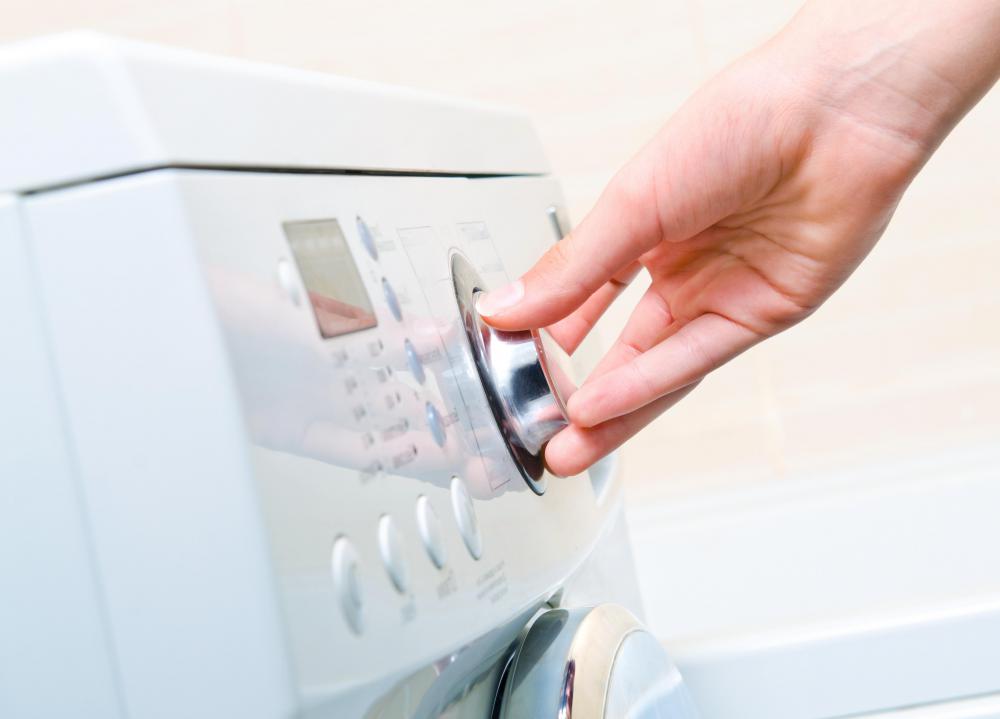
![Washing machines use around 360 kilowatt hours per year.]() By: eyewaveWashing machines use around 360 kilowatt hours per year.
By: eyewaveWashing machines use around 360 kilowatt hours per year. -
![Televisions use around 80 to 400 kilowatt hours of electricity per year.]() By: Maxim PimenovTelevisions use around 80 to 400 kilowatt hours of electricity per year.
By: Maxim PimenovTelevisions use around 80 to 400 kilowatt hours of electricity per year. -
![Central air conditioners can use around 2,000 kilowatt hours of electricity per year.]() By: carroteaterCentral air conditioners can use around 2,000 kilowatt hours of electricity per year.
By: carroteaterCentral air conditioners can use around 2,000 kilowatt hours of electricity per year. -
![Microwaves use about 0.36 kilowatt hours every 15 minutes they run.]()
Microwaves use about 0.36 kilowatt hours every 15 minutes they run. -
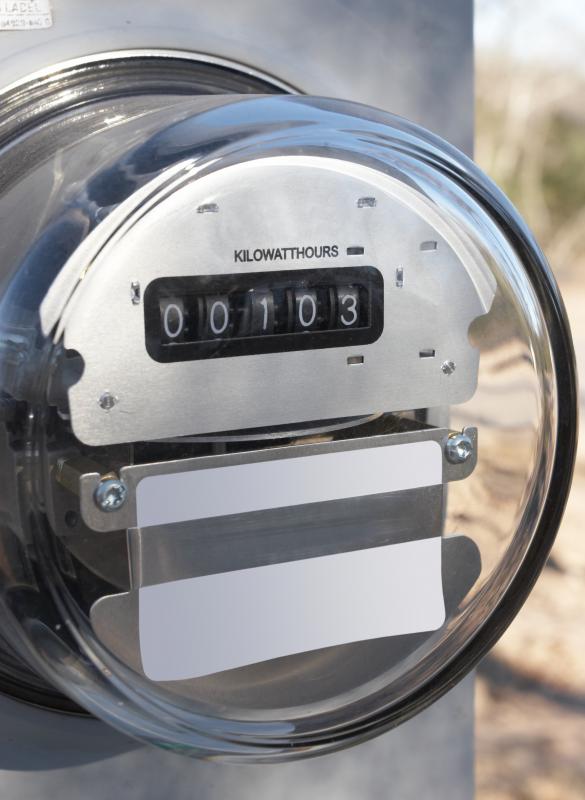
![Residential electric meter.]()
Residential electric meter. -
![Small, modern refrigerators only use about 37.5 kilowatt hours per month.]() By: Brian JacksonSmall, modern refrigerators only use about 37.5 kilowatt hours per month.
By: Brian JacksonSmall, modern refrigerators only use about 37.5 kilowatt hours per month. -
![Some electricity usage meters can be used with individual appliances to measure energy usage.]() By: RasulovSome electricity usage meters can be used with individual appliances to measure energy usage.
By: RasulovSome electricity usage meters can be used with individual appliances to measure energy usage. -
![Using a mechanical alarm clock may help save money on the electricity bill.]() By: Bacho FotoUsing a mechanical alarm clock may help save money on the electricity bill.
By: Bacho FotoUsing a mechanical alarm clock may help save money on the electricity bill.



Discussion Comments
A friend of mine insists that it uses less electricity to leave the refrigerator door open while she's pouring milk in her coffee. Someone told her that opening and closing the door sucks more cold out of the fridge than just leaving the door open for a minute or two does.
I say she should close the door while she pours the milk, then reopen the fridge to put the milk back, that all the cold is "falling out" of the fridge while she's leaving the door open.Which of us is correct? --Mary
We are all forgetting about magnets.
I live in Spain and I get my electricity through solar only. I have been told to keep away from a no frost refrigerator as it will drain my batteries. Is this true?
@anon275897: Your comment made me chuckle. My mom is 83 and I understand.
There are two reasons that I can think of. First, when your grandpa was younger, televisions were these huge units that gobbled up the kilowatts. They were about as inefficient as you can possibly imagine. So it's hard for him to believe that technology has changed so much in such a short time that a TV doesn't drain the electricity all the time. We used to unplug the TV at night to cut down on the electric bills, back in the Dark Ages known as the seventies. They drained power all the time they were plugged in.
Second reason: He doesn't like the TV shows you watch, so this is his way of getting you to turn it off. Not making judgments on what you watch, but it could be the reason.
Why, oh why does my grandfather insist the TV uses more electricity than the air-conditioner, no matter what I show or tell him? It drives me crazy!
I often travel and turn my fridge and hot water off at the mains and circuit boards for the duration. How expensive is it to start the fridge and hot water systems each time upon return? would it be better to leave them each running, knowing that no fridge doors are opened and no hot water is consumed in my absence? My travels vary from one week to eight weeks.
current times voltage equals watt, not volt.
Response to - jffk300. Yes, reducing the current your appliances and lights use will immediately reduce your kilowatt usage by a proportional amount.
A kilowatt is a unit of power. An ampere is a unit of current. A colt is a unit of voltage. Power = current times voltage.
(While this is the DC equation it will be sufficient for your question. The AC equation is slightly more complicated involving power factors and is more relevant if you use a lot of electric motors and compressors. Most appliance manufacturers nowadays attempt to correct the power factor to near 1.0 so this makes it less of an issue.)
The simplest way to reduce the current and thus power usage in an appliance or light is to avoid the "high" settings. Experiment with medium and low settings to see which can still meet your needs.
When you buy a new appliance or light try to estimate how much energy it will save and whether you will get a payback in a reasonable space of time Example: A 60 watt (900 lumen) incandescant light bulb on for 100 hours per month will burn 6 kilowatt hours at 8 cents/kilowatt-hour. An 860 lumen CFL will burn 14 watts. After 100 hours it will have used 1.4 kilowatt hours at 8 cents/kwh. The savings is thus 4.6 kwh x $0.08/kwh=$0.368/month. After a year it would have saved $4.41, provided you use this bulb that much. Does the $4 upfront pay for the more energy efficient CFL? Do you want to wait 1 year to get your money back if you buy it? Do the same for your washing machine or refrigerator. The big eye opener is that you need to stick with appliances under $1000 and ideally half that if you want to get a payback in under 10 years. Buying the super glitzy $2000 European washing machine can very well wipe out all the benefits of its lower energy usage.
I live in Toronto, Ontario Canada. As consumers we have been reducing our electricity so much that our Hydro company has raised our rates to compensate for losses due to reduction of electrical demand. July/09
response to ddl post. Of course the 60 year old fridge uses less energy. It is not frost-free! Technology advances do save energy, but you have to compare apples to apples.
If I reduce the amount of current my appliances are using is there any way I will not reduce my kilowatt usage?
An old fridge doesn't necessarily use more electricity. We have a 60y old Frigidaire (fridge with freezer compartment) that uses 25kWh/month. A 30y old AEG fridge/freezer uses 57kWh/m. (22 July 2008)
we often focus on large appliances...don't forget about all those small appliances like toasters, computers and electronics. experts often recommend plugging these into a power strip that can be turned off to stop that constant energy drain throughout the day, even when you're not using them.
Post your comments