
At SmartCapitalMind, we're committed to delivering accurate, trustworthy information. Our expert-authored content is rigorously fact-checked and sourced from credible authorities. Discover how we uphold the highest standards in providing you with reliable knowledge.
How is the Price of Gasoline Determined?
 Nicole Madison
Nicole Madison
Nicole Madison
There are many factors that go into determining the price of gas, although demand has a strong influence. In the United States, demand for gas is often quite high during the spring and summer, as individuals drive to popular vacation spots and the whole country gets more active. Gas prices often spike around the holidays, often on Memorial Day and Independence Day. This is not always the case, however, as prices do not always rise in the warmer months.
Sometimes the demand for gas puts a strain on refinery capacity. This often happens in the spring, when refinery maintenance is typically conducted. While maintenance is performed, the gas market may tighten, resulting in a rise in the price. Fortunately, refineries are usually finished with maintenance by the end of May, just in time for summer driving season.

The price of gas is also influenced by oil in its most natural state: crude oil. The type of crude oil that is available affects how much gas costs, and when desirable crude oil is less plentiful, prices go up. Oil is described as light or heavy, and sweet or sour. Crude oil that is sweet and light is cheaper and easier to refine, and less plentiful. By contrast, heavy, sour oil is more difficult and costly to refine, yet is widely available throughout the world.

The cost of transporting and marketing crude oil has a significant effect on the price of gas. Transporting crude oil involves moving it to refineries, followed by shipping gasoline to distribution points and, finally, gas stations. Money is also spent in marketing an oil company’s brand. Both costs are passed on to the consumer as part of gas prices.
In the United States, federal, state, and local taxes account for a significant portion of the price of gas. Taxes on gas are considerably higher in Europe than they are in the United States, so European gas prices are often much higher.

Individual gas stations play a role in the gas prices as well. Typically, gas stations mark up the price slightly in order to profit. There are no laws governing the amount a gas station may charge for its gas. As such, some stations mark up their gas a few cents per gallon, while others add on $0.10 US Dollars (USD) per gallon or more. Some states, however, have laws that prohibit gas stations from charging less than a certain percentage of the total cost of their wholesale gas orders. These laws are intended to protect smaller gas stations from being significantly underpriced by large, chain gas stations.
The price of gas may also be influenced by such things as weather, major disasters, world events, and wars. Any event or situation that affects the drilling, refining, and transporting of oil can have a significant influence on gas prices.
Nicole Madison
Nicole’s thirst for knowledge inspired her to become a SmartCapitalMind writer, and she focuses primarily on topics such as homeschooling, parenting, health, science, and business. When not writing or spending time with her four children, Nicole enjoys reading, camping, and going to the beach.
Learn more...
Nicole Madison
Nicole’s thirst for knowledge inspired her to become a SmartCapitalMind writer, and she focuses primarily on topics such as homeschooling, parenting, health, science, and business. When not writing or spending time with her four children, Nicole enjoys reading, camping, and going to the beach.
Learn more...AS FEATURED ON:
AS FEATURED ON:









-
![Gas price fluctuations may be caused by regulatory actions, a sudden increase in holiday driving, or problems with refinery production.]() By: Jim MillsGas price fluctuations may be caused by regulatory actions, a sudden increase in holiday driving, or problems with refinery production.
By: Jim MillsGas price fluctuations may be caused by regulatory actions, a sudden increase in holiday driving, or problems with refinery production. -
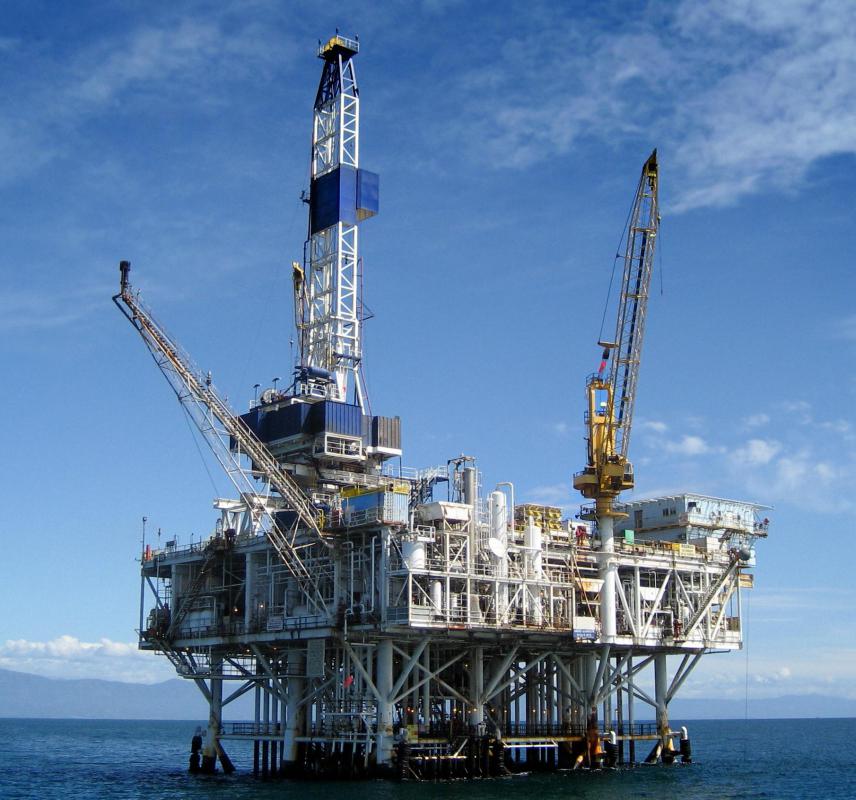
![An offshore oil platform. Problems with drilling, as well as the quality of oil extracted, can affect the price of gasoline.]() By: eyeideaAn offshore oil platform. Problems with drilling, as well as the quality of oil extracted, can affect the price of gasoline.
By: eyeideaAn offshore oil platform. Problems with drilling, as well as the quality of oil extracted, can affect the price of gasoline. -
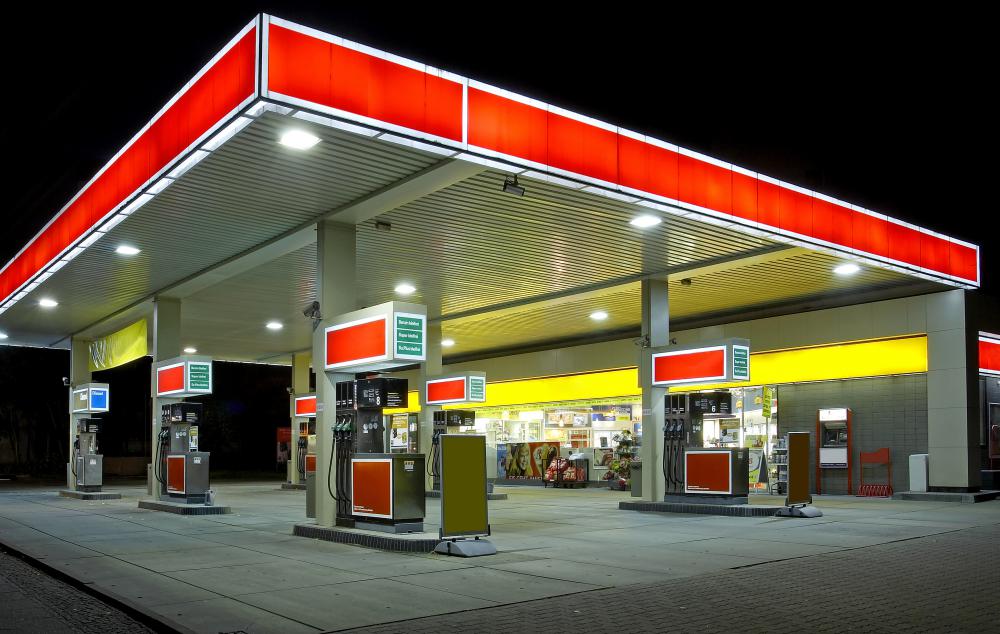
![Individual gas stations play a role in the price of gas.]() By: fhmedien_deIndividual gas stations play a role in the price of gas.
By: fhmedien_deIndividual gas stations play a role in the price of gas. -
![Crude oil price and quality is an important factor in determining gasoline price.]() By: jamenpercyCrude oil price and quality is an important factor in determining gasoline price.
By: jamenpercyCrude oil price and quality is an important factor in determining gasoline price. -
![Consumers absorb the costs of transporting crude oil and gasoline.]() By: nexussevenConsumers absorb the costs of transporting crude oil and gasoline.
By: nexussevenConsumers absorb the costs of transporting crude oil and gasoline. -
![Market demand, seasonality and geography can all make a difference in how gasoline is priced.]() By: witthayaMarket demand, seasonality and geography can all make a difference in how gasoline is priced.
By: witthayaMarket demand, seasonality and geography can all make a difference in how gasoline is priced. -
![Consumers might stock up on gasoline in cans when prices are low.]() By: Winai TepsuttinunConsumers might stock up on gasoline in cans when prices are low.
By: Winai TepsuttinunConsumers might stock up on gasoline in cans when prices are low.





Discussion Comments
Thank you all for the clear and concise answers. But, I'd also to see some discussion about the commodities market's role in establishing gasoline prices.
The world fuel prices used to be calculated on an estimated landed cost of refined fuel from Singapore.
The reason for this was Singapore used to dictate most economic markets as it was the central hub in the 60's 70's.
Firstly, Singapore does not have any refineries, nor do they have any any oil wells. It was an economic decision. When countries started to take on their own economics, they used taxes to keep the fuel prices where they were and the local economy reaps the benefits.
Answer me this question, in a country that has its own wells & refineries, how can they justify the same prices that Europeans pay to the same prices that North Americans pay?
The local oil produced and sold is sold at the same price as imported imported refined fuel. Is there any one else who sees there is something wrong with this picture? When demand goes up for any other commodity, prices go down. Why does it not happen for fuel?
Like your article on "what is high octane fuel" (where I've posted an expanded explanation of the 3 basic factors that determine the octane requirements for any gasoline engine), this article on how gasoline prices are determined is correct, but not complete.
The total crude oil refining capacity in the United States is not large enough to produce enough gasoline (or diesel fuel) to meet the market demand for these fuels, particularly in the summer months when more people drive. There has not been a new refinery built in the US in about 30 years (the Marathon refinery at Garyville, LA being the last new refinery built in the US). So this domestic product shortage must be met by imports of gasoline (and some diesel) from others -- mainly Canada, Venezuela and Europe. Basic enonomics says that the cost of the marginal (last) supply sets the market clearing price for a product. In the case of the USA, this is set by the cost of imported fuels -- which tend to have higher supply costs than domestic produced fuels (with California being an exception that I will discuss separately, below).
New refineries have not been built in the USA for these 3 reasons:
- Environmental regularions and requirements (by the EPA and state agencies) have substantially increased the cost and complexity of getting permits and then building a new refinery, above these costs 30 years ago. There are many hoops that an oil company must jump through to build a new refinery. It is cheaper (but still quite expensive) to expand an existing refinery.
- There are few if any communities that want a relatively dirty crude oil refinery located in or near them. "Not in My Backyard" is the current watchword for most locations in the USA.
- Until recently (about the last 5 years), the profitability of crude oil refineries was not very good -- with about a 5% return on invested capital in the 90s -- so oil companies invested money on finding crude oil (that had a higher ROIC) rather than on refining it.
Supply and Demand do set the price of gasoline, but the supply is restricted (with incremental supply being more costly) while demand is only restrained by the cost of gasoline. It does not appear that this situation will change any time soon.
Now, California is a special case -- resulting in even higher gasoline prices in CA than in the rest of the country. The reason for substantially higher prices for California gasoline is the very strict California specifications on gasoline -- what I call "California Boutique Gasoline." California had environmentalists determine the specifications for gasoline that could be sold there, and these restrictive specs meant the following:
- Less gasoline volume can be produced from a barrel of crude oil than can be produced for sale in other states.
- Substantial investments in new refining equipment were needed to produce gasoline to meet California specs.
- A few older California refineries either shut down or stopped producing gasoline rather than make these high-cost investments, and the others spent the money.
- Other than the 10 remaining operating refineries that produce gasoline in California, there was only one refinery in the world (when I was still working in the industry in 1998) that could produce any real volume of California Boutique Gasoline -- and it was located on the Texas Gulf Coast.
Because California has such restricted supply (due to specifications), the market clearing price for gasoline in California is much higher than in the rest of the USA.
SilverMax
Post your comments