
At TheHealthBoard, we're committed to delivering accurate, trustworthy information. Our expert-authored content is rigorously fact-checked and sourced from credible authorities. Discover how we uphold the highest standards in providing you with reliable knowledge.
How is Foot Drop Treated?
 Niki Foster
Niki Foster
Niki Foster
Foot drop is a condition in which normal dorsiflexion, the bending of the ankle and toes upwards, is not possible, leading to a characteristic labored gait called steppage gait. It is treated by addressing the underlying condition. Because this problem can result from a variety of conditions, including disorders of the nervous or muscular system, injury, and pharmaceutical side effects, any of a variety of treatments may be indicated.
If foot drop is the result of injury to the nervous system, such as a slipped disc impinging on the nerve leading to the foot, correcting the injury through surgery will relieve the problem. If it results from injury to the dosiflexors, the muscles responsible for lifting the foot, can also be repaired through surgery.

Tendon transfer surgery is often helpful in correcting the condition as well. Some medications, notably the chemotherapy drug Vincristine, carry the risk of peripheral neuropathy as a side effect, leading to conditions including foot drop. In such cases, discontinuing or lowering the dosage of the drug may be necessary.
Other times, however, foot drop is the symptom of an untreatable condition. Some illnesses associated with it are Lou Gehrig's disease or amyotrophic lateral sclerosis (ALS), multiple sclerosis (MS), Charcot-Marie-Tooth disease, and Duchenne muscular dystrophy. A patient suffering from one of these conditions must typically use a combination of orthotics and exercise to address the foot problem.

Foot drop sufferers are usually fitted with an ankle foot orthosis (AFO), which provide foot and ankle support. The orthosis may be installed in shoes or worn separately. A relatively new treatment for foot drop involves using electricity to stimulate the peroneal nerve, which is responsible for lifting the foot while walking. This treatment is commonly used in conjunction with an AFO. Physical therapy can also help strengthen a patient's dorsiflexors and improve his or her gait.
Niki Foster
In addition to her role as a TheHealthBoard editor, Niki enjoys educating herself about interesting and unusual topics in order to get ideas for her own articles. She is a graduate of UCLA, where she majored in Linguistics and Anthropology.
Learn more...
Niki Foster
In addition to her role as a TheHealthBoard editor, Niki enjoys educating herself about interesting and unusual topics in order to get ideas for her own articles. She is a graduate of UCLA, where she majored in Linguistics and Anthropology.
Learn more...AS FEATURED ON:
AS FEATURED ON:


-
![The best treatment for foot drop, in which bending of the toes and ankle upward is not possible, depends on the cause.]() By: Photographee.euThe best treatment for foot drop, in which bending of the toes and ankle upward is not possible, depends on the cause.
By: Photographee.euThe best treatment for foot drop, in which bending of the toes and ankle upward is not possible, depends on the cause. -
![Surgery might be needed to correct a slipped disc that impinges on the nerve running to the foot and causing foot drop.]() By: forestpathSurgery might be needed to correct a slipped disc that impinges on the nerve running to the foot and causing foot drop.
By: forestpathSurgery might be needed to correct a slipped disc that impinges on the nerve running to the foot and causing foot drop. -
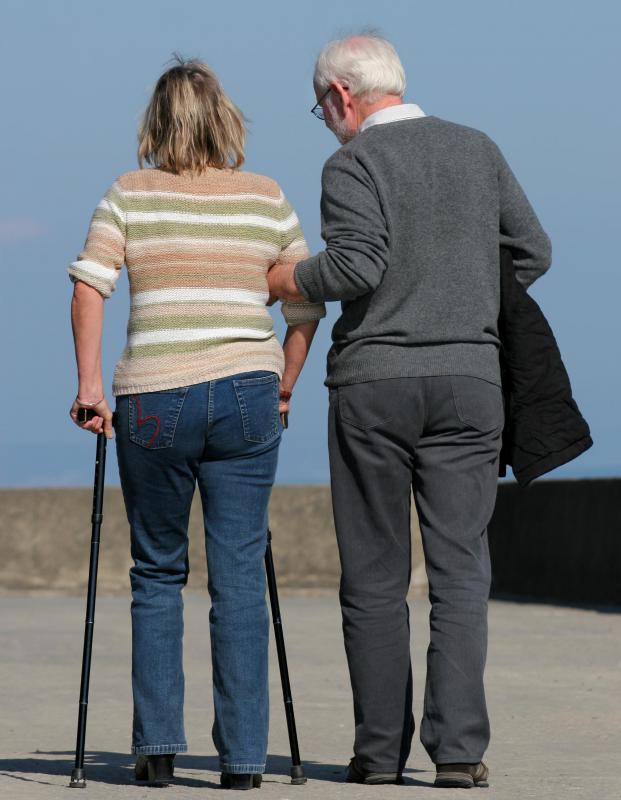
![Orthopedics and exercise might be used to treat foot drop caused by an untreatable condition, such as multiple sclerosis.]() By: marilyn barboneOrthopedics and exercise might be used to treat foot drop caused by an untreatable condition, such as multiple sclerosis.
By: marilyn barboneOrthopedics and exercise might be used to treat foot drop caused by an untreatable condition, such as multiple sclerosis. -
![Lowering or discontinuing the use of a chemotherapy drug, such as Vincristine, might be needed to treat foot drop.]() By: Haukeland universitetssjukehusLowering or discontinuing the use of a chemotherapy drug, such as Vincristine, might be needed to treat foot drop.
By: Haukeland universitetssjukehusLowering or discontinuing the use of a chemotherapy drug, such as Vincristine, might be needed to treat foot drop. -
![A physical therapist may help people with foot drop improve their gait and improve mobility.]() By: Monkey BusinessA physical therapist may help people with foot drop improve their gait and improve mobility.
By: Monkey BusinessA physical therapist may help people with foot drop improve their gait and improve mobility.




Discussion Comments
My laminectomy was done in January 2012 at L4- L5. Both my legs were paralyzed. I could not walk. After I was referred to a rehab, my mobility has improved, especially in the left leg. The problem is with my right foot with foot drop.
At first, I had experienced a lot of neuropathic pains, especially from the right foot but in taking the drug prescribed by my doctor, the pain has come down a little but has not yet disappeared. My foot drop worries me a lot as I am unable to drive.
I think I have foot drop as I have all the symptoms. Nothing has caused it, though. I'm really scared.
I have had foot drop for three weeks due to a gunshot in my leg. The doctors say that it will take a long time to heal because the nerve endings regrow very slowly.
I have drop foot and I had a tendon transfer. Now I can move my foot up and walk like I should with no help of an AFO. I had foot drop for eight years. The surgery was nothing and rehab was good, as well. Anyone who has this condition I would say what are you waiting for? Get it done.
I have foot drop in my left foot, after spraining both ankles badly after a fall down the stairs and after four months of walking weirdly, I went to the physio and that night I was able to walk almost normally after he worked on my back.
I still have some weakness, and my toes feet are a bit purplish (and so are my fingertips) but overall, I am seeing a lot of improvement. Just hope the blood flow improves some more too.
I have had foot drop for about six days now. I am scared that my foot will not go back to normal.
I dropped a glass bottle on my toe from counter height and woke up the next morning with foot drop! I was so scared, so I went to see my doctor and he had no idea what was wrong with my foot! He told me to come back and see him if it didn't improve in a few days.
I came home and started looking on the internet for similar situations and what the symptoms were. The thing I don't understand is how it started. I have no pain and didn't break my toe or anything and there is no swelling inside my foot from dropping the bottle. I didn't even get a bruise! I am only 21 and have a two year old and my husband works seven days on, seven days off, so the week that he is at work, I have to do everything for my son.
It is hard not being able to walk properly. I can't run or walk fast without feeling like my ankle is going to give out or twist! It is so irritating. I have two sets of stairs in my house and it's getting harder and harder to climb them because my ankle is weak. It's a good thing my son can go up and down the stairs on his own, or I don't know what I would do!
I feel embarrassed in public, like people are staring at me all the time and I feel horrible for anyone who has had to live with this issue. I also have a brother in law in wheelchair, so I am not one to judge others but feel like I am the one being judged.
I usually take my son for a walk with out friends every day and now I can't even do that, but might still try for shorter walks to strengthen my ankle. I'm not sure what is going to happen, if my doctor is going to send me for any testing or anything but I would really like to know what is causing this, even though I think I may have hit a nerve when I dropped the bottle on my toe.
I am determined to fix my foot whether I am tested or not. I plan on exercising it daily and trying to raise it at the ankle as much as I can as often as I can. Summer is close and I am going to be better.
I have also heard about foot drop being a symptom of pregnancy and I am about five weeks pregnant. I never had anything like this while being pregnant with my son but it would be pretty hard to be super pregnant with foot drop! I will fix my foot and am determined to walk normally again or at least as close to normally as I can.
Being that I still have a little movement in my ankle (upward) and in my toes must be a good sign. I know that sometimes foot drop can be a long term thing and sometimes it can be short term. My doctor checked all my reflexes and he checked my circulation and my pulse in my foot and everything was perfectly normal. That must be a good sign as well. I have all the feeling in my foot and toes; it is not numb like a lot or other stories I have read, and it still falls asleep now and then. Hopefully these are all good signs and my foot will return to normal in time.
I have never experienced this before and have never had any type of injury that could have caused this (aside from the bottle the day before).
The first day I had it, it was very scary and it was only my son and myself home and I thought I was going to fall when I tried to walk but after a few minutes it seemed to get better. Days two and three were even better, and I thought it was almost gone and I could pretty much walk like normal and was able to forget about it even being there, then on day four it seemed that it had gotten worse again and I was so scared I got my husband to come home from work and take me to the emergency room because I didn't understand why I could hardly move my foot.
It hasn't seemed to get any worse since day four, but hopefully it will start to get better again. Wish me luck!
I am 34 years old and had a bike accident two years back in which I fractured my tibia and fibula on my right leg and also injured my common peroneal nerve in my right leg.
I have been suffering from a foot drop since then on my right foot and am walking using compensatory movements such as knee flexion. Since I have a metal implant to support my broken bones the physios here did not opt for electrical stimulation. I have been doing some exercises mentioned by them and see marginal improvement.
Please suggest what treatments I can go in for once the metal implant gets removed in the next couple of months (since the docs have confirmed that my bones have healed fully now).
By the way, I don't have any issues with the sensory nerve in my foot, rather it is only the dorsiflexion that has been compromised.
I am post lumbar fusion surgery since 1996. I have permanent nerve damage and the drop foot will always be with me, according to the doctors.
Back in 04 I was in a bad car accident that left me with drop foot and a fused hip on the same leg. The nerve was cut in half where my hip was destroyed. I have no function at all with it other than pushing down. I have had to wear an afo since then and I hate it. Between the breaking of the brace, chafing in the summer time and having to have special shoes that are 15 4e on one foot to fit the brace in the shoe, then having the same shoe on the right foot and then being a size too big and twice as wide as needed, I'm sick to death of it all.
I'm interested in having my foot and ankle fused. if anyone has done this please give me info. Did this really help and does it give you the support you need to walk like you're supposed to? I live in va so if anyone on here has had this done in this state or surrounding states, please let me know who did it. I'm just over the whole thing. Help. --jason
Ankle fusion is an option with many pros outweighing the cons. It's good for people who have foot drop due to spinal nerve damage, or ankle damage who are unable to lift their foot.
I've had foot drop since a spinal injury in 2005. My surgeon wanted to fuse the ankle years ago but I was scared, being only 23 at the time. but now I'm so sick of wearing AFOS all the time and having to be a female living in jeans and sneakers every day of my life. I'm seeing my surgeon tomorrow and booking in the surgery.
I dislocated my knee in 2009, tearing four major ligaments and two nerves one being the perineal nerve, not sure of spelling. I have had my nerves joined back together, but after two years I still have a foot drop. I shall be having tendon transfer surgery before the year is through, but am unaware of what kind of result I should expect. Any information would be greatly appreciated thanks.
I'm only 14 and have been having foot drop for three years. I had surgery on my foot to make it straight and now I have foot drop in my right foot.
I recently had a tendon transfer to correct my foot drop. So far, it is looking good, and it is so nice to see my foot at the correct angle. I realize this will take a while before I am fully functional but am very pleased with the outcome. Find a good orthopaedic surgeon who specialises in small bones to do this op.
I have foot drop and neuropathy. I was in a car wreck and something impaled my foot at the arch. I have tried the TENS unit and multiple drugs and nothing seems to help the pain. My toes hurt really bad and I can't move them. I just about cry when I have to cut my toenails because it hurts so bad.
My ankle on that side was also broken and I have pins in it as well as pins in my hip on that side. Does anyone know of anything I can try to relieve the pain? I have been in the care of a pain doctor for three 1/2 years and nothing she has done has helped me.
I had drop foot since 1991, I was mugged and stabbed on the subway in Brooklyn. For 18 years my doctors told me nothing could be done except wearing braces. I had the plastic afo then the carbon fiber afo. A person came up to me on the street and told me they had drop foot from a stroke and told me that there's a foot surgeon in manhattan who specializes in these sort of cases. I found him had transfer of the only two functional tendons in my foot. When I saw the surgeon on follow-up a year later he couldn't tell which foot had the dropfoot before the surgery, the results were perfect.
My first visit there he actually let me meet two other patients who recently had similar drop foot procedures. I still go online and read about others in the same situation all I have to say is if you are going to get this type of procedure done it's hard but find someone who know what they are doing. Most doctors don't even know these procedures exist.
I'd like to post my docs name if that's OK David Gitlin he's a foot and ankle surgeon, and he's got offices all over manhattan, long island. I think he used to have one in connecticut but I didn't see that on his new website. Good luck to anyone with the problem.
This is for post no. 54 (anon149987) and anyone who can relate.
I had surgery when I was 15 and six months later at 16, for a tumor in my spinal cord which had caused me to have a foot drop and an immense amount of pain.
I was a soccer player so running was part of my daily routine. I know how terrible it feels not being able to walk right. Much less run. But after my second surgery, I set myself a goal, and gave myself somewhat therapy. By simply walking beside a wall and holding on to the wall, slowly just to get my foot use to walking again. Then I started getting on the treadmill walking at a slow pace just to feel some movement. I did that for about six months. And noticed "some" difference, but it worked. Even that small difference made a big change.
It's been about seven years, and I can now jog. So if you have the will and set your mind to it, you will start walking again. I am living proof. And am now studying for Physical Therapy to help other people with the same or similar problems. Hope this helps.
I bought a pair of Sketchers shape up tennis shoes, and surprisingly it helped with the foot drop. It forces me to strike my heel first. I've been wearing them without my AGO. I have had foot drop for five years. Not fun.
to peter dixon: i was involved in a road traffic accident which caused me to completely shatter all my pelvis and sever my sciatic nerve down my left side of my leg. the nerve pain i suffer was unbearable and i was put on gabapentin. this is a miracle drug!
if you do take this medication though, your body soon gets used to it and you have to up the dosage often. In regards to keeping your foot vertical in bed, my specialist gave me a foot splint which i put on to sleep in. hope this helps you a bit.
a very close friend of mine had foot drop. all the doctor kept doing was signing him off work. well, he died last week and the postmortem said it had traveled up into his lungs which stopped functioning which caused him to die. somehow i find this hard to understand. could his death have been prevented? He was 52 and one of the nicest gentleman you could have ever known.
I have foot drop in my left foot. Had a tumor in the lower spine area, caused the foot drop. I can't walk, am in a wheel chair, will begin therapy tomorrow, will I ever walk again? My foot tingles bad. (I can stand some, but can't walk. Need some advice and help. Thank you.
I had Chiari Malformation surgery in 1994. I had trouble with L4-L5 at that time, but was in great shape, thus I felt no pain and my mobility wasn't yet limited.
Now I am overweight and the drop foot is so severe that I walk with a limp and trip constantly. I am hopeful once I lose the weight and get an exercise routine that I can live with the drop foot once again and not go the route of surgery.
I have foot drop after a total hip replacement two months ago. I'm 45 years old. Neurologist said there is nerve injury and there is some movement. I do physiotherapy 3 times a week with electricity, 30 minutes each visit and I wear a foot up thing on my sports shoes (very difficult to put on however, I always ask my son's help). Improvement is very little however. (Sorry my english is not very good.)
I am 32 years old and have foot drop in my left foot due to a long, difficult labor and being in the "frog position" too long. It has been five weeks and no improvement. Anyone have a similar story with a successful ending?
I'm 19 years old and I've had foot drop on my left leg since i was 12 years old. i was a victim of gun violence and had my sciatic nerve severed.
I was shot on my thigh, which instantly gave me foot drop. I've only had a nerve graft surgery once, eight months after i got shot, and nothing has changed.
It's hard to maintain strength in my leg and foot
and i don't know what is good to use to keep my foot healthy. I've been trying to figure out what is good to also keep the blood on my foot flowing and to maintain the pain.
I have bi-lateral drop foot and was just recently diagnosed with Distal Muscular Dystrophy.
Who is the best person to treat this? My son had a traumatic accident two months ago and has no signs of regeneration, not sensory or motor. Anyone have any suggestions on who can help him?
I had severe drop foot for 14 years. I wore a number of braces because I could not walk well at all. I had complete dead nerves and severe atrophy - zero ability to dorsiflex. This was for 14 years.
In 2006 I had tendon transfer surgery (bridle procedure) at age 40. I thought I would gain some movement, but would probably have no stamina for long walking and hiking.
I am happy to say I was wrong. This surgery was awesome! I did not think it would turn out as well as it did. I actually began running again and discovering shoes. My foot is still smaller on the right, but it never gets tired - I just walk like a normal person.
It is amazing what they did for me at the Hospital for Special Surgery in NYC. My only advice to anyone thinking about this surgery is to maintain your fitness before and after. It is not a fast recovery, so being lighter in weight and eating right will help. I had a great doctor and therapist. This surgery can give you your life back. It did it for me.
I have foot drop in both feet. Since 2007, I've used a walker. I saw neurologists in 2003 - no real diagnosis. Saw a neurologist in January 2010, and last week to review the second MRI I've had done. Same thing. Nothing wrong with my spine and he didn't see justification for repeating nerve conduction studies. He is amazed at my positive, upbeat attitude and my good health in spite of this disability. How do you do it, he said? I do yoga meditation every day, use visualisation and affirmations.
It's very hard having foot drop. I don't have advice to give, but this is what helps me. Exercise helps, along with a good, nourishing diet (keep weight stable, overweight is hard on the joints) and keep the mind nourished with positive, uplifting, inspirational thoughts.
Yes, nerve damage causing foot drop can regenerate iteslf, unfortunately not for us all (We all wish it did).
Many of your posts remind me of myself, (age 52) when in May, 2009 while my herniated disc worsened, I awakened to my left foot numb and hanging. Staying on point, after my second Lumbar Laminectomy in late June 2009 (L4-L5 with L5-S1 less significantly), less than a year after my first (same surgery), my surgeon explained that regeneration of my foot drop is a slow, 12 to 24 month process before results are known. He instructed in terms of looking at it as little tiny incremental impulses, slowly working its way to the nerve-endings that are damaged during the healing process. I didn't believe him -- it looked lifeless and reading material wasn't inspiring.
During the instantaneous new life of a foot brace, constant back brace and I call my extended right arm cane, (Yes I'm messed up but kind of happy when pain is not dominant) also accepting it as life-long (it was okay, because it is what it is), I did what many of you are doing, hoping to find similar patients like myself and wishing to read any success stories. I found very few to none.
Eight months after surgery the nerves in my left foot--on its own--started regenerating, and today my left and right feet have almost equal movement, but the left foot is weaker. I had forgotten about the foot and had a daily routine.
One evening while lying in bed, I raised both feet in the air, side-by-side and compared movement. I was alone but not very calm when I saw that my lifeless left foot was halfway alive. Now it's what we all want ours to be.
Hope this helps with what I was looking for when it happened to me. Now, this dumb-dumb is wondering can it suddenly drop again. Boy, with what some of you are going through, can you all believe that?
I'm so glad i came to this discussion board. drop foot is such a devastating condition to have and it helps to read how everyone else manages theirs.
i am 27 years old and have lived with severe drop foot for 20 months now following a car accident that ripped my perineal nerve in half. i had nerve repair surgery that included Neurogen 24 hours after the accident with absolutely no success.
Until recently i had been in denial over the permanence of my condition and am finally coming around to having the bridle procedure done. i have seen some talk of it on here, has anyone had any great success with it? I'm still a little confused as to how my foot will actually be following the surgery. any details would be very much appreciated. thanks in advance!
this is for peter. my husband came up with the idea to put a piece of plywood at the foot of the bed and put a pillow on it and slide down till your foot is vertical. i also used his terry cloth bath robe tie around my foot and i could pull it and move my foot anywhere i wanted to. hope this helps.
The health care system has failed us. The surgeon that did my hip surgery, which resulted in foot drop just shook his head and was baffled. He told me that it will come back in a couple of months and sent me to his incompetent physiotherapist. He also said to me that I shouldn't feel too bad, after all "this is only the second time this has happened in his surgery career"!
Everything that I have found out about this condition was by taking a proactive approach. I was lucky to find a very good physiotherapist who has experience treating the condition. He set me up with an exercise program, which I wrote about a little a few days ago.
I started using a TheraBand six weeks after my surgery. A Theraband is a rubber like band that you can order through your physiotherapist. Tie it together to make a loop and loop it around your affected foot. With your leg in a fairly straight angle, sitting in an easy chair and foot resting on a stool.
Exercise by applying some resistance bringing your foot up, down,side to side. All directions. You will need a partner to hold the band when you attempt to pull your foot towards you. All I could do at first was try to keep my foot stationary in that position, with my husband using only a little resistance with the band.
In the beginning I had almost no movement at all. Then slowly I could see the strengthening taking place.
If you have any movement at all and are using an AFO at all times, I have to agree with my physiotherapist: it's slowing down the progression of healing. It's designed to support, but doesn't allow your muscles to work and strengthen. After using it for four months at all times, I stopped using it around the house unless I had a very busy day on my feet.
Yoga and taking walks are two of my passions and I started going out for walks gradually increasing the distances from 1/2 mile to 2 miles. I used my brace for my walks and when I finally stuck the brace in the closet for good at seven and a half months, vowing to never use it again, I started taking walks freestyle again. I had a lot of movement at that point, but about half strength. Without the brace I started once again to build up the distance of my walks.
This has been a long and painful process and I still have much pain in my foot. I hate sitting still, and jumped back into my normal life of gardening, walking,and yoga.
I'm going to win this battle. I'm starting up some ultrasound treatments with my physiotherapist once again and it will take several treatments to bring the pain back to a manageable keel.
I hope this helps some of you.
My husband has foot drop due to back pain. He had surgery just after the foot drop symptoms. He as had the emg, mri, x-rays, etc. He is not a candidate for tendon transfer. We found this out eight months after the surgery.
Only found out about this procedure due to the internet. Why had the doctors not mentioned this earlier? The second surgeon stated that had we seen him earlier, he may have been a candidate. Feel like the health system failed us. My husband wears an AFO, with not much help to his step. Any suggestions?
I am a 48 year old active woman who developed foot drop syndrome following hip surgery one year ago. After testing, it was discovered that my nerves were bruised, not severed or scarred and I was told that it could take up to two years for the nerves to grow back and that I should have almost full usage eventually.
I used an OSO for seven and a half months and at my physiotherapist's urging finally put it aside. He felt that with it supporting my foot so much, it would not give my muscles a chance to work out. He was right. As soon as I got rid of it, then the progress really began. It was difficult and very painful but it made a huge improvement.
My foot has been coming back bit by bit and I have had to retrain my muscles physically with an exercise program designed to strengthen. I walk almost normally now but the front of my foot still comes down fairly hard.
My physiotherapist does ultrasound treatment on my foot and that helps immensely. I recommend it to anyone with foot pain. Using a golf ball and rolling your foot over it, although it hurts, it too will help to work out the kinks.
The best ankle strengthening exercises I find are: rotate standing on one foot and lifting up so the weight is on your toes. Also standing on a step with your heels hanging over the edge, lower heels. You will feel a good stretch in the calf muscles.
If anyone has any more suggestions for exercises or any medication that may help with the ongoing pain please let me know. If you have any questions for me please feel free to ask.
Hope this helps. And also, don't give up hope. It's a long process to heal. I know that I still have a long way to go too but I am hopeful that I will fully recover.
I'm a 38 year old woman who suffered a herniated disc that turned into cauda equina syndrome. I was not diagnosed for five days, so it was left untreated for a longer period than most doctors recommend. Anyway, I had acquired foot drop before I had surgery.
I still had it and all my other nerve damage (saddle anesthesia, both feet and calves and backs of thighs are numb and tingling).
Just wondering if there are other cauda equina syndrome people out there with foot drop that have recovered, or from any of their other nerve damage.
thanks.
i think we should all get together and go dancing. I've had foot drop for eight years and I'm only 24 years old. The foot drop will always be there but support from those who don't quite understand won't be.
Foot Drop: I had surgery on L5-L4 to decompress the nerve and surgeon made scar over the nerve S1. Now I have foot drop more pain and burn in back, numbness in my toes, electrical waves in my leg. I used canoes, gabapentin and antidepressants with little help, but i have sharp headache.
I had the EMG-test and the doctor said it's not too bad, but did not explain the problem and then said that the nerve can regenerate.
Then I had an MRI and he said no complications, but I need to wait six months and do exercises. For the past 12 months my condition is the same. The doctor at rehab said it will be permanent foot drop and pain all my life. The nerve is not regenerate and I have nerve damage.
This is my MRI result: There some desiccation of the L4-L5 disc, No significant foraminal or spinal stenosis is seen. AtL5L4 is evidence of a left-side laminectomy with minor scaring through the laminectomy defect and about the left S1 nerve
1.minor dasiccation L4-L5 disc
2. Some postoperative scarring, left side, L5-S1, without obvious spinal stenosis or disc protrusion.
Has anyone else dealt with foot drop, pain caused by leg surgery and could find some treatment, or repair nerve damage (with scarring)? Is there any hope of my leg and foot coming back with stem cell treatment? Do any California hospitals use stem cells for treatment?
Sorry for my mistakes. Thank you so much for the patience to read my long story to the end. I hope to get some recommendations. Thank you again.
please help me. i have had foot drop for four years.
i had an ectopic pregnancy and went for keyhole surgery to remove my fallopian tube.
When i came round from the anesthetic, i had foot drop. this was two weeks ago. The hospital is sorting physio for me. Should i go private in the mean time? i'm worried if left too long, there will be less chance of a cure.
i can't understand how simple surgery can cause this! has anyone made a full recovery?
I obtained foot drop or drop foot from hip replacement surgery in 2007. I was told there is no treatment. Only time will heal and only partial. I started searching the Internet for help. I found an orthotic that actually aids with dorsiflexion from online and I found a physical therapist who used the Russian Stimulation machine on my leg and I began to have positive reactions from it.
I am now able to flex my foot up, down and from side to side. I have since gone back to therapy and do not use the aid of the AFO brace or a cane to allow movement back in my leg muscles.
Be careful with the foot drop. Do not let it go on for too long. My mother just went through this - and they found a tumour behind her T12 and attached to her spinal cord.
Her drop foot was caused from compression of the spinal cord. Don't dismiss it as sciatic pain and don't only get checked at the L4-L5. After my mom finally had a spine MRI, that is when we heard the news of a mass or 'tumour'.
Take care of yourselves, be proactive, and if the pain is too much, disturb the healthcare system to get answers!
I was in an atv accident January 2009 and,broke my hip, which in turn a piece of my hip bone severed my nerve causing severe pain in and foot drop in my left foot. Still have the pain and foot drop now. Will it get any better?
Please try alternative therapies such as Acupuncture, chiropractic, yoga, physical therapy before you get any surgery. Once they cut you open you cannot undo it! Take a conservative approach first then surgery as a last option.
You have so much to gain for starting with a non-invasive approach. Back surgery has about a 30 percent chance of success, a 40 percent chance of no change, and 30 percent chance of getting worse.
A surgeon knows surgery and will almost always recommend surgery. To a hammer everything looks like a nail.
I was in the United States Air Force, I completely tore my acl which right away caused trauma to my foot. I immediately lost feeling in my foot but have recovered some over time, but i find now I can't bend my big toe or two of my smaller toes upward at all. will i ever fully recover?
I had surgery L5-L4 decompress nerve. Before i had pain back, I had burning in my left leg, numb toes and could not move may toes. After surgery I still have pain in back and numbness in my toes and (foot drop). The EMG-test doctor said it's not too bad, that the nerve can regenerate.
After the MRI he said no complications, but I need to wait six months and do exercise past nine months in my condition is the same.
The doctor suggested epidural injections, and said the nerve may not regenerate. nerve damage. Stem cells are not uses in clinic yet. He doesn't promise any answers.
Now I have the same pain (only without burning) and additionally, I have foot drop and my leg gets skinnier and skinnier.
Is there any hope of my leg and foot coming back with stem cell treatment? Do any California hospitals use stem cells for treatment? Sorry for my mistakes. English is my third language.
I had two back surgeries. The first back surgery the doctor cut my L5 nerve. He tried to hide it. Told me I was going to be stuck this way for life. I got really depressed.
I called my L&I manager. She told me to get another option. I did. The new doctor did an EMG on me. Then I had my back fused and a nerve decompression done. L5 S1.
I got another EMG done after that surgery as well. My new doctor told me and my work that the old doctor cut my L5 nerve. It was barely hanging together.
I have over 60 percent loss in my right leg. I had my first surgery over two years ago and my second surgery a little over a year ago. I am getting terminated from my job in January. Because I was a city bus driver. I loved my job. I went to see if I could get a tendon transfer a few weeks ago for my last ditch effort to save my job.
He said Tendon Transfers work great but in my case, I only have one tendon that works in my whole leg. So it's not for me. He said a normal foot takes six tendons to lift it up. So if he was able to take a tendon, it would help me greatly but I don't have one to spare.
My nerve doctor and foot and ankle doctor both told me that I will be like this for life. My new back doctor wants to think positive.
It's been over two years now. I was 33 years old when this happened to me. I have been getting panic attacks like crazy for over a month now knowing I will never be able to go back to my job. I hope everyone gets their leg back. Don't let it go on too long because you might run out of options.
That is what my new doctor said: that my old doctor let me go on for a year like this before I went to see a new doctor. The longer you wait, the more damage that can happen. I hate taking pills and I deal with pain until I can't take it any more.
I am taking pills right now when I have my panic attacks. I can't handle thoughts at all. Good Luck and Happy New Year!
my brother was diagnosed with foot drop after a long and painful stay in a local hospital. a brace and special shoes have been ordered and recommended for him. he was in the same position for almost a month before transferred to a better facility.
is this the proper course of action?
Foot drop: I have Arnold Chiari Malformation 1 and learned to jog and walk long distance. I now am wearing a brace on my left leg and they say I have foot drop. wondering if it's because of chiari.
no. 5 I have been taking gabapentin for a year almost two years now, and I have no more nervy flutters or now no more shooting, lightning pain in my left side. I am afraid to go off of it, for fear that it will return, but I am also looking to have to have another back surgery in the near future. I had the laminectomy because my drop foot progressed so badly, in the L4-5 S1, almost two years ago and now my L5 is herniated. But the gabapentin does work for me.
i have never had any serious injury before until i went to play soccer one afternoon and i think i sprained my ankle so i went to see the physiotherapy in my school. it all happened in march. so i have been walking abnormally, due to the sprain in my ankle, and it resulted to foot-drop. i have been on some medications in the hospital and they used one kind of instrument called E.M.S. to adjust the foot. Please, all i want to know is if i ever will play basketball again and will i ever walk normally again. Because it is almost getting to eight months now and i am losing hope on walking straight.
Please, someone talk to me.
I had bunion surgery on my right foot in April 2006. the bone did not heal around the screw, so I went to a new surgeon for corrective surgery. The second surgery took place in July 07. Four months later I developed left foot drop. My physical therapist thought it was due to carrying all my weight on my left leg/foot for such a long period of time with boot casts and regular casts. I have been sent to a neurologist who thinks I have PD. Scares the heck out of me, and I'm going for a second opinion.
I have developed foot drop after my hip surgery. Please anyone advise me whether is there any treatment to cure my foot drop.
PeterDixon, you indicated, "I exercise and am using a sock-like foot prosthetic that can be adjusted to raise the foot in comfortable increments." Please tell me more about the sock-like prosthetic.
I was bitten by a deer tick in October 2003 and did not discover that I had Lyme disease until it was almost too late, in July 2004. By that time, my blood was so contaminated that the doctors wanted to filter all my blood out of my body, run it through some type of cleaner, and then put it back into my body. I just couldn't see that happening.
I was treated with an antibiotic, yet the disease left behind some substance on my spine that put extreme pressure on my spinal nerves causing my foot drop.
I have tried all kinds of AFO's with no success. Please tell me more about the sock-like prosthetic. I want to try it. I would appreciate your feedback. Shauna
I had surgery recently and I thought everything went fine until I woke up and the doctor asked m to move both feet. I could not lift my right leg. They did an MRI and CT scan and said everything was fine. Well, 48 hours later the doctor went back in to see what was going on and could not find anything wrong so as of today, I have no answer as to why I woke up with a drop foot. I asked the doctor in a very nice way if maybe he cut the nerve and he said no. Well I have had nerve study and muscle studies test done and no one has any answers for me.
I had spinal fusion at L5-S1 seven years ago with ultimate results. Been back to work as an RN ever since with no problems or back pain. Two days ago I noticed significant numbness in my right lateral calf and right foot. What is more troubling to me is I dorsiflex my right foot. I can plantarflex with no problems. And my back feels fine.
Any ideas out there? I really can't afford to be off work because I am a travel nurse under contract. Any suggestions would be greatly appreciated. These symptoms came out of nowhere and with no preceding injury. I'm clueless.
plz can you help? my partner was impaled on a spike which passed close to his spine. since then he has been told he has foot drop in his left leg, he is in a lot of pain saying it feels like constant pins and needles and burning. i have to constantly rub his leg, when we asked doctors about this pain we don't get much response. only they were more interested in saving his life.
can youpleasegive any information on how to relieve his pain?
thanks sam
I developed a foot drop after having a brain tumor removed. It was cause by laying on my side for 11 1/2 hrs on the surgical table and my sciatic nerve became compressed. Does anyone know how to ease the numbness feeling that comes with it. Im just starting physical therapy but this feeling of pins and needles is driving me crazy.
i've had foot weakening since 2002... i feel i can't move my left foot upward since 2004. 2007 i got in an accident (minor) and my nerve got strained..i put bandage on it and i got foot drop. now 2009 im on therapy..exercise for 2 weeks with electrolyte.
do you think i can recover this? at this stage...? for so long i ignored this? do i need surgery? or brace? please tell me the truth so that i am prepared.. thank you
Bridle procedure is a tendon transfer. At least eight incisions are made and tendons are transferred from the "good" side and attached to the "bad" tendons, and literally clipped so the foot can't drop.
There are also nerve transfers, and I would check into that as yours is very recent - Aug 08. I've been told nerve transfers need to be done fairly soon after the damage.
Foot drop is devastating. I am in PT, and I don't think things will ever be normal, but they should be far better than they were before bridle procedure. I will be in PT til the end of Jan 09. Go on line and look up the procedure - there are illustrations along with explanation. Good luck.
What is the bridle procedure with drop foot. I am devastated! I had back fusion in august 2008. Came home with a dropped foot. Do you know of any success stories?
To PeterDixon, yes I have tried all the abouve meds, Gabapentin, Hydromorph Contin and Dilaudid. Gabapentin, didn't do anything other than make all my joints swell and hurt terribly I couldn't get out of bed it hurt so much. Dilaudid I took 6 times every day, but didn't do anything for me. began to just take the edge off the pain after about 2 hours after taking it. It does not stay in your body long at all, is gone according to my pain doc after about 2-3 hours, so have to constantly take it. Hydomorph did help, but ran out of the prescription and just got it started again today and stopped the Gabapentin. Hope this helps. I haven't been able to get my foot under the covers or socks, etc for 10 months now. Hope it won't be a cold winter. Good luck to you, June
I had fusion in Feb this year on S1,L4,L5 .Began to have drop foot immediately after surgery. I was just told today that I have damage to the L5 nerve due to the surgery. I have been on Garbartin, I had extreme swelling of all joints in the body.. very painful so stopped that. The pain management doc today told me I am not a candidate for any surgery as it has been too long since disc surgery. This means that I had to have this pain for the rest of my life. Has anyone else had this problem after surgery for fusion ? Is this a malpractice thing or normal? Anyone know out there? Help June
My foot drop came from my back L4 L5. Emg showed blockage. I had a laminectomy on L4 L5 when I developed the foot drop. Not much relief and it got much worse. Three years later, I had L4 L5 fused, and it helped my back, but still problems with the foot drop. I had the bridle procedure, and start PT tomorrow. My foot is not dropping, so I'm hoping for the best.
Angelstar, I hope you have good news from the neurosurgeon.
I too had spasms that started in my foot and went up my leg. Was originally diagnosed as a pinched nerve causing the problem but it turned out to be a brain tumor pushing on the spot on the brain that controls left leg. Ever since my surgery to remove the tumor I have had foot drop. I have an afo brace and I do exercises to help, its been over 1 1/2 years since my surgery and I still have foot drop.
I am a 23 year old mother of a 2 year old and 1 year old. I suffer from foot drop and have since the beginning of May 2008. So far MRI on right knee and leg came back normal, but emg shows conduction block behind my knee. An MRI of my spine was performed and I see a neurosurgeon Friday of this week. The most interesting thing of my case is that I have had no prior injury that I can remember to cause this. I just woke up and couldn't walk correctly one day. No epi during either labor and pt 3 times a week to help regain strength and flexibility. Anyone with similar stories care to talk let me know?Would be great to know I'm not alone!
I have foot drop from spinal nerve damage - L4 L5. I have difficulty walking, even with a toe off brace my right foot turns in to the left, blistering my big toe underneath the callouses. My big toe is totally paralyzed, and the tendon on that side of my foot is not working.
I am scheduled for the Bridle Procedure, which is a tendon transfer, on September 10th, and hope for good results. I know I will be in a cast for six weeks or so, but doctor says I should only be off work a week or two. I have e mailed one person who had the procedure, and it worked.
One thing I want to say is, my foot drop was not so severe in the beginning, but it got progressively worse, so those of you with this problem, please be careful. At this point it's very uncomfortable, actually painful, even with a brace. I was considering ankle fusion, but Bridle procedure (tendon transfer) sounds like the answer.
Has anyone experienced taking the nerve pain medications, Gabapentin, Hydromorph Contin and Dilaudid? If you have, how effective are they for you? Any bad side affects?
Thanks.
Peter
Sometimes the reasons why the foot cannot be raised is due to a neurological problem. Have you consulted with a neurologist to determine why your foot no longer can be raised? A stroke can also be a reason why there is foot drop.
In my case the reason is clear why I cannot raise my foot to 90 degrees or more like I could previously. I had a tumour removed from my knee cap and a muscle/skin graft taken from my right side of the calf to fill in the hole where the tumour was. That meant the peroneal nerve was traumatized. Apparently, sometimes nerve damage can result in the nerve dying. The recovery of the nerve is about 1 millimeter per day (I believe) hence, it takes weeks and months in order for the nerve to repair itself. I am hoping my nerve damage will heal itself over time.
In the meantime, I exercise and am using a sock-like foot prosthetic that can be adjusted to raise the foot in comfortable increments. I also use a foot splint at times.
Has anyone else dealt with footdrop caused by leg surgery?
Peter
Are there any tips on how to treat foot drop caused by leg surgery?
How can the foot be kept vertical in bed?
Foot Drop
Can you recommend me what can I do further with this disease? Here is the short history of my disease. 3 years ago my right leg became weaker. It was not at once, but during 5-6 months. During this period, at night, was the spasms of gastrocnemius muscle, starting form the foot and, from night to night, rising higher, to the ankle. I made a lot of analysis: MRI (no problem), blood (no problem) etc. None of the doctors didn't find the reason of disease. Now I can raise my foot just a little - there is no strength in muscles. What can you recommend to me?
Post your comments