
At DelightedCooking, we're committed to delivering accurate, trustworthy information. Our expert-authored content is rigorously fact-checked and sourced from credible authorities. Discover how we uphold the highest standards in providing you with reliable knowledge.
How is Chocolate Made?
Chocolate is a general term used to describe a number of foods made from the cacao bean. It is particularly used to describe a sweet confection made from cacao with sugar added. There are many different ways to prepare it, some dating back thousands of years. It is believed that chocolate use by the Mayans dates back more than 2,500 years, and the Aztecs are also known to have used it ritually and for pleasure. This chocolate was consumed as a bitter drink, sometimes with hot peppers added, and was an important item throughout the New World.
The cacao bean grows on the cacao tree, and the first step in chocolate production is harvesting these beans. The beans are then cut open, the pulp is taken out, and the husks are discarded or used for other purposes. The mix of pulp and seeds is then left to ferment, usually in wooden boxes in the ground, for between five to ten days. Once sufficient flavor has been imparted through fermentation, the beans are dried either by laying them out in the hot sun or by using a special kiln. After they are cleaned of twigs, dust, and other contaminants, they are ready to be bagged and shipped.

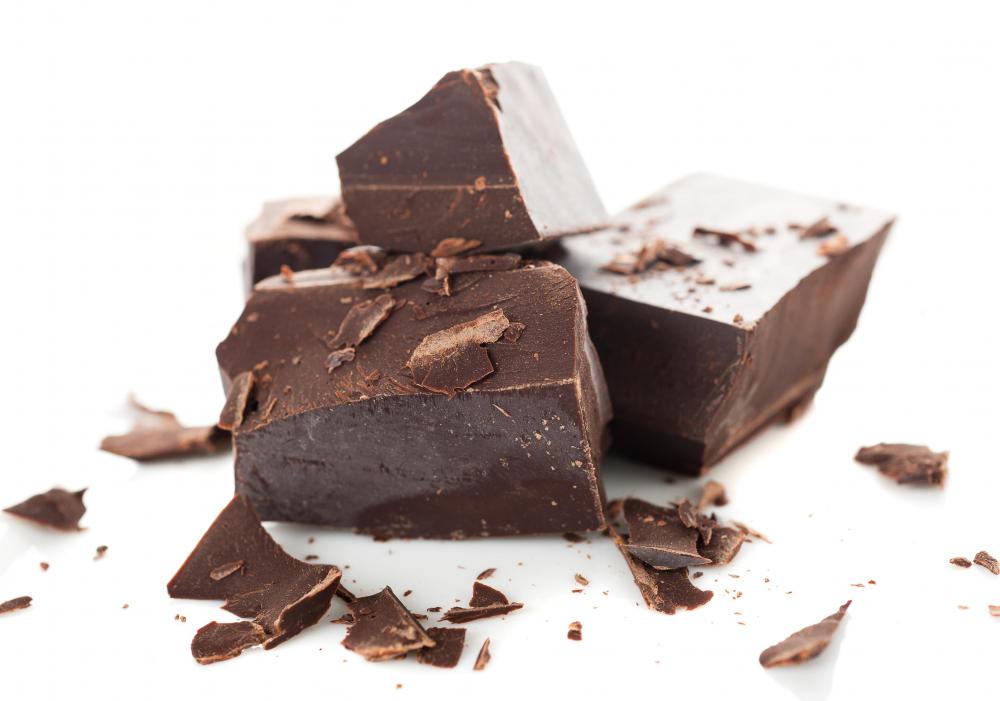
The cleaned beans are then roasted to make the flavors come out even more strongly and to lower the acidity somewhat. They are then cracked and blown through a fan to remove the shell from the meat of the bean. These chocolate nibs are crushed either by hand, using large stones, or by a machine, and the heat generated by the pounding liquefies them into a liquor. This liquid is then poured into a mold, where it hardens into blocks of dark, unsweetened chocolate.

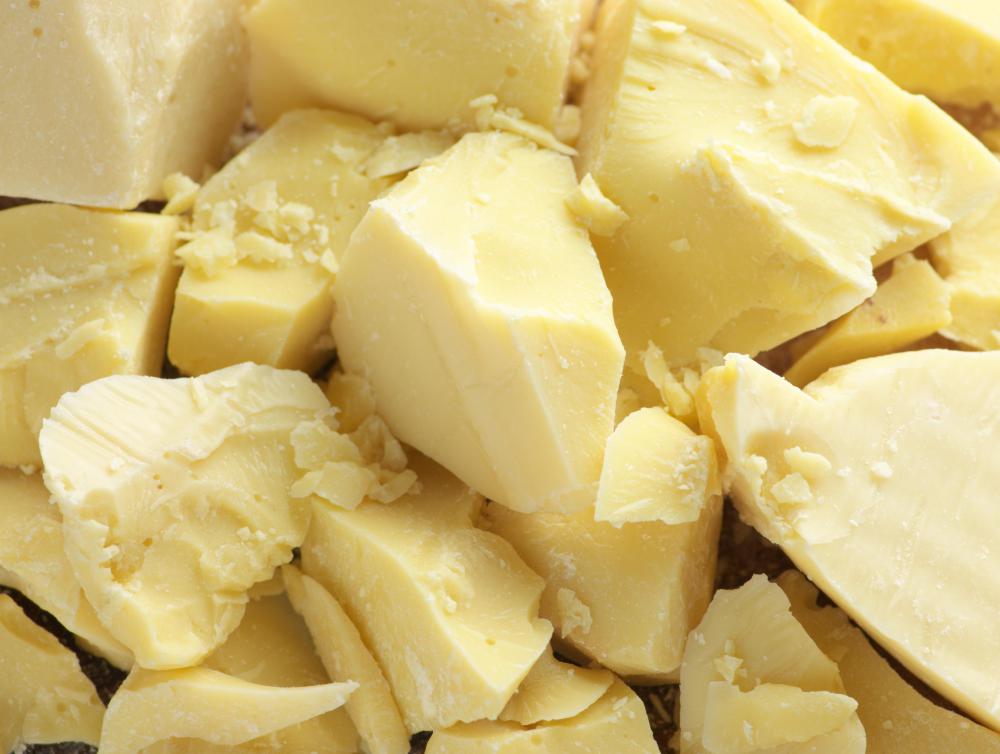
At this point, the chocolate may have sugar, cocoa butter, vanilla, and other ingredients added to make it into something closer to what we think of as sweet chocolate. Cocoa butter, the fatty part of the nibs that is often separated during the grinding process, is used to give it a smooth texture, and it is a key ingredient in milk chocolate and in many sweet dark chocolates. The cocoa liquor may be left out of the final product, as in the case of white chocolate, so that the flavor is imparted solely by the fatty cocoa butter.

Once blended, the chocolate may be subjected to further blending in a process known as conching. Conching involves fine grinding using many small metal beads, breaking down the sugar crystals and the particulate chocolate into smaller and smaller bits to remove any grittiness and to leave the smoothest, richest feel possible. The better the product, in general, the longer it has been conched, and the smoother the final feel in the mouth.

Finally, the chocolate must be tempered to ensure that the crystals that form when it solidifies are of a uniform size. Tempering involves dissolving already crystallized chocolate into a liquid, gradually adding pieces and stirring them in until they dissolve. Once properly tempered, it can be molded and allowed to solidify, at which point it is ready to be packaged and consumed.
AS FEATURED ON:
AS FEATURED ON:


-
![Chocolate.]()
Chocolate. -
![Chocolates covered in coconut flakes.]()
Chocolates covered in coconut flakes. -
![Chocolate and nut confections.]() By: rvlsoftChocolate and nut confections.
By: rvlsoftChocolate and nut confections. -
![Chocolate is made from the cacao bean.]() By: RozmarinaChocolate is made from the cacao bean.
By: RozmarinaChocolate is made from the cacao bean. -
![Cocoa butter is used to make chocolate.]() By: svl861Cocoa butter is used to make chocolate.
By: svl861Cocoa butter is used to make chocolate. -
![Chocolate can be used to make decadent cakes.]() By: Michael GrayChocolate can be used to make decadent cakes.
By: Michael GrayChocolate can be used to make decadent cakes. -
![Conche machines are used to grind course particles of chocolate.]() By: Silvia CrismanConche machines are used to grind course particles of chocolate.
By: Silvia CrismanConche machines are used to grind course particles of chocolate. -
![Chocolate scouts search the world for the best cocoa beans to use in making chocolate.]() By: Jiri HeraChocolate scouts search the world for the best cocoa beans to use in making chocolate.
By: Jiri HeraChocolate scouts search the world for the best cocoa beans to use in making chocolate.




Discussion Comments
@anon319014: Where in this article did you get *that* idea? You must be thinking about one particular kind of *coffee* where the coffee beans are found in civet excrement. That's in Sumatra and you can read about it online. The article states clearly that the cocoa beans ferment in boxes outside in the sun. The heat of the sun in those climates is enough to start the fermentation process.
I wouldn't drink that kind of coffee, either, and I'm a coffee lover. But no, cocoa beans ferment in boxes in the sun.
Does fermented really means that the animal eats the cocoa bean, and waits for them to make feces and then wash the feces with water and soap to take the cocoa beans inside the feces? If it is true, then I will not eat any chocolate ever again.
People may not no this eating a micro amount of animal feces is a serious danger to your health even if it has been washed with soap and other cleaning products. Plus it also harms the animals.
In response to rat feces and what not falling into the cocoa processing mix-- I just learned about that tonight from my father in law who ran a processing plant for a number of years.
They established a maximum percentage of feces and insect parts that was allowable.
Trucks carting beans that exceeded that amount were turned back. Yuck. The process of cleaning those beans involves heavy duty chemicals.
As a chocolate lover, I am so disturbed to learn about this. What's a chocolate lover to do now? dk
To Bizzy: They allow a certain percentage of garbage and crap that you wouldn't want in all food products you purchase from the store. I worked at a plant that made pillsbury's sweet ten and the bottles are just trucked in on boxes and set up on the line. They don't even clean these bottles, just start pouring it in. A little more than I wanted to know at the time but nonetheless, an acceptable fact that everything that is produced has something in it. An acquaintance of mine told me he used to work for smuckers, the jelly company. He said that when he worked there, a snake found its way into the grinder and he saw this. The snake was ground up with all the other stuff and sold as strawberry preserves -- just exactly what you wanted with your toast and butter huh?
describe fermentation process in processing chocolates
a friend was telling me that when the cocoa beans are being fermented to become chocolate that rat feces & what not fall into the mix and that regulations on chocolate allow a certain percentage of that stuff to be part of what we know and love as chocolate - is this accurate information? have you learned that in any of your research?
what is the difference between cocoa and caoco??
Post your comments