
At DelightedCooking, we're committed to delivering accurate, trustworthy information. Our expert-authored content is rigorously fact-checked and sourced from credible authorities. Discover how we uphold the highest standards in providing you with reliable knowledge.
How is Cheese Made?
 Mary McMahon
Mary McMahon
Mary McMahon
Cheese is one of the most varied and fascinating of dairy products. In its most basic form, it is the curdled milk of sheep, goats, cows, or other mammals. Cheese can be found in a wide range of incarnations, from the soft curds of farmer's cheese to the much harder Parmesan, which also includes a hard rind achieved by long curing. It is used in a dazzling array of culinary applications, with various types being called for depending upon the desired effect.
To make cheese, rennet, an enzyme complex produced in the stomach of all mammals, is introduced to milk. Most rennet comes from the stomachs of calves, although rennet from other young mammals is also used. Non-animal sources of rennet are available for vegetarians and those observing kosher diets. Rennin is the active enzyme in rennet, and when introduced to milk, it causes it to separate into solid curds, leaving whey behind.

After the curds have formed, they are drained and pressed to separate them from the whey. Loosely packed curds, also called cottage cheese, are eaten across much of the world. Cottage cheese contains a small amount of whey, because it is not fully drained. Little Miss Muffet was known to be consuming this type before being frightened by a spider, probably because the mild flavor appeals to children.

Usually, curds are drained and pressed repeatedly to squeeze all the water out. As they start to firm up, the curds turn into fresh or farmer's cheese, which is a soft and easy to spread product with a mild flavor. This type is delicious eaten fresh. Chevres, Neufchatel, and Cas are all examples of fresh cheeses. Fresh varieties spoil quickly, even when refrigerated, unless heavily preserved.

After being pressed dry, the curds are packed into a mold and weighted. This is where the magic of the cheese begins, because depending upon the diet of the animals used to produce the milk, milk fat content, pasteurization, ambient molds and bacteria, and ripening time, dramatically different products can be produced. The molded cheese can be brined, as is the case with feta, or treated in other ways for a desired flavor. Flavors can also be introduced by smoking, soaking in wine or another liquid, or adding herbs and spices to the curds.

The longer a cheese ages, the more flavor will develop. Most are highly acidic, and therefore will kill any harmful bacteria while allowing flavor-imparting molds to remain. Some molds are only found in very specific regions, or even in certain caves, meaning that a wide range of cheeses can be produced all over the world.
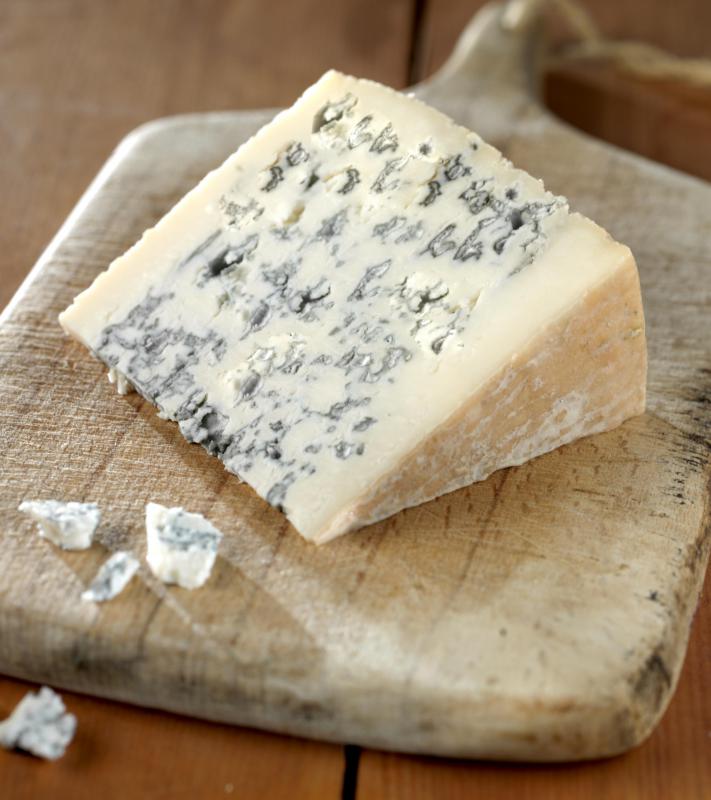
The possibilities for this dairy product are literally endless. In some cases, governments have protected their heritage cheeses by applying for origin appellations, meaning that only specific items can bear a regional name. Cheese must be aged in the Cambalou caves of France and contain Penicililum roqueforti to bear the Roquefort name, for example.

Cheese molds are often extraordinarily complex, and efforts to type them all have so far been unsuccessful. A single cheese can contain many types of mold, and those from different parts of the same cave sometimes have varying mold populations. Therefore, many are considered to be artisan products, because they must be ripened in a particular location and cared for in a certain way to achieve the desired result. Some gastronomists have suggested that they are simply the result of carefully controlled decay, presenting infamously smelly, gooey, and colorful cheeses as evidence.
Mary McMahon
Ever since she began contributing to the site several years ago, Mary has embraced the exciting challenge of being a DelightedCooking researcher and writer. Mary has a liberal arts degree from Goddard College and spends her free time reading, cooking, and exploring the great outdoors.
Learn more...
Mary McMahon
Ever since she began contributing to the site several years ago, Mary has embraced the exciting challenge of being a DelightedCooking researcher and writer. Mary has a liberal arts degree from Goddard College and spends her free time reading, cooking, and exploring the great outdoors.
Learn more...AS FEATURED ON:
AS FEATURED ON:


-
![Cheddar cheese wheels aging on shelves.]()
Cheddar cheese wheels aging on shelves. -
![Cheese-making factory.]()
Cheese-making factory. -
![A thick wedge of fontina cheese.]() By: LsantilliA thick wedge of fontina cheese.
By: LsantilliA thick wedge of fontina cheese. -
![Jug of whey.]()
Jug of whey. -
![Goat cheese.]()
Goat cheese. -
![Slice of havarti cheese.]()
Slice of havarti cheese. -
![A small bowl of grated Parmesan cheese.]() By: Bert FolsomA small bowl of grated Parmesan cheese.
By: Bert FolsomA small bowl of grated Parmesan cheese. -
![Feta is a soft, salty cheese made from sheep's milk.]() By: Denis TablerFeta is a soft, salty cheese made from sheep's milk.
By: Denis TablerFeta is a soft, salty cheese made from sheep's milk. -
![Roquefort is a heritage cheese protected by the French government.]() By: yildiraycanRoquefort is a heritage cheese protected by the French government.
By: yildiraycanRoquefort is a heritage cheese protected by the French government.





Discussion Comments
I also hate cheese. The taste makes me gag. I would starve to death if cheese were the only thing available to eat. And no, I'm not vegan or lactose intolerant. I just don't like cheese. That means all of you cheese lovers can have all of mine.
Did anyone else read the part about the calves' stomach lining? Good grief! Poor calves!
I like cheese, but not the ones that smell like feet.
What's so important about cheese?
@people hating on cheeses. If you hate it, don't it eat?, simple. No one is forcing you to eat it.
for the person who said cheese is cruel: News flash: it's not. if the animals weren't milked they would get sick and die.
I want to see a clip of cheesemaking. cheese is absolutely amazing.
Why are you people so hateful about cheese? It's good.
cheese is the greatest.
I'm simply crackers about cheese!
I love cheese but i hate the ones that small like feet!
why be crazy over cheese? Probably because it's like the 8th wonder of the world. and who cares if it's not hurting the cow?
Cheese is for cruel, cruel people! Save the animals!
Life = cheese.
cheese is good on burgers.
Maybe the reason we go crazy over cheese is because we enjoy it! If you're lactose intolerant and can't enjoy it, that's not our problem. we love cheese because it tastes good and that's the end of it!
I like sausages and cheese on a sandwich with chili sauce. :D
Well I like cheese. It tastes good and it works with crackers.
Cheese rocks!
Cheese is good :D
Yummerz! My favorite kind is brie! I like it with crackers!
We live in Wisconsin and I smile at all the cows we pass on the street. I smile because they make cheese. Cheese is a delicacy and everyone should be blessed with its yummy taste.
it's cheese, people! calm down!
but cheesse is good. i want some now.
I love every kind of cheese. Even the ones that smell like feet.
i hate cheese. how can you people love that smelly, ugly thing (cheese)? It's disgusting!
i love cheese. :)
i don't care what anyone says. cheese is good!
... and it's put on thousands of foods around the world...
cause it's good.......
why do people go crazy over cheese?
Post your comments