
At DelightedCooking, we're committed to delivering accurate, trustworthy information. Our expert-authored content is rigorously fact-checked and sourced from credible authorities. Discover how we uphold the highest standards in providing you with reliable knowledge.
How Is a Food Expiration Date Determined?
Food expiration dates are usually determined through a series of tests and trials designed to measure the safety and nutritive value of the food in question. In many places, government regulatory bodies are involved in setting expiration dates, or at least mandating their use. Not all food products have fixed expirations. In general, the only foods that are required to have and display them are infant formulas, which have been shown in numerous clinical trials to lose nutrition over time. Since babies being fed formula typically get all or most of their nutrients from the drink, governments usually see a vested interest in making sure that levels of vitamins and minerals are stable and consistent. Most other foods have “sell by” or “best if used by” dates. These aren’t quite the same as expirations, since in most cases the product can actually be fine for days if not weeks past the noted time. These dates are more often determined not on the food’s inherent nutritive content but on when it is most likely to taste the best and look the freshest. In most instances, the printing of “use by” dates is at the discretion of the manufacturer and isn’t always based on any sound science.
Understanding Food Expiration Generally

There are lots of reasons why foods are printed with expiration dates, though consumer safety is usually at the top of the list. “Expired” foods are typically those that have either lost so much nutrition so as to be harmful, as is the case with many liquid and powdered formulas, or those that are in imminent risk of spoiling and becoming breeding grounds for bacteria, like dairy and meat products.

In general, dates are determined by studying the chemical composition of the food in question and then comparing this with the environmental conditions where the food is likely to be stored. There’s often a lot of testing and experimenting that goes into finding the line between “safe” and “should be thrown away.”
Oversight and Governing Agencies

In the US, the Food and Drug Administration (FDA) oversees the regulation of packaged food and drugs, while the Department of Agriculture (USDA) regulates the production and packaging of fresh meats and produce. Many other countries have parallel systems. The FDA requires an expiration date only on infant formulas, and the USDA requires a label for the packaging date of fresh poultry. Packaging isn’t the same as expiration, but can give consumers a clearer idea about the product’s freshness.

Most all other food and over the counter medication can be labeled with terms such as "best if used by," as opposed to having a clear expiration. The FDA notes that this is because the majority of foods and drugs may spoil if they are kept to long, but they may not, and in most cases they don’t present a serious health danger and shouldn’t be discarded simply on a technicality.
Clinical Studies and Trials
Dates that are printed as true expirations are usually determined based on extensive tests. Researchers try to pinpoint the moment that a food goes from being possibly past its prime to presenting some true threat. These tests are usually carried out by career clinicians and typically go through several iterations.
Understanding “Best By” Labels
It’s much more common to see foods printed with a "sell-by" or “best by” date, though in most cases this is not the same thing as an expiration. Many are actually designed by food manufacturers to force sale and turnover, and can also be used by stores for the same reason. The FDA notes that labels such as "best if used by" refer more to the quality or flavor of the food than its intrinsic quality or nutritive content. Consumers should usually use their best instincts in these cases, and only throw food away that smells, tastes, or looks “off.”
Effect of Packaging
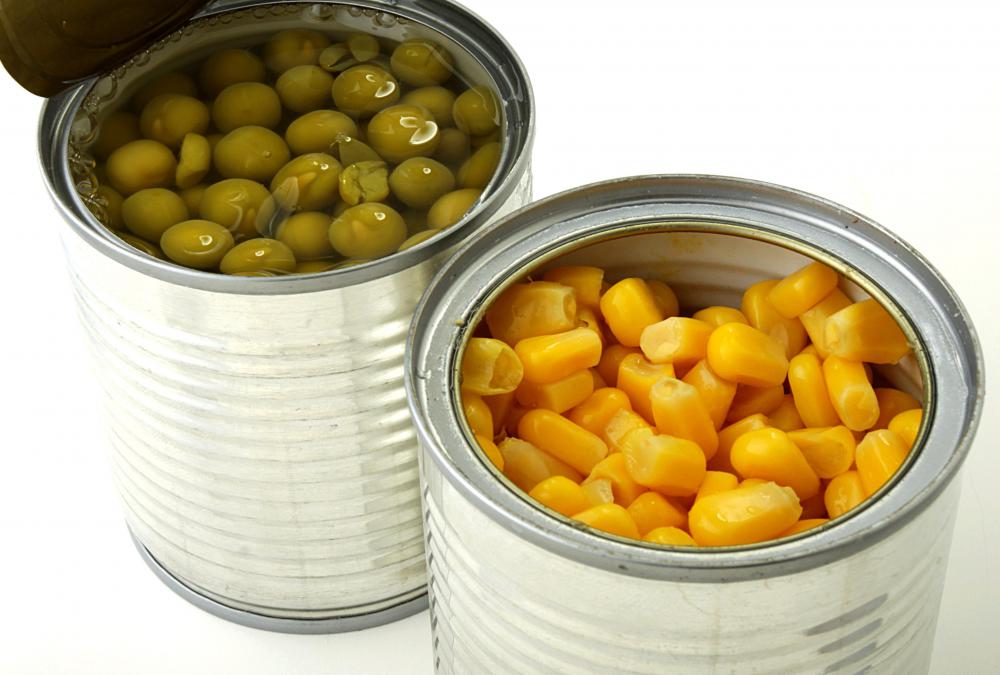
How a food is packaged can also affect its freshness, even if it’s within its window of best use or expiration. Canned foods can typically be stored for up to a year as long as they are stored at a temperature below 75° F (24° C). Dry foods, such as cereals, pastas, and cake mixes, can usually stored up to six months prior to use, but they may spoil faster if they are exposed to moisture, heat, or direct sunlight. Using them even years later may not present any problems, though they may not taste as fresh.
AS FEATURED ON:
AS FEATURED ON:


-
![Cake mix can usually last about six months, if stored in a dry place.]() By: HamsterManCake mix can usually last about six months, if stored in a dry place.
By: HamsterManCake mix can usually last about six months, if stored in a dry place. -
![Milk cannot be sold after its expiration date.]() By: ElenathewiseMilk cannot be sold after its expiration date.
By: ElenathewiseMilk cannot be sold after its expiration date. -
![Food expiration dates are usually indicated on food packaging.]() By: Art AllianzFood expiration dates are usually indicated on food packaging.
By: Art AllianzFood expiration dates are usually indicated on food packaging. -
![Canned foods can be stored for up to a year at room temperature.]() By: Andrzej WłodarcCanned foods can be stored for up to a year at room temperature.
By: Andrzej WłodarcCanned foods can be stored for up to a year at room temperature.



Discussion Comments
As this article says, sell-by dates are in large part no indication as to when a food becomes unhealthy for consumption. Sell-by, best-when-used-by and expiration dates are often more about maintaining the reputations of the companies that sell the foods than anything else.
These companies don't want you to buy food that has lost its flavor or visual appeal, so a sell-by date or an expiration date insures that you will get the product while it is still at top quality.
There is a scientific food lab in the state of California in the United States that puts food on shelves for extended periods to determine how long the foods will remain fresh and edible.
For the most part, the studies at this lab have determined that foods are not likely to cause consumers harm even when eaten long after the expiration date. Of course, the length of time a food remains safe after the expiration date depends in large part on which food we are talking about. Year-old milk isn't going to be good for anyone.
The terms "sell by" and "expiration" should not be thought of as interchangeable when they are seen on dairy products. Dairy products such as milk can usually be stored in a refrigerator in ideal temperatures (34 to 38 degrees F) for up to a week beyond the sell-by date stamped on the container.
If you buy a container of milk with a stamp marked as an expiration date then you don't want to use the milk after that date. Never buy a carton of milk after the expiration date has passed, and if the carton is in your refrigerator already then a simple sniff of the open container will probably tell you the condition of the milk. Souring milk has a distinctive odor, even early on.
Post your comments