
At HomeQuestionsAnswered, we're committed to delivering accurate, trustworthy information. Our expert-authored content is rigorously fact-checked and sourced from credible authorities. Discover how we uphold the highest standards in providing you with reliable knowledge.
How does Wall Color Affect Mood?
 Hillary Flynn
Hillary Flynn
Hillary Flynn
Nothing seems to have as much impact on atmosphere as wall color. When walking into a room, a bright, bold color on the wall can instantly startle, stumble, or wake up an individual who was previously lost in a daydream. The formerly frazzled might step into a calming nest of blue walls and feel the heartbeat slow and sense the nerves begin to calm. Psychological attachments or color memories can imperceptibly alter mood, but emotional responses to color vary by person.
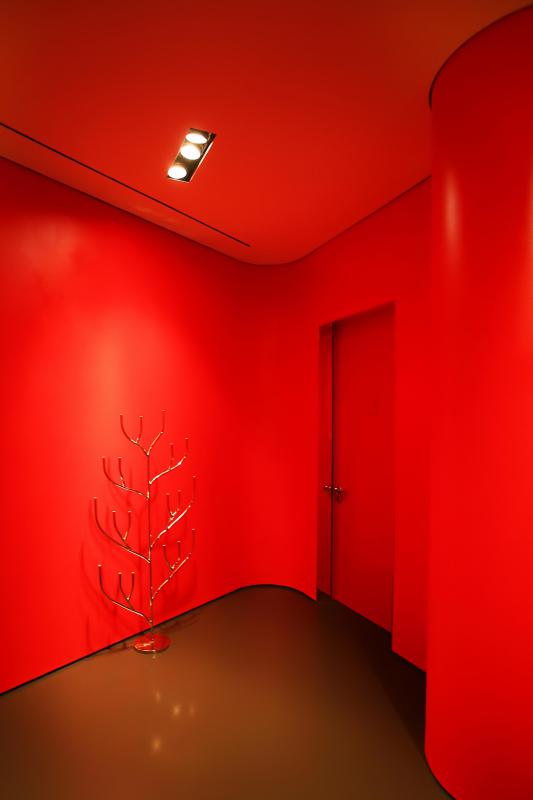
Research has indicated that warm hues, such as reds and yellows, are perceived as stimulating and are often associated with aggression, strength, courage, frustration, lust, and feelings related to action and assertion. Many of the studies tagging red with this stimulating effect were done in North America, so it's easy to see how the use of red as the color used for fire engines, ambulances, and emergency signs in this region could be attached to a cognitive trigger for a "stimulating" effect. Other areas may use color in different ways, however, so associations are not the same for every person or culture.

Blue and green used as calming colors is probably a more universal notion. The blue skies and waters and the green color of things growing in nature is often associated with feelings of peace, so blue or green wall color is often used as a nod to focusing on feelings of calmness. Sensory reactions to these colors can even result in a slower pulse and lowered body temperature, which indicates strong psychological ties to different colors. There is a big difference between a sedated dark green and a neon green, however, and the tone and shade of colors also play a big role in determining the color's effect, in addition to personal experience and memory.

Anytime a shade of color is taken to its brightest hue possible, the effect will be stimulating, simply because the visual jolt of anything bright causes the eye to physically react. Neon shades will not likely make for a restful bedroom, but they would be an invigorating color for an athletic facility. Other common color associations are the purity, simplicity, and innocence of white; the formality and elegance of black; and the royalty and nobility of purple. So memory, history, culture, and personal preference and associations all play a role in the effect of wall color on mood.
Hillary Flynn
Joining the HomeQuestionsAnswered team has helped to satisfy Hillary’s insatiable curiosity for knowledge. She also manages an electronic publishing business that allows her to develop her skills in technical writing, graphic design, and business development. Hillary has a passion for satirical writing and enjoys traveling, especially to places of historical importance.
Learn more...
Hillary Flynn
Joining the HomeQuestionsAnswered team has helped to satisfy Hillary’s insatiable curiosity for knowledge. She also manages an electronic publishing business that allows her to develop her skills in technical writing, graphic design, and business development. Hillary has a passion for satirical writing and enjoys traveling, especially to places of historical importance.
Learn more...AS FEATURED ON:
AS FEATURED ON:


-
![Red is associated with aggression and romantic passion.]() By: araraadtRed is associated with aggression and romantic passion.
By: araraadtRed is associated with aggression and romantic passion. -
![As it evokes the look of the sea and sky, blue is thought to be a calming color.]() By: chungkingAs it evokes the look of the sea and sky, blue is thought to be a calming color.
By: chungkingAs it evokes the look of the sea and sky, blue is thought to be a calming color. -
![Green is a calming color due to its association with nature.]() By: Alexandr79Green is a calming color due to its association with nature.
By: Alexandr79Green is a calming color due to its association with nature. -
![Choice of room paint is believed to affect the mood of those in the room.]() By: RobChoice of room paint is believed to affect the mood of those in the room.
By: RobChoice of room paint is believed to affect the mood of those in the room.


Discussion Comments
Is there a way to measure it?
A friendly visit to your local hardware store can result in wall color schemes that have been specially crafted by manufacturers and suggestions for the do-it-yourself consumer. These wall color palette suggestions will be found in the paint area of these department in hardware stores near the paint samples and other paint information that is available by the retailers.
Wall colors truly do affect the mood of the people in the room but they also need to reflect the style and personality of the people that reside there as well. Wall colors are truly a personal choice.
while often people choose a white or neutral color for the tones in their walls. I prefer a wall color of beige or off-white wall color.
Beige wall color is very popular among many people. The richness of the extra tones add to a room can make you feel much warmer than a pure white wall or a blue tinted white wall.
Mood also be affected greatly by the choice of an accent wall color. Using the choice of an accent color you can greatly increase the creativity in designing the interior wall color and feel of your room.
I like to paint the color of my walls depending on the type of room in the kind of activities that I'll be doing in that room. For instance, inside of the bathroom I like to have brighter colors because I think it allows me to wake up easier and fill ready and charged for the day.
Inside the bedroom, one can make a lot of different choices about the color of their walls. I think the choices you make for your bedroom has a lot to do with your personality and the type of movie you're trying to set.
Perhaps a more neutral tone would be easier to work with inside of the living room, that truly depends also on the style that you have and the movement you want to set. People who intend to do a lot of entertaining might take into account what color they paint the walls acts not commit offense of the color.
Wall color doesn't only affect the mood that we feel, it also can affect our perception of colors in the things that we look at. The ambient temperature of color in any given room to have a greater effect for instance, when photographers try to correct images on the screens of their computers.
The general color around your peripheral vision can affect the times that you are seeing in front of you, even if these towns have nothing to do with the. It almost has the effect that a photo filter can have when you put on the lens of the camera.
For this reason, photographers and other creative staff color sensitive work such as designers, who often paint the walls of their studio workspace or desk office area a neutral color of gray density. This will allow them to remove any kind of color influence in their vision.
Post your comments