
At AllThingsNature, we're committed to delivering accurate, trustworthy information. Our expert-authored content is rigorously fact-checked and sourced from credible authorities. Discover how we uphold the highest standards in providing you with reliable knowledge.
How does Ocean Temperature Affect Air Temperature?
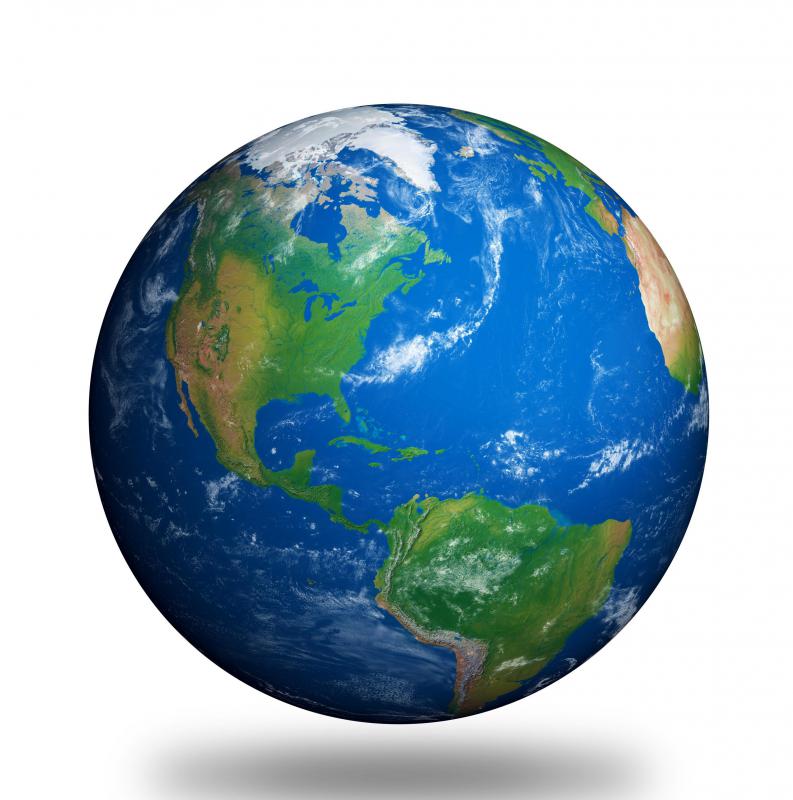
The oceans have a moderating effect on the Earth’s climate, helping prevent extremes of air temperature. This is because water takes much longer than air to heat up and cool down. Since about two thirds of the planet’s surface is ocean, this has a profound effect on climate. Outside the equatorial regions, this vast body of water tends to store heat during the summer months, and slowly release it during the winter. This is why coastal regions tend to have milder climates than areas that are far inland.
Specific Heat

Specific heat is a measure of how much heat it takes to raise the temperature of a given quantity of a substance by a given amount. This value is more than four times higher for water than for dry air or land. Land heats up quickly, and this heat is easily transferred to the air.
Air over land, however, also cools down relatively quickly. In contrast, much more heat is required to bring about a similar rise in ocean temperature, and so the seas take much longer to heat up. Similarly, they take much longer to cool down. For this reason, in areas that experience seasons, the ocean tends to lag behind the land in terms of temperature.
Effects on Climate

This difference in specific heat affects temperature ranges on both seasonal and daily timescales. Days are cooler, and nights warmer, over the oceans than on land. This has an effect on coastal areas, keeping temperatures down during the day, and preventing them from dropping very low at night.
On a micro scale, the effects of ocean temperature can easily be seen at the beach. Usually, air at a beach is a few degrees cooler than the air just a few miles inland during the day. Likewise, during the night, the air at the coast may not cool down quite as much as at inland locations. This is why coastal areas like San Diego have one forecast for the beach, and another for inland areas. The effect can also be seen in wind direction: typically, during the day wind will blow from the sea toward the land, where heat causes the air to rise, and vice-versa at night.

On a longer timescale, in summer, ocean temperature does not reach its maximum until some time after the maximum day length. Similarly, the minimum ocean temperature occurs some time after the shortest day. This influences the climate over land, creating a similar time lag.
As oceans heat up, they release more water vapor into the air, increasing its humidity. This also affects climate, as humid air takes longer to heat up, and retains heat for longer than dry air. Again, this has a moderating influence. Without the oceans, temperatures would fluctuate far more dramatically, probably making conditions impossible for most life forms.

The extent to which the ocean influences climates inland depends on topography. Moist air from a warm ocean can help moderate the climate for a considerable distance, but if it is forced to rise by a mountain range, much of the moisture will condense, forming cloud and producing rain. On the other side of the range, the air will have lost most of its moisture, and the climate will tend to be more extreme.
Ocean Currents
The equatorial regions receive more heat from the Sun than the higher latitudes, and this difference in the degree of warming of the oceans leads to currents that circulate heat around the globe. These currents have a huge impact on the climates of some parts of the world. Perhaps the best-known ocean current is the Gulf Stream, which is sometimes known as the North Atlantic Drift. This brings warm water from the Gulf of Mexico northward to northwest Europe, where its effect can be seen by contrasting the winters experienced in this region with those in Eastern Europe. For example, Glasgow in Scotland typically experiences mild, wet winters, while Moscow — at roughly the same latitude — has freezing conditions.
While this may be the most commonly cited example, ocean currents exist all over the world. Some are cold water currents, carrying cooler water from the arctic areas down toward the tropics. These reduce evaporation and humidity, leading to drier conditions with greater temperature variations than is usual for coastal regions. ENSO (El Niño/Southern Oscillation) is a periodic warming of part of the Pacific Ocean off the west coast of South America that has a huge effect on climate all over the planet.
Frequently Asked Questions
How does the temperature of the ocean influence the climate on land?
Ocean temperatures play a crucial role in regulating the climate on land. Warm ocean waters heat the air above, leading to the formation of weather patterns and storms. Conversely, cooler waters can lead to milder weather. The ocean's vast surface absorbs and stores solar radiation, acting as a thermal buffer that significantly moderates global climate.
Can changes in ocean temperature impact weather events?
Yes, changes in ocean temperature can have a profound impact on weather events. For instance, warmer sea surface temperatures can intensify tropical storms and hurricanes, as they provide more energy for these systems to develop. According to the National Oceanic and Atmospheric Administration, the intensity, frequency, and duration of North Atlantic hurricanes have all increased since the early 1980s, coinciding with increases in sea surface temperature.
What is the relationship between ocean currents and air temperature?
Ocean currents act as conveyer belts of heat, redistributing warm and cold water across the globe. Currents like the Gulf Stream transport warm water from the equator toward the poles, warming the air along coastlines and influencing regional climates. This redistribution of heat plays a vital role in establishing the climate patterns we experience.
How do El Niño and La Niña events affect global weather patterns?
El Niño and La Niña events are significant disruptors of normal weather patterns, caused by variations in ocean temperatures in the Pacific. El Niño corresponds to a warming of the central and eastern tropical Pacific, often leading to wetter conditions in some regions and drought in others. La Niña, characterized by cooler ocean temperatures, typically has the opposite effect, influencing global weather in a contrasting manner.
Does ocean warming contribute to global warming?
Ocean warming is both a result and a driver of global warming. As greenhouse gases trap more heat in the atmosphere, the ocean absorbs about 90% of this additional heat, according to the Intergovernmental Panel on Climate Change. This not only raises ocean temperatures but also contributes to a feedback loop that exacerbates global warming by releasing stored carbon from melting sea ice and permafrost.
What role do oceans play in the Earth's carbon cycle?
The oceans are integral to the Earth's carbon cycle, acting as a major carbon sink. They absorb carbon dioxide from the atmosphere, with cold waters being particularly effective at this process. Phytoplankton in the ocean also consume CO2 during photosynthesis. However, as ocean temperatures rise, their capacity to absorb CO2 decreases, which can accelerate the rate of global warming.
AS FEATURED ON:
AS FEATURED ON:









-
![Majority of the surface of the Earth is covered with ocean.]() By: jeremyculpdesignMajority of the surface of the Earth is covered with ocean.
By: jeremyculpdesignMajority of the surface of the Earth is covered with ocean. -
![Water takes longer to heat up and cool down which has an impact on the air temperature.]() By: TanouchkaWater takes longer to heat up and cool down which has an impact on the air temperature.
By: TanouchkaWater takes longer to heat up and cool down which has an impact on the air temperature. -
![Since two-thirds of the planet's surface is ocean, the temperature of the ocean has a profound effect on climate.]() By: SukritaSince two-thirds of the planet's surface is ocean, the temperature of the ocean has a profound effect on climate.
By: SukritaSince two-thirds of the planet's surface is ocean, the temperature of the ocean has a profound effect on climate. -
![Sea surface temperature can affect storm systems.]() By: powerzillySea surface temperature can affect storm systems.
By: powerzillySea surface temperature can affect storm systems.



Discussion Comments
Accurate information.
The ocean also affects air temperature because when it is evaporated (changing from a liquid to a gas), it needs more latent heat energy. The ocean gets that energy from the air, causing the air to be cooler.
What types of air or ocean currents are nearby Miami? Are they cold, warm, dry, wet?
I don't think I could stand to be near a cold ocean. I have friends who love going on vacation in Alaska, but any breeze coming in off of thirty degree water would cut me to the bone!
I have heard that when the ocean temperature rises, it causes severe storms. The warm water can evaporate really easily, and this causes more clouds.
Also, any change in temperature is going to conflict with the surrounding air. When you have warmth and cooler air colliding, that is a recipe for a storm. I believe this is how hurricanes are formed and how their severity is intensified.
@feasting – Have you ever noticed that during the day, the breeze blows from the ocean toward the land, and at night, it blows from the land toward the ocean? This is because the ocean surface temperature during the day is cooler than that of the land, but at night, the ocean retains more heat than the land, so it is warmer.
Land cools off pretty soon after the sun goes away. Water hangs onto the heat of the day, though.
The difference in air pressure makes the breeze blow a certain way. I have noticed that the temperature on the beach can be pleasant while the temperature just a mile or so away can be stifling. I think this is all due to the breeze and the air pressure.
I think that the temperature of the ocean water affects the surrounding air because of the constant breezes that blow over it. I'm not exactly sure what causes this, but I do know that there is always a breeze blowing by the sea, and it actually makes the temperature on the beach bearable.
@ Fiorite- Driving all of these natural energy systems is solar radiation and the rotation of the earth. The sun heats ocean water changing its density and salinity. When the planet rotates and tilts away from the sun, some of this stored energy is radiated back into the atmosphere, causing the oceans density to decrease, and helping to create wind currents. Ocean currents and temperatures are interconnected, just as ocean currents and wind currents are connected. It is a complicated process, but many of the resources we have today would not exist without the thermohaline cycle.
Ocean water temperature has a profound effect on air temperatures. The warmer water that is circulated to the poles causes surface temperatures to warm. This warm air pushes up through the cold air, causing air circulation, storms, and air currents.
The system is the same for all areas. Ocean and land temperatures create different temperature and densities of air, creating high pressure and low pressure air currents that circulate the globe to heat and cool the planet. These winds deliver moisture to different parts of the planet, and they help to push surface water, creating currents and gyres.
Post your comments