
At BeautyAnswered, we're committed to delivering accurate, trustworthy information. Our expert-authored content is rigorously fact-checked and sourced from credible authorities. Discover how we uphold the highest standards in providing you with reliable knowledge.
How does Hand Sanitizer Work?
 Tricia Christensen
Tricia Christensen
Tricia Christensen
Hand sanitizer works because of its high concentration of alcohol. However, it is not suitable for cleaning all types of dirt or soil. How one applies it can also affect its benefits.
Alcohol kills most bacteria, and hand sanitizer contains a high amount of alcohol. When it is rubbed on the hands for about 30 seconds, it really will eliminate many forms of bacteria and also many viruses. It has been proven very effective against some dangerous forms of bacteria, like methicillin-resistant staphylococcus aureus (MRSA), which can cause the deadly and frightening flesh-eating bacteria.

A person who uses hand sanitizer is also likely to show slower redevelopment of bacteria. People all have some bacteria on their hands at all times. Hand sanitizer tends to slow growth of the bacteria on the hands after appropriate use. It may not be equally effective in preventing all germs, since some viruses are spread through inhalation of the nasal droplets of infected persons, as with the common cold. However, use of sanitizer in schools is relatable to a drop in illness rates and better attendance records.

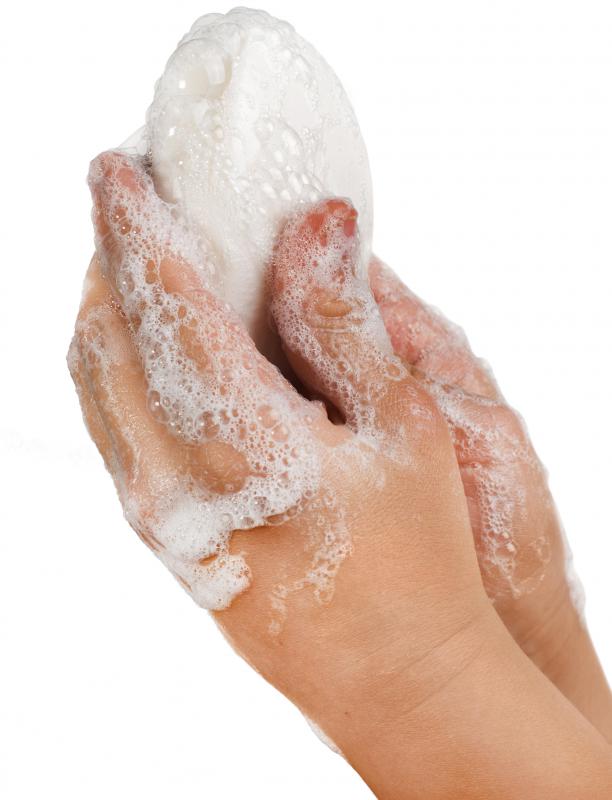
Another reason hand sanitizer may be more effective in some cases than hand washing, is that it is easier and quicker to use. Truly effective hand washing requires warm water, soap, and lathering and scrubbing for about two minutes. Hand sanitizer can be carried in small bottles, and takes about 30 seconds of scrubbing to achieve, in many cases, the same benefits as soap and water.
However, hand sanitizer is not effective for all cleaning needs. Certain bacteria make using it in hospital settings important. However, it cannot effectively clean the hands when they are exposed to blood or fecal matter.

Hand sanitizer is not effective in the food service industry, where the hands are kept wet frequently during food preparation. It cannot effectively remove fecal matter on the hands from poor hand washing after using the bathroom, or from the handling of vegetables grown in manure. Coming into contact with bodily fluids or with dirt requires a rigorous hand washing.

This product should also not replace hand washing in a hospital setting, or in any setting. In general, hand sanitizer provides the best results when used after one thoroughly washes one’s hands. This is particularly true after one uses the bathroom. Many hospitals have now instituted policies that require use of sanitizer between patients, and hand washing after four uses of it. Further, anytime a medical worker comes into contact with bodily fluids, the hands should be washed instead.

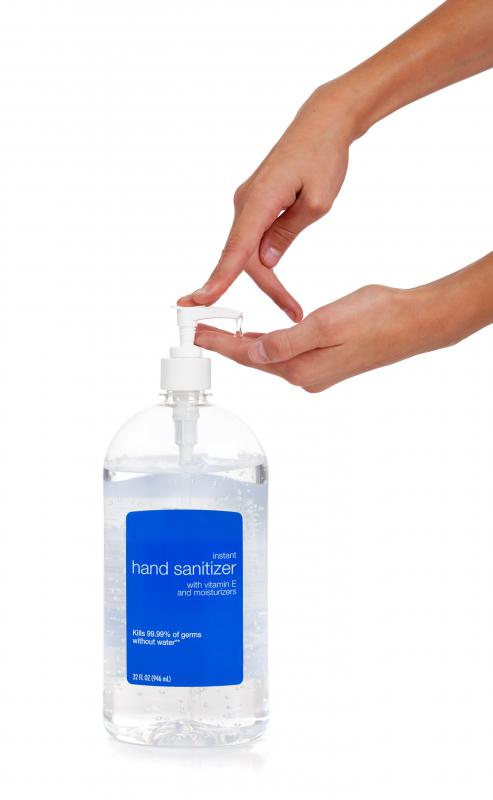
Hand sanitizer does not work effectively if it is not applied correctly. People need at least a dime size dollop, and should be able to scrub the hands together for 30 seconds. If the sanitizer dries in less time, it's likely that not enough was used, and the person should repeat the process.
Tricia Christensen
Tricia has a Literature degree from Sonoma State University and has been a frequent BeautyAnswered contributor for many years. She is especially passionate about reading and writing, although her other interests include medicine, art, film, history, politics, ethics, and religion. Tricia lives in Northern California and is currently working on her first novel.
Learn more...
Tricia Christensen
Tricia has a Literature degree from Sonoma State University and has been a frequent BeautyAnswered contributor for many years. She is especially passionate about reading and writing, although her other interests include medicine, art, film, history, politics, ethics, and religion. Tricia lives in Northern California and is currently working on her first novel.
Learn more...AS FEATURED ON:
AS FEATURED ON:


-
![Using hand sanitizer is an option when washing hands is not possible.]() By: Michael FlippoUsing hand sanitizer is an option when washing hands is not possible.
By: Michael FlippoUsing hand sanitizer is an option when washing hands is not possible. -
![Small bottles of hand sanitizer can be kept in backpacks, handbags, and briefcases.]() By: Borys ShevchukSmall bottles of hand sanitizer can be kept in backpacks, handbags, and briefcases.
By: Borys ShevchukSmall bottles of hand sanitizer can be kept in backpacks, handbags, and briefcases. -
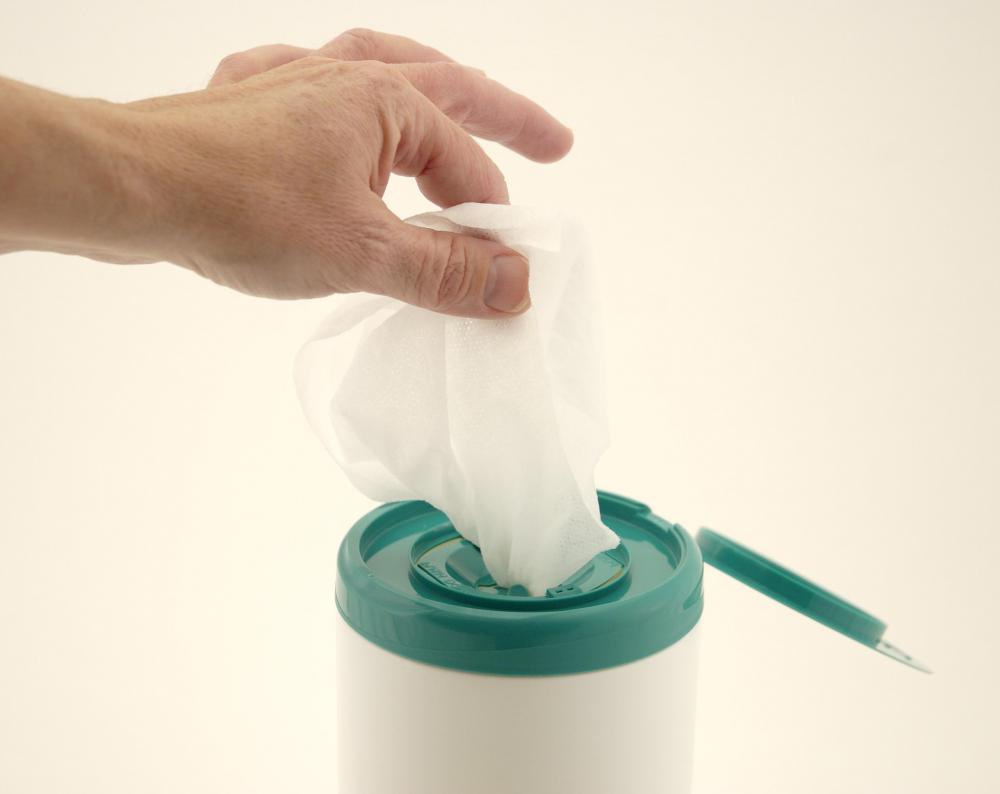
![Hygiene wipes can be used to sanitize hands.]() By: Scott MillessHygiene wipes can be used to sanitize hands.
By: Scott MillessHygiene wipes can be used to sanitize hands. -
![Hand sanitizer should not always an effective replacement for hand washing, which requires, soap, warm water, and lathering for up to two minutes.]() By: Deyan GeorgievHand sanitizer should not always an effective replacement for hand washing, which requires, soap, warm water, and lathering for up to two minutes.
By: Deyan GeorgievHand sanitizer should not always an effective replacement for hand washing, which requires, soap, warm water, and lathering for up to two minutes. -
![Hand sanitizers should be used following a cold to prevent a recurrence.]() By: stefanolunardiHand sanitizers should be used following a cold to prevent a recurrence.
By: stefanolunardiHand sanitizers should be used following a cold to prevent a recurrence. -
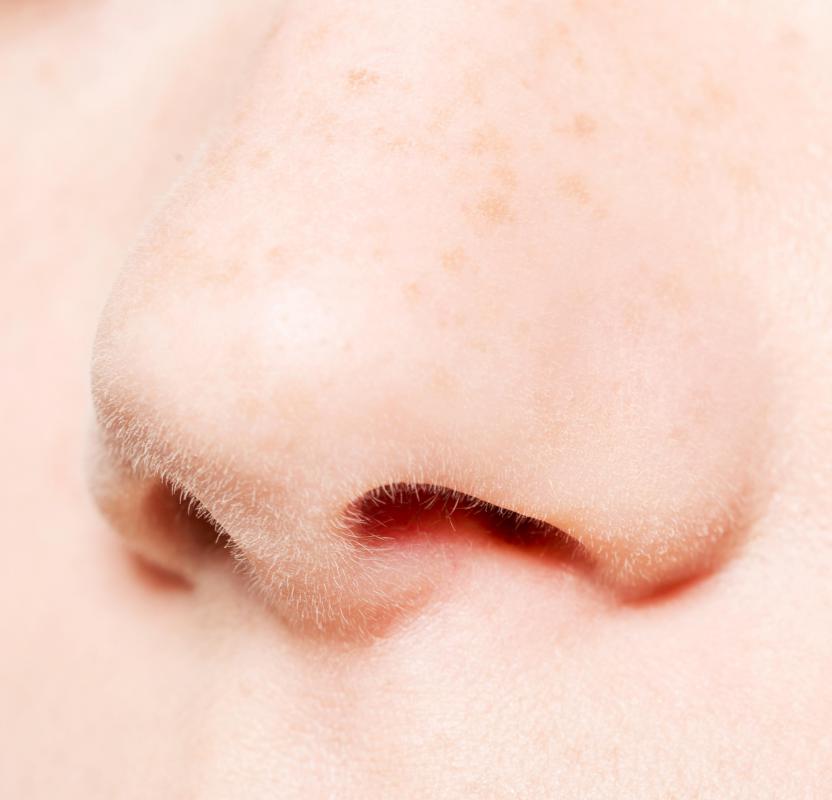
![Hand sanitizer may help prevent the spread of MRSA, which most often lives in the nasal cavity.]() By: Piotr MarcinskiHand sanitizer may help prevent the spread of MRSA, which most often lives in the nasal cavity.
By: Piotr MarcinskiHand sanitizer may help prevent the spread of MRSA, which most often lives in the nasal cavity. -
![MRSA can travel into hospitals on the skin of healthy or sick people.]() By: Lisa F. YoungMRSA can travel into hospitals on the skin of healthy or sick people.
By: Lisa F. YoungMRSA can travel into hospitals on the skin of healthy or sick people.

Discussion Comments
Hmm, what happens if the person has rings on their fingers with nooks and crannies where bacterium can be?
I need help. What chemical reaction does hand sanitizer have? Please, someone help me.
@Anon56083, Post 12: But can it kill a bear?
To answer that question: If you poured a few bottles down its mouth, then most likely. You are chucking alcohol down it's mouth which is poisonous in large amounts so I think it could kill a bear, actually.
It is strongly true that the hand sanitizer is easy to make. For me, the hand sanitizer is effective and it can protect us from germs. I trust the hand sanitizer.
Did an experiment comparing hand sanitizer, soap, and antibacterial soap. Hand sanitizers are pretty effective at killing bacteria (grown in Petri dishes). More so than hand soap, because hand soap only binds dirt to the molecule so once you wash your hands, the dirt comes off. To be very effective, soap and water first, than hand sanitizer.
A person who uses hand sanitizer is also likely to show slower redevelopment of bacteria. We all have some bacteria on our hands at all times. Hand sanitizer tends to slow growth of the bacteria on the hands after appropriate use.
It may not be equally effective in preventing all germs, since some viruses are spread through inhalation of the nasal droplets of infected persons, as with the common cold.
However, use of hand sanitizer in schools is related to a drop in illness rates and better attendance records.
Another reason hand sanitizer may be more effective in some cases than hand washing, is that hand sanitizer is easier and quicker to use. Truly effective hand washing requires warm water, soap, and lathering and scrubbing for about two minutes. Hand sanitizer can be carried in small bottles, and takes about 30 seconds of scrubbing to achieve, in many cases, the same benefits as soap and water.
Hand sanitizers do not work! I have done many experiments with them, all ending with the same results. i used petri dishes with my finger prints and let the bacteria grow overnight, and well, the dishes with the sanitized fingerprints had more bacteria spots. It was gross!
i think a hand sanitizer really does work, but i work with different people every day and you know, shaking hands and all -- how often should i use sanitizer?
But can it kill a bear?
Hand sanitizer is quite effective on bacteria, but I am not convinced it works very well on viruses.
I work in a retail environment, constantly handling product and money handled by others. How long is sanitizer effective, and how often should I reapply?
Good to know that hand sanitizer is not more sanitary than just washing your hands!
Just for your info, the hand sanitizers have the alcohol content that penetrates or diffuses through the cell membrane wall of the bacteria and pretty much causes the cell to die. It wouldn't be a good idea for the whole body, in that you would kill good bacteria on your body and this could have consequences. I am a microbiologist and I trust soap and water with the sanitizer after.
I'm a parapro at an elementary school and I notice the teachers are telling the students not to wash after using the bathroom but instead use hand sanitizer because it's quicker. Does hand sanitizer clean hands if there is urine on it?
How does hand sanitizer kill the bacteria?
I have a co-worker who uses the bathroom and then walks out without washing his hands. He then goes to his desk and uses Purell. In this situation, is this the same as washing your hands with good old soap and water?
can the concept of hand sanitizer be adapted to body? so we can have alternative clean product for body just for emergency.
Even though hand sanitizers, and hand wipes help reduce the number of germs on our hands, the old fashioned way of keeping hands clean with soap and water seems to be a better way to go. That is at least what some recent studies have suggested. By all means hand sanitizers should be used when soap and water are not available.
will the hand sanitizer kill both the good germs and the bad germs on your hand? and is it more effective than the hand soap we all use at our house?
i know all this but what would happen if you added more germs in it?
Post your comments