
At WiseGEEK, we're committed to delivering accurate, trustworthy information. Our expert-authored content is rigorously fact-checked and sourced from credible authorities. Discover how we uphold the highest standards in providing you with reliable knowledge.
How do You Make Hard Boiled Eggs?
Hard boiled eggs are easy to make and require only eggs, water, and a pot big enough to hold them, and there are numerous recipes for and ways to prepare them. Though many argue the finer points of making hard boiled eggs, there is really nothing simpler. To hard boil eggs, simply place eggs with unbroken shells into a pot and add enough water to cover them to 1 inch (2.5 cm). Bring the water to a boil, reduce the heat, and maintain a low boil for approximately 13 minutes.
When the eggs are done cooking, there are two ways to cool them. You can let them cool naturally in the pot until they are cool enough to peel, or you can speed cool them by draining off the hot water and rinsing them with cold water until they can be handled. Some cooks recommend speed cooling the eggs if they are going to be peeled and used right away. This is because the rapid cooling shrinks the egg slightly inside the shell, making it easier to peel.

In addition to Easter egg dying and eating, many recipes call for hard boiled eggs. They can be diced up for use in fresh vegetable salads, meat salads, and spreads, and they are also used to make the hors d'oeuvre deviled eggs. Deviled eggs are made by splitting hard boiled eggs in half lengthwise, removing the yolks, and mashing them with a combination of mayonnaise, mustard, and seasoning. The yolk mixture is then placed back inside the vacant hollows of the egg halves.

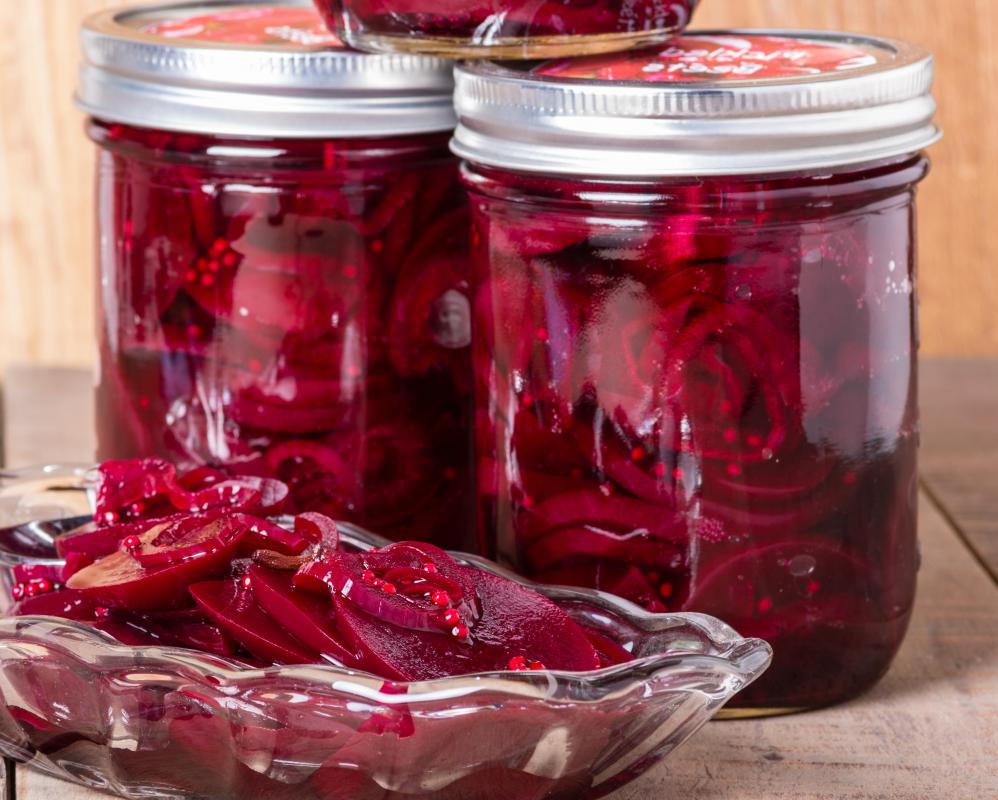
Hard boiled eggs are good eaten warm or cold. They are a healthy way to add protein to a green salad, and they are excellent diced up in potato salad. These eggs are also frequently used when pickling beets; many people like to drop whole, hard boiled eggs, along with onion, into the pickling mixture.
Whatever your purpose for hard boiling eggs, be sure to cook them for at least ten minutes, as undercooked eggs are extremely difficult to work with because the yolk is still runny. You can store them unpeeled and covered in the refrigerator for up to ten days safely. Peeled eggs should also be covered and eaten within three days.
AS FEATURED ON:
AS FEATURED ON:









-
![Hard boiled eggs.]() By: Igor DutinaHard boiled eggs.
By: Igor DutinaHard boiled eggs. -
![Mayonnaise is often blended with hard boiled egg yolks to make deviled eggs.]() By: AlexandraMayonnaise is often blended with hard boiled egg yolks to make deviled eggs.
By: AlexandraMayonnaise is often blended with hard boiled egg yolks to make deviled eggs. -
![To boil eggs, place eggs in boiling water for about 13 minutes.]() By: roblanTo boil eggs, place eggs in boiling water for about 13 minutes.
By: roblanTo boil eggs, place eggs in boiling water for about 13 minutes. -
![Mustard is needed to make hard boiled eggs.]() By: dragojagagitubicMustard is needed to make hard boiled eggs.
By: dragojagagitubicMustard is needed to make hard boiled eggs. -
![Whole boiled eggs are sometimes added when pickling beets.]() By: zigzagmtartWhole boiled eggs are sometimes added when pickling beets.
By: zigzagmtartWhole boiled eggs are sometimes added when pickling beets. -
![A gas range may take longer to reach boiling temperature than an electric range, but the temperature is easier to control.]() By: jokerproA gas range may take longer to reach boiling temperature than an electric range, but the temperature is easier to control.
By: jokerproA gas range may take longer to reach boiling temperature than an electric range, but the temperature is easier to control.



Discussion Comments
What about steaming the eggs instead of hard boiling them?
I have chickens, and I can confirm that the older the egg the easier to peel. Fresh eggs are nearly impossible to peel. We poke a hole with a thumbtack (this allows a little water to get in between the shell and the egg), hard boil them, speed cool them, and then refrigerate them overnight. Store bought eggs will peel easier right after cooking because they are much older.
Yet another tip in hard boiling eggs is to poke a hole with a pin on the wider part of the egg. That will help release the pressure when eggs are put in the water.
always I have learned to boil eggs is to put them in the water before it starts to boil. I rarely ever have cracked egg shells.
If you take eggs out of refrigerator and put it in boiling water, the difference in temperature is so tremendous that more often then not, the eggshell will brake because it can not withstand the sudden change in temperature.
Usually when I take the eggs out of the refrigerator I rinse them then with the help of a spoon lower them in boiling water, rather slowly. Very rarely do I get cracked shell. I do not have any scientific proof of this, but this is what I have figured out by trial and error.
I heard that putting a few drops of vinegar in the water helps the shell peel more easily. Because it's so little vinegar in comparison to the amount of water, and because the egg is protected by the shell, you can't taste the vinegar when you eat the egg!
I find that putting eggs in lukewarm water reduces the frequency of broken shells. Also, by bringing it to a boil, then turning off the heat and letting them sit in the hot water for about 15 minutes, there isn't as much of a chance of the shells breaking in a rolling boil.
Sometimes when I place unbroken eggs into a pot of boiling water, their shell cracks open. How come?
Post your comments